Mathew Needleman hosts a new blog carnival to limited fanfare and an inexplicably shortened deadline. But I’m a sucker for carnivals.
A two-part submission, then. One part to take issue with Mathew himself, and another to offer a slick assignment for a class that isn’t mine.
A Story Is A Story
My original sleep-drunk post basically declared (without justification) storytelling the most common discipline between every 21st-century career, consequently declaring it the most common discipline between every classroom on your campus, as well as the most collaborative and the most important to teach.
Mathew took exception to my democratic optimism:
I still think that there is a particular language to film making that only a few will pick up just by osmosis. If you want to make good videos you have to be aware of certain film language in the same way that print design requires adherence to certain principles.
It’s true that editing a montage involves a different instrument than composing a paragraph but they descend from the same skill.
For reasons of time, I can only offer one other example but they are littered everywhere if you feel like looking:
In storytelling, it’s essential that you set the scene and lend your reader / viewer / listener (henceforth “audience”) some bearing
-
Language. In writing, it’s an introductory/topic sentence, like the first from chapter three of Moby Dick:
Entering that gable-ended Spouter-Inn, you found yourself in a wide, low, straggling entry with old- fashioned wainscots, reminding one of the bulwarks of some condemned old craft.
-
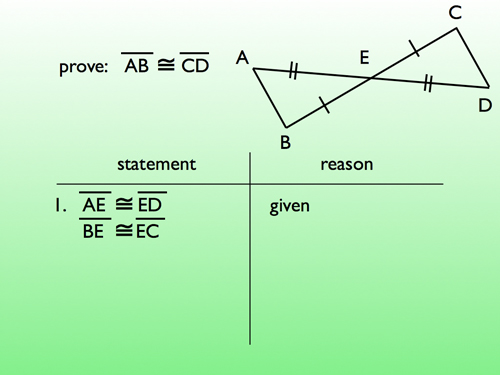
Math. In a proof, you first declare the given constraints:
- Music. In music, you often set the scene by layering your instruments, staggering their introductions. Like in Gimme Shelter, first the guitar, then the drums, then the piano, then the vocals, and then, after the audience has become comfortable, they rock.
-
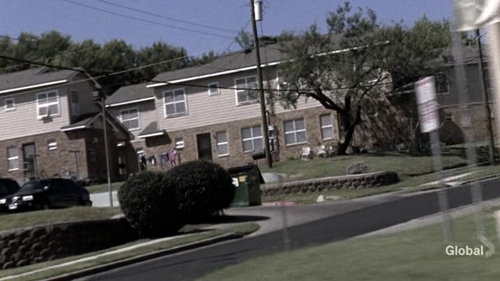
Film. In film/tv, you open a new sequence with a wide, establishing shot, letting the audience orient itself before you dig deeper with medium shots and close ups.
Like with last Friday’s Friday Night Lights, within the first few seconds of the episode, you’ve got this wide, exterior shot of Smash’s neighborhood:
Writing and film offer the most useful parallels and, honestly, they. just. don’t. stop. Everything – from transitional sentences to the rhythm of individual words to alliteration to concluding paragraphs – has an analog in film and vice versa. True to Mathew’s point, their executions vary, but execution is always secondary to conception.
I want to build students who can recognize common storytelling elements in these mediums and then move effortlessly between them.
Kant Attack Ad
To that end, it’s impossible to watch this mudslinging campaign ad without dreaming up a classroom assignment.
So you have your kids pick two opposing people, ideas, or concepts. Yeah, you could go with opposing philosophers as in the video, but my mind is elsewhere:
- metric v. imperial,
- hamlet v. laertes,
- basketball v. soccer,
- wii v. xbox 360,
- or, since in the states it’s a freakin’ election year, pick two candidates and go at it.
And by “go at it,” I mean:
- research the issues;
- pick a side;
- choose a limit on duration;
- research current campaign ads on youtube;
- gather images, video clips, sound bites from the opposition;
- distort and decontextualize them;
- get your menace on for the narration;
- use the ken burns effect a lot;
- host a classroom film festival;
- have the class vote on the issues based on the persuasiveness of the campaign ads.
Raise your hand if you wish you were teaching an elective right now.
*raises hand*



