In an astonishingly wise appropriation of tech funds, my district is paying its own teachers to conduct tech seminars for other teachers. I signed up for a block of three tutorials on maximizing digital projector use in the classroom. I have way too much material for this workshop.
But my district’s curriculum coordinator assigned me a workshop called “Web 2.0 for Mathematics Instruction” unaware that my c.v. here is positively larded with skepticism about this place where your Internets and my Maths coincide, a place which you have sworn exists. I have no material for this workshop.
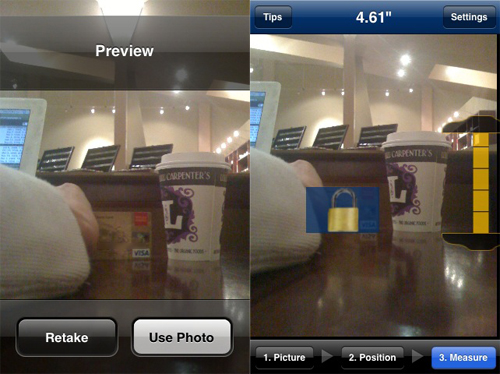
Neither, apparently, do the ed-tech institutions. Vicki Davis retweeted this from Dianne Krause the other day:
Leigh Ann Sudol’s response, that this blog represents some kind of coincidence of Web 2.0 and math, is even more disconcerting:
Far from representing the read-write web’s effect on math instruction, this blog remains perpetually befuddled by it.
So before I cancel this workshop (for which I never volunteered in the first place) I’ll put Vicki and Dianne’s question out here: does anybody have any examples of Web 2.0 technology transforming math instruction?
I’m particularly interested in methods specific to math. Tell me my students can collaborate over a conceptual wiki, or Skype with another country over project-based learning, or blog their class notes, and you’ll find my attention wandering. These techniques could enhance a class on auto repair, I realize, but the farther you wander away from the liberal arts towards my room, the more their returns diminish.
Postscript:
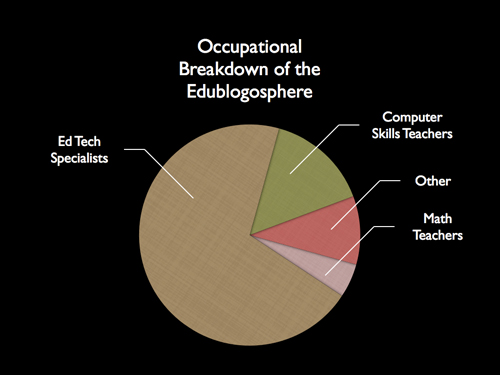
Though Scott has yet to release his 2008 survey of the edublogosphere (which *cough* will only be a year outdated this January) I have seen some of the early infographs and they confirm that the loudest voices on the matter of ed-tech don’t teach and, furthermore, don’t teach math:
Time was, I’d recommend Darren Kuropatwa as the go-to guy for math instruction using read-write technology but I pay my taxes more often than he blogs.
So where are the Web 2.0-enabled math teacher bloggers?