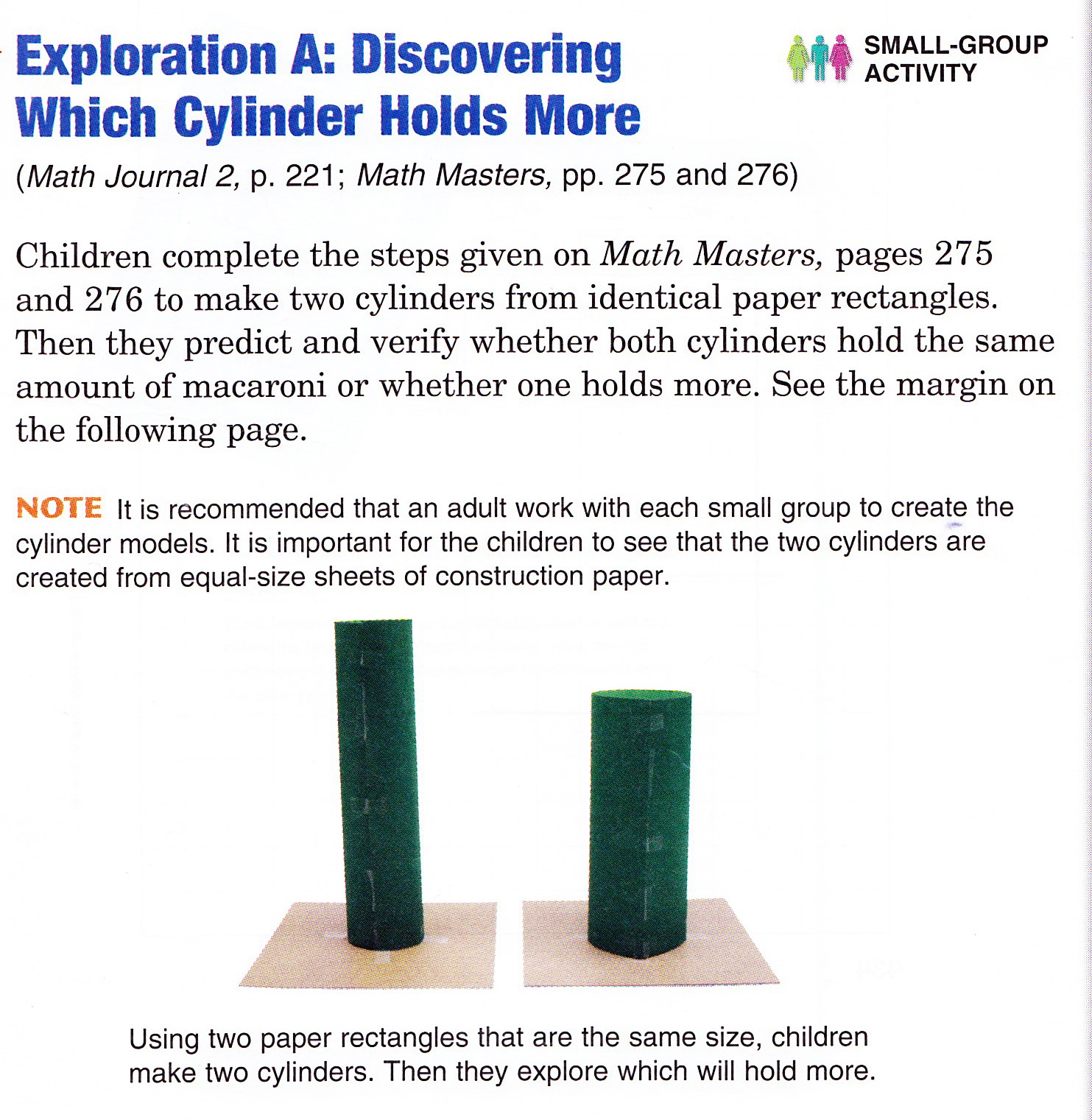
See the task page.
I set up the problem and then had a whale of a fun time figuring out an answer. I suspect I used a railroad spike where a penny nail would have sufficed, though, so I’d like to see how you’d solve it. Leave your method or a link to a scanned scribble sheet in the comments.
BTW: This is another example of the advantages of the digital medium I’m working with. The student sees two images. One looks almost identical to the other.
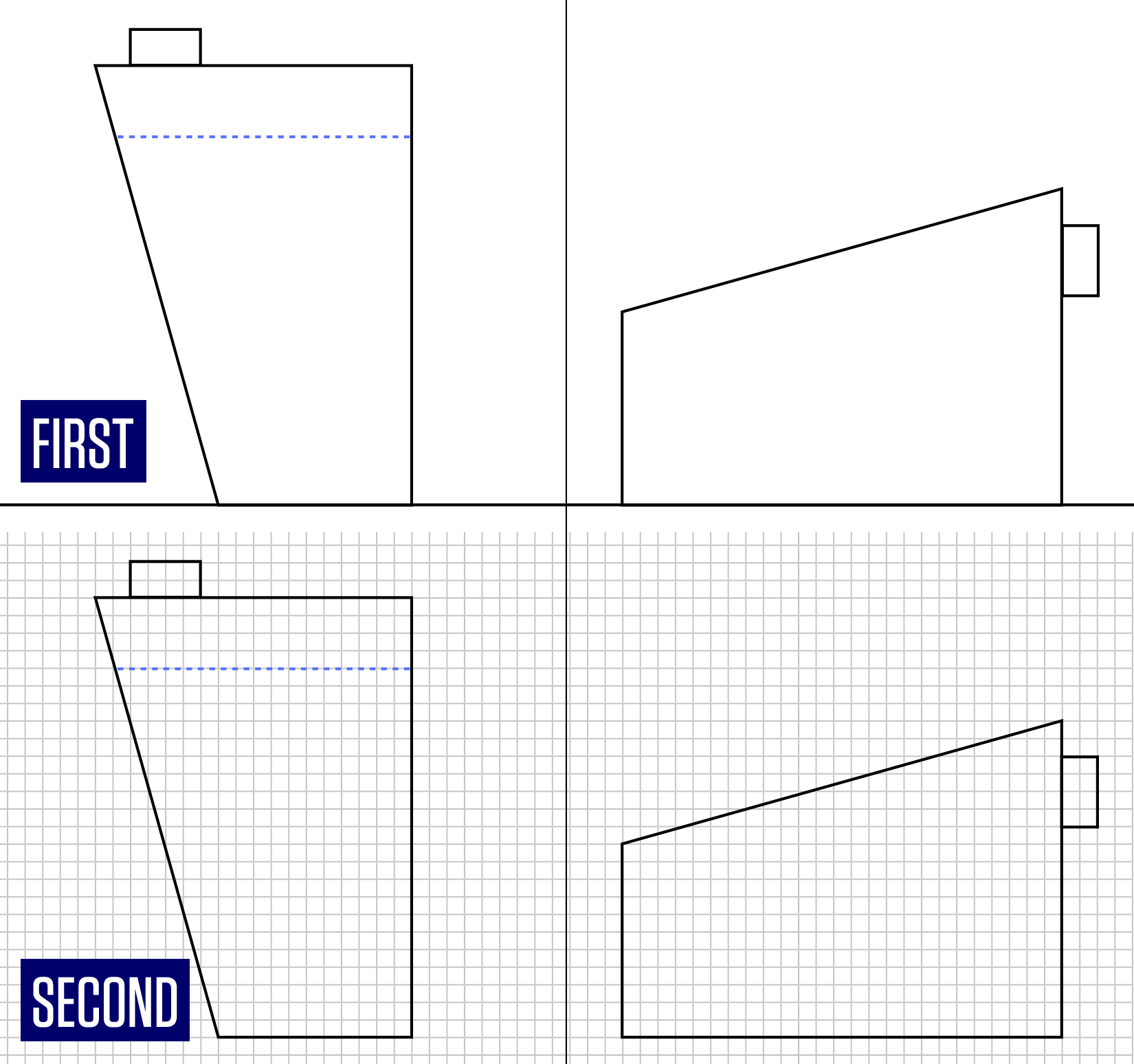
With the first image, I can ask the student to guess where the water levels falls in the rotated traveler. Then we lay down a mathematical structure on the image and the student works on a more abstract task. But I’ll wager that when people use this task they’ll just print out the second image because, wow, that’s a lot of paper to use for something as fleeting as a guess. That’s an advantage of digital media: students can work on more concrete tasks using more concrete representations, then abstract tasks using more abstract representations. At no extra charge.
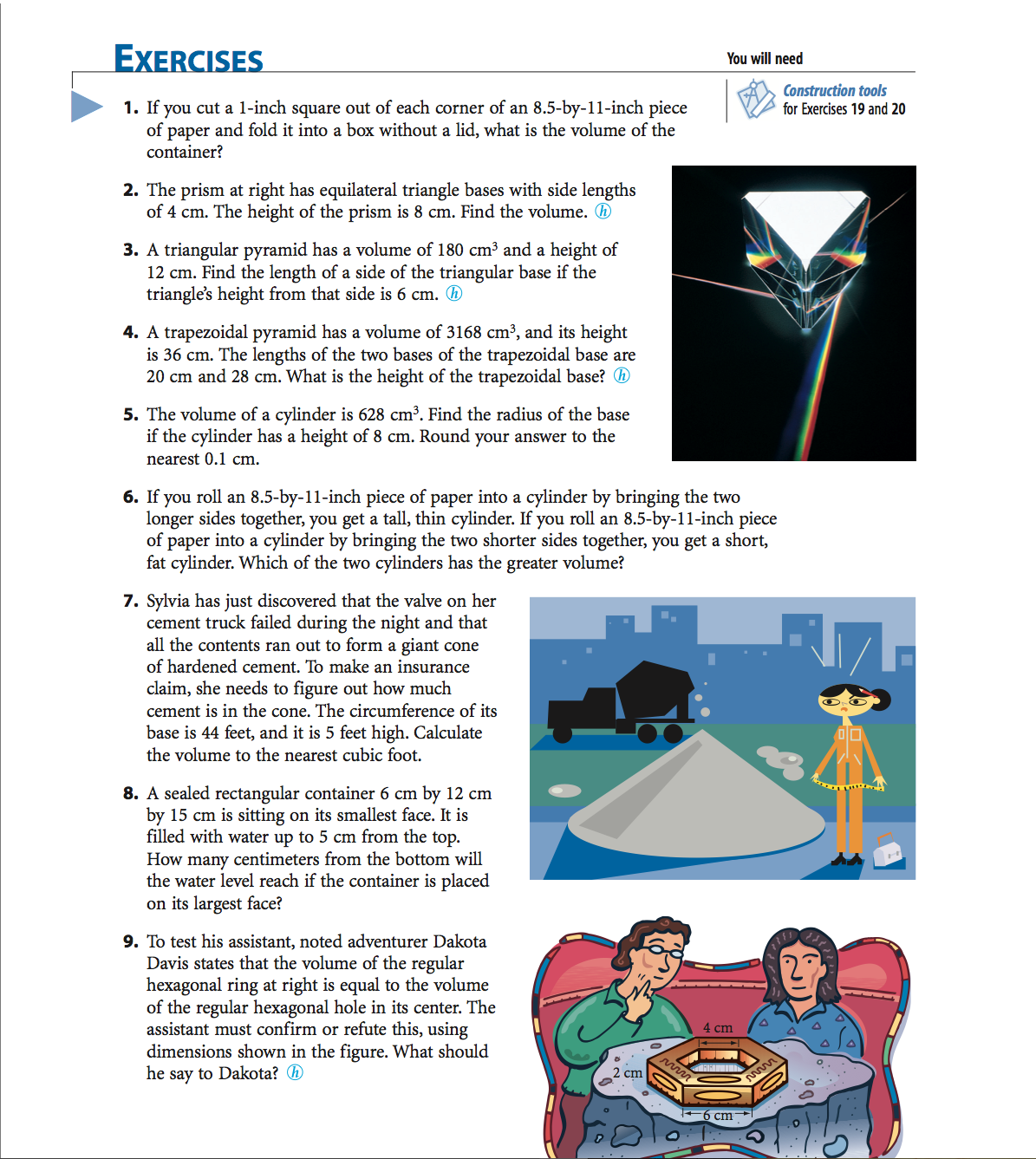
2012 Jun 16. From Discovering Geometry, Fifth Edition, pg. 548:
A sealed rectangular container 6 cm by 12 cm by 15 cm is sitting on its smallest face. It is filled with water up to 5 cm from the top. How many centimeters from the bottom will the water level reach if the container is placed on its largest face?