Dan Meyer

Total 1628 Posts
I'm Dan and this is my blog. I'm a former high school math teacher and current head of teaching at Desmos. He / him. More here.

OSCON 2009: My Ignite Presentation

I was constrained by twenty slides at fifteen seconds apiece for a lean five minutes to talk about whateva to a crowd of open source software-types. I talked about a) teaching, b) why my first two years were miserable, c) the difference between teaching math and teaching citizenry, and d) what excites me lately.

[Click through to view embedded content.]

If any other pecha kucha survivors want to commiserate over the format, which required (for me) 400% more rehearsal and 90% less slidework than I’m accustomed to, the comments are all yours.

BTW: A couple of people have asked for a YouTube embed. I tried, but the audio stopped tracking with the video. Here, instead, is a link to a high-quality file.

OSCON 2009: Overview

I attended O’Reilly’s Open Source Convention last week in San Jose, which wasn’t my usual scene. I gave a brief, five-minute talk Tuesday night (which I’ll post shortly) and then spent Wednesday and Thursday wandering between sessions, feeling alternately like I was a) bobbing along the surface of something awesome or b) submerged several hundred feet beneath that same surface, all depending on the complexity of the content. I stuck to sessions on design, usability, business-building, and data visualization. Those were pretty great but OSCON punished me, without exception, anytime I decided to get adventurous, like the session on e-mail protocols that I would have understood just as well had it been delivered in Croatian.

Scattered notes:

  • It’s nice to know that, even at 27 years old, there are still things I don’t know, that there are at least a few things I have left to learn.
  • Everyone was exceptionally warm and welcoming, even people who, upon subsequent Google background-checking, turned out to be something of rockstars within the community. I wonder if this is particular to the open source ethos or if, more generally, I just go to all the wrong conferences.
  • Seriously, Valerie Aurora did everything but sound out the syllables in Li-nux Ker-nel for me. Such is the patience with noobs here.
  • There were no handouts whatsoever at this conference. I asked a few people about this and they looked at me like I was high.
  • Keynotes were fifteen minutes long. Sessions, forty-five.
  • The gender balance here is inverted at education conferences.
  • Everyone had an opinion or an anecdote to share about teaching. It was easy to lure someone into conversation by asking her to elaborate on why her ninth-grade science teacher was so good or bad. I had these conversations all throughout the conference, all throughout the convention center. I can’t imagine water management engineers enjoy this sort of ready social icebreaker so chalk one up for teaching.
  • Open Source Hero I: Clay Johnson, director of Sunlight Labs, who aims to make meaning out of the deluge of data from data.gov.
  • Open Source Hero II: Michael Driscoll, who makes awesome visualizations of huge data sets using the statistical analysis software R. Check out his six-dimensional analysis of baseball pitches.

Don’t Forget Answers, Iteration

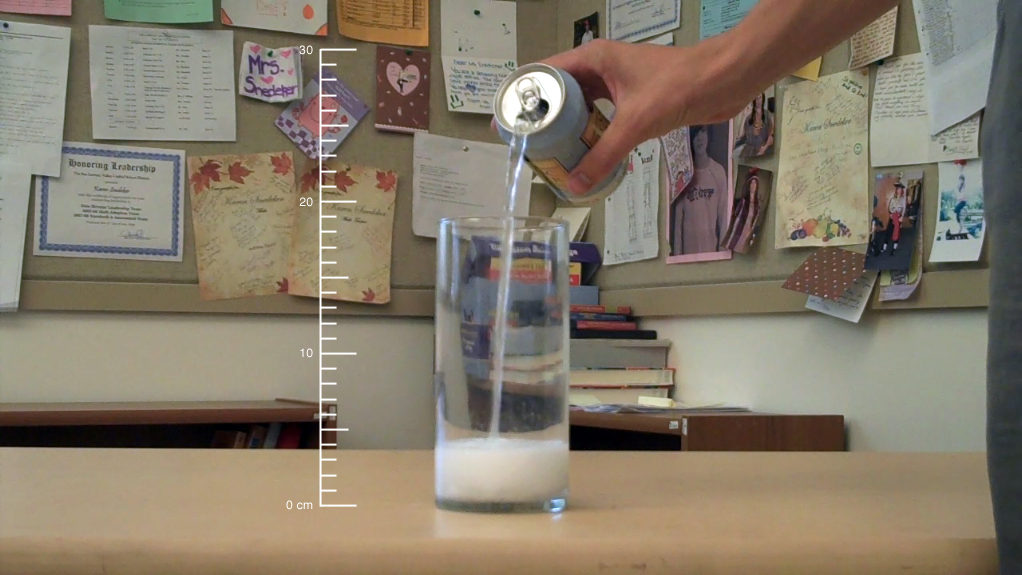
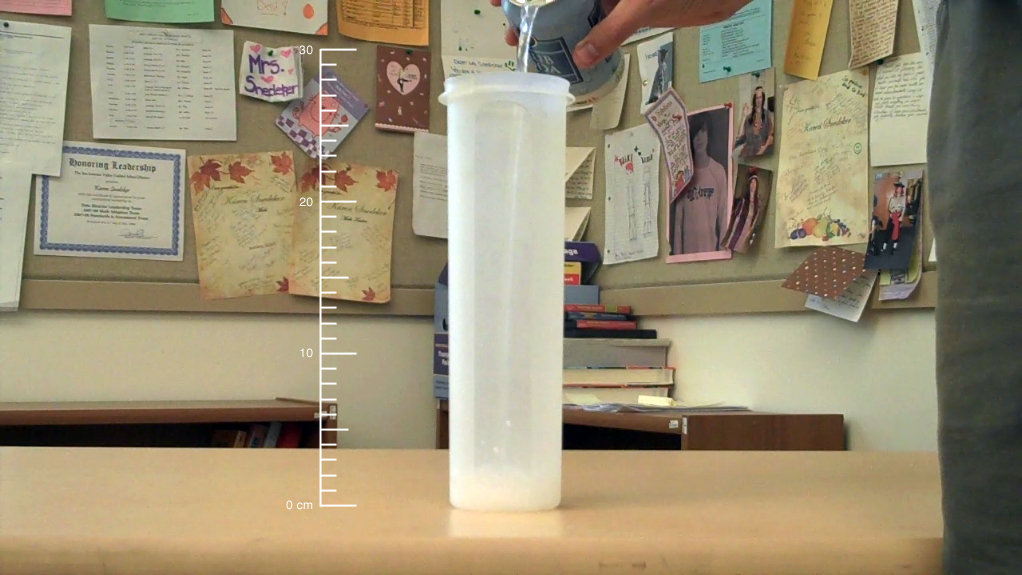
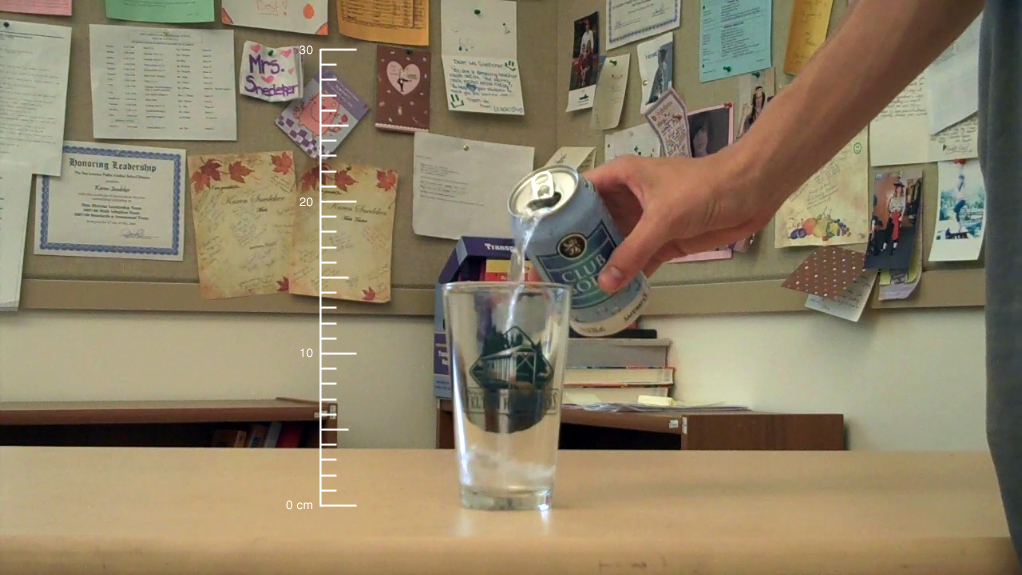
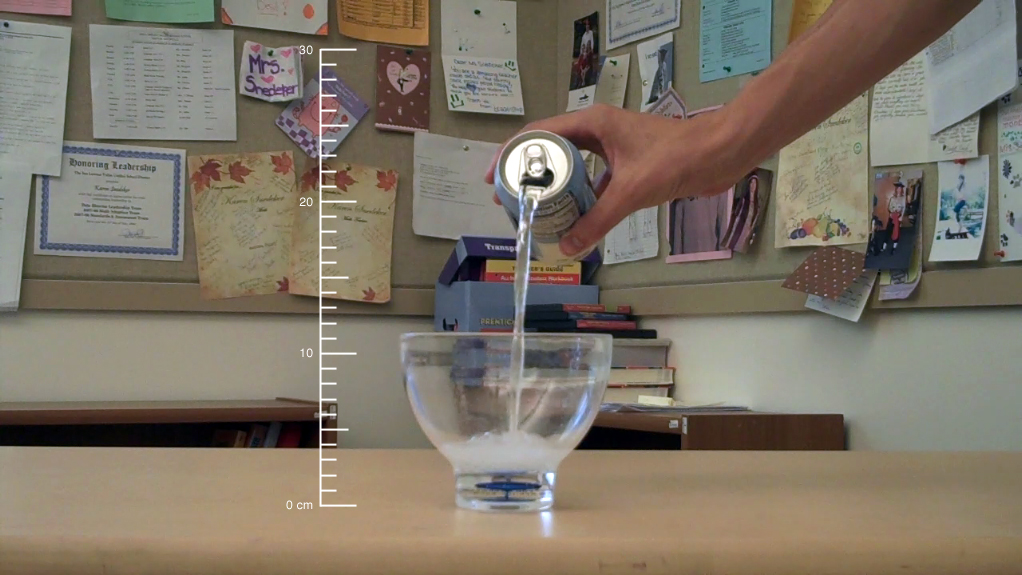
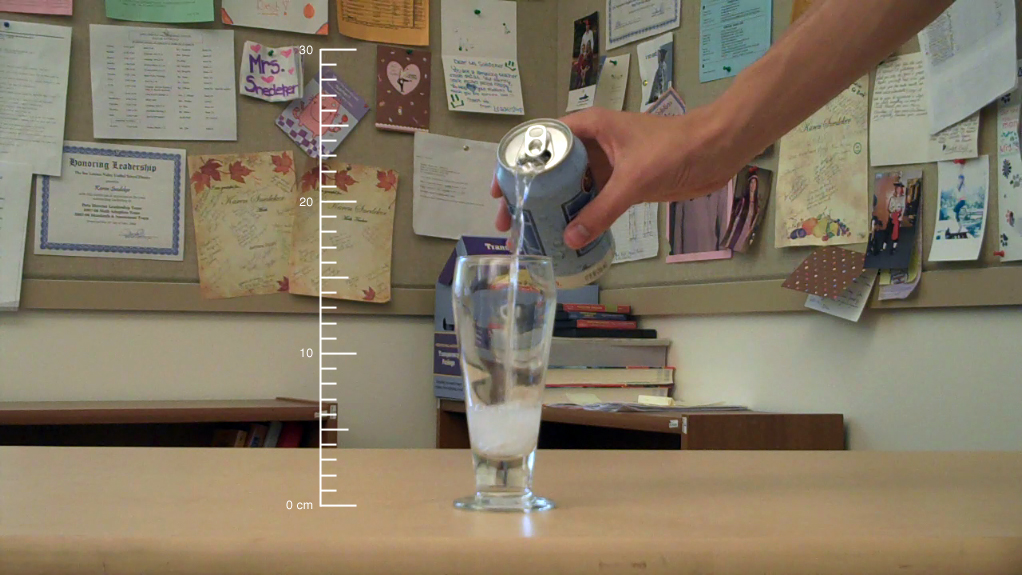
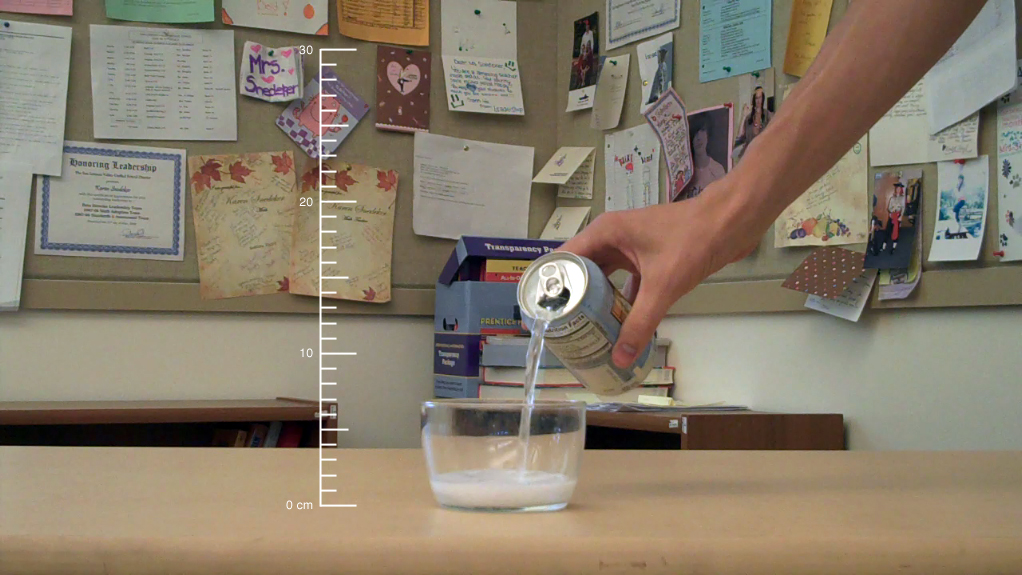
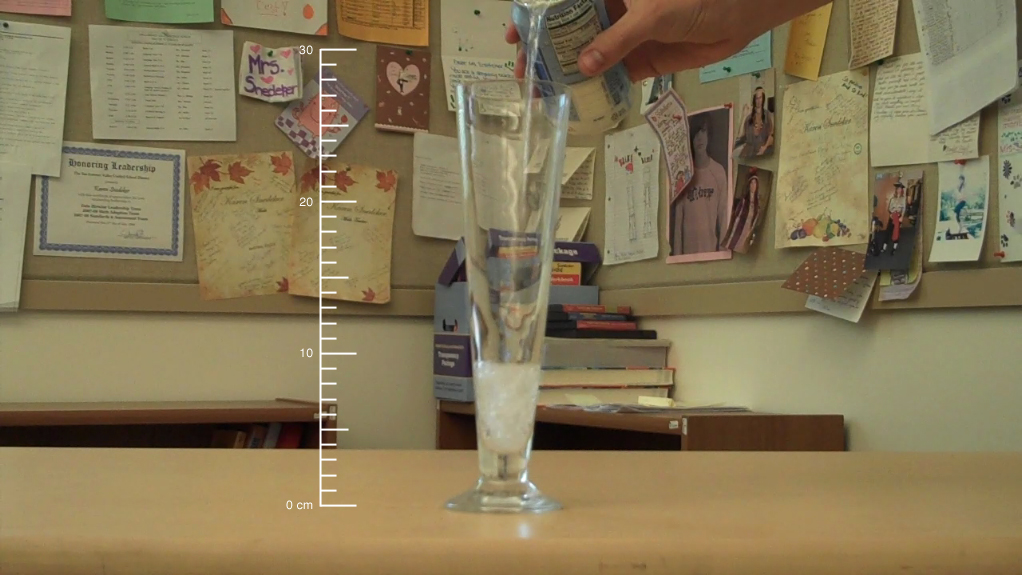
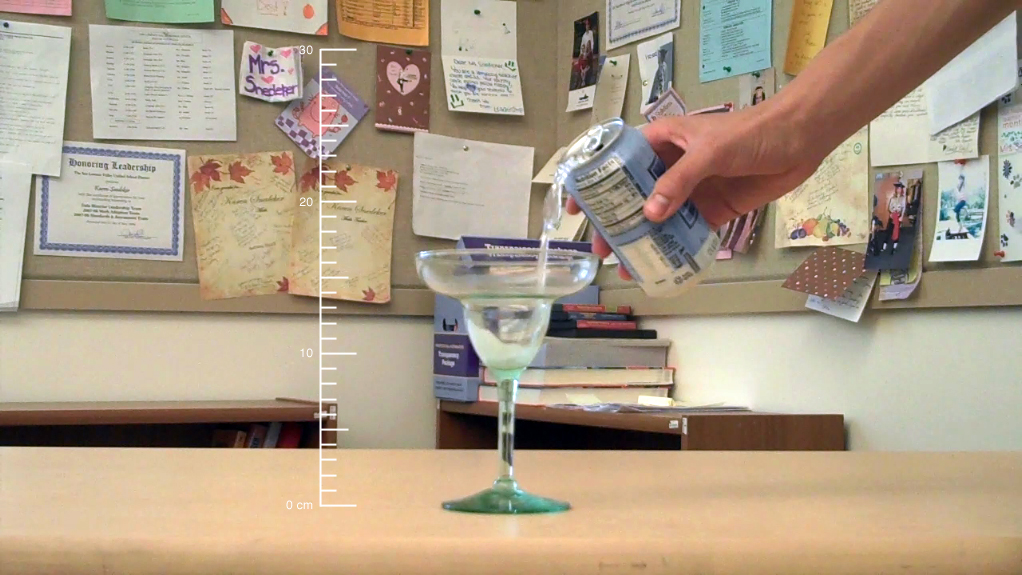
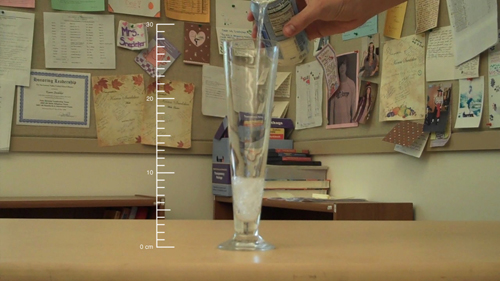
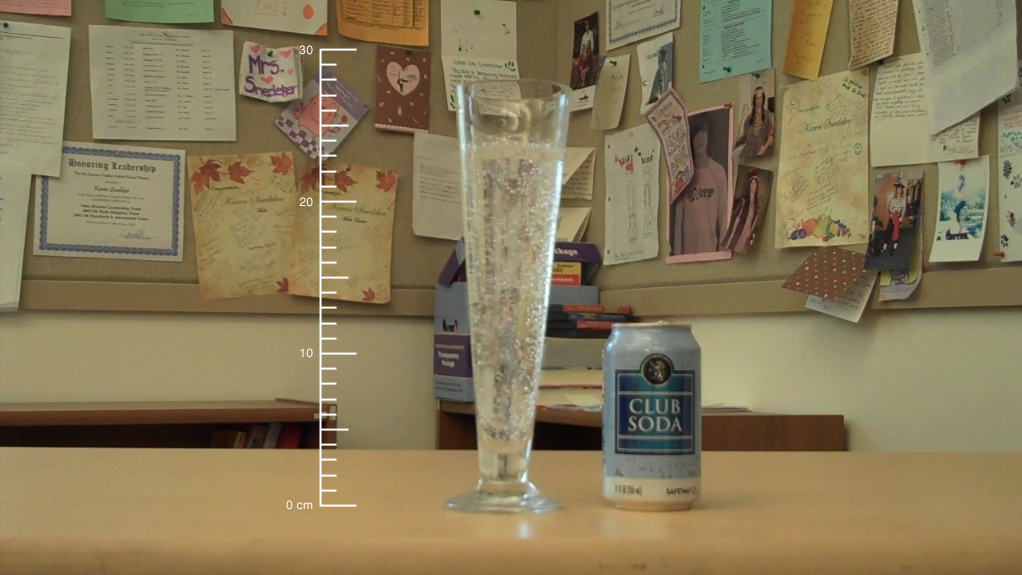
With the question, “how high will the club soda go?” we have taken WCYDWT media into calculus, which is fun.

It’s important with these media-based math questions that you have on hand a) answer media (like this, showing how high the club soda went) that students can contrast against their own work, and b) iterative practice problems that scale in difficulty.

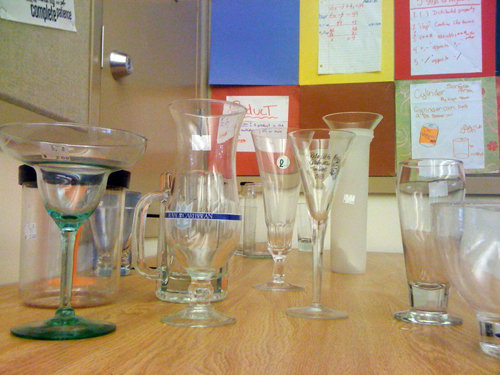
Maybe you start with i) the cylinder tumbler, building towards ii) angled, linear sides, moving through iii) the parabolic bowl, and culminating with iv) the piecewise monstrosity that is the margarita glass, which, it turns out, holds exactly 12 oz. of club soda. I only know that to make WCYDWT media worth your while, you must iterate them.

[Click each for high quality.]

What Is Thirty Minutes Worth?

These two photos go a long way to summarize the transformation of Dan Meyer circa 2003 into Dan Meyer circa 2009. I lifted the first one off an advertising kiosk in the Minneapolis-St. Paul airport in June and used it last week in a discussion of similar figures.

The second photo shows what $17.00 and thirty minutes will buy in Abbot’s Thrift Store where, last week, I walked around agog at all the interesting glassware and rolled them around on the floor whenever the clerk wasn’t looking.

In 2003, I would have counted that half hour as a regrettable casualty of a demanding job, but I realize now that the calculus is much trickier than that. I realize now that the return on that investment of thirty minutes of my personal time isn’t the promise of more personal time later. (ie. “I’ll get to reuse this next year.”) Rather it’s the promise of easier and more satisfying work time now.

The question I suppose I’d put to my younger, narrower self is: how much personal time would you give up every day if it meant that your students would be, on average, excited to come to your class? Would you give up thirty minutes every day if it meant that driving home that afternoon you’d feel flush with connection to other people and assured of the relevance of your work to the world your students see in thrift stores and airport concoursesIt’s worth a footnote to mention that I become more and more thrilled by Algebra every new year I teach it. Thrilled.? I think my younger self would go for that. Especially when the alternative, driving home, was this sort of sterile sense of basic competence and the freedom to do whatever completely forgettable things I did with all that free time back then.

The magic isn’t in keeping work and play as far away from one another as possible. If I can get to that understanding with someone, if I can convince a new teacher of that, then we can talk about the best investments for those off-contract hours. But until we get to that point, it’s all seating charts and pyramids of intervention and my heart just isn’t in it.