Pseudocontext sends two signals to our students, both false:
- Math is only interesting in its applications to the world, and
- By the way, we don’t have any of those.

Pseudocontext sends two signals to our students, both false:
Kate Nowak, on the grand finale of Pseudocontext Saturday:
I realize this is going to sound urban legendy, but I know someone who knows the teacher who wrote this question [..] And, the story goes she wrote this question as a joke. As in, as a lark she wrote something so bad and ridiculous that it would never be used. And then they put it on the exam.
Nope nope nope. No way. Not buying.
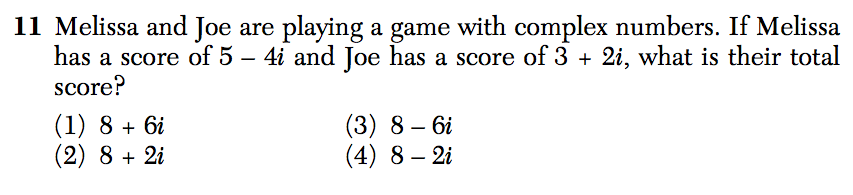
This is completely subjective, but Peter Brouwer sent in the problem that I thought satisfied both halves of the working definition of pseudocontext in the most spectacular fashion. This is it. This is as bad as it gets.
From the June 2001 Math B New York Regents examination [PDF]:
Jo Boaler gets the last word:
Students do however become trained and skillful at engaging in the make-believe of school mathematics questions at exactly the “right” level. They believe what they are told within the confines of the task and do not question its distance from reality. This probably contributes to students’ dichotomous view of situations as requiring either school mathematics or their own methods. Contexts such as the above [pseudocontext], merely perpetuate the mysterious image of school mathematics.
That’s it. Thanks for pitching in.
These are submissions I received that didn’t seem to fit the criteria. This isn’t to say they’re great problems. This isn’t to say that I’d throw water on any of these problems if they were on fire. This isn’t to say that they’ve even represented or examined their context well, just that the context itself isn’t pseudocontext.
McDougal Litell’s Math Course 1:

Barbara Panther
McGraw-Hill’s Total Math – Grade 6:
Bill goes to a farm and sees cows and chickens. He counts 6 heads and 18 legs. How many of each animal does he see?
Haese and Harris Mathematics for the International Student.:
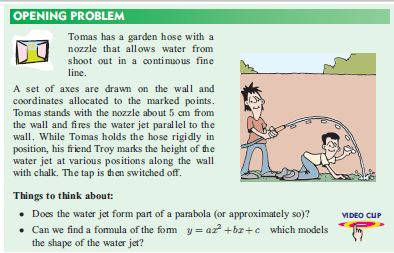
Jeff Bowlby
McGraw-Hill’s Algebra 1:
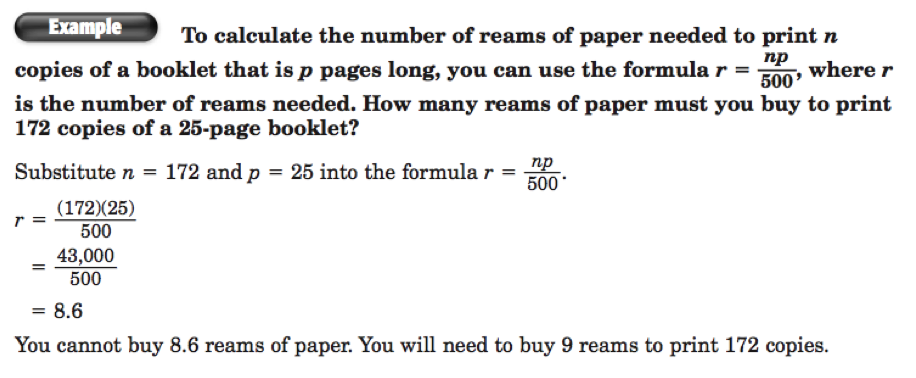
EdExcel International’s Longman Mathematics for IGCSE Book 1:
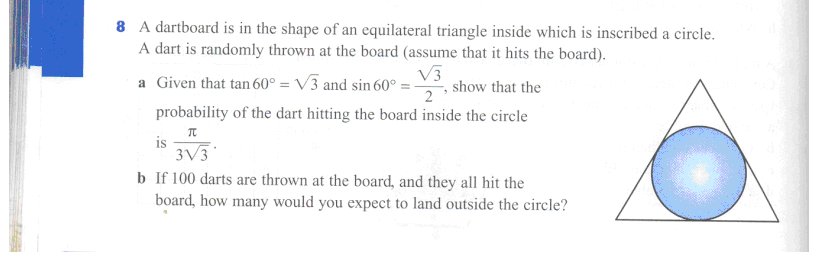
Scotland National Examination:
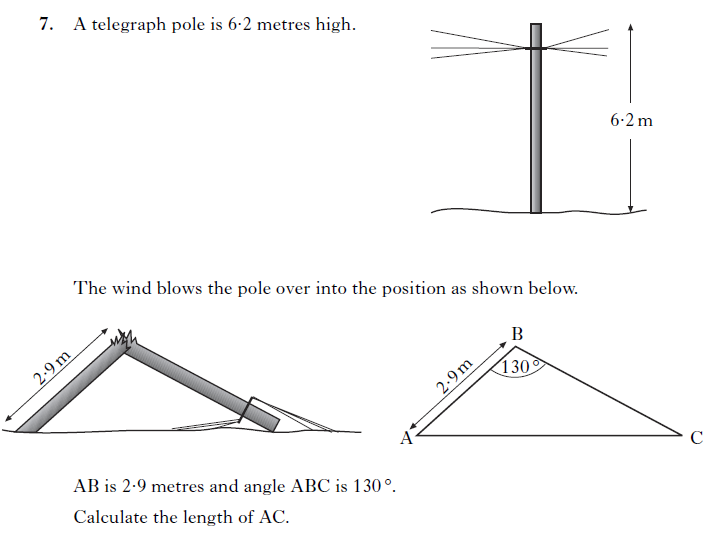
Christine Lenghaus
Australian Year 12 Exam:
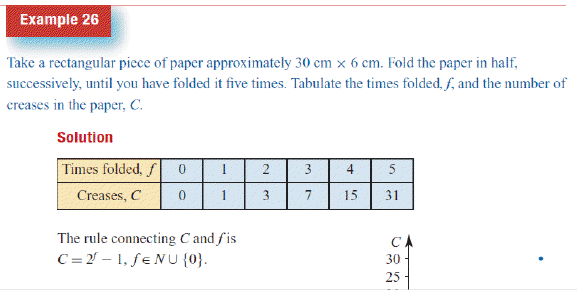
Pearson’s Algebra 2:
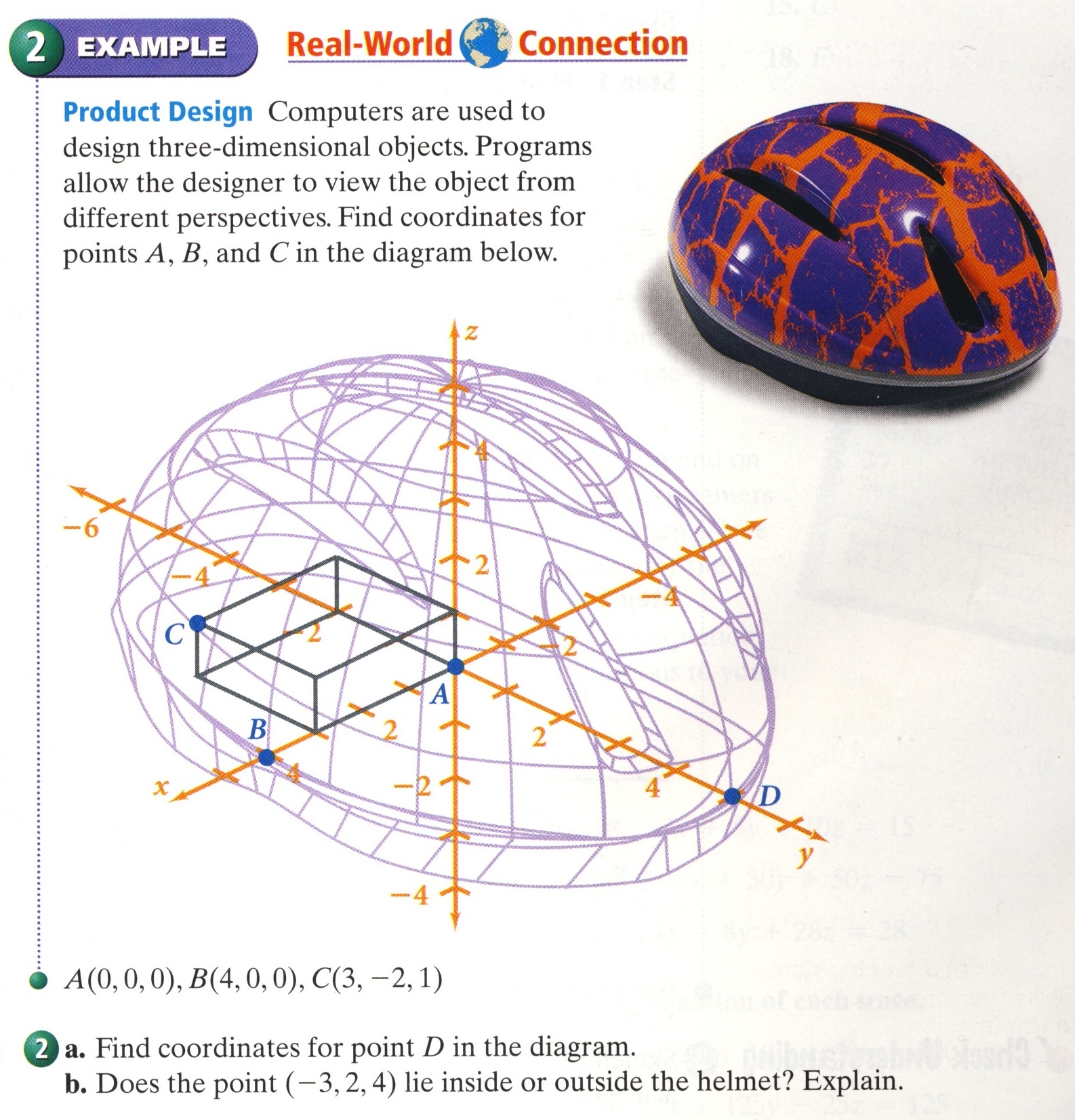
Steve Bullock
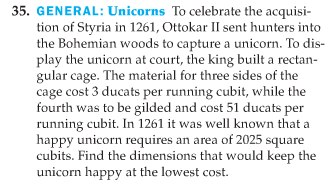
Unknown:
Here are three problems that satisfy the second half of the working definition of pseudocontext. I cop to a lot of guilt at the end of this post.
Prentice Hall’s California Mathematics – Pre-Algebra:

Kevin Krenz
McGraw-Hill’s Mathematics: Applications and Concepts, Course 3:
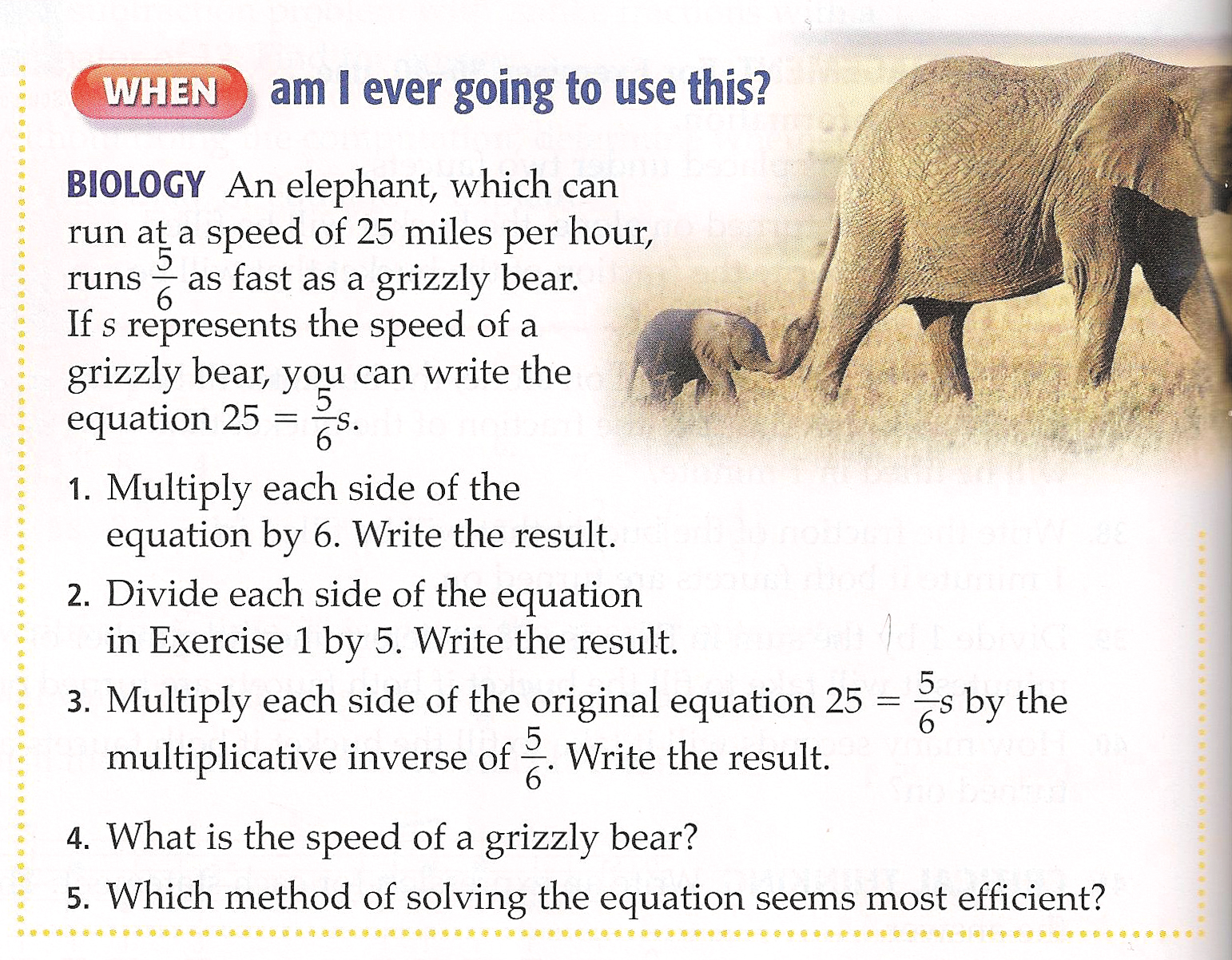
McGraw-Hill’s Algebra 1:

Can you spot the common problem?
The author has fit an equation to a context that doesn’t want or need it. Does anybody think the elephant/grizzly problem would be any less engaging if we just described “a mystery number, five sixths of which is 25?”
And I’m guilty. When it comes to systems of equations, I shake a handful of coins and ask students to write down how many coins they think they hear. We trade guesses and I tell them “40 coins.” The best guesser gets some love from the class. Then I ask them to tell me how much cash they think I have in my hands. They ask me for the denominations of the coins. (“Nickels and dimes.”) We trade guesses again, reveal the answer again (“$2.75”), and congratulate the winner again. Then I ask them if they think there’s more nickels or dimes and why. Then we figure out the answer exactly, first by guess-and-check, then by systems of equations as I introduce an unmanageable number of coins. Then I confirm the answer visually.
But seriously: nothing inherent to a handful of nickels and dimes would lead a student to formulate and solve this system of equations.
n + d = 40
5n + 10d = 275
Nothing. Our arrival at that system of equations was painless only on account of a lot of coy teacherly showmanship. Does that theatricality – the shaking coins, the cocked eyebrow, the dramatic pause before the question, none of which is included in the problem as written in the textbook – inoculate the pseudocontext? Am I absolved if I don’t pretend this is (as elephant/grizzly puts it) “when you’re going to use this?” I’m not sure. I’m only sure that implicit in my use of pseudocontext here, whether I’ve inoculated it or not, is the admission that I’m empty-handed when it comes to a real context for systems of equations. I’m admitting that we only use this stuff in silly games.