Category: series

Total 134 Posts

What I Would Do With This: Glassware

If you have never rolled a cup across a flat surface and marveled at how precisely it returns to the same place you rolled it from, it’s possible you’re the wrong audience for this post.
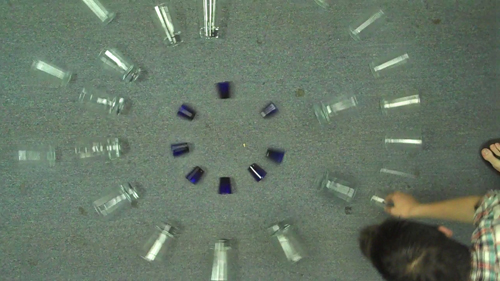
There is math here, certainly, but I have made it a goal this year to stall the math for as long as possible, focusing on a student’s intuition before her calculation, applying her internal framework for processing the world before applying the textbook’s framework for processing mathematics.

Bad First Question
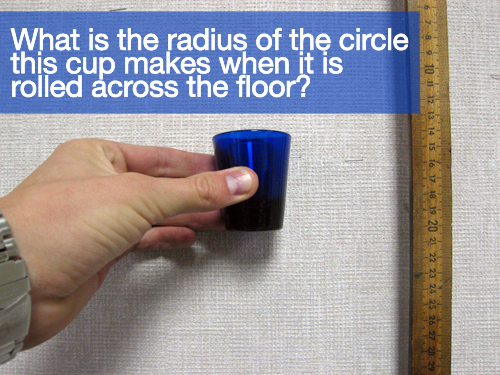
This one sucks the air right out of the room. We’re into the math immediately, having bypassed several easy opportunities to pull in our students who hate math… and, when those students comprise your entire class, good luck with that..

Jason’s First Question

Jason Dyer suggests handing out plastic cups, letting students roll them around, then asking “why do they do that?” I have no problem with this approach. I would like to start from a position of stronger student investment, though.

My First Question
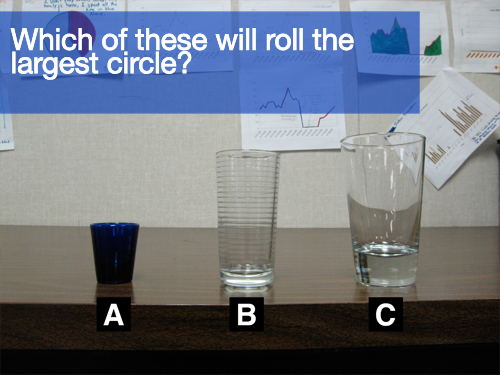
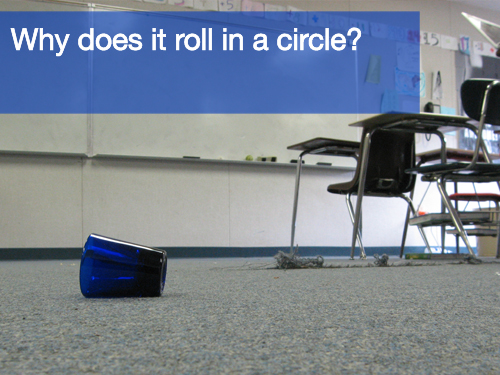
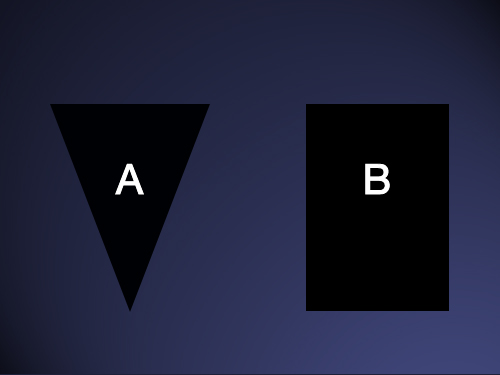
Have them roll some plastic cups around. Then toss up this slide and ask them a question that has a correct answer, yes, but which attaches little stigma to the wrong answers. It’s an educated guess and different students will make persuasive cases for all three of these. Ask them to write their guesses down, to put them on the recordIt’s extremely helpful here that the tallest glass doesn’t make the largest circle..

A Lesson Sketch

The conversation can then proceed along some interesting lines where you ask the student to:

  1. justify her guess.
  2. draw the kind of cup that will roll the largest circle using a fixed amount of plastic. This is fun. Many will draw a really tall cup, which isn’t the best use of limited material. A two-inch-tall cup can roll a circle that’s a mile wide.
  3. make their ideal cup from a page of card stock. The fixed size of the card stock will normalize the results.
  4. draw a complete picture of their cup including the auxiliary lines. Can they find the invisible center of the circle it will roll? What’s the method?

We do all of this before we start separating triangles, before we write up a proof, before we generalize a formula. We ask for all this risk-free student investment before we lower the mathematical framework down onto the problem.
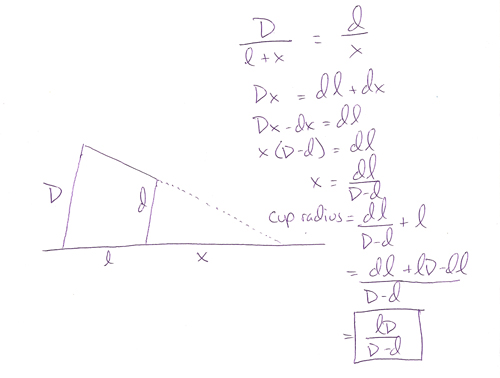
Degenerate Cases

A cool feature of this formula is how well it handles degenerate cases. For example these two:
  1. A cone’s roll-radius is the same as its slant height so letting d = 0 should (and does) eliminate D from the formula.
  2. A cylinder will roll forever so letting D = d should (and does) return an undefined answer.

Iterate

From there you can pull out of your cupboard (digital or otherwise) any random set of cups and the students should be able to predict the roll-radius within a small margin of error.

And the framework grows stronger.

A Parting Swipe At Textbooks

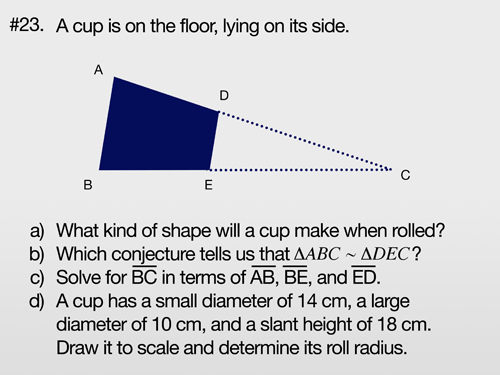
I didn’t dig this out of a textbookh/t Mr. Bishop, Summer School Geometry, Ukiah High School, 1997. but this (hypothetical) scan highlights the difference between my math pedagogy and my textbook’s.

What Can You Do With This: Glassware

[Updated here with my response.]

Click through to view embedded content.

Two things:

  1. It isn’t “what question can you ask?” but “what can the students do with it?” What is your lesson plan here?
  2. If Jason Dyer doesn’t come around to tell me I’m doing this wrong, I’ll be very surprised.

[high quality: photo, video]

[BTW: I updated the original image because josh g. is exactly right.]

What Can You Do With This: Other People

Kate Nowak: Demon Mathematics

Kate posted a clip which exposes the profits oil companies make by working the rules of rounding to their advantage. It’s mathematically engaging and relevant and well worth dropping into some dead air at the end of class.

But I don’t know what the kids do with it.

Mostly, it runs afoul of the rule of least power which, for our purposes, means the medium has to hint at a question while leaving several square miles of pasture open around it for student exploration. This guy, in contrast, lays out an explicit thesis and supports it completely, leaving little room for inquiry.

Denise Gaskins: Quiltometry

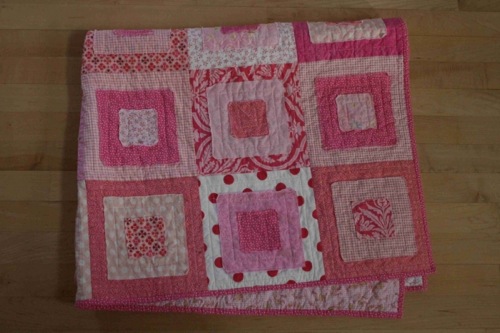
Your mileage will vary, obviously, with your class’ enthusiasm for quilting. I appreciate this, though, because it doesn’t just beg that wormy chestnut, “what shapes do you see here?”

Three notes:

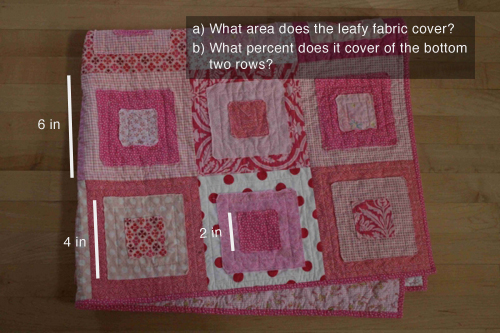
  1. Ask: “how many different kinds of fabric do you see in the bottom two rows?” a question which anyone, regardless of mathematical ability, can answer or guess at. (Similarly: the question “will the ball hit the can?” is a prelude to mathematical inquiry but isn’t, itself, strictly mathematical.)
  2. Then ask: “how much of each kind of fabric do you need to quilt the bottom two rows?” a question which is unanswerable without more information. This begs the very, very valuable student inquiry, “what information do I need here?” and the very, very cool lazy-student follow-up “what is the least amount information I can get away with knowing here?” ¶ From there you can go lots of fun places, some of which might involve the practicality of purchasing fabric in one-yard increments with a fifty-four-inch bolt width, something I would know absolutely nothing about.
  3. Textbooks ruin these problems:

    Be less helpful, etc.

[photo credit]

Flight Control / Lesson Plan

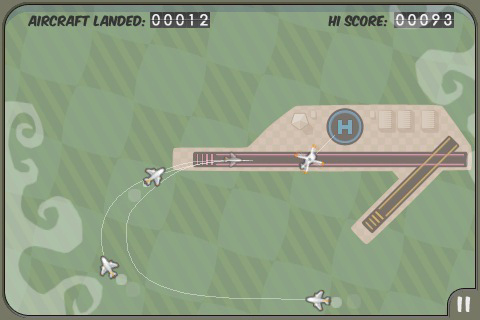
I love the iPhone game Flight Control for all the reasons I love a good lesson plan.

  1. It builds from a simple, visceral premise. “Land the planes. Don’t let any collide.” ¶ Which packs the same clear punch as “what is the combination?
  2. Harder, differentiated challenges arise naturally from that premise. Which is to say, as you get better at the game, it doesn’t just double the speed of the planes or throw up concrete clouds or reverse the controls. It introduces different planes into the airspace, planes which move slightly faster. ¶ In the same way, a good lesson plan doesn’t adapt itself to faster learners by doubling the length of the same problem set or imposing artificial constraints like, “what if one of the buttons was broken?” It tells the learner, “okay, we dusted the lock for prints and found out that these four numbers get pressed a lot. What can you do with this?”
  3. Those new challenges necessitate new skills. In its early stages, Flight Control accommodates a player’s sloppiness but when you have three 757s approaching the landing strip and three helicopters holding in a pattern you have to keep your approaches extremely tight. ¶ The combination lock forces the need for permutations.
  4. Those new skills are assessed simply and clearly. A lesser game would assign separate point values for larger planes or include bonus multipliers. Flight Control assesses your skill along one simple metric: “How many planes have you landed?” ¶ After all the calculations in “Will it hit the can?” the assessment was simply “Were you right?”

Not every game or lesson can accommodate this aesthetic. Nor do I expect them to. But these are my favorite. These are my students’ favorite. And they are too few and far between. We need more.

My Lesson Plan: The Door Lock

Michael Caratenuto:

Personally, I think that this particular image lacks opportunities for inquiry. Perhaps if it was presented with other kinds of door locks leading students to come up with and answer the question, โ€œwhich is the most secure lock?โ€ [emph. added]

This is exactly right. The latest WCYDWT? installment has provoked the usual litany of Really Interesting Bite-Sized Questions, the sort of prompts that will play great in the Applications & Extensions & Assorted Mindblowers section of your lesson plan but which, on their own, aren’t a lesson plan. Those questions don’t provoke the kind of iterated, increasingly difficult practice that students need for skill development.

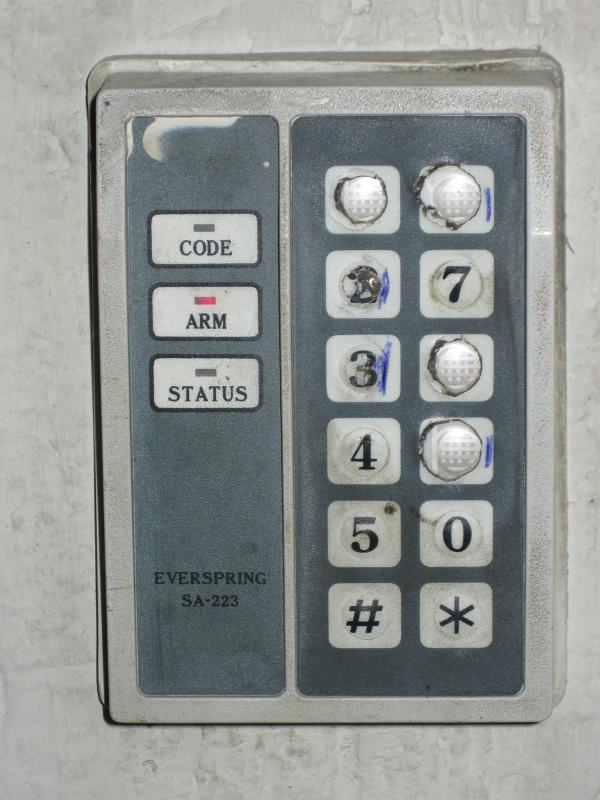
Again, this image on its own is insufficient. With some creative modifications, however, it will carry you through permutations. Here is that lesson plan in its broadest strokes.

Start with the image.

Tell them the code is 1 digit long. Tell them the code is 2 digits long. Tell them it’s as long you want it to be. I respected the rule of least power here, which meant that when I took this photo I tried to stay out of the way of your lesson planning. Have them write down all the possible codes for n=1, n=2, n=3, etc. The increasing obnoxiousness of the task will motivate a formula for the general case. That’s arrangements.

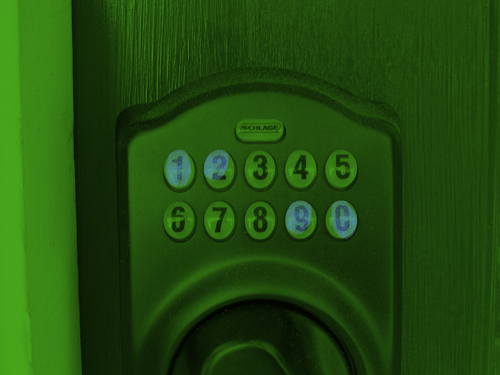
Tell them the lock is a 4-digit lock. Now turn on the blue light.

Ask them to list the possible codes. You can iterate this a bunch of times until they have discovered on their own this tool that mathematicians call a factorial.

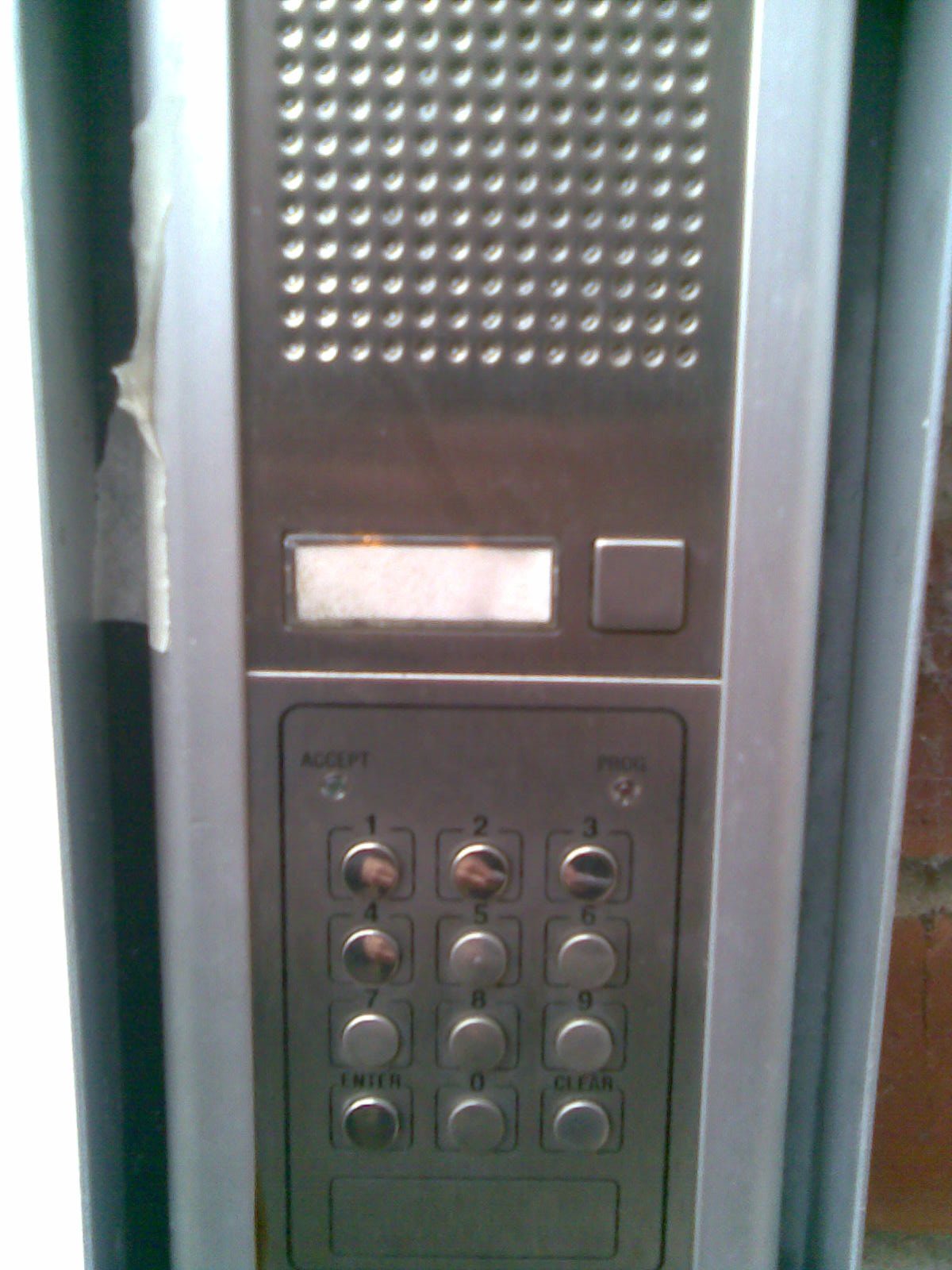
Remind them it’s a 4-digit lock. Then put up this image. It will be confusing, but only for a second. Ask them to list every possible code.

Iterate this with two and three buttons until they have generalized permutations. Then maybe you iterate the entire thing with another keypad lock.

Then maybe you dip into the comments of the original WCYDWT? post and help yourself to some very-interesting follow-up questions. I recommend Alex’s.

Let me close by saying how shocked I am at how little all of this costs.

[Update: Bruce Schneier has a good follow-up on information leakage. Two photos.]

[Update II: due to the peculiarities of many car door locks punching in “123456” tests both “12345” and “23456.” Consequently, there is a number string 3129 digits long that will test every five-number comination.]

[Update III: more information leakage.]

[Update IV: more information leakage.]