Category: series

Total 134 Posts

Great, Great News For WCYDWT Enthusiasts

Statement of the Librarian of Congress Relating to Section 1201 Rulemaking:

Motion pictures on DVDs that are lawfully made and acquired and that are protected by the Content Scrambling System when circumvention is accomplished solely in order to accomplish the incorporation of short portions of motion pictures into new works for the purpose of criticism or comment.

It was getting to be a huge pain propping my Hi-8 camcorder up on a tripod in front of my TV just to grab clips from NBC comedies. [via]

What Can You Do With This: Yellow Lights

Naples Daily News:

According to county guidelines, yellow lights should be on one second for every 10 miles per hour of the speed limit. With a 45-mph limit on Collier Boulevard, the yellow light should have been on for 4.5 seconds. Instead, it was only about 3.8 seconds, Mogil said.

Yellow Lights – Kannapolis, North Carolina from Dan Meyer on Vimeo.

So I’m thinking about an ongoing classroom project, something that includes a wall map of the county, push-pins marking off claimed intersections, students collecting data with stopwatches or cameras, developing (what seems to them) a fair algorithm for the duration of yellow lights, then researching the county code to determine the actual algorithm, finally marching down to city hall to call the mayor on the carpet (if need be) for his reckless disregard for public safety in pursuit of a little extra revenue.

The math isn’t terribly difficult here – algorithm development, some discussion of domain, data visualization – but it’s the sort of project a) that takes place largely outside of class, and b) that stitches a class together, united against The Man, in a way that’s hard to reconcile with the usual instructional value calculus. (ie. how many hours of class time would you spend to create this kind of community out of your classroom? At their twenty-year reunion, will your students remember their investigation of cylinder surface area or the time they brought down city hall?)

Also, I should point out that the first thing I did when I rolled into Kannapolis, North Carolina, last Monday was shoot video of twenty traffic lights. Because I am often little more than a breathing apparatus and a set of limbs for whatever muse puts these ideas in front of me and I have to keep her happy.

You Don’t Have To Be The Answer Key

a/k/a Annuli Follow-up

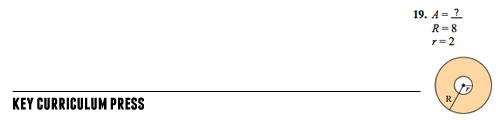
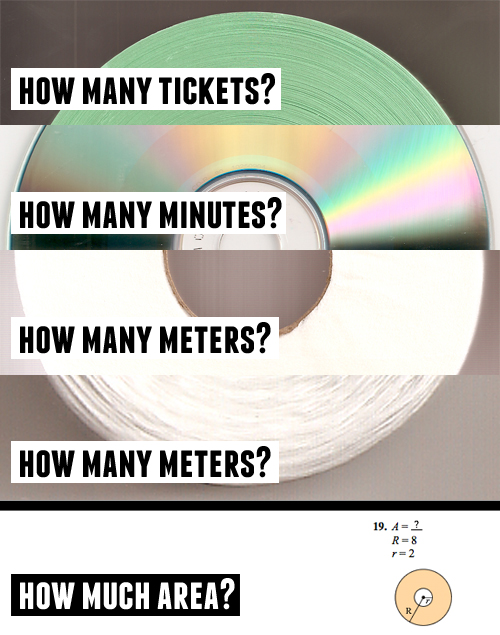
Is there any advantage to these images over the analogous problem in a textbook?

I vote “definitely, yes.” The first four of these questions offer two enormous bonuses on top of the fifth while assessing the same skills.

The first is that you can guess them intuitively before you answer them mathematically.

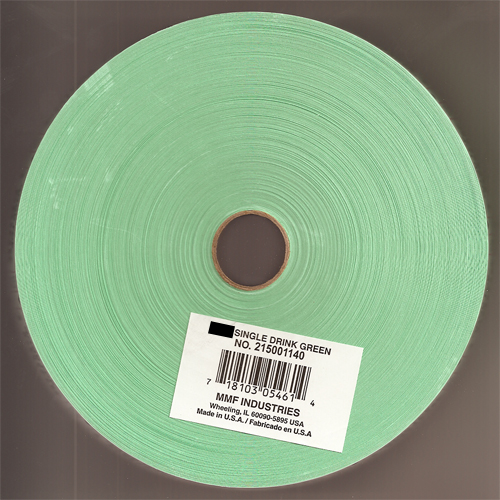
What do you think? 500 tickets? 5,000 tickets? 50,000 tickets?! Give me a wrong answer. Give me an answer you know is too high. Give me an answer you know is too low.

I spent six years looking for high-yield techniques to draw students who hate and fear math into conversations and then calculations about math. Given another six, I’m sure I’d find something more effective but that right there is the best I have. It costs you nothing and it gets them talking. It gets them interested in an outcome. It gets them interested in the tools to determine that outcome.

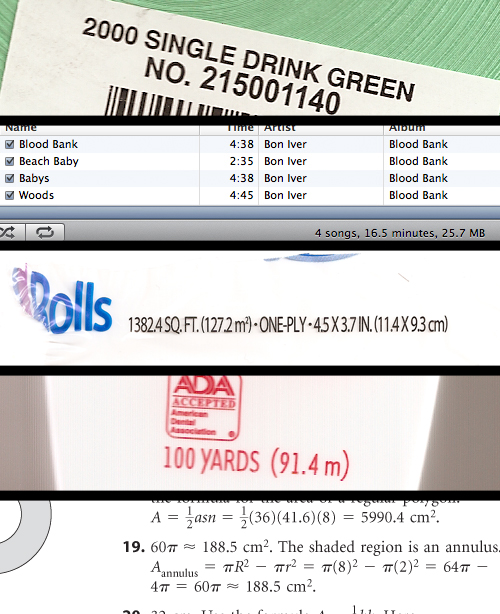
The other advantage to this curriculum is that the student doesn’t need the teacher to verify the answer.

I usually envy all the fun ELA instructors get to have with their students. Not here, though. ELA instructors have to grade essays using subjective measures of form and content. “Was my thesis coherent?” the student wonders. “Was my essay persuasive?” The student waits for the instructor to render judgment. This is necessary, I suppose, but it’s also adversarial and it forces the teacher to double down elsewhere to restore a spirit of collaboration to the relationship between teacher and student.

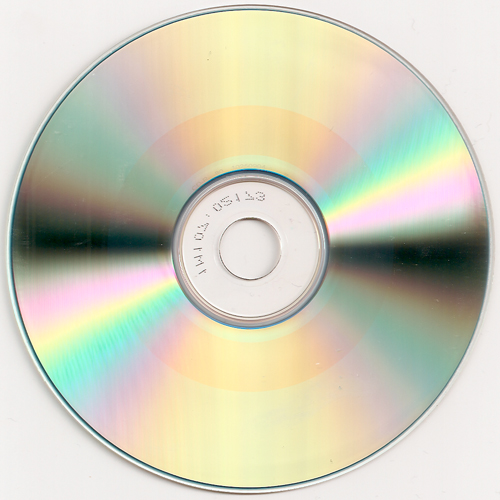
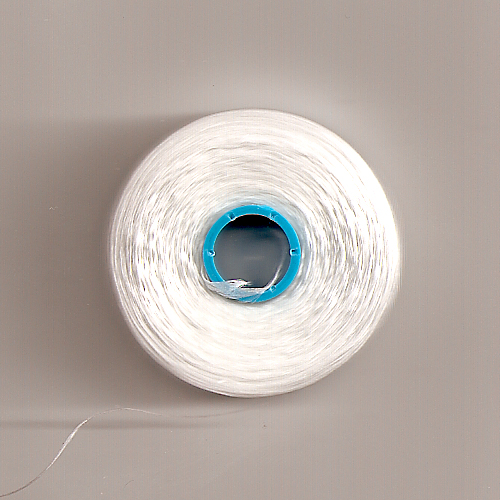
Meanwhile, my math student wonders, “Was my original guess correct? Is my math right?” to which I can respond, “Beats me, man. Let’s find out.” And we count up the tickets. Or I show them the playlist from which I burned that CD. Or we measure the toilet paper. Or we look at the front of the dental floss container.

Every answer but the last one disposes the student to see that math makes sense on its own terms, that math coheres to the world, that math exists apart from her teacher’s say-so. Her teacher doesn’t determine the correctness of her answers.

This did wonderful things for my relationship to my students. At our very best, we became peers, collaborators, and co-conspirators in the creative exercise of mathematics.

2012 Mar 12: “It”™s Killing Me. I Gotta Know.”

2012 Dec 12: Watch Students Watch The Answer To Their Math Problem

2013 Feb 14. Mr. Ward has another illustration.

2013 Feb 27. The conclusion of the Barbie Bungee activity has students testing out their predictions, making sure their bungee cord is long enough for Barbie’s head to come close to the ground but short enough that it doesn’t touch the ground. Kids flip for this, apparently. Here are examples from different teachers’ classrooms:

2013 Feb 27. Brian Miller’s class solves The Bone Collector challenge and watches the answer.

2013 May 11. Nat Banting’s students “gave a round of applause” when they saw the end of Toothpicks.

2014 May 19. Reader Amy Hughes writes in:

After some work on rectangular prisms with 6th graders, we worked on the file cabinet problem. It took all week to weave the videos into our work/homework, etc but on the final day, when the last post-its are being place on the cabinet, the bell rang and students would not leave the room until their calculations were verified – it was awesome to see them care that much.

2014 Aug 1. Kate Nerdypoo:

They would literally CHEER and high five when they discovered they had the right answer.

2014 Dec 28. Nat Highstein:

… in my experience, this is not your typical reaction to getting the right answer on a math problem!

2015 Sep 9

2015 Sep 29

2015 Oct 2

Mary Bourassa:

At this point one student was about to leave the room and said “I’ll wait because I need to know how this turns out!” – how cool is that?

2016 Feb 07.

2018 Feb 26.

https://twitter.com/nik_nak36/status/966872882503598080

2018 Feb 28.

2018 Jun 10

2018 Nov 13

https://twitter.com/KLicK816/status/1060600748440993793

2018 Nov 14

2019 May 20

2019 Aug 2

2021 Feb 26
What Can You Do With This: Annuli

I don’t foresee any slack to these features when I’m in grad school. Math is just too fascinating; problem solving is just too fun.

What fascinating math can you find in these scans? What fun problems could we solve here? Are these multimedia in any way superior to the annulus problems in your Geometry textbook? Are they just shinier?

Tickets

CDs

Toilet Paper

Dental Floss

Teaching WCYDWT: Misconceptions

It’s my fallen nature to blog about successes more often than failures. The balance with WCYDWT, though, is especially out of whack. I had a productive conversation with Jackie Ballarini at NCTM earlier this year that reminded me to rein in certain misconceptions.

So I’d like to clear my throat here. I hope to assure you that I’m just as much of a hack as anybody with this stuff, though I’m a really happy hack.

Here are the facts:

We don’t do WCYDWT every day in my classes.

Most of my teaching strays only four or five degrees from the path beaten by my textbooks. We do a full WCYDWT unit – the kind of home run that I post here – perhaps once every two weeks. Naturally, that pace picks up every school year as I swap out old parts for new and as more of y’all do that hard work for me.

We do tell mathematical stories every day, though they’re often brief.

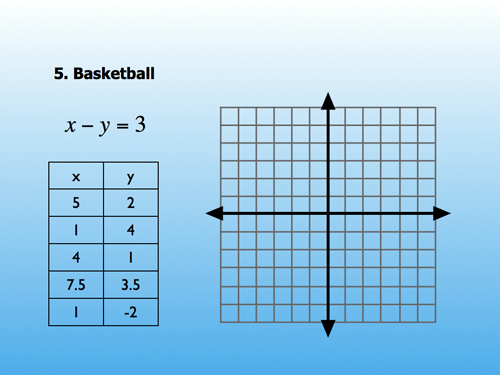
For example, we did a few problems with standard form lines last week. I put up an empty graph, a table of coordinate pairs, and a standard form equation. “Who is the imposter?” I asked. “Who doesn’t belong?” The students then had two methods (graphing or evaluating) for determining the villain.

That’s probably the smallest unit of math storytelling I can offer. I didn’t shoot videos. I didn’t take photographs. I just reoriented my textbook’s existing activity towards drama.

You can do that tomorrow.

The home runs take a really long time.

If I posted it on this blog, it took me (on average) three hours spread out over three weeks. Some take a lot longer. Most require research.

For instance, I was in Chicago in early May with my family and we took a fantastic architecture tour. The tour guide offered me a gem of a WCYDWT idea so I interviewed him afterward. That led me to track down an expired building code from Chicago c. 1930. I’m now hunting down a book that’s out of print and absent from every public and commercial collection in Santa Cruz County. I can’t buy it. I can’t borrow it. I’m going to get it.

I file this in my day planner under “leisure time.” The process exhilarates me. My teaching is my life, in the healthiest possible sense of the expression.

Home Runs : Triples : Doubles :: 1 : 5 : 30

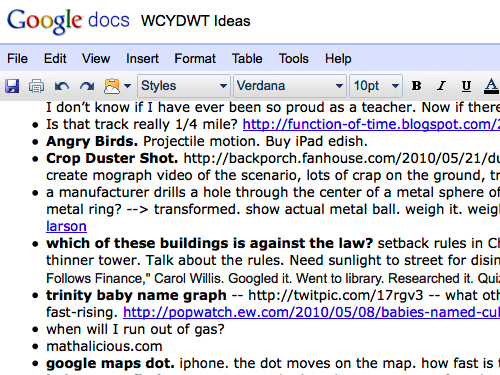
I have a document in Google with a few hundred WCYDWT ideas. I add to it weekly. Most additions contain just a sentence and a link.

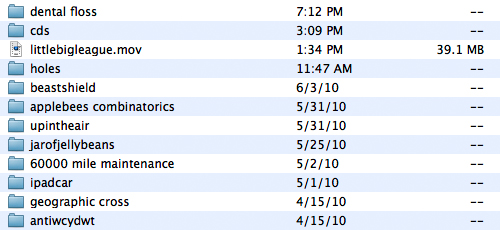
Then I have several dozen folders on my Mac. Each folder contains images, videos, Photoshop documents, Geogebra applets, and other files contributing to a story from the Google document that had to be told in greater detail, a story that was compelling enough to demand more of my time and attention.

For every thirty entries in the Google document and every five folders on my Mac, I post one WCYDWT entry here.

Of those three venues, the Google document is the most dear to me. It’s where I put inspiration. It’s how I convert inspiration into something, clearing it from my mental queue, freeing up room for more.

You can do that tomorrow.