Category: show and tell

Total 30 Posts

Show and Tell: The Superlative Edition

My classes and I have pushed through a lot of exceptional media over the last two weeks but, in the midst of a longer summary, I realized that only two matter.

Lines

The first is Maria Moore’s photoset, “Lines,” (click through “Portfolio” to “Lines”) one of the most impressive collections I have ever seen. Though I find the reasons difficult to articulate, I can say that if you’re the sort who prefers the forest to the trees (that is, if you’re unafflicted by any detail-oriented obsession) this may not grab you like it did me.
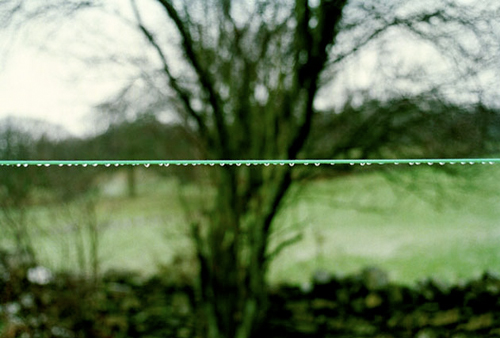
If, however, you’re the sort who can’t help noticing the perfect angles on a stop sign even as a parade tromps past, meet your muse.

Food Fight

A history of US military operations – from WWII through Enduring Freedom – re-enacted by each country’s national fast food. On technical merit, it’s flawless, from the sound design, which carries a huge burden, to its seamless blend of stop-motion and motion graphics.
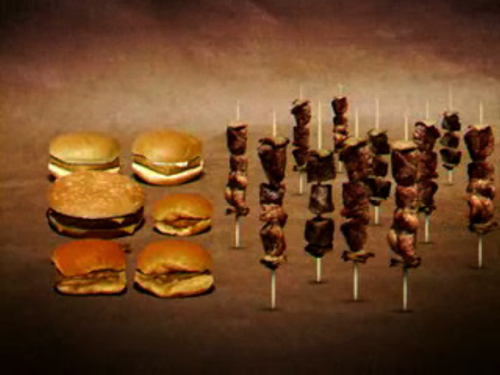
Its content is equally powerful and almost impossibly objective. The Cold War standoff is just a beautiful, succinct piece and I found myself even a little choked up when a tiny falafel ball sends a tall hamburger collapsing to the ground.

Please forward it along to a history teacher or a loved one or a loved history teacher. One of my students called it the best video he’d seen all year.

Update:

This thing just gets better. The filmmaker has a rundown of the conflicts depicted as well as a food-to-country cheat sheet. I had no idea beef stroganoff was a Russian thing. Awesome.
Anyway.

Been getting a little heavy around here with classroom management, so let’s toss out something inconsequential:

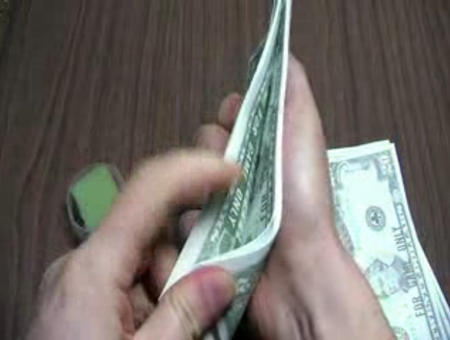
  1. How People Count Cash? Turns out they don’t just talk differently in other countries. Also turns out Afghanistan has us beat on style.
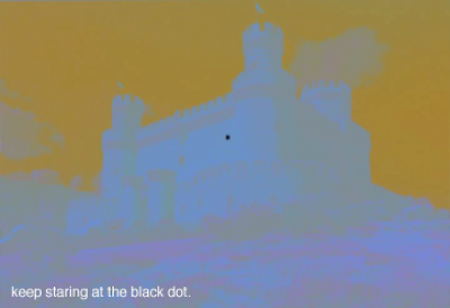
  2. Old Spanish Castle Optical Illusion. Which blew our collective mind. To keep this inside the PowerPoint family (if you don’t want to mess with Java in the middle of class) put the inverted image on one slide and the black-and-white image on the next in exactly the same place. Look at the first for thirty seconds and then advance the slide.
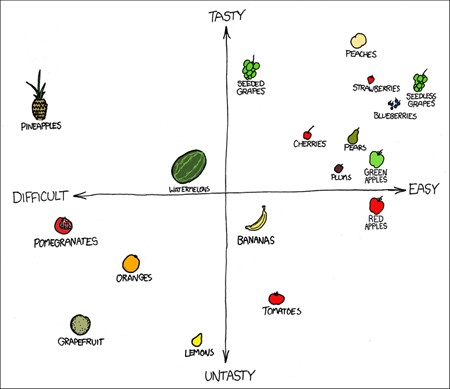
  3. F–k Grapefruit. Pointlessly profane but completely cool. I blocked off the cartoonist’s suggestions and had them toss out their own, which turned into a total melee, students throwing stones at each other over the right y-coordinate for cranberries.

    I realize this is totally soft math but I’ll absolutely defend the value of having these kids reframe their daily lives in mathematical terms. No one had considered fruit like this until today.

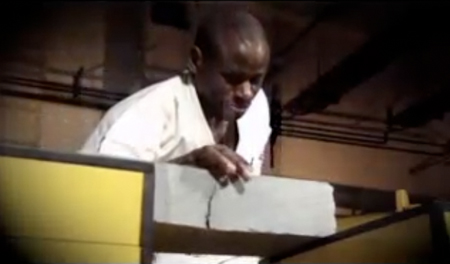
  4. Karate Slow Motion. A man shatters a brick at 4,000 frames per second, his entire forearm reshuffling itself grotesquely in less than a second. The kids insisted it was fake. I told them it wasn’t but I wished it was. Horrifying stuff.
  5. 41 Hilarious Science Experiments. Hardest I’ve laughed in several months.

And now back to your regularly scheduled handwringing.

2011 Aug 26: This is Dan from the future. It’s bizarre coming back to these posts where I didn’t realize I was teaching math with things like the tasty / easy graph. At this point, I’m still filing the things that will eventually define my career under a “Miscellaneous” category. I mean, look at that. The title of this post is “Anyway.” Like the tasty / easy graph isn’t one of the best introductions to the Cartesian plane ever. This is such a weird time capsule. Anyway. Here’s JL with some great comments on classroom implementation:

We started by graphing fruit on a coordinate plane where the y-axis ranges from “Tasty” to “Un-tasty” and the x-axis ranges from “easy to eat” to “difficult to eat.” Students were given 3 sticky notes and told to write a different fruit on each one. Then they went up and graphed them. They were asked to defend their ordered pair. If a student put Pineapple on the “easy to eat” side, there was an uproar of argument. Kids got really, REALLY into it.

Show and Tell: Decomposing Chocolate Hyenas

  • Footprint,” a time-lapse illustrating the decomposition of an aluminum soda can over fifty years. Great CGI. Kind of horrifying.
  • How to kill a chocolate bunny,” literally horrifying. There’s a shot halfway through with the chocolate bunny backlit by the heat lamp which blows my mind. Pink cacti, also.
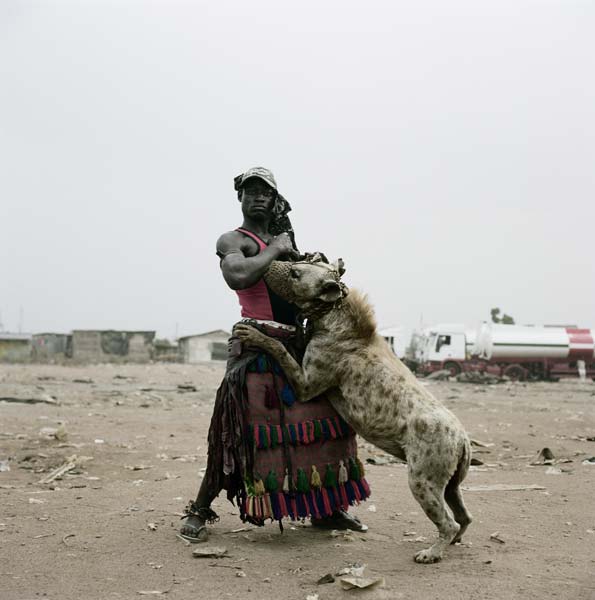
  • The Hyena and Other Men,” a photoset by Pieter Hugo out of Nigeria which can’t help evoking some conflicted emotions. There is power here which still photography rarely captures, the sort that left me keyed up and shaking a little. Nick and I agreed that if we maintained any kind of alpha-male bachelor sanctuary, you’d see an enormous Hugo print as you walked through the door. My pick:

Show and Tell

the photo sets:

  • 25 photos taken at exactly the right moment, a set which is exactly what you think it is.
  • Running From Camera, a German dude who sets his camera to a two-second timer and then sprints. If you’re gonna do any sort of long-term photo project, his set demonstrates the efficacy of a reference point. The dude’s blurry backside pins each photo down and lets your eyes wander off from there.
  • Washington, D.C., on $85 a day, a set which probably isn’t what you think it is. [Related reading: souvenirs.]

the video clips:

  • The Morning After, an awesome historical document, not of the actual (blasé) aftermath of Y2K, but of the worst-case scenarios we were all running through our heads on 31 December 1999.
  • 721 claps per minute, offering the quick, back-of-the-gum-wrapper calculation, how many claps is that per second?

for your consideration:

Keep cool with Coolidge. Vote dy/dan best new edublog and best individual edublog.