Michael Caratenuto:
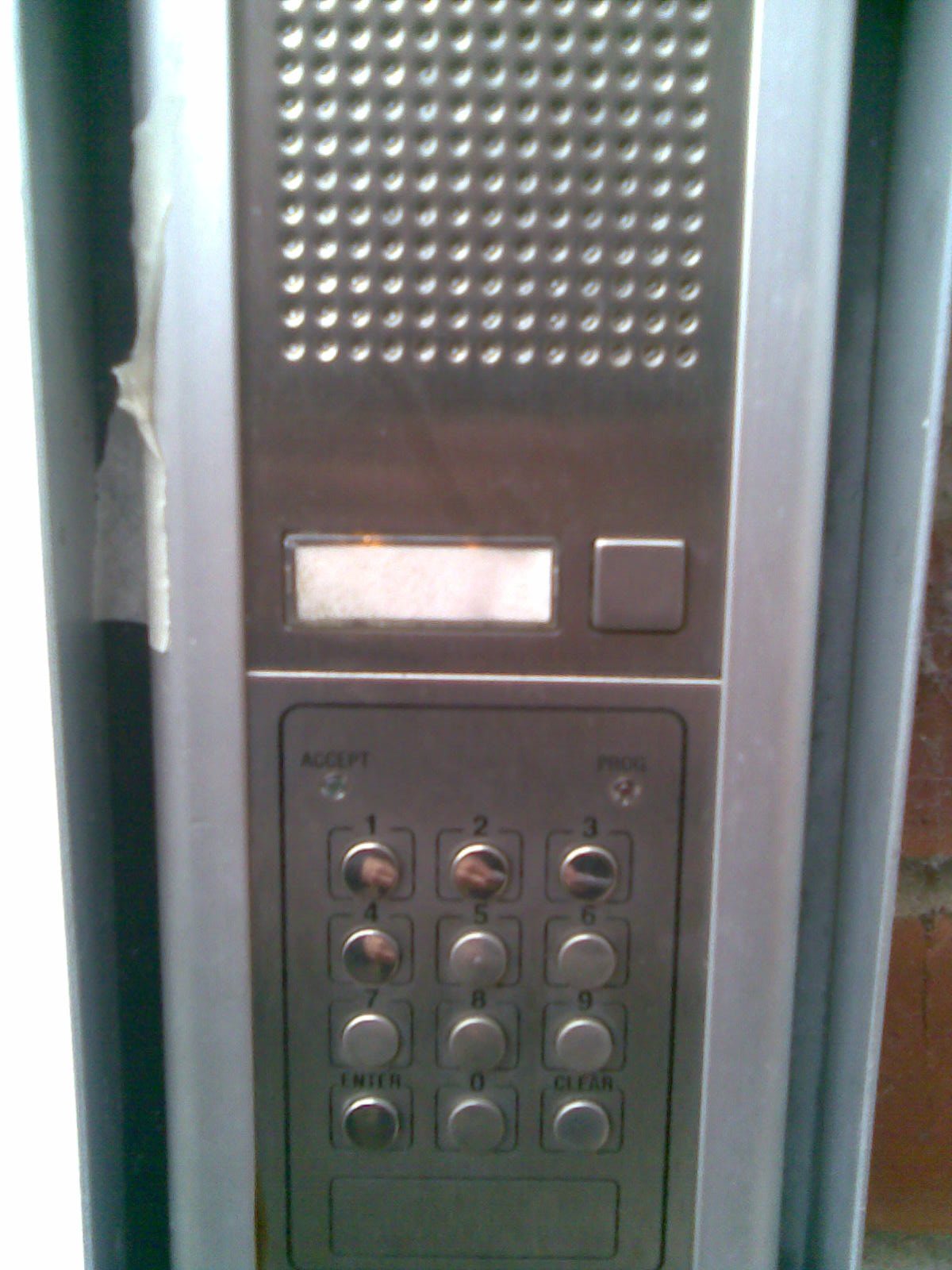
Personally, I think that this particular image lacks opportunities for inquiry. Perhaps if it was presented with other kinds of door locks leading students to come up with and answer the question, “which is the most secure lock?” [emph. added]
This is exactly right. The latest WCYDWT? installment has provoked the usual litany of Really Interesting Bite-Sized Questions, the sort of prompts that will play great in the Applications & Extensions & Assorted Mindblowers section of your lesson plan but which, on their own, aren’t a lesson plan. Those questions don’t provoke the kind of iterated, increasingly difficult practice that students need for skill development.
Again, this image on its own is insufficient. With some creative modifications, however, it will carry you through permutations. Here is that lesson plan in its broadest strokes.
Start with the image.
Tell them the code is 1 digit long. Tell them the code is 2 digits long. Tell them it’s as long you want it to be. I respected the rule of least power here, which meant that when I took this photo I tried to stay out of the way of your lesson planning. Have them write down all the possible codes for n=1, n=2, n=3, etc. The increasing obnoxiousness of the task will motivate a formula for the general case. That’s arrangements.
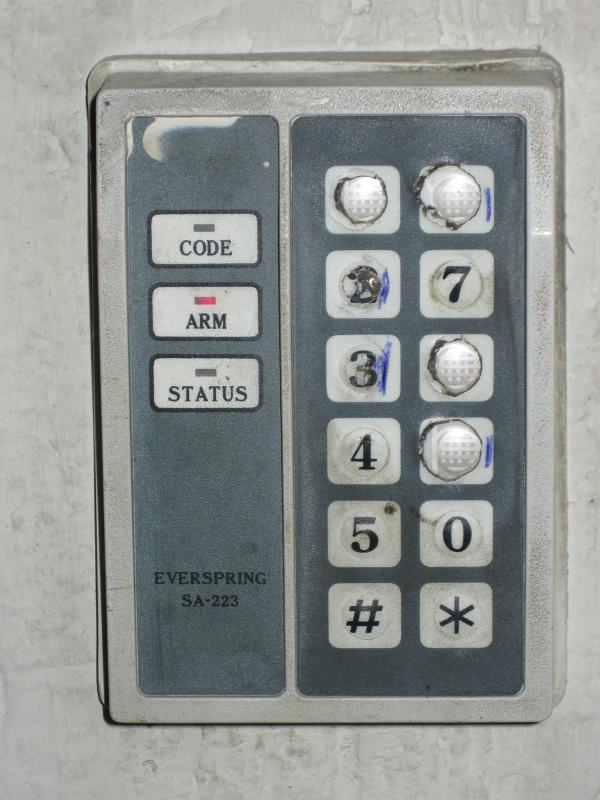
Tell them the lock is a 4-digit lock. Now turn on the blue light.
Ask them to list the possible codes. You can iterate this a bunch of times until they have discovered on their own this tool that mathematicians call a factorial.
Remind them it’s a 4-digit lock. Then put up this image. It will be confusing, but only for a second. Ask them to list every possible code.
Iterate this with two and three buttons until they have generalized permutations. Then maybe you iterate the entire thing with another keypad lock.
Then maybe you dip into the comments of the original WCYDWT? post and help yourself to some very-interesting follow-up questions. I recommend Alex’s.
Let me close by saying how shocked I am at how little all of this costs.
[Update: Bruce Schneier has a good follow-up on information leakage. Two photos.]
[Update II: due to the peculiarities of many car door locks punching in “123456” tests both “12345” and “23456.” Consequently, there is a number string 3129 digits long that will test every five-number comination.]
[Update III: more information leakage.]
[Update IV: more information leakage.]