Category: uncategorized

Total 483 Posts

My Application Video For Apple’s Distinguished Educator Program

I use a lot of Apple technology in my curriculum development + I like the people in Apple’s education group + My doctoral interests include communities of practice online = I applied for membership to the ADE program.

They required a video, which I’m posting because a) it’s a 90-second summary of my curriculum adaptation process and b) I introduce Apple to you folks somewhere around the 1:15 mark. I have plenty more remarks โ€“ most grateful! โ€“ about what the education blogosphere has done for me as a person, as a teacher, and as a worker, but I can summarize 90% of them by reminding you that last week a reader e-mailed a tip about a product which I turned into a WCYDWT math activity which caught the eye of the brand manager of that product who eventually supplied all of us with the company’s internal data on that product.

I don’t really understand that, but I love it.

ADE Application Video โ€“ Dan Meyer from Dan Meyer on Vimeo.

2011 Mar 01: I’m in.

2011 Aug 27: If this is something you’d like to show around, let me link up a download for you [hi, lo].
Required Reading: Improving Learning In Mathematics

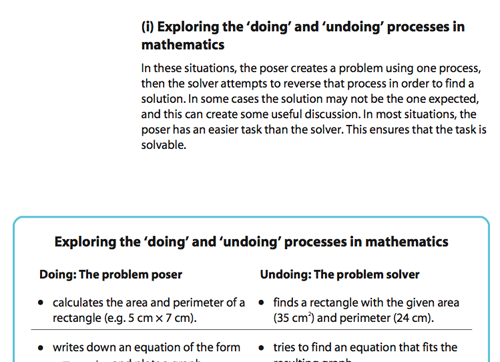
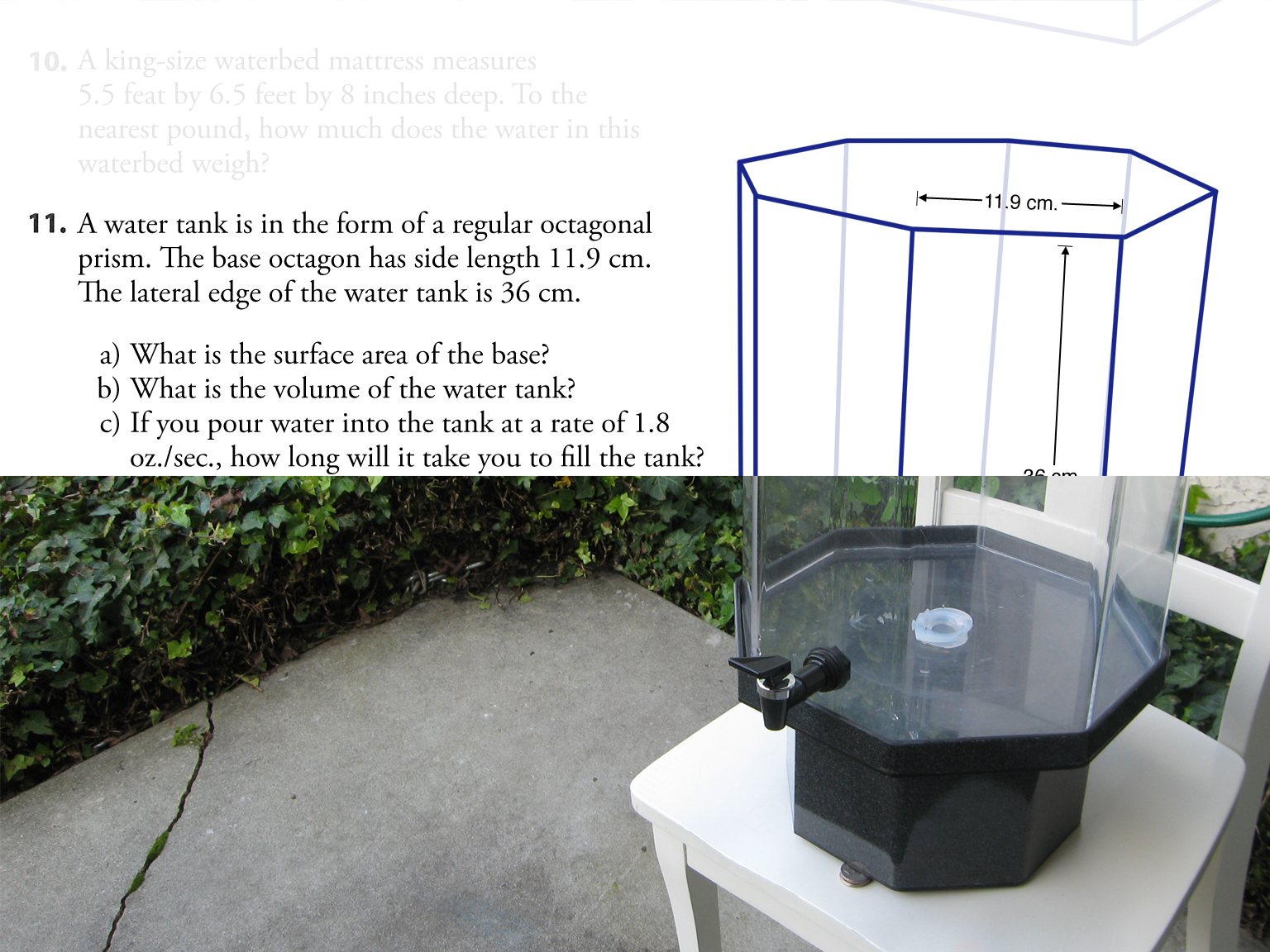
This is essential. On commission from the UK in 2005, Malcolm Swan wrote a guide to great math teaching [pdf] that’s as good as anything I’ve read at this length. It is, explicitly, a collection of activities โ€“ full explanations of resources a teacher can use for floatation in her first year โ€“ but the document also goes into exquisite detail about what theory motivates those activities. It outlines excellent pedagogy while at the same time keeping your head above the waterline.

This is a fast read โ€“ big type, thin margins, lots of color, etc. โ€“ and from now on, it’ll be the first thing I recommend to new math teachers. I hope you’ll do the same. But help them make sense of it also. Some of this only may look so brilliant in light of my abundant early-career failure.

Reject The Premise

BetterLesson:

Because documents are the building blocks of a good lesson, we’ve recently made them more prominent on the lesson page.

I’m dumbfounded by the premise. I read and re-read the post and I trip over the first ten words every time. BetterLesson asserts the superiority of worksheets like it’s a matter of fact and not up for debate. Even within that debate, I’m not sure I’d put worksheets inside the top ten sturdiest building blocks of a good lesson. Ahead of Wordle, maybe, but definitely behind a can of Play-Doh.

But that’s what’s most interesting to me watching BetterLesson and Edufy sort themselves out. A pedagogical decision hides behind every design decision. When they nudge the worksheets section to the top of the page, they are making an assertion about what they think teaching is. When they ask you to create a course and then a unit and then a lesson, they are making an assertion about the best organization of learning.

Nat Torkington said, “The secret sauce to social software is the invisible walls that steer people towards productive behaviour.” You get what you make easy.

So if worksheets aren’t the building blocks of a good lesson, what is? And, more to the point, is it possible to design a user experience online that promotes it, that makes good pedagogy the easiest, most natural thing to share on your site?

Students Tweeting About Clickers

I find it hard to get worked up one way or the other over clickers (or “student response systems” or what-have-you) but something I definitely don’t hate is Derek Bruff’s weekly roundup of student clicker tweets.

For instance:

@jackiesayswhat I need to buy a clicker? seriously? during my last semester?

@hornylizard Man who got a clicker that they aint using this semester and wouldnโ€™t mind letting me use?

@Thee_JadeE Oooohhhh Iโ€™m bout to drop this psych class! Something told me I was gunna have to buy a clicker!

You start to get a pretty strong sense of the student response to student response systems.

Pro Tip

Anytime anybody asserts anything disparaging (or affirming) about contextual problem solving in mathematics, it’s helpful to ask “what representation of problem solving are you talking about?” Because a) unless the student is actually outside the classroom in the context, you (or more likely your textbook’s publisher) have had to represent that context somehow for use in the classroom, and b) not all representations are created equal. Also, not to get too big for my first-year PhD student britches either but this seems like a blind spot in the existing research.