This Week’s Installment
Poll
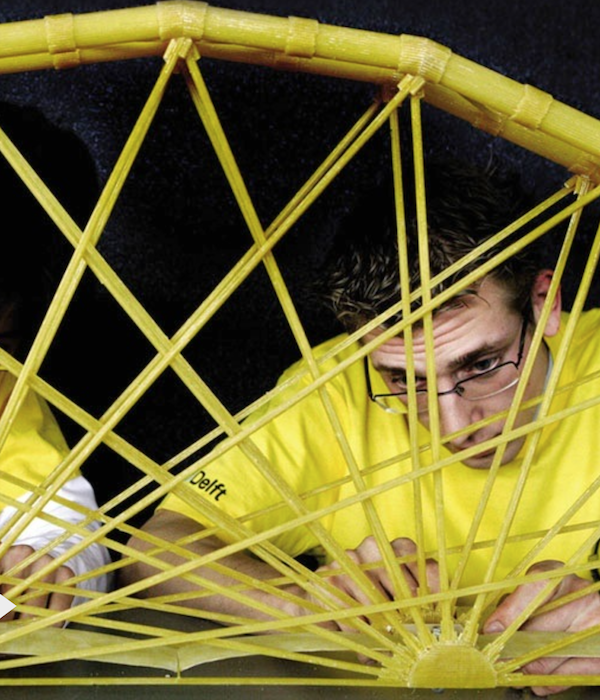
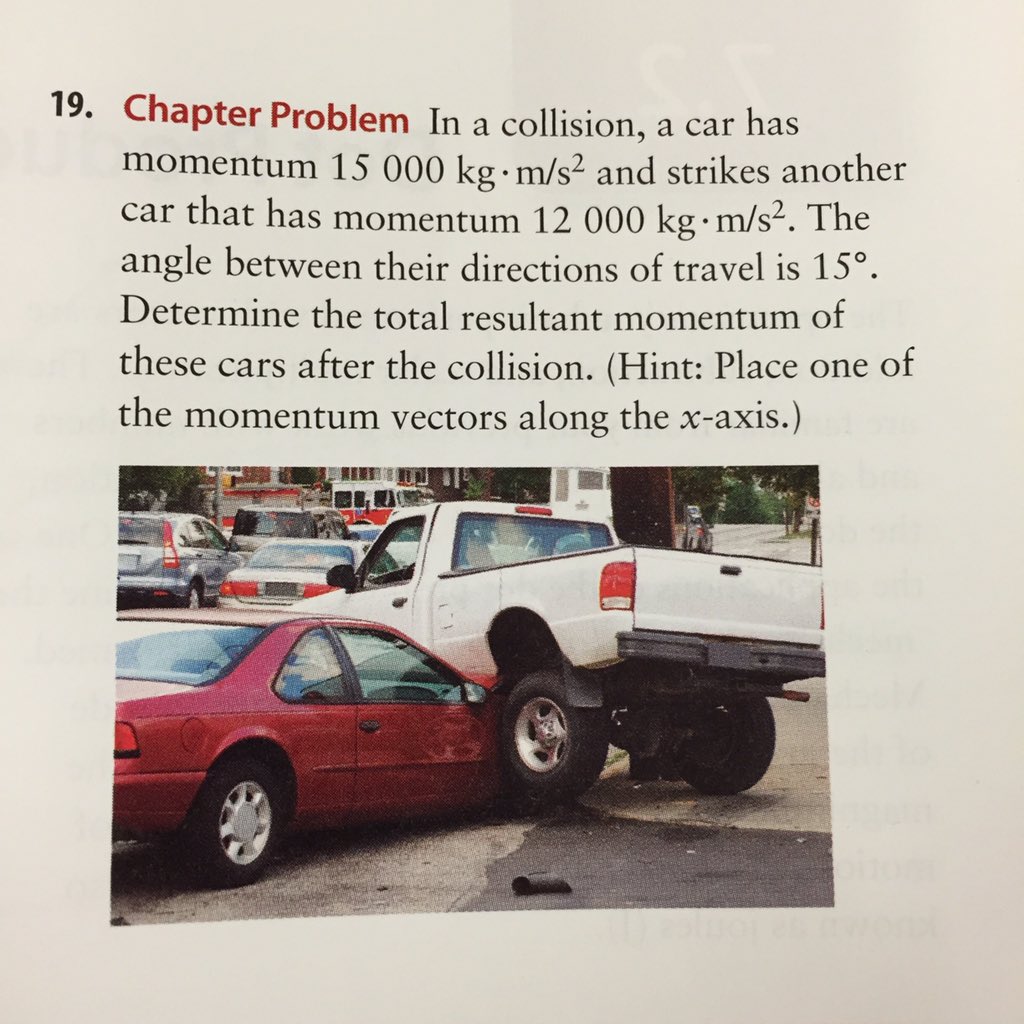
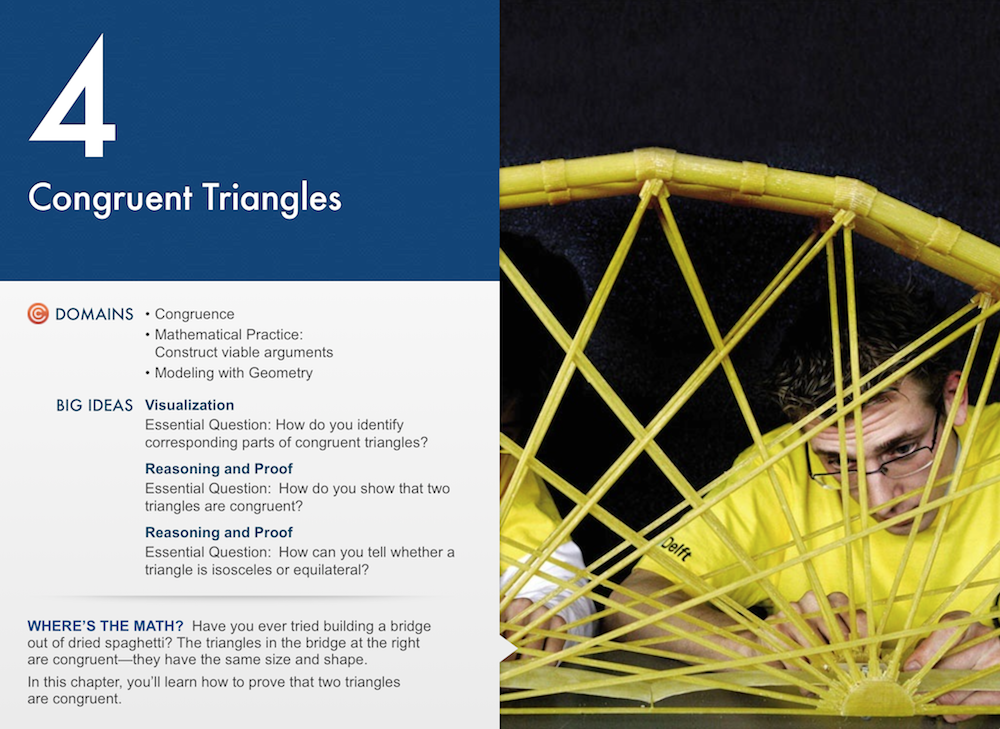
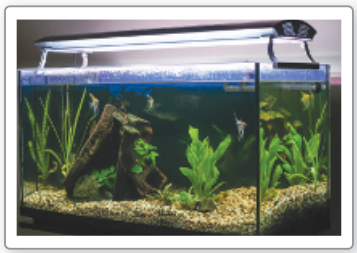
What mathematical skill is the textbook trying to teach with this image?
[poll id=”10″]
(If you’re reading via email or RSS, you’ll need to click through to vote. Also, you’ll need to check that link tomorrow for the answer.)
Current Scoreboard
Team Me: 5
Team Commenters: 3
Pseudocontext Submissions
Rules
Every Saturday, I post an image from a math textbook. It’s an image that implicitly or explicitly claims that “this is how we use math in the world!”
I post the image without its mathematical connection and offer three possibilities for that connection. One of them is the textbook’s. Two of them are decoys. You guess which connection is real.
After 24 hours, I update the post with the answer. If a plurality of the commenters picks the textbook’s connection, one point goes to Team Commenters. If a plurality picks one of my decoys, one point goes to Team Me. If you submit a mathematical question in the comments about the image that isn’t pseudocontext, collect a personal point.
(See the rationale for this exercise.)
This was a nail-biter between Team Commenters and Team Me this week, with Team Commenters narrowly tipping the scales in their favor.
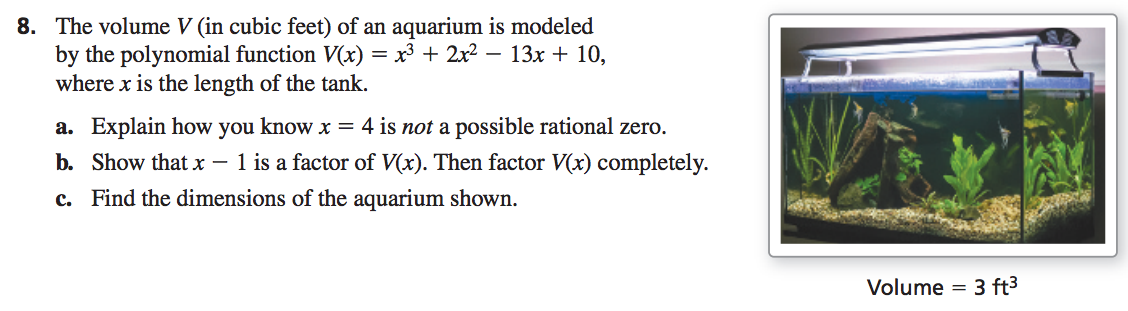
The judges rule that this satisfies the second rule of pseudocontext:
Given a question, the assigned method isn’t a method most human beings would use to find it.
Reasonable people might wonder about the dimensions of a water tank. The judges rule that most human beings would use a tape or a stick or any other kind of measuring device to answer it, not a cubic polynomial.
I can’t think of any way to neutralize this pseudocontext. The number of actual contexts for cubic polynomials with non-zero quadratic and linear terms is vanishingly small.
Here is an activity I would much prefer to use to teach the construction of polynomials. It doesn’t involve the real world but it does ask students to do real work.
Featured Comment
One motif in pseudocontextual questions seems to be treating as a variable things that, you know, don’t vary. I have a funny video playing in my mind of some surprised fish watching the volume of their tank become negative. But happily the volume of that tank is not varying, inasmuch as it’s sides are made of glass.