Are You The Steve Jobs Of Your Teaching?

If you haven’t caught John Siracusa’s essay by now, odds are good you aren’t interested. It’s essential reading, though, for anyone trying to connect blogging to serious professional development and not, say, to an abnormally supportive faculty lounge where everyone shares your exuberance and thinks your last post was great.

Like greed, criticism gets a bad rap, especially when it’s presented in large doses. It’s impolite. It’s unnecessarily obsessive. It’s just a bummer. But the truth is, precious little in life gets fixed in the absence of a good understanding of what’s wrong with it to begin with.

Elsewhere, he describes criticism as “a virtuous cycle created through apparent viciousness” which is exactly how I would describe last month’s (very satisfying) Darren-Dan-Jason slide remix.

For my part, after some large missteps and a lot of reconsideration, I am finally comfortable with this blog’s critical stance. It turns out not to be terribly difficult to respect an individual and her serious commitment to teaching while at the same time holding her work up for serious scrutiny. I’d argue, even, that the two are equivalent, that, issues of tact notwithstanding, to offer any less to each other is the real disrespect.

Some may find this abrasive and check out but my remaining commenters, unsurprisingly, are a seriously critical bunch and keep me relentlessly on message, forcing me to justify and rejustify my crackpot pedagogy. And, most days, I’m pretty sure that’s all the professional development I need.

[via]
How I Roll

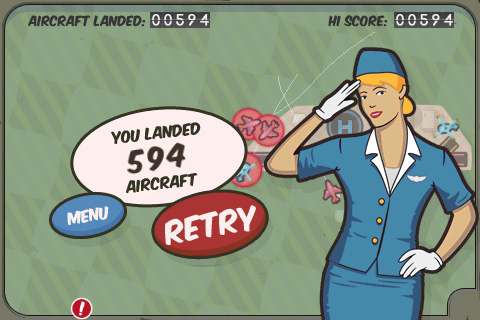
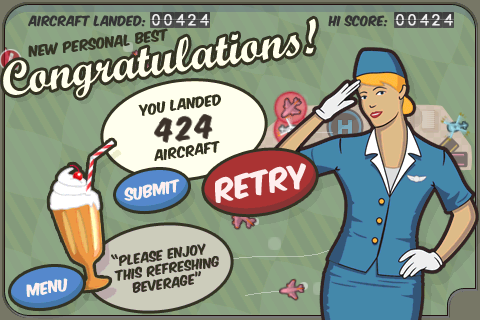
At 21h23 last night, Nate Gravelle, a student of mine, commented to let me know he had demolished my Flight Control high score. He attached a screenshot:

At 7h30 this morning, I spent ten minutes of useful prep time digitally fabricating my own high score:

At first he swears I’m lying. Then I dupe him with the screenshotWhich, side-by-side with the real deal, looks pretty sad. and he fumes for a second, then swears he’ll top me. I doubt he’s looked up from the iPod Touch he’s tucked beneath his desk since school began.

Let’s keep this between you and me, ‘kay?

“Let The Beat Build,” Nyle

This is how you make a music video. Watch the video and if the greatness isn’t immediately apparent, I have composed a 2.5-minute explanation.

Click through to view embedded content.

Aiming Right At The Bar

This is one of the most thought-provoking comments this blog has ever seen, one which was posted weeks ago but which still messes with me:

David Cox: What percentage of the population do you think has the eyes and/or ears to know the difference [between soundtracks done well and done poorly]? When I watch a movie or listen to a song, I don’t see the things that you see. I try, but I don’t understand why certain shots are done certain ways or why a particular piece of music was or wasn’t used. Can I learn that? I don’t know. But if my audience won’t know the difference, should I take the time to learn it?

Two incomplete thoughts:

1. The software programmer should not write your lesson plan.

The programmer cares about consumers, not students. The programmer’s job is to make as many features accessible to as many consumers as easily as possible, without glutting the program. Your job is to challenge your students. Your job is very, very different. So don’t feel weird telling kids not to use a) bullet points in PowerPoint, b) filters in Audacity, and c) the “Add Track From iTunes” button in iMovie. The existence of the button does not make good pedagogy out of the button.

2. To put students in a place to care about the difference between good and bad production and not to equip them is wrong.

Which is to say, if you don’t know why those closing montages at the end of Grey’s Anatomy and Lost are insipid shortcuts to genuine emotional interaction with a story, then you should have the humility to recuse yourself and say, “Maybe I’m the wrong person to teach students to make movies.”

This isn’t about amateurs and experts. That fight is over. The amateurs have won and I wouldn’t reverse that ruling if I could. But it’s extremely important to understand where teachers fit into the new creative structure, a structure which has seen the quantity of published media increase at the same pace as its median quality has declined.

We must act as bulwarks against that decline, not accelerants of it.

Flight Control / Lesson Plan

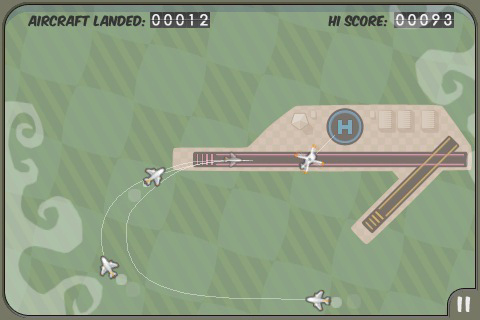
I love the iPhone game Flight Control for all the reasons I love a good lesson plan.

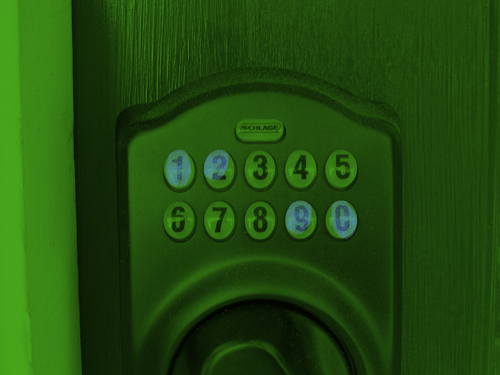
  1. It builds from a simple, visceral premise. “Land the planes. Don’t let any collide.” ¶ Which packs the same clear punch as “what is the combination?
  2. Harder, differentiated challenges arise naturally from that premise. Which is to say, as you get better at the game, it doesn’t just double the speed of the planes or throw up concrete clouds or reverse the controls. It introduces different planes into the airspace, planes which move slightly faster. ¶ In the same way, a good lesson plan doesn’t adapt itself to faster learners by doubling the length of the same problem set or imposing artificial constraints like, “what if one of the buttons was broken?” It tells the learner, “okay, we dusted the lock for prints and found out that these four numbers get pressed a lot. What can you do with this?”
  3. Those new challenges necessitate new skills. In its early stages, Flight Control accommodates a player’s sloppiness but when you have three 757s approaching the landing strip and three helicopters holding in a pattern you have to keep your approaches extremely tight. ¶ The combination lock forces the need for permutations.
  4. Those new skills are assessed simply and clearly. A lesser game would assign separate point values for larger planes or include bonus multipliers. Flight Control assesses your skill along one simple metric: “How many planes have you landed?” ¶ After all the calculations in “Will it hit the can?” the assessment was simply “Were you right?”

Not every game or lesson can accommodate this aesthetic. Nor do I expect them to. But these are my favorite. These are my students’ favorite. And they are too few and far between. We need more.