How I’m Learning to Step into Math Problems

The biggest inhibitor to my development as a math teacher is that I don’t teach or do math enough. That should make plenty of sense.

I’ve ramped up my teaching since fall with regular (okay, monthly) sessions at a local San Francisco high school. Opportunities to do math are bit easier to find and a bit easier to wedge into empty corners of my day than classroom teaching.

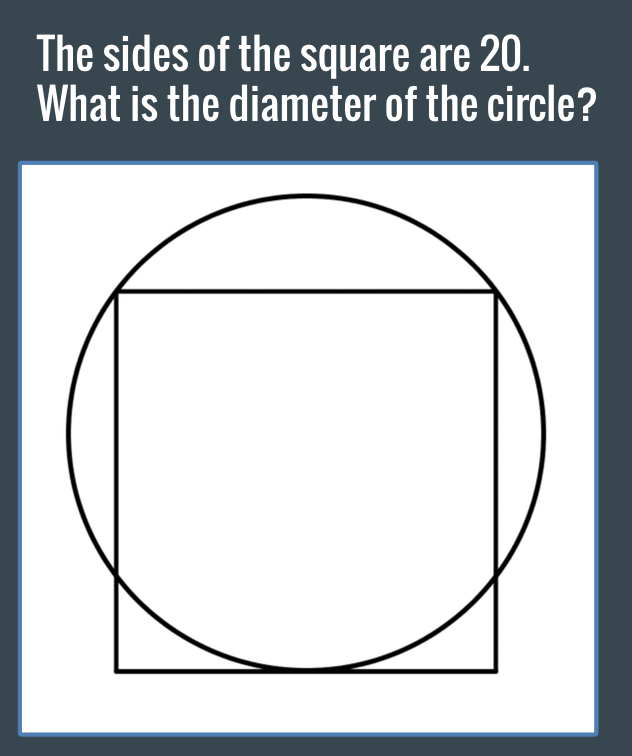
I was grateful, for example, that Jennifer Wilson built plenty of time for doing math into her workshop today at North Carolina’s state math education conference. She posed this problem (source unknown) and I experienced two insights into how I experience mathematical insights.
161027_3

First, I approximate an answer. I recognize that the diameter of the circle will be larger than the side of the square. That’s because I can draw the diameter in my imagination and compare the lengths, and also because I know that chords in a circle are never longer than the diameter. I’m guessing the diameter is around 25 units, not more than 30, and not less than 21.

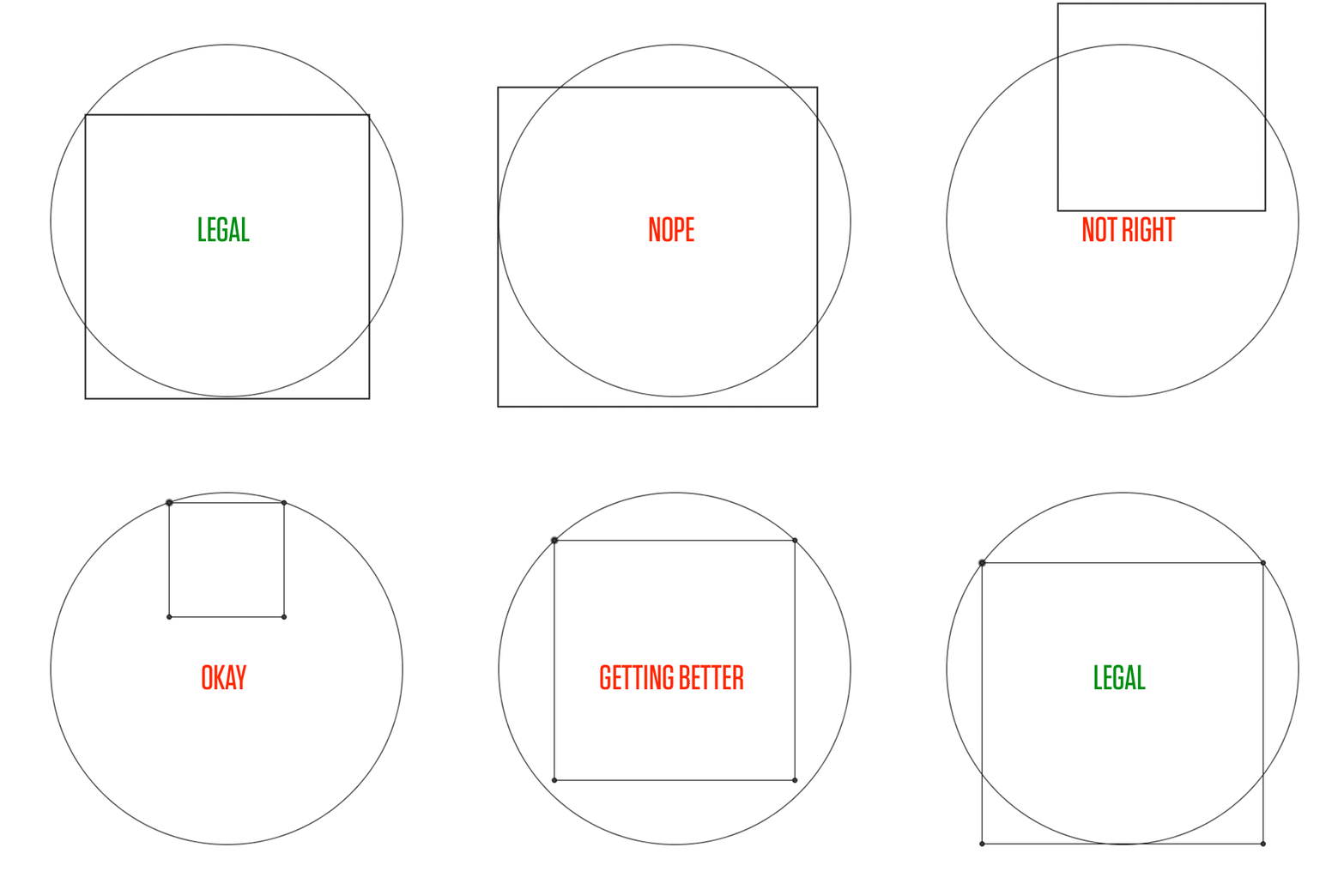
Second, I try to figure out what makes the thing this thing rather than some other thing. I don’t have any details about how the square was constructed. The circle could be any circle, but what makes that square that square? I need to construct it myself. I start changing the square’s location and scale in my head, asking myself, “Is this square legal? What about this square?”

Here is what I see in my head:
161027_1

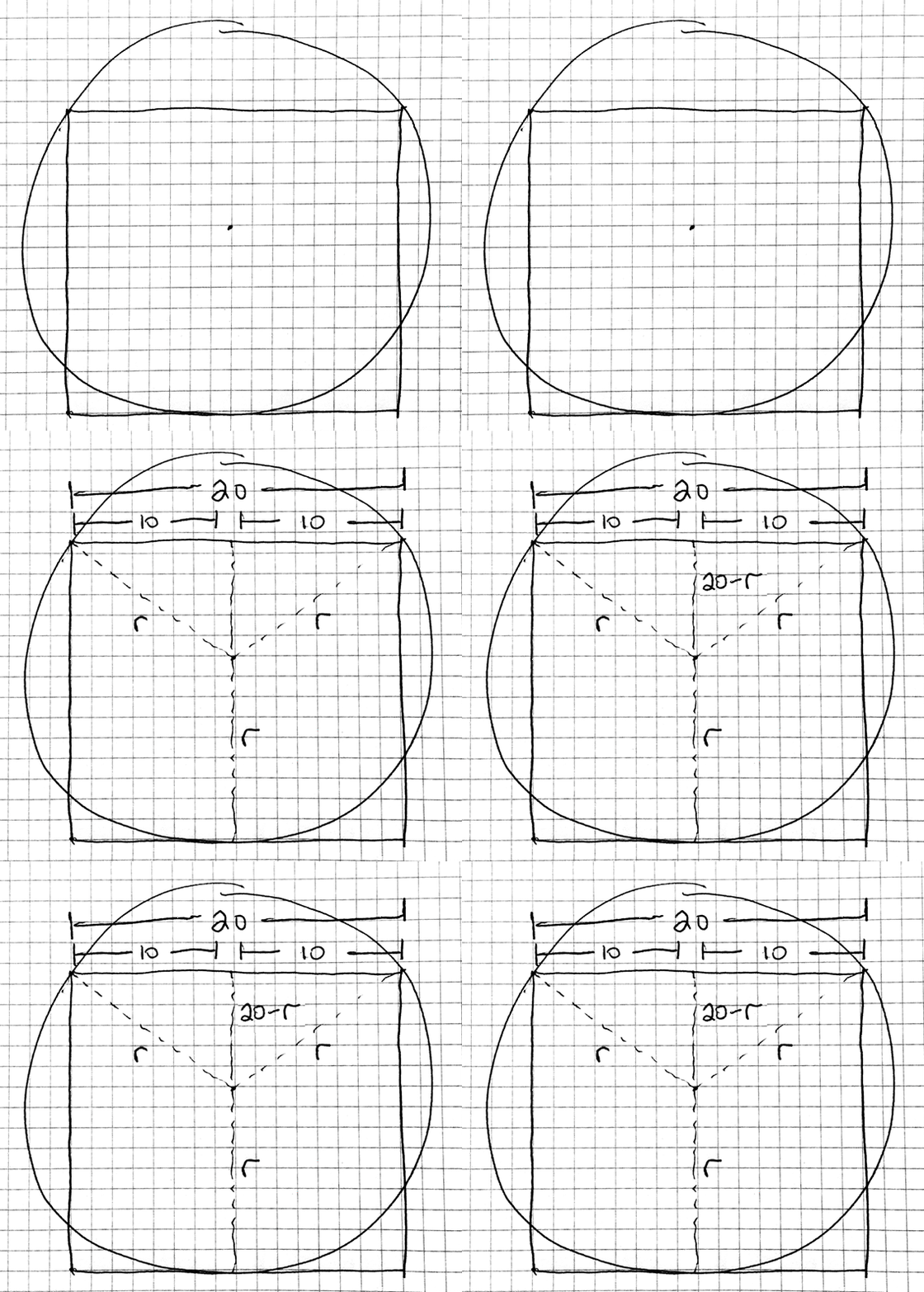
When the square becomes legal at the end, I hear an actual “ding” inside my brain. That’s when all the constraints make sense to me and I can start writing down variables and relationships.
161027_2

That last “20 – r” was only possible because of the exercise of mentally making different illegal and legal squares.

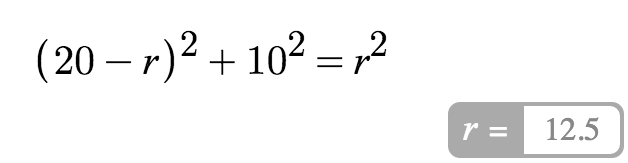
From there, I trotted over to Desmos with a Pythagorean relationship in my hand.
161027_7

Because I had approximated right and wrong answers earlier, I knew that 12.5 was too low. I realized that was the radius so I doubled it for the diameter.

I think these techniques are what Piggott and Woodham call “stepping into the problem.”

Here visualisations are used to help with understanding what the problem is about. The visualisation gives pupils the space to go deep into the situation to clarify and support their understanding before any generalisation can happen.

At least that’s the best term I can coax from the Internet. I don’t know if Polya’s work on problem solving speaks to that practice directly.

  • If you have another name for that process, let us know it.
  • If you’ve made mathematical problem solving a part of your development as a teacher, let us know how.
  • And if you have an interesting problem to share, let us know about that too.

I’ll leave you with this awesome little number from Brilliant. I promise you can solve it.
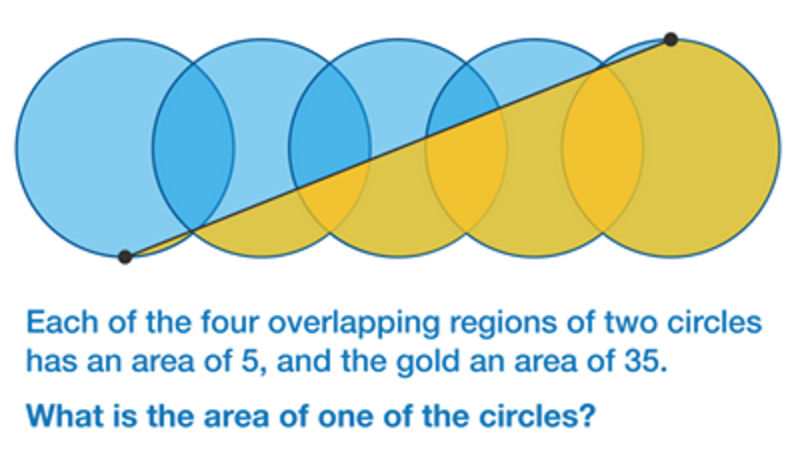
161027_6

Featured Comments

William Carey:

If you ask a literature teacher what book they read most recently for pleasure and they don’t have an answer that’d be really worrying. But I bet it’s pretty rare. If you ask a math teacher what math problem they most recently worked through for pleasure, I bet the results are much scarier.

Lori M:

For decades, there has been a focus in ELA classes around a push that teachers who read, know how to teach (and reach) readers. Let’s start a similar movement among math educators.

Dick Fuller:

With some over simplification, real problems are not about mathematics, certainly not about arithmetic. The problem is the formulation of the problem. To suggest a problem is particular to values of parameters points toward evaluation as the critical component of its solution. It is not. Evaluation is particularization of a general formulation. A bald assertion: this is at the root of the difficulty students have with “real” problems.

Simon Gregg offers his own solution and then links to a fascinating question about perimeter.

[Pseudocontext Saturday] Mazes

This Week’s Installment

161019_2

Poll

What mathematical skill is the textbook trying to teach with this image?

[poll id=”3″]

(If you’re reading via email or RSS, you’ll need to click through to vote.)

Rules

Every Saturday, I post an image from a math textbook. It’s an image that implicitly or explicitly claims that “this is how we use math in the world!”

I post the image without its mathematical connection and offer four possibilities for that connection. One of them is the textbook’s. Three of them are decoys. You guess which connection is real.

After 24 hours, I update the post with the answer. If a plurality of the commenters picks the textbook’s connection, one point goes to Team Commenters. If a plurality picks one of my decoys, one point goes to Team Me. If you submit a mathematical question in the comments about the image that isn’t pseudocontext, collect a personal point.

(See the rationale for this exercise.)

Current Scoreboard

Team Me: 1
Team Commenters: 0

Answer

screen-shot-2016-10-19-at-1-48-03-pm

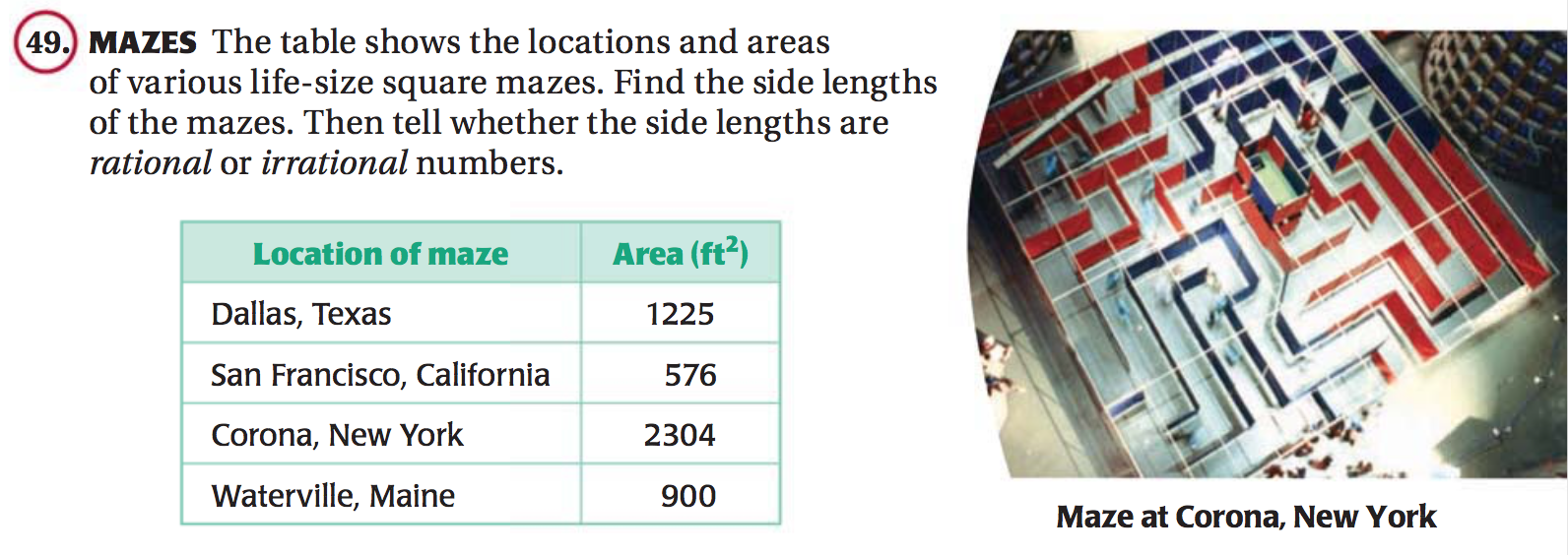
The judges rule this pseudocontext because, given that awesome square maze, it’s very unlikely that anyone would wonder about the side length of the maze and unlikelier still that anyone would wonder if the side length was rational or irrational. An exhaustive search for a 1,225 ft2 square maze in Dallas, TX, produced no results, exacerbating the judges’ sense that the textbook is exploiting the world for the sake of math. That’s pseudocontext.

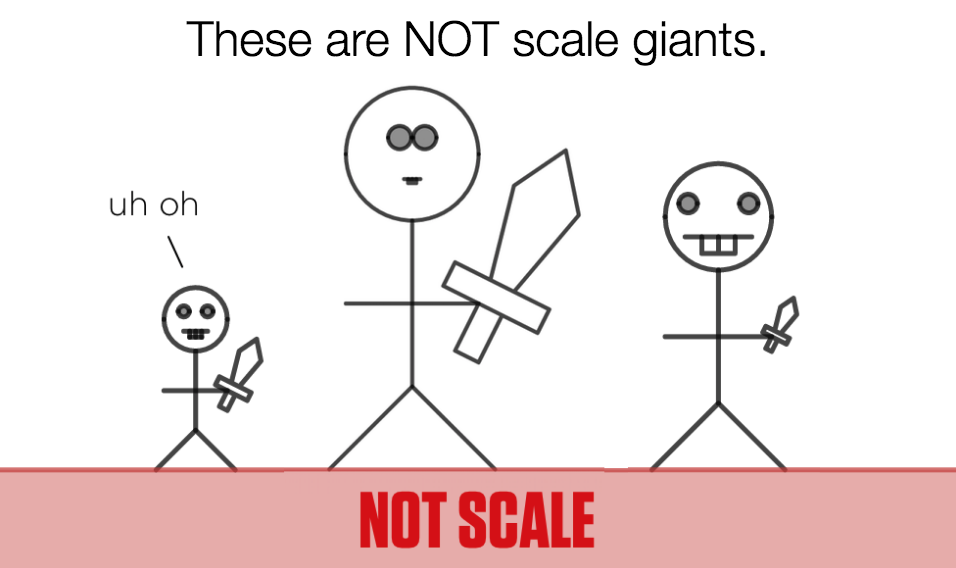
New Activity: Marcellus the Giant

161018_4

In Marcellus the Giant, the new activity from my team at Desmos, students learn what it means for one image to be a “scale” replica of another. They learn how to use scale to solve for missing dimensions in a proportional relationship. They also learn how scale relationships are represented on a graph.

There are three reasons I wanted to bring this activity to your attention today.

First

Marcellus the Giant is the kind of activity that would have taken us months to build a year ago. Our new Computation Layer technology let Eli Luberoff and me build it in a couple of weeks. We’re learning how to make better activities faster!

Second

When we offer students explicit instruction, our building code recommends: “Keep expository screens short, focused, and connected to existing student thinking.”

It’s hard for print curricula to connect to existing student thinking. Those pages may have been printed miles away from the student’s thinking and years earlier. They’re static.

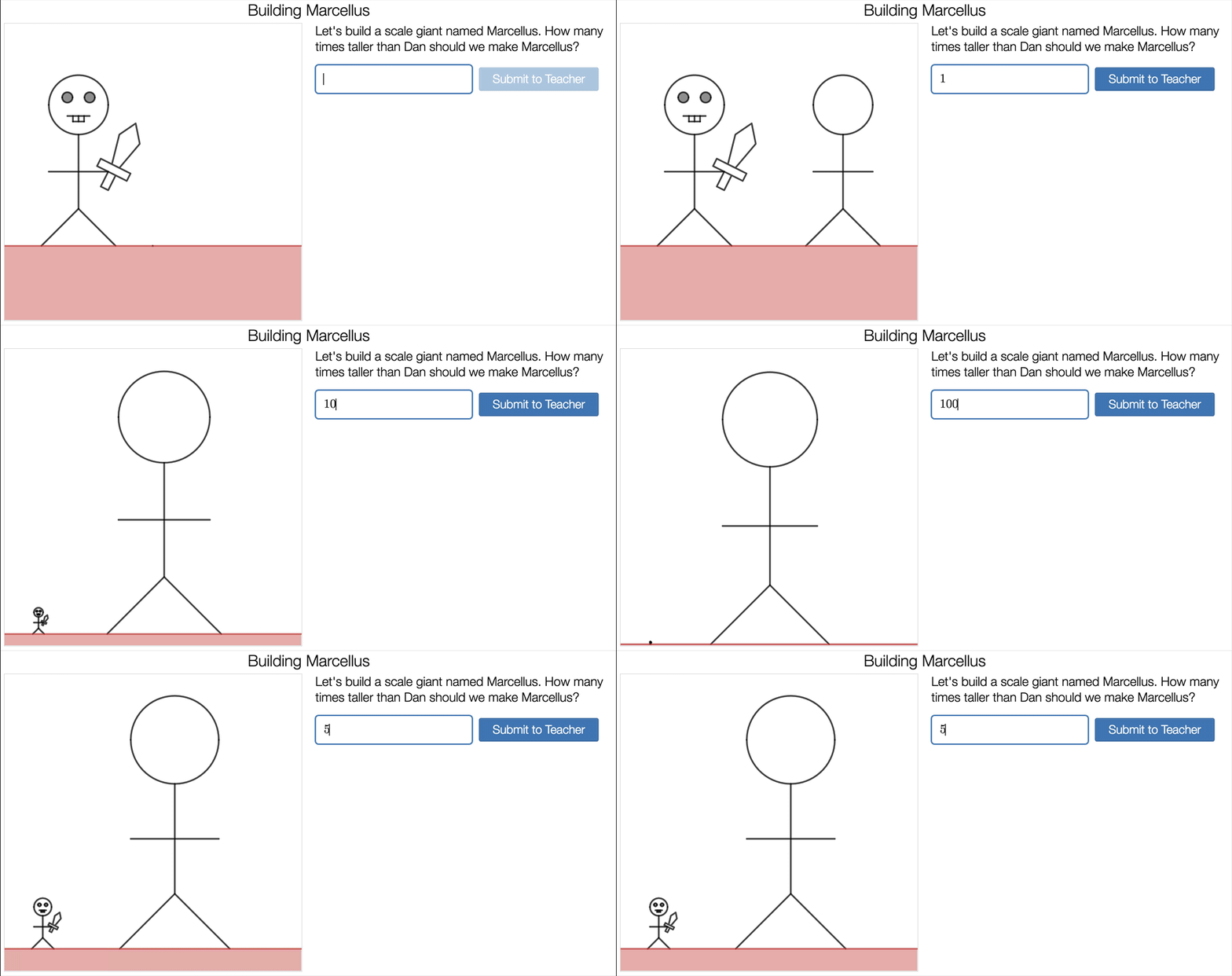
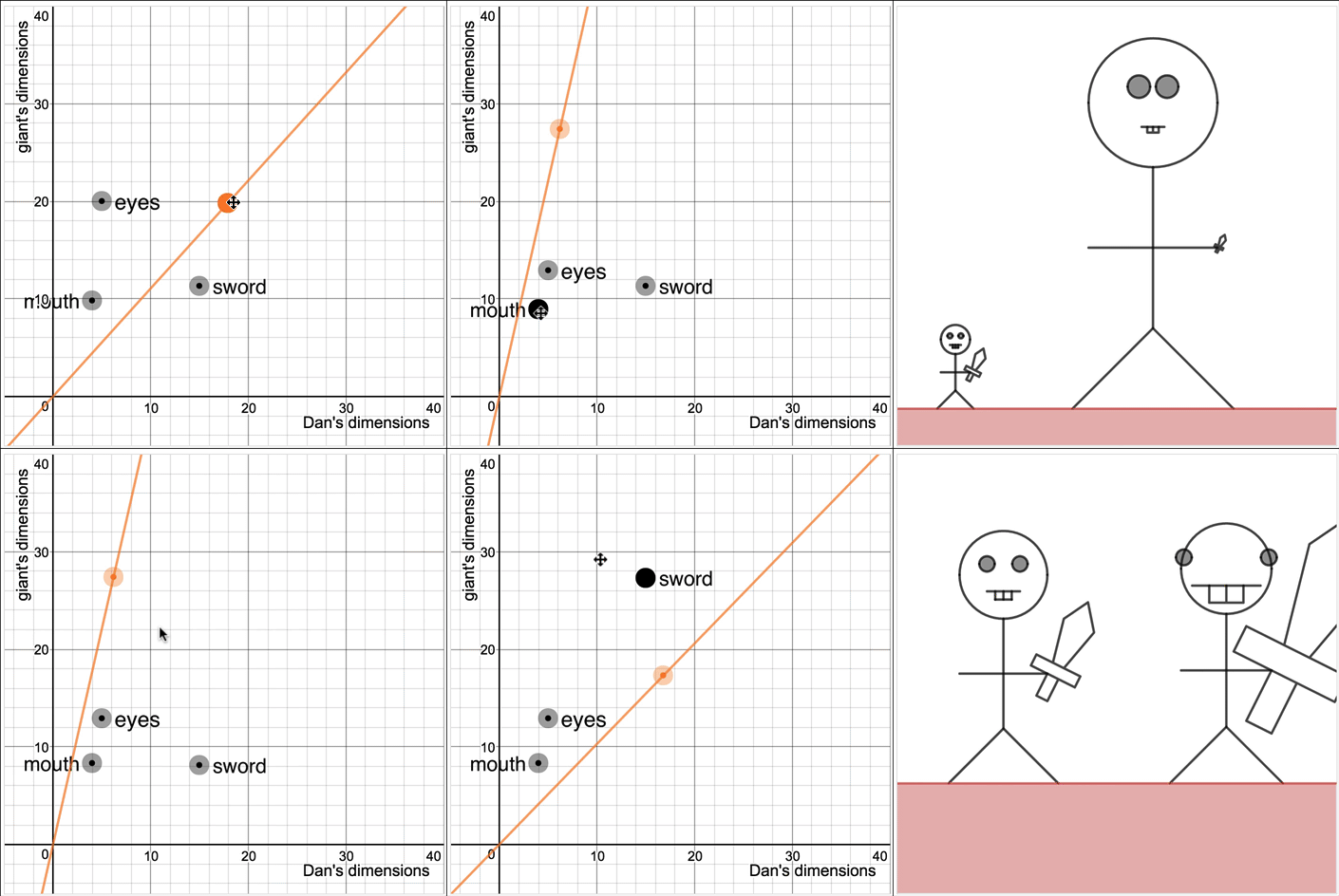
In our case, we ask students to pick their own scale factor.

161018_5

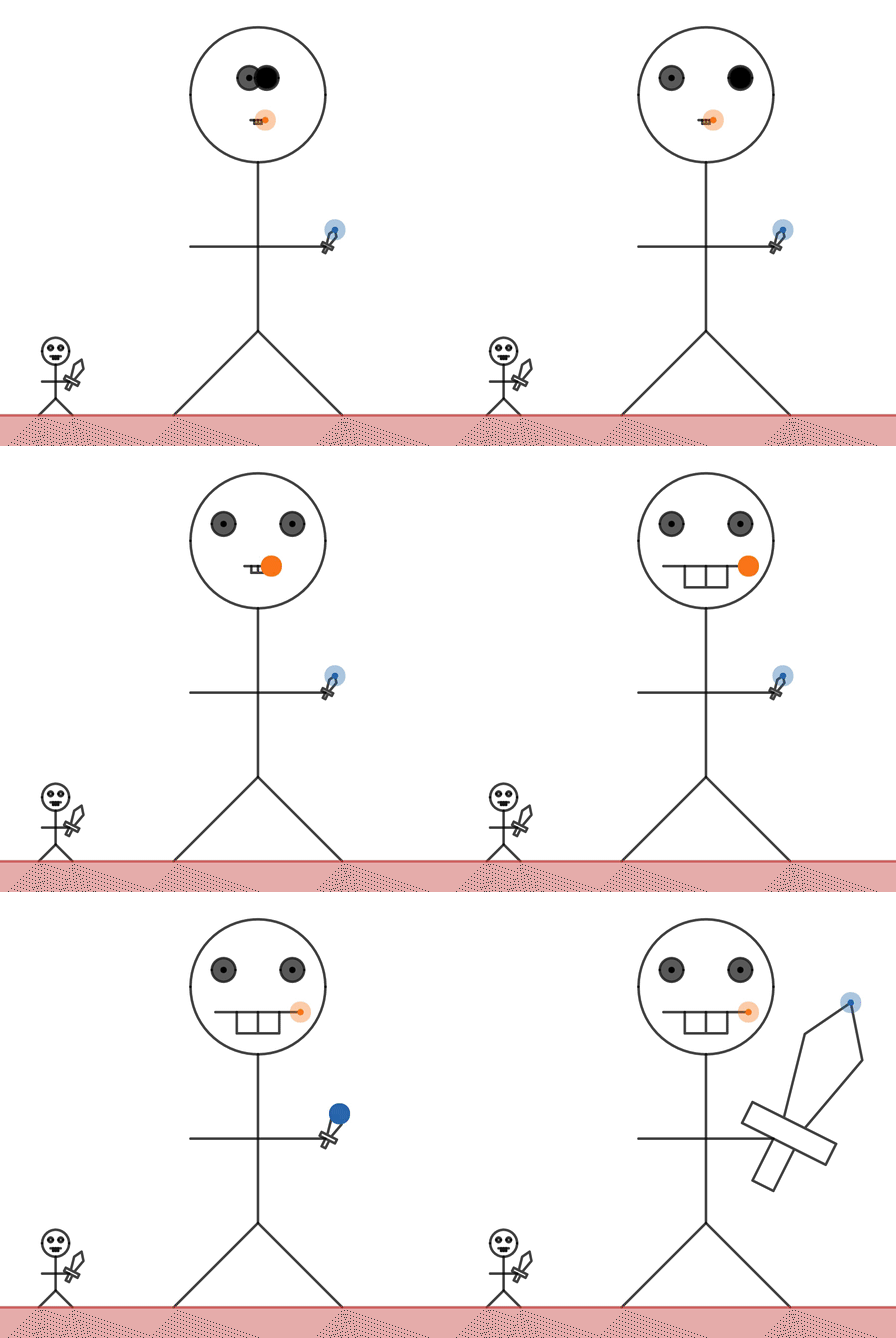
Then we ask them to click and drag and try to create a scale giant on intuition alone. (“Ask for informal analysis before formal analysis.”)

161018_6

Then we teach students about proportional relationships by referring to the difference between their scale factor and the giant they created.

You made Marcellus 3.4 times as tall as Dan but you dragged Marcellus’s mouth to be 6 times wider than Dan’s mouth. A proportional giant would have the same multiple for both.

Our hypothesis is that students will find this instruction more educational and interesting than the kind of instruction that starts explaining without any kind of reference to what the student has done or already knows.

That’s possible in a digital environment like our Activity Builder. I don’t know how we’d do this on paper.

Third

Marcellus the Giant allows us to connect math back to the world in a way that print curricula can’t.

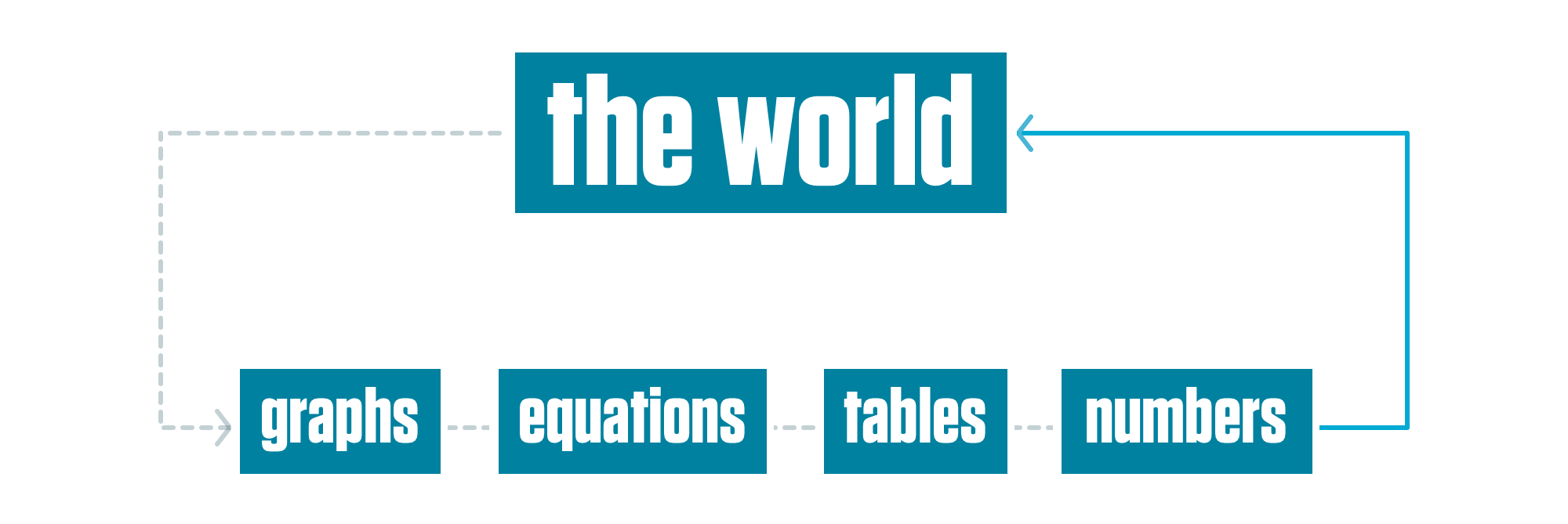
Typically, math textbooks offers students some glimpse of the world — two trains traveling towards each other, for example — and then asks them to represent that world mathematically. The curriculum asks students to turn that mathematical representation into other mathematical representations — for instance a table into a graph, or a graph into an equation — but it rarely lets students turn that math back into the world.

161018_8

If students change their equation, the world doesn’t then change to match. If the student changes the slope of the graph, the world doesn’t change with it. It’s really, really difficult for print curriculum to offer that kind of dynamic representation.

But we can. When students change the graph, we change their giant.

161018_9

There is lots of evidence that connecting representations helps students understand the representations themselves. Everyone tries to connect the mathematical representations to each other. Desmos is trying to connect those representations back to the world.

Great Classroom Action

img_2996

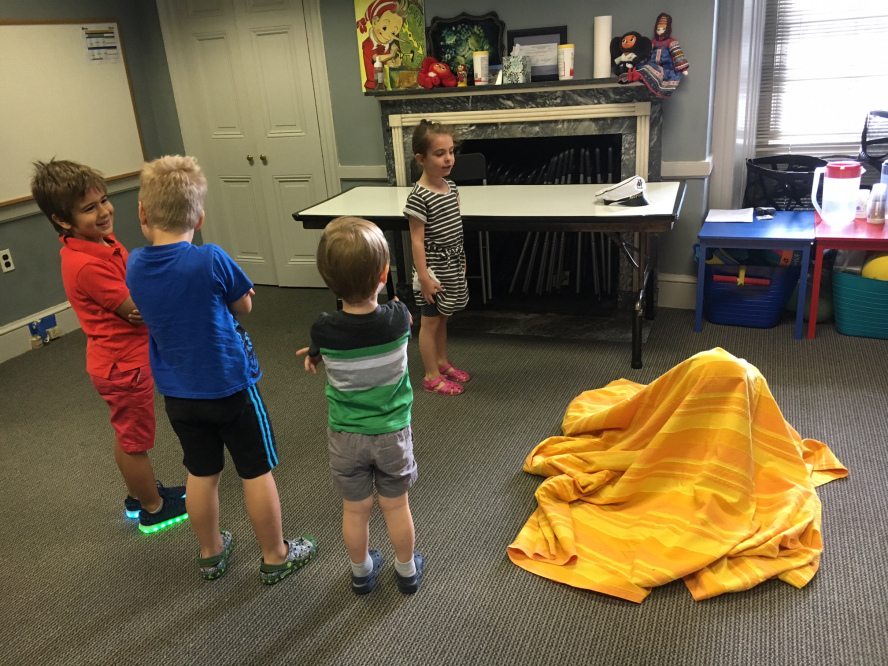
A. O. Fradkin used her students as manipulatives in a game of addends:

The classic mistake was for kids to forget to count themselves. Then I would ask them, “How many kids are not hiding under the blanket?” When they would say the number of kids they saw, I’d follow up with, “So you’re hiding under the blanket?” And then they’d laugh.

Cathy Yenca put students to work once they finished their Desmos card sorts:

From here, it becomes a beautiful blur. Students continue to earn “expert” status and become “up for hire”, popping out of their seats to help a bud. At one point today, every struggling student had a proud one-on-one expert tutor, and I just stood there, scrolling through the teacher dashboard, with a silly grin on my face.

I’d love to know how we could employ experts without exacerbating status anxieties. Ideas?

Laurie Hailer offers a useful indicator of successful group work:

It looks like the past six weeks of having students sit in groups and emphasizing that they work together is possibly paying off. Today, instead of hearing, “I have a question,” I heard, “We have a question.”

David Sladkey switches from asking for questions to requiring questions:

My students were working independently on a few problem when I set the ground rules. I told my students that I was going to require them to ask a question when I was walking around to each person. I also said that if they did not have a math question, they could ask any other (appropriate) question that they liked. One way or another, they would have to ask me a question. It was amazing.

Featured Comment

Ryan:

I also have kids sign up to be an expert during group work, indicating that they’re open to taking questions from other students. Sometimes, after a really good small group conference, I’ll ask a student to sign up to be an expert.

How I’m Voting in NCTM’s Upcoming Election

161017_1

Here is how I’m voting in the upcoming NCTM board election. Ballots close 10/31. You should vote too.

There are few issues in mathematics education that both matter a lot and that NCTM can directly affect. One issue in that subset matters most to me:

I care how well NCTM accesses the capacity of its members to help each other develop continuously as educators.

NCTM has the largest store of teaching knowledge of any math education organization in the world. Its 70,000 members comprise hundreds of thousands of years of math education experience. But NCTM accesses that capacity only sporadically. Fewer than ten times yearly at face-to-face conferences. Twelve times per year in its five journals. Occasionally in books and blog posts.

The only medium that will allow an NCTM member in Scranton, PA, to help another member develop continuously in San Diego, CA, is the internet. My tweeting and blogging colleagues know exactly what I’m talking about. They know the exhilaration of asking a question from a veteran and getting an answer in minutes. They know what it’s like to read someone’s interesting idea one day, try it out the next, and then offer the originator some useful feedback.

They’re developing, and developing each other, continuously. They don’t want to wait for conferences, journals, books, or blog posts.

So how am I voting? A few years ago, I’d vote for any candidate who even mentioned the internet in her candidacy statement. Now I’m looking for people who have a plan for helping NCTM’s members develop each other continuously. I’m looking for people who seem receptive to the experiments in online professional development Zak Champagne, Mike Flynn, and I put together annually under the name “ShadowCon.” I’m looking for people who understand that NCTM’s membership is underutilized for most of the year.

Here are promising excerpts from the candidates’ statements.

Robert Q. Berry III (President-Elect) [Twitter]:

Membership is a major challenge facing the Council. NCTM must rethink its membership model, working to ensure that longtime members continue to value NCTM while showing potential members the value of associating themselves with NCTM. This can done by tapping into their interests in social media and other digital technologies to promote interactive communities of professionals. Such efforts broaden the Council’s space for professional learning while maintaining meaningful engagement with the membership.

Nora Ramirez (President-Elect):

NCTM has the knowledge, experience, and skills to support both national and state affiliates in developing the abilities to advocate effectively for issues that are critical to them. Affiliates interested in this initiative would meet both face-to-face and online to learn, plan, and collaboratively develop or identify resources.

David Ebert (Director, High School):

NCTM needs to consider all forms of professional learning, including electronic learning opportunities, sustained yearlong professional learning, and joint professional learning opportunities personalized for the needs of the teachers within an affiliate.

Jason Slowbe (Director, High School) [Twitter, Web]:

NCTM should develop an online platform offering members a living portfolio for their professional development. NCTM already attracts top-notch speakers; now it should empower speakers with tools for building a following and facilitating year-round development. Attending sessions should be the beginning, not the end, of the conference experience. NCTM should enable attendees to pin, share, and discuss resources from within and beyond NCTM, including conference handouts, blog posts, articles, and student work. Integration with affiliate conferences and other stakeholders would connect teachers and grow membership organically. NCTM should leverage both the power of collaboration and its unique position as the world’s largest math education organization to influence more teachers and students.

Rick A. Hudson (Director, At Large):

Teachers today communicate in very different ways from the past, and NCTM must make use of the new media while building on its current strengths to reach a wider audience. For example, the quality of NCTM’s conferences is one of the Council’s greatest strengths, and we must think proactively about ways to share content from conference sessions virtually to reach a larger group of the membership and to extend the conference experience for those in attendance.

DeAnn Huinker (Director, At Large) [Twitter]:

A task force on building the next generation of teachers can consider resources, tools, and innovative ways to reach out to prospective teachers, such as providing access to blogs and online mentorships.

Daniel J. Teague (Director, At Large):

NCTM should take the lead in creating online and downloadable video courses (see Jo Boaler’s How to Learn Mathematics and Scott Page’s Model Thinking) to be used by individual teachers and departments for extensive work in these areas.

Desha L. Williams (Director, At Large):

Maintaining and expanding membership is a challenge for NCTM. The age of technology has created avenues for teachers to access information that was once available only within NCTM resources.

Vanessa Cleaver (Director, At Large):

Although I am a huge fan of Facebook, Twitter, LinkedIn, and other social media, I believe that these sources are to some extent now meeting the needs of educators for interaction with one another and exchange of information in non—face-to-face settings.

That’s what matters to me and how I’m voting. What about you?

Featured Comments

  • Steve Weimar outlines NCTM’s current efforts towards helping teacher develop continuously online.
  • Cal Armstrong wants to see current or recent teachers in leadership positions
  • Brandon Dorman would like to see NCTM accredit its members using technology like Mozilla’s Open Badges.