Mathew’s digital storytelling carnival is live, and full of tutorial-y goodness. I’m uncertain if this was coincidence or intent, but it’s worth noting that “digital storytelling” seems synonymous with “digital filmmaking” over there.
Month: January 2008
Total 44 Posts
We’re waiting for one more judge to weigh in, which is cool, ’cause he’s had his hands tied up with his own annual report until recently. After that we’ll summarize a few things and close this one up until next year.
Until that announcement, here’s some miscellany I wanted to put out there:
The Faculty Room
Just for the dy/dan completists. I’m a contributor over at The Faculty Room, a blog run by Grant Wiggins, who I guess is kind of a big deal. It’s like a LeaderTalk for, uh, well, um, well just what the hell demographic are we over there?
I’m gonna keep it up in spite of the motley company simply because Meg Fitzpatrick’s writing prompts bring the heat every time. This week’s was especially solid and kinda got me going on two familiar fronts:
Stephen King once said of writing, “I don’t believe writers can be made… the equipment comes with the original package.” Is this true of teachers?
You can find my response here:
If any deception was ever perpetrated upon the teaching community – particularly upon its new and preservice members – it’s the lie that teaching is an art, when, in fact, teaching is equally, if not moreso, a profession deeply rooted in the scientific method of try, fail, adjust, and try again.
The 36 Exposures Contest
Great contest prompt. Great ethos behind the prompt:
In the analog era, when we had to pay to see what we shot, we were more careful when we took photographs. This forced a discipline that is hard to imagine today. In the words of Stephen Shore, “[Today] there seems to be a greater freedom and lack of restraint … as one considers one’s pictures less, one produces fewer truly considered pictures.”
So File magazine accepted 100-word story submissions. They sent one 36-exposure film canister
The contest ends January 31. I imagine you’ll find a link here once the winners are announced.
Best Media Artifact Of My Year
This being my first full year with a reader, I know I’ve consumed more media than in any year previous. I wish, then, that I had done a more dutiful job cataloging the good and the great but since I haven’t, I’ll dispense with a comprehensive year-end list
It’s an MIT production from 2006 (linked up in 2007 by David Simon) called “TV’s Great Writer,” a moderated Q&A with David Milch, who wrote for Hill Street Blues, NYPD Blue, Deadwood, and John From Cincinnati, most recently.
His shows feature some of the most unapologetically immoral characters on TV, but theirs is an extremely complicated immorality, one that doesn’t reflect a lack of moral fiber but rather a rejection of it
Milch walks that line with tremendous balance, enough to have won the Humanitas Prize – the Catholic Church’s prize for film and TV writing which “seeks to promote the full realization of humanity” – three times.
Two segments of this interview worked me over every time I heard them.
- The first (length: 2:17; beginning at 19:14 and excerpted here) details his contempt for and eventual reconciliation with the same priest who awarded him the Humanitas prize year after year.
- The second (length: 7:57; beginning at 1:49:47 and excerpted here) is a nuanced description of America’s indiscriminate tendency toward TV and how that tendency basically doomed public perception of the war in Iraq from its onset.
This media criticism comes, of course, not from a clucking, self-appointed cultural critic but from a master of that media.
Final Exams
I’m writing this while my kids sweat my final exam, a semester-end rite-of-passage which, over the years, has seen a steep decline in the weight I give it, both in my head, and on my students’ grade sheets. This sucks because they’re no less cumbersome to administer.
This being my second year of blogging, I’m noticing some cyclical themes to my output. For example, from Finals Fever!, posted almost exactly a year ago:
Now they’re a nuisance. My exams are worth a paltry 10%, simply because I’ve already assessed my students so much.
I know what my students know about Algebra and Geometry. In fact, if any grade out of any of my three classes rises or falls by a letter grade or more, I’m buying drinks for the entire blogosphere.
There are better ways to spend this time, I’m positive. Better ways to end a semester than this.
Kevin Hodgson showed up a few hours late to the party, but posted his anyway. ¶ Inspiration for / judge of this event, Nicholas Felton, posted his own last night and proves himself well worth the fuss. [via everyone]
Great show. We received as many entries here as in the first contest in spite of a significantly steeper learning curve. You people have heart.
Two things:
- Enjoy the entries. Please direct specific feedback to the linked blogs and general observations here. The judges will get back at you Wednesday, January 16, with their thoughts.
-
Submit your candidate for People’s Choice Award. E-mail dan [at] mrmeyer [dot] com. Set your subject to “People’s Choice.”
The judges have ponied up a second prize (same subscription, same great magazine) for the candidate the crowd finds most deserving. The polls are open for 24-ish hours, until 23h59, Monday, January 14, Pacific Standard Time. One vote per person.
For your consideration:

I look forward to constructive feedback. I’m still not too sure about the colors.

Do you think the judges will notice that I have five slides in a four slide contest?
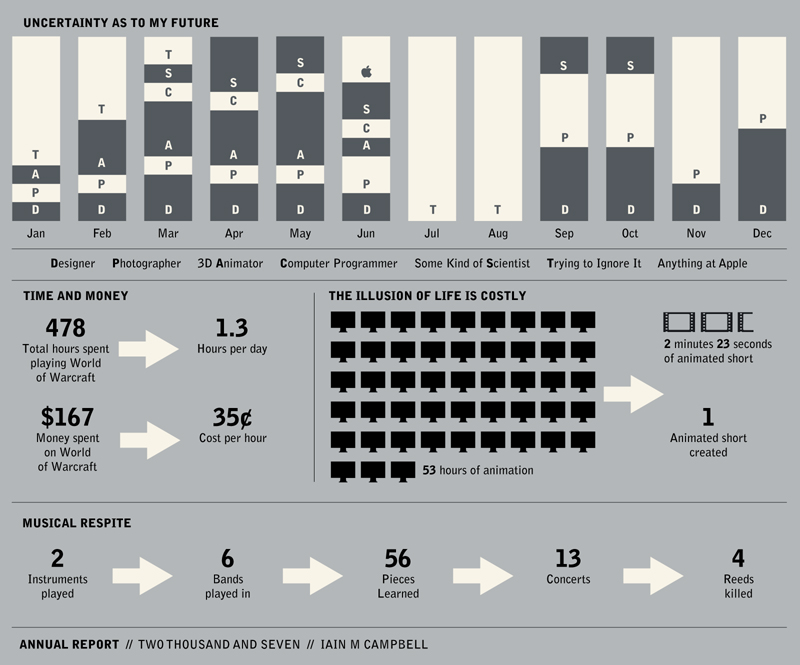


I’ve had sketches for a week and the deadline’s in two hours. Sneaking it in before getting the last grades in and getting some sleep.

My four slides represent the connectedness I’ve found through my blog; some of our home electronics; a quick snapshot of my school district; and, always at the center of it all, my family.

I liked this contest because it made me think about the year in a way that I hadn’t before. I think that is what we are always trying to do as teachers anyway.

I considered not posting my entry here because it takes a, shall we say, whimsical interpretation of the subject.

In an act of sleep-defiance unwise before an exam week I stayed up to make my annual report for Dan’s contest.

here is a more post 9-11 color scheme for the same graphics

I may not be the best entrant, but I’m guessing I’ll be the only to have actually done work on an annual report for a Fortune 500 company.

I will say that the more I do, the better I start to see ways to improve presenting what I want to say.

I choose to create an annual report about my media consumption.

The idea came together when I was miles above the earth somewhere over Siberia.


Initially, I was going to compare my running and watching habits. “Maybe there’ll be a pattern,” I thought. “Surely my running and watching are inversely proportional.” A few graphs later, that didn’t pan out.



It’s the result of a few days pondering, and more hours with photoshop than I would care to mention – or can really afford at the moment …

It was also inspired by A Tribe Called Quest’s “Scenario”.

Anyway, it really made me think – some parts I think turned out OK and other parts I know are as dodgy as can be.

I was amazed by how little I track what I do and, often, how little access I could get to my own data (which I know the companies are tracking).
Mathew Needleman hosts a new blog carnival to limited fanfare and an inexplicably shortened deadline. But I’m a sucker for carnivals.
A two-part submission, then. One part to take issue with Mathew himself, and another to offer a slick assignment for a class that isn’t mine.
A Story Is A Story
My original sleep-drunk post basically declared (without justification) storytelling the most common discipline between every 21st-century career, consequently declaring it the most common discipline between every classroom on your campus, as well as the most collaborative and the most important to teach.
Mathew took exception to my democratic optimism:
I still think that there is a particular language to film making that only a few will pick up just by osmosis. If you want to make good videos you have to be aware of certain film language in the same way that print design requires adherence to certain principles.
It’s true that editing a montage involves a different instrument than composing a paragraph but they descend from the same skill.
For reasons of time, I can only offer one other example but they are littered everywhere if you feel like looking:
In storytelling, it’s essential that you set the scene and lend your reader / viewer / listener (henceforth “audience”) some bearing
-
Language. In writing, it’s an introductory/topic sentence, like the first from chapter three of Moby Dick:
Entering that gable-ended Spouter-Inn, you found yourself in a wide, low, straggling entry with old- fashioned wainscots, reminding one of the bulwarks of some condemned old craft.
-
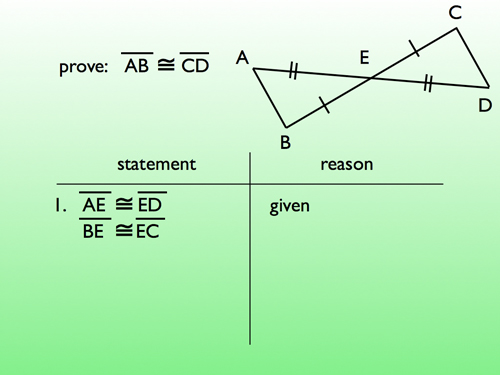
Math. In a proof, you first declare the given constraints:
- Music. In music, you often set the scene by layering your instruments, staggering their introductions. Like in Gimme Shelter, first the guitar, then the drums, then the piano, then the vocals, and then, after the audience has become comfortable, they rock.
-
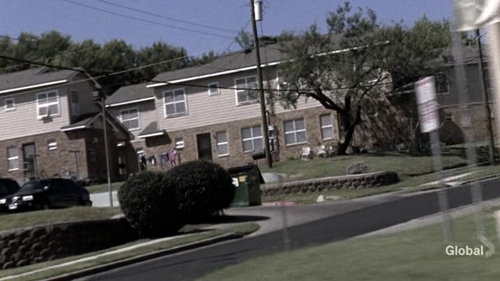
Film. In film/tv, you open a new sequence with a wide, establishing shot, letting the audience orient itself before you dig deeper with medium shots and close ups.
Like with last Friday’s Friday Night Lights, within the first few seconds of the episode, you’ve got this wide, exterior shot of Smash’s neighborhood:
Writing and film offer the most useful parallels and, honestly, they. just. don’t. stop. Everything – from transitional sentences to the rhythm of individual words to alliteration to concluding paragraphs – has an analog in film and vice versa. True to Mathew’s point, their executions vary, but execution is always secondary to conception.
I want to build students who can recognize common storytelling elements in these mediums and then move effortlessly between them.
Kant Attack Ad
To that end, it’s impossible to watch this mudslinging campaign ad without dreaming up a classroom assignment.
So you have your kids pick two opposing people, ideas, or concepts. Yeah, you could go with opposing philosophers as in the video, but my mind is elsewhere:
- metric v. imperial,
- hamlet v. laertes,
- basketball v. soccer,
- wii v. xbox 360,
- or, since in the states it’s a freakin’ election year, pick two candidates and go at it.
And by “go at it,” I mean:
- research the issues;
- pick a side;
- choose a limit on duration;
- research current campaign ads on youtube;
- gather images, video clips, sound bites from the opposition;
- distort and decontextualize them;
- get your menace on for the narration;
- use the ken burns effect a lot;
- host a classroom film festival;
- have the class vote on the issues based on the persuasiveness of the campaign ads.
Raise your hand if you wish you were teaching an elective right now.
*raises hand*