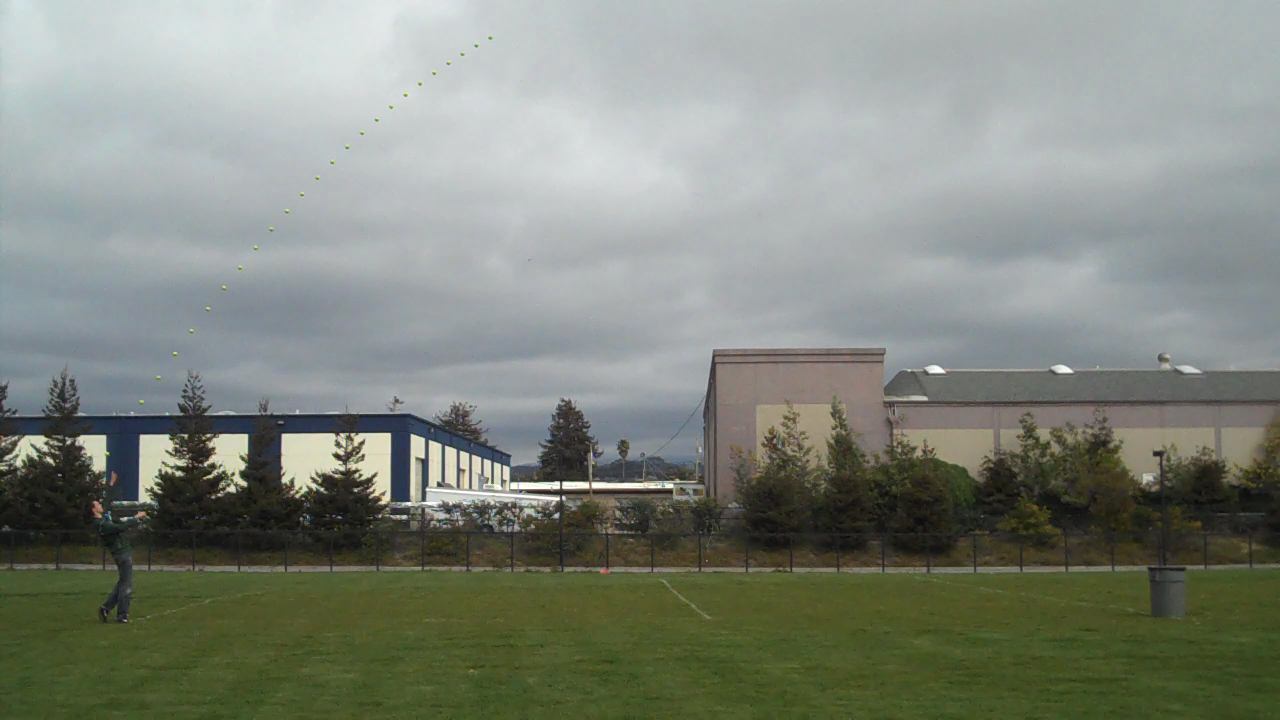
Download high quality here. See the pilot for instructions.
BTW: Lotta good stuff in the comments. I can’t prove any suggestion is better than another, but Jackie hits the one I intended all along, the one that packs the most punch per word, the one that rides into class alongside a student’s intuitive understanding of the world, the one that will do the most good as a introduction to parabolas:
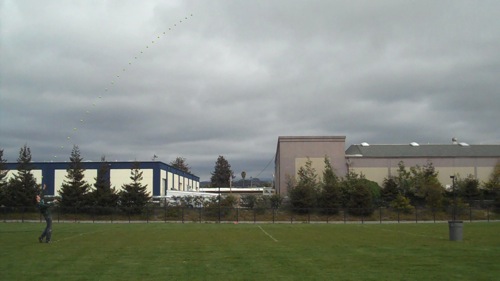
Will the ball make it into the can?
Any question heavier than that and the picture starts to get a little wobbly under the weight.
I’d stop the tape after the turn comes down and have them figure out the chance that the guy with 2 pair wins
ESPN makes a running calculation of these percentages, of course, so I blacked out that information in the clip. Have the students make the calculations and then play the unedited clip.
The cool thing, to me, is that there are varying levels of difficulty, depending on how many community cards are still unknown.
The other cool thing, to me, is that the problem functions pretty well as just a photo. In the thumbnail image, for instance, you have all the information you need, with just enough panic in Eastgate’s face to motivate the problem.
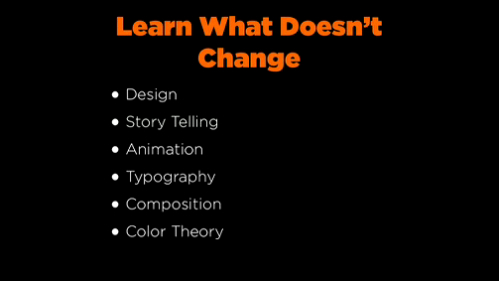
Campbell tells the crowd to learn what doesn’t change.
We are awash in shinycheaptools, a reality which is both wonderful and maddening. These creative disciplines have changed very little in the last several centuries and yet when edubloggers talk about creativity in 21st-century schools they talk overwhelmingly of the tools and, occasionally, of who found the tool first.
I paint with a broad brush here but for every 100 posts celebrating the easy-bake aesthetic of Wordle and Animoto you’d think I could find one celebrating the use of color toward easier, more satisfying communication.
Just gotta make it look new maybe. Like maybe we lose some vowels, rename it colrthry or something. We’ll give it a logo with a gradient, add some social networking functionality, and if our district IT guy blocks it maybe then we’ll start talking about what’s more important to art than the tools we use to make it.
YouTube user cigotie attends my feeder middle school. In spite of his age and our rural setting, he has amassed a portfolio of digital special effects on par with people twice his age and half his distance to Hollywood.
He is an auto-didact, having taught himself with online tutorials (like Video Copilot, which is the best of the best) to use tools which others attend brick-and-mortar schools to learn. He publishes his videos on a YouTube channel to a global audience. One of my freshmen fully expects to see him on the shortlist for an Academy Award in 2015. Your poster digital immigrant, in other words.
I’m impressed. I’m worried.
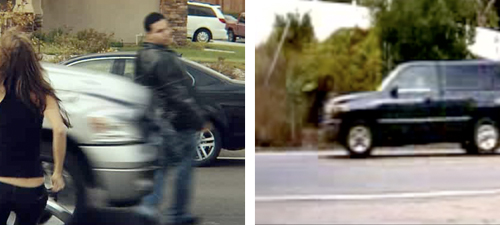
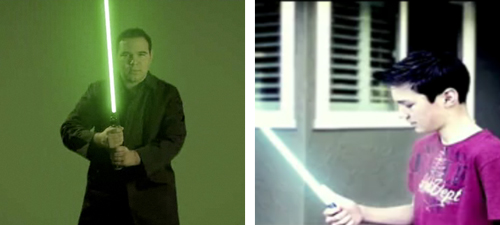
Here are a few comparisons between cigotie’s work and the Video Copilot tutorial, which, well, I guess “inspired” it is the right word.
The vision of education that promotes digital nativism seems very effective to me at equipping the natives with tools and technique, with hammers, nails, screwdrivers, glue, and a birdhouse tutorial from which they can build an identical birdhouse. But if there is a plan for moving the natives past raw technique, for bridging the gulf between technique and art, I have yet to see it widely articulated.
It’s just too easy to plunder Delicious for tags like “digitalstorytelling,” “aftereffects,” or “tutorial” and pass them off to natives like cigotie. But this kid doesn’t need more links, more web apps, or more resource sites lousy with textures, tutorials, and embeddable 3D objects. He needs someone to help him tell his own stories. Someone to interpret his interests and direct him to fiction and nonfiction that will drive his thinking to the point where he can create and not simply mimic.
I worry. Probably needlessly, but I worry that we are building schools that put students in a place to care about artistic expression while only equipping them with technique.
By Dan Meyer •
March 18, 2009
• Comments Off on Fisking Ruff Ruffman
Rhett Allain kills me. Here you have him writing several hundreds words (with LaTeXing and diagrams) taking down the dubious physics of Ruff Ruffman, animated host of the children’s show FETCH! with Ruff Ruffman:
Ruff, if this is indeed the definition you used – I am not sure if it fits in this case. Maybe you meant momentum, although I think that is not quite right either. How about I solve this problem?