Year: 2011

Total 140 Posts

For The Next Ten Days Only: Create Your Own Graphing Story At GraphingStories.com

Never heard of a Graphing Story? Here’s one I made earlier this week:

Height v. Time from Dan Meyer on Vimeo.

What’s fun is meeting people who tell me they’re still using Graphing Stories, which is a lesson that in Internet years is basically old enough to cash Social Security checks. What’s awful is that people are still using the same set of ten videos, one of which is so ridiculous I can link to it but I can’t bear to watch it ever again.

The fact of the matter is that teachers and students have great ideas for their own graphing stories. The other fact is that the tools for creating them are just out of reach of many of those same people. Tools shouldn’t impede creativity, so here’s the plan:

You handle the creativity. I’ll deal with the tools.

I’ve partnered up with the good folks at BuzzMath to create a very simple workflow for you.

What You’ll Need

  1. Fifteen seconds of video of something happening.
  2. A graph that describes what’s happening. (Use this template.)

What You’ll Do

  1. Point your browser to www.graphingstories.com.
  2. Upload your fifteen-second story.
  3. Upload your graph. (Take a photo of it. Scan it. Whatever)
  4. Wait for an e-mail with a download link.

I’ll be creating all the graphing stories manually, on a first-come-first-served basis, one story per person. After ten days, I’ll cut off submissions and get down to work.

The result? A massive collection of graphing stories spanning all kinds of interesting dimensions (height, speed, distance, pain, happiness, etc) that we can all download and use in our classrooms.

So get to work. Tell your students. Tell a friend. Reblog and retweet this thing. Let’s make it huge.

[WCYDWT] Russian Stacking Dolls

2011 May 15: Major updates on account of useful critical feedback in the comments.

Let’s see how well the storytelling framework holds up.

The Goods

Download the full archive [5.5 MB].

Act One

Play the question video.

[anyqs] Stacking Dolls – Question from Dan Meyer on Vimeo.

Ask your students what question interests them about it. Take some time here. This is the moment where we develop a shared understanding of the context. If a student has some miscellaneous question to ask or information to share about the dolls, encourage it. That isn’t off-task behavior. This task requires that behavior.

Then ask them to write down a guess at how many Russian dolls they think there are. Ask them to write down a number they think is too high and too low.

Act Two

Offer your students these resources:

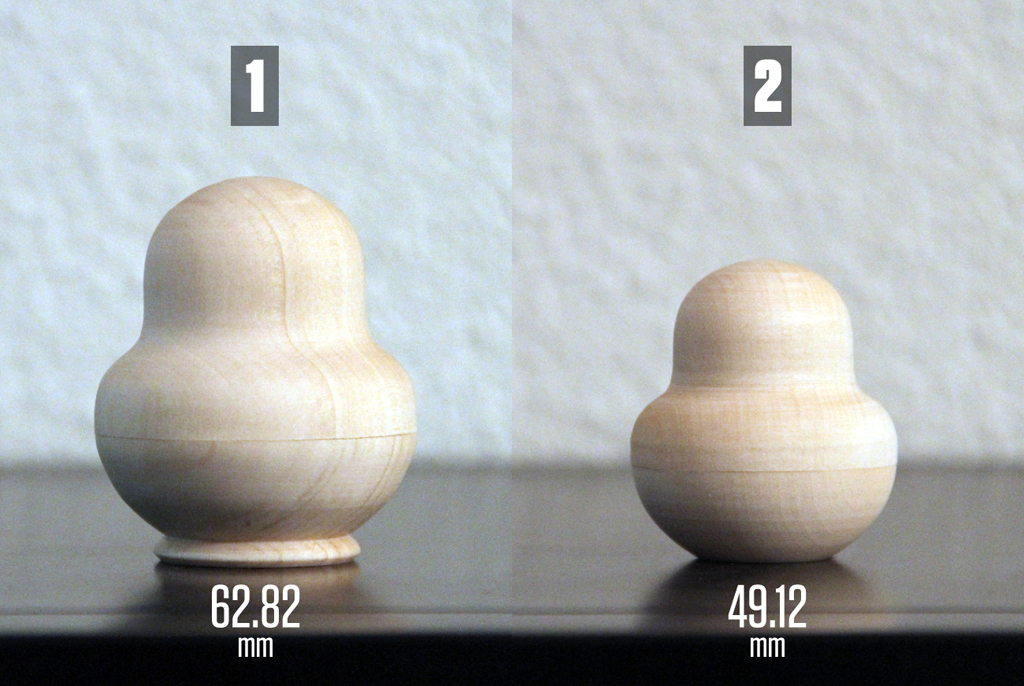
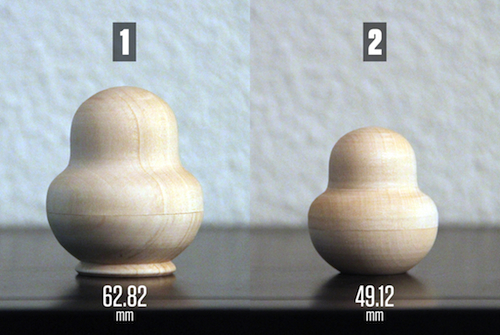
  1. The first two dolls side-by-side.
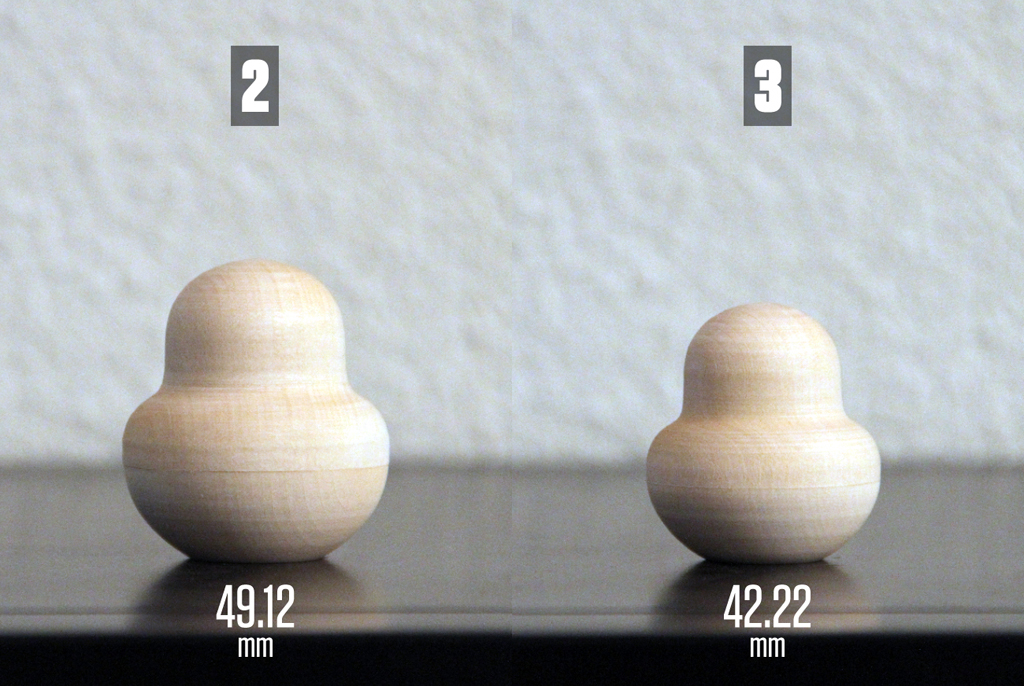
  2. The second two dolls side-by-side.

After you show them the first set of two dolls, ask them how big they predict the third will be. As one of the commenters mentioned, they need to discover the fact that these guys aren’t decreasing by a fixed amount every time, that a new model is necessary.

Once they have this new model in mind, they’ll keep applying it until they reach a doll height they think is impossibly small.

Act Three

That task isn’t going to win anybody a Fields medal. As students finish, ratchet up the demand of the task with this sequel. Say:

I need you to design me a doll that’s as tall as the Empire State Building and is made up of 100 dolls total. Tell me everything you know about that doll.

Ask them to generalize. Ask them to graph.

Host a summary discussion of the activity. At this point you’ve identified different solution strategies around the room. Have those students explain and justify their work to their peers. Everyone is accountable for understanding everyone else’s strategy.

Then show them the answer video:

[anyqs] Stacking Dolls – Answer from Dan Meyer on Vimeo.

Find out whose guess was closest.

[h/t @baevmilena who gave me the idea when I met her in Doha.]

Featured Email

Dawn Crane:

I recently took your nesting dolls activity and here’s what I did:

At the beginning of the unit on exponential functions, I followed your process fairly closely, except I used pictures of the dolls. I asked kids to predict the patterns, etc. Most kids went with exponential, though a few were strongly in favor of linear. At the end of the unit was where I believe the magic appeared and is what I will use in the future. By this point, kids had done work with linear and exponential functions and some kids had studied quadratics. I had 7 different sets of nesting dolls in the room. Kids were told they could pick any of the sets, but had to identify them. Their job was to determine an equation to model the growth/decay pattern of the dolls and use math “tools” to convince me that their equation did an adequate job at modeling the dolls. They had to do all of the measuring…some kids chose height, some volume, some girth.

I got a huge array of problem solving. Some kids used graphs to visually show more of a regression to see whether linear or exponential had a better fit. Some kids developed both linear and exponential equations and then used tables and graphs to see where each went off track. Some recognized a constant second difference in growth and used systems of equations to develop an amazing quadratic equation that appeared to fit their data perfectly.

This project really allowed students to take the problem as far as they wanted with an entry point for everyone. And the kids loved the nesting dolls so they were really engaged. I strongly recommend actually using the dolls rather than video-taping them as well. It adds a tactile dimension which is really valuable to many students.

The Three Acts Of A Mathematical Story

2016 Aug 6. Here is video of this task structure implemented with elementary students.

2013 May 14. Here’s a brief series on how to teach with three-act math tasks. It includes video.

2013 Apr 12. I’ve been working this blog post into curriculum ideas for a couple years now. They’re all available here.

Storytelling gives us a framework for certain mathematical tasks that is both prescriptive enough to be useful and flexible enough to be usable. Many stories divide into three acts, each of which maps neatly onto these mathematical tasks.

Act One

Introduce the central conflict of your story/task clearly, visually, viscerally, using as few words as possible.

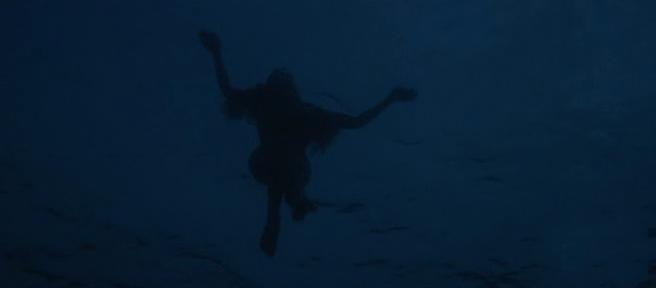
With Jaws your first act looks something like this:

The visual is clear. The camera is in focus. It isn’t bobbing around so much that you can’t get your bearings on the scene. There aren’t any words. And it’s visceral. It strikes you right in the terror bone.

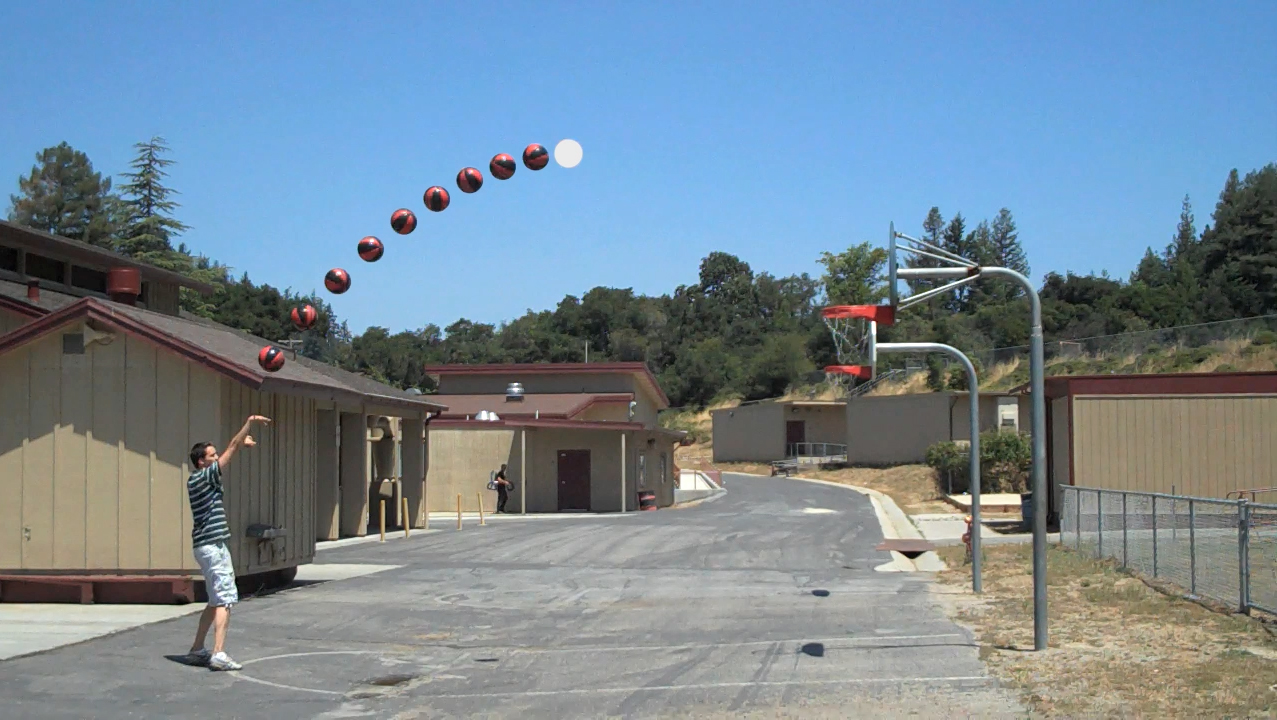
With math, your first act looks something like this:

The visual is clear. The camera is locked to a tripod and focused. No words are necessary. I’m not saying anyone is going to shell out ten dollars on date night to do this math problem but you have a visceral reaction to the image. It strikes you right in the curiosity bone.

Leave no one out of your first act. Your first act should impose as few demands on the students as possible โ€“ either of language or of math. It should ask for little and offer a lot. This, incidentally, is as far as the #anyqs challenge takes us.

Act Two

The protagonist/student overcomes obstacles, looks for resources, and develops new tools.

Before he resolves his largest conflict, Luke Skywalker resolves a lot of smaller ones โ€“ find a pilot, find a ship, find the princess, get the Death Star plans back to the Rebellion, etc. He builds a team. He develops new skills.

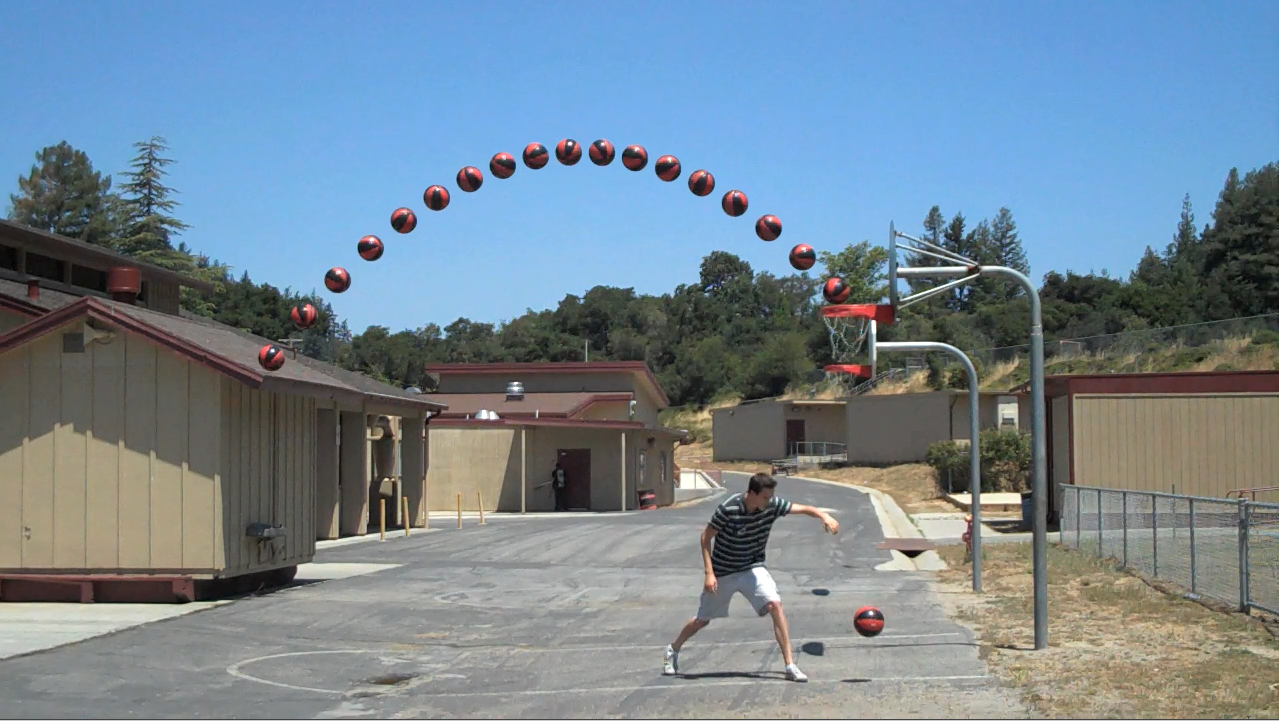
So it is with your second act. What resources will your students need before they can resolve their conflict? The height of the basketball hoop? The distance to the three-point line? The diameter of a basketball?

What tools do they have already? What tools can you help them develop? They’ll need quadratics, for instance. Help them with that.

Act Three

Resolve the conflict and set up a sequel/extension.

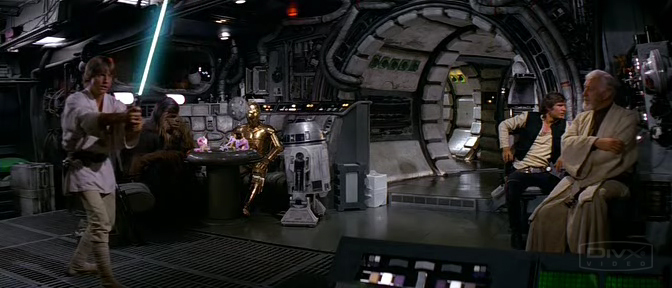
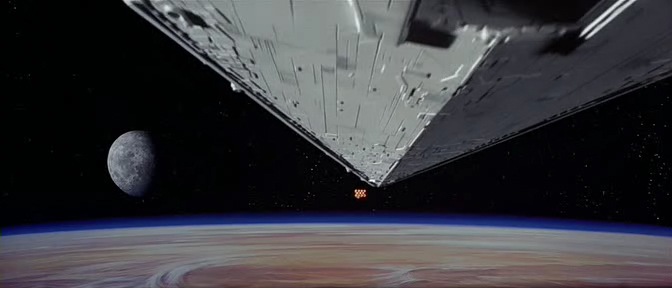
The third act pays off on the hard work of act two and the motivation of act one. Here’s act three of Star Wars.

That’s a resolution right there. Imagine, though, that Luke fired his last shot and instead of watching the Death Star explode, we cut to a scene inside the Rebellion control room. No explosion. Just one of the commanders explaining that “the mission was a success.”

That what it’s like for students to encounter the resolution of their conflict in the back of the teacher’s edition of the textbook.

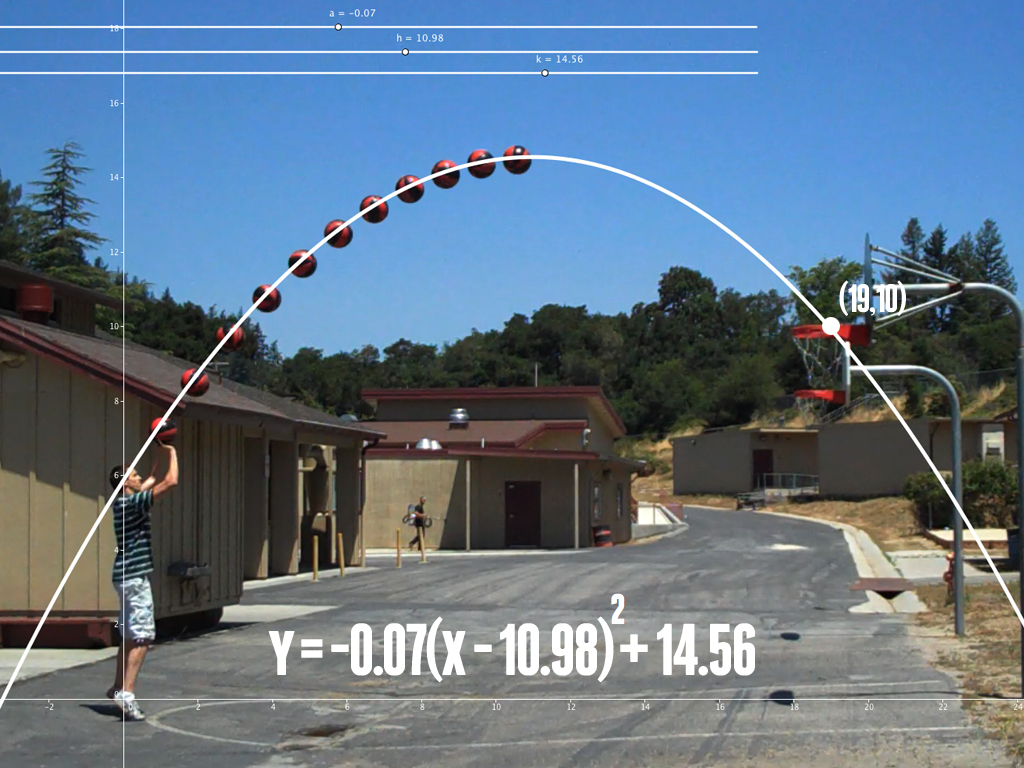
If we’ve successfully motivated our students in the first act, the payoff in the third act needs to meet their expectations. Something like this:

Now, remember Vader spinning off into the distance, hurtling off to set the stage for The Empire Strikes Back. You need to be Vader. Make sure you have extension problems (sequels, right?) ready for students as they finish.

Conclusion

Many math teachers take act two as their job description. Hit the board, offer students three worked examples and twenty practice problems. As the ALEKS algorithm gets better and Bill Gates throws more gold bricks at Sal Khan and more people flip their classrooms, though, it’s clear to me that the second act isn’t our job anymore. Not the biggest part of it, anyway. You are only one of many people your students can access as they look for resources and tools. Going forward, the value you bring to your math classroom increasingly will be tied up in the first and third acts of mathematical storytelling, your ability to motivate the second act and then pay off on that hard work.

Related

  1. I gave this post a try a year ago.
  2. Also, Breedeen Murray has a lot of useful things to say about storytelling, though I can’t endorse her enthusiasm for “confusion.”

2011 Dec 26: The Three Acts of a (Lousy) Mathematical Story is also on the syllabus.
Dissents Of The Day: Danielson, Pickford, Scammell

Christopher Danielson:

Your quest for the perfect image that will get 100% of viewers on board with the same mathematical question may be a bit quixotic …

Avery Pickford:

In [my ideal] world, I imagine spending a greater amount of time talking about the aesthetics of what makes for an interesting math problem and much less time cajoling students to ask the โ€œrightโ€ question.

John Scammell

Itโ€™s unfortunate that we are so curriculum driven that we have to trick them into inventing the question we want them to come up with.

Here’s the thing: nobody watches Jaws and feels cajoled into wondering the question, “Won’t anybody stop that shark?!” No one watches Star Wars and feels tricked into wondering, “Will the rebels defeat the Galactic Empire?!” Those questions are irresistible, not on account of any deception on the part of the cast or crew, but because the cast and crew evoked the central conflict of their story skillfully.

This isn’t to say those questions are irresistible to everybody. Some people lack the cultural prerequisites to care about Star Wars. Some people possess the prerequisites and simply don’t care. Not everyone is interested in every movie, however skillfully it creates a narrative.

The point of the #anyqs challenge is to evoke a perplexing situation so skillfully that the majority of your students will wonder the same question (whatever that is) and the rest of the class won’t find that question unnatural or uninteresting, even if it wasn’t the first question that struck them.