Pseudocontext sends two signals to our students, both false:
- Math is only interesting in its applications to the world, and
- By the way, we don’t have any of those.
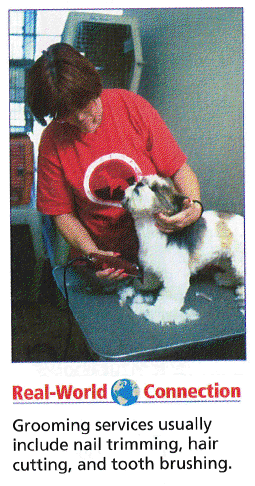
Pseudocontext sends two signals to our students, both false:
This is essential. On commission from the UK in 2005, Malcolm Swan wrote a guide to great math teaching [pdf] that’s as good as anything I’ve read at this length. It is, explicitly, a collection of activities – full explanations of resources a teacher can use for floatation in her first year – but the document also goes into exquisite detail about what theory motivates those activities. It outlines excellent pedagogy while at the same time keeping your head above the waterline.
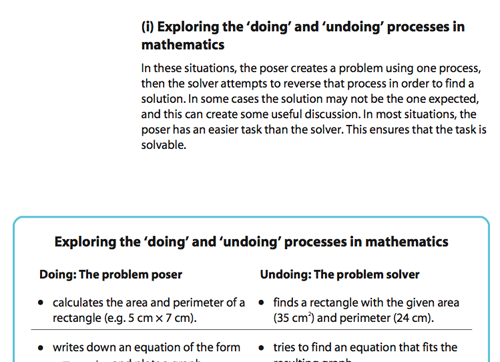
This is a fast read – big type, thin margins, lots of color, etc. – and from now on, it’ll be the first thing I recommend to new math teachers. I hope you’ll do the same. But help them make sense of it also. Some of this only may look so brilliant in light of my abundant early-career failure.
Sharon Cohen, the brand manager at Orbeez, checks in on the last post:
The disparity (150/100) is based on the fact that growth depends on ionic content of the water–the purer the water the larger they grow. The very same Orbeez wll grow to a different size depending on the water purity. The number we chose ended up being a marketing decision (100 is a powerful figure) but we should have been consistent. It’s impossible to choose one accurate number.
BTW: Sharon Cohen sent along Orbeez’ internal measurements of expansion given different water sources.
This one is about a year old. It’s short and simple. As I recall, I used it for an opener problem and nothing more. In my development as a math teacher and curriculum developer, though, it has a lot of sentimental significance. In Leslie Knope’s Love Life, I wrote about my goal to draw inspiration closer to action through practice, practice, practice, and this is the result.
I was driving along, checking Maps on my iPhone for directions, and found it interesting how the blue tracking orb moves faster when you’re zoomed in close to the map and slower when you’re zoomed out. Reflexively, I turned it into a question: “how fast is the car going, given this particular orb?” Then I tweaked it: “Do we arrest this person for speeding?” (Crime doesn’t pay, but it’s more interesting to my students.) Then, just as reflexively, I knew the image I needed to create.
iPad – No Timer from Dan Meyer on Vimeo.
Such a simple thing, but it was one of the most satisfying moments of my professional life.
The Goods
The problem archive, including:
Just to be totally clear, I wouldn’t bring this video inside fifty feet of a classroom. I’m not recommending you use this video in a classroom. I’m recommending that when you see math in the world around you that you get in the practice of doing something about it – especially, that you turn it into a question.
Don’t know how to do the black box and the censor beep? Just pause the video right before she answers her own question. Point being, the more you habituate this practice – even on lessons like this one that won’t go anywhere – the more often you’ll catch these moments.
Here’s the answer:
The Goods
The problem archive, including:
Don’t do it, seriously.