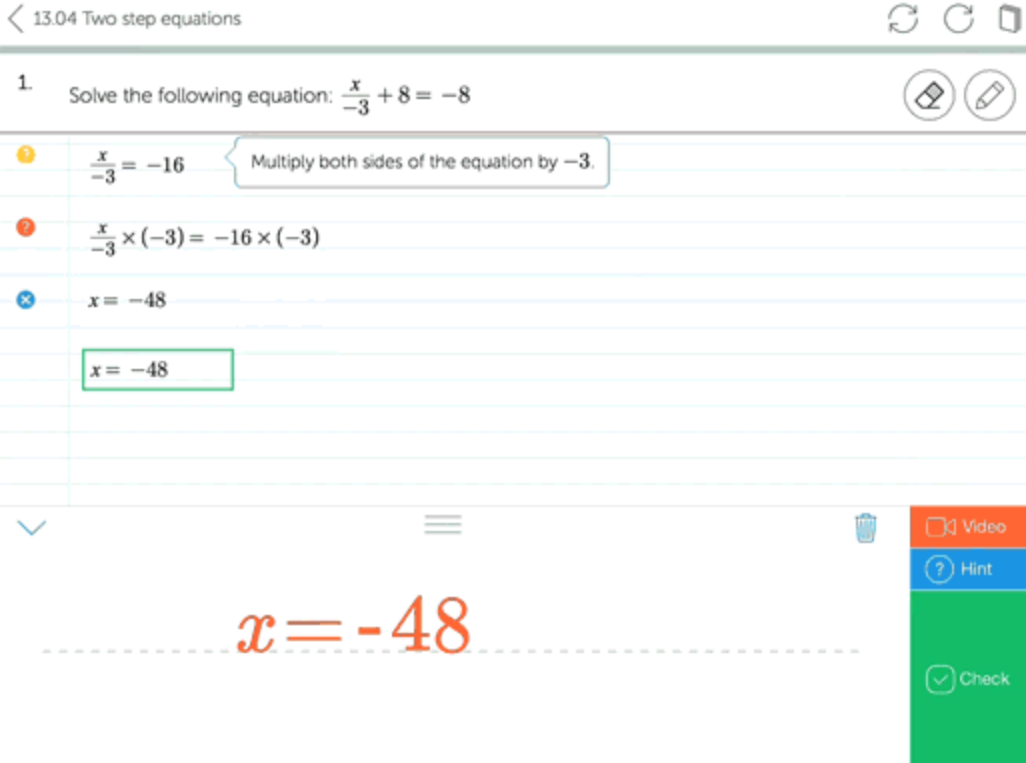
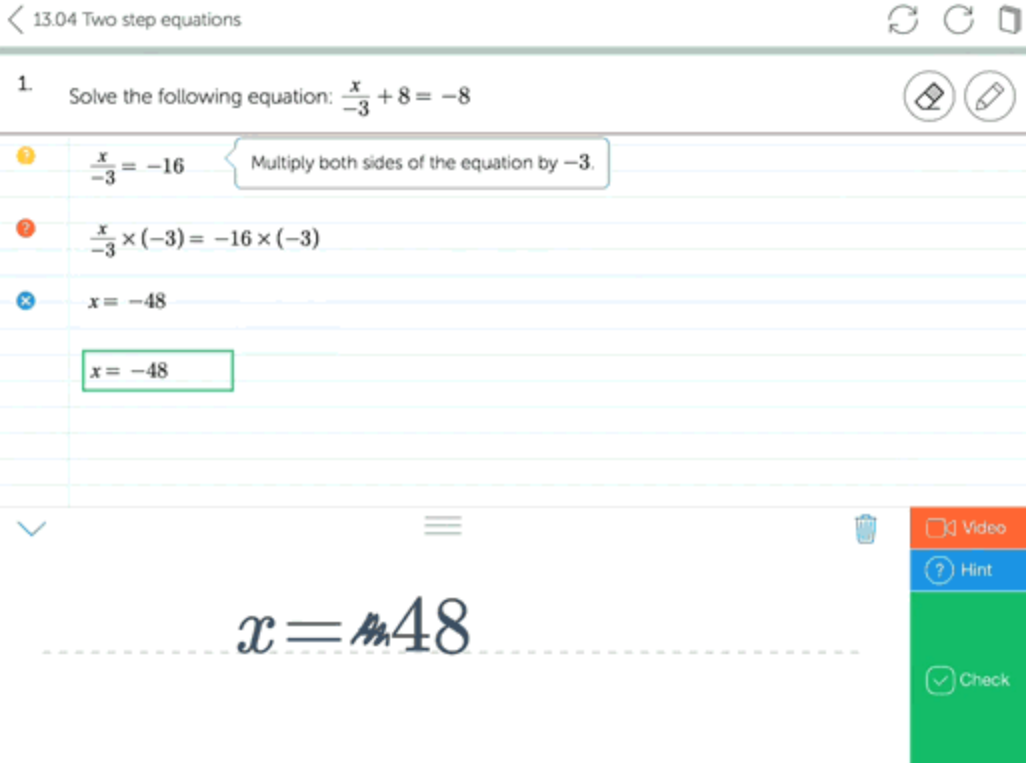
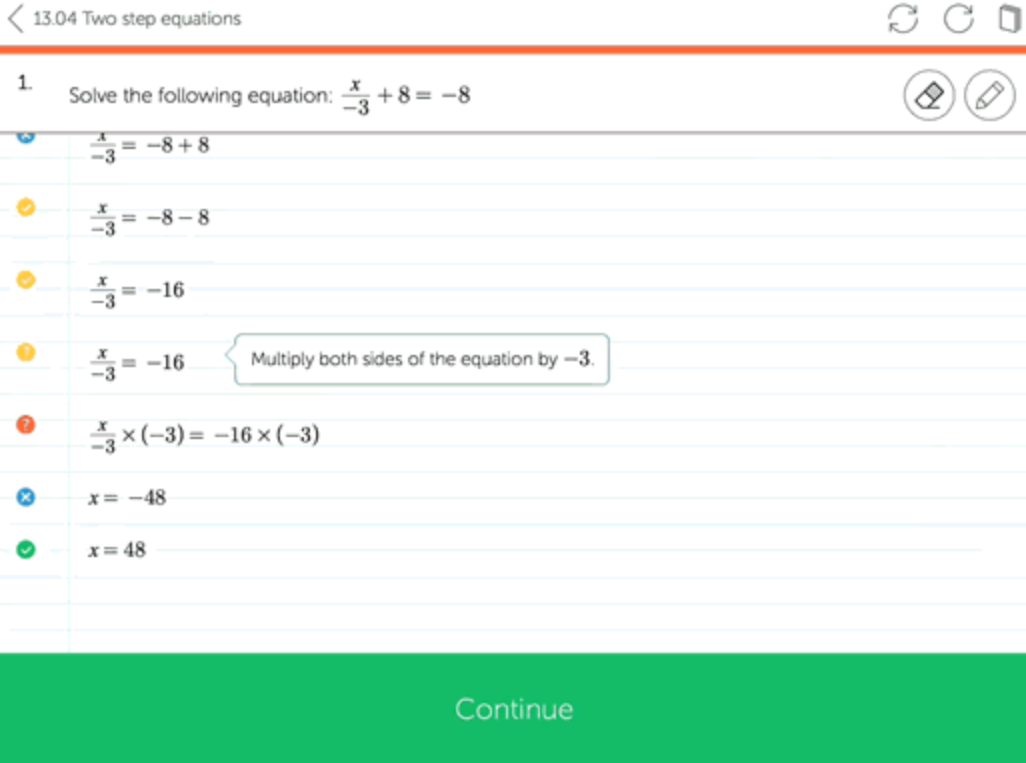
Before I get to the good, here’s the tragic, a comment from a father about a math feedback platform that I don’t want to single out by name. This problem is typical of the genre:
My daughter just tried the sine rule on a question and was asked to give the answer to one decimal place. She wrote down the correct answer and it was marked wrong. But it is correct!!! No feedback given just — it’s wrong. She is now distraught by this that all her friends and teacher will think she is stupid. I don’t understand! It’s not clear at all how to write down the answer — does it have to be over at least two lines? My daughter gets the sine rule but is very upset by this software.
My skin crawls — seriously. Math involves enough intrinsic difficulty and struggle. We don’t need our software tying extraneous weight around our students’ ankles.
Enter Classkick. Even though I’m somewhat curmudgeonly about this space, I think Classkick has loads of promise and it charms the hell out of me.
Five reasons why:
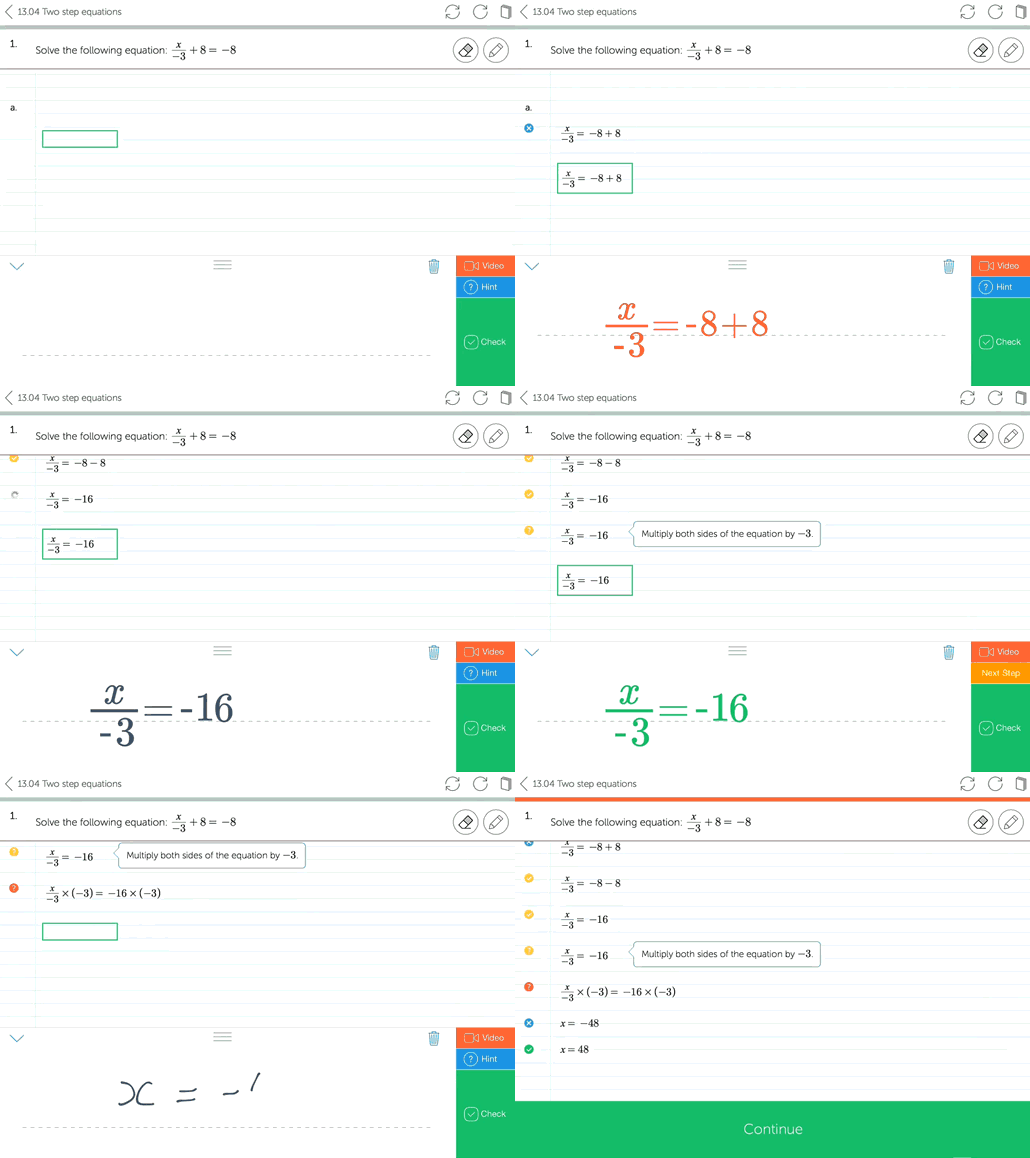
- Teachers provide the feedback. Classkick makes it faster. This is a really ideal division of labor. In the quote above we see the computer fall apart over an assessment a novice teacher could make. With Classkick, the computer organizes student work and puts it in front of teachers in a way that makes smart teacher feedback faster.
- Consequently, students can do more interesting work. When computers have to assess the math, the math is often trivialized. Rich questions involving written justifications turn into simpler questions involving multiple choice responses. Because the teacher is providing feedback in Classkick, students aren’t limited to the kind of work that is easiest for a computer to assess. (Why the demo video shows students completing multiple choice questions, then, is befuddling.)
- Written feedback templates. Butler is often cited for her finding that certain kinds of written feedback are superior to numerical feedback. While many feedback platforms only offer numerical feedback, with Classkick, teachers can give students freeform written feedback and can also set up written feedback templates for the remarks that show up most often.
- Peer feedback. I’m very curious to see how much use this feature gets in a classroom but I like the principle a lot. Students can ask questions and request help from their peers.
- A simple assignment workflow for iPads. I’m pretty okay with these computery things and yet I often get dizzy hearing people describe all the work and wires it takes to get an assignment to and from a student on an iPad. Dropbox folders and WebDAV and etc. If nothing else, Classkick seems to have a super smooth workflow that requires a single login.
Issues?
Handwriting math on a tablet is a chore. An iPad screen stretches 45 square inches. Go ahead and write all the math you can on an iPad screen — equations, diagrams, etc — then take 45 square inches of paper and do the same thing. Then compare the difference. This problem isn’t exclusive to Classkick.
Classkick doesn’t specify a business model though they, like everybody, think being free is awesome. In 2014, I hope we’re all a little more skeptical of “free” than we were before all our favorite services folded for lack of revenue.
This isn’t “instant student feedback” like their website claims. This is feedback from humans and humans don’t do “instant.” I’m great with that! Timeliness is only one important characteristic of feedback. The quality of that feedback is another far more important characteristic.
In a field crowded with programs that offer mediocre feedback instantaneously, I’m happy to see Classkick chart a course towards offering good feedback just a little faster.
2014 Sep 17. Solid reservations from Scott Farrar and some useful classroom testimony from Adrian Pumphrey.
2014 Sep 21. Jonathan Newman praises the student sharing feature.
2014 Sep 21. More positive classroom testimony, this entry from Amy Roediger.
2014 Sep 22. Mo Jebara, the founder of Mathspace, has responded to my initial note with a long comment arguing for the adaptive math software in the classroom. I have responded back.