Category: 3acts

Total 60 Posts

NCTM President Michael Shaughnessy Responds To My Revision Of His Geometry Task

Hola, amigos. I’m back from Spain, back in the game after sidelining myself for a helluva comment thread. It turns out that NCTM President Michael Shaughnessy designed the task that I critiqued in a recent post and he stopped by with a few notes on my redesign.

Michael Shaughnessy:

Not all math problems have to be posed everytime in a a high tech environment. Sure, it’s ‘cooler’ that way, but i completely disagree with your comment on this one, about ‘how the problem was posed.’ It’s only boring in the beholder’s eyes, depends on how it’s pitched to a group.

The last line seems to contradict itself, though. Either boredom is in the eye of the beholder, in which case we should just pose the task however we like and accept that it simply won’t engage some students or engagement depends on how the task is posed, in which case we can discuss productive ways to pose it. They both can’t be true, though.

I figured there were three productive ways to pose that task, three revisions to Shaughnessy’s original problem that would open it up to a few more students. I’m quoting my original post here:

  1. Show how this new, difficult problem arises from an old, easy problem.
  2. Make an appeal to student intuition.
  3. Introduce abstraction (labels, notation, etc.) only as a necessary part of solving a problem that interests us.

What’s interesting is how many critics, Shaughnessy included, saw a video and assumed I was aiming at something “high-tech,” “cool,” and “hip.” But those are beside the point. The point is helping more students access an interesting problem. Video was the means, not an end.

Shaughnessy also reports having “gotten a LOT of mileage out of this problem with middle school kids, high school kids, perspective teachers [sic]” without anything fancier than the paper the problem was printed on. I don’t doubt that’s true. But if that brief video opens the problem up to even one more student, my only question is why not? Why not get a little more mileage out of the problem? What’s the downside?

While most critics decided early on that I was just trying to buy off the YouTube generation with something shiny, I was grateful that Tom I. critiqued the redesign on its own terms:

… it seems like Dan is always recommending that we (more or less) apologize to our students for the abstractness of math. The abstractness makes it hard, but must we assume that it makes math pointless and uninteresting for our students?

Abstraction doesn’t make math harder. Abstraction makes math possible. It’s one of the most powerful and satisfying tools in the mathematician’s box. The trouble is that you can’t abstract a vacuum. You start with something concrete (not necessarily “real-world”) and then abstract its essential features. Again: you start with something concrete and then abstract it. Over and over again, though, math curricula provide both the concrete and the abstract simultaneously, one on top of the other. This is unnatural. (R. Wright puts it artfully: “This is a charming problem when posed simply and innocently, not flayed alive by terminology, labels, and notation.”) Unnatural abstraction is boring and intimidating. When we put abstraction in its rightful place as a tool for simplifying the concrete, it’s interesting and empowering.

Other Featured Comments

Debbie:

By starting off with a very familiar problem-style and seeing you apply your approach to it I think I’m finally convinced that this isn’t a one-trick pony but something that can work with all sorts of maths.

Bowen Kerins:

I also want to point to some language used in the discussion here. The initial problem is “insultingly easy”, while the later problem is “trivial” (Alexander’s comment). This is in the eye of the giver of the problem, not in the eye of the recipient.

This is a strong point and I’ll mind my manners going forward. Rephrasing: the goal isn’t to start with a problem every student will find easy. The goal is to show how something relatively simple quickly turns into something relatively more complex.

Tom I:

I bet 9 out of 10 readers of this blog thought [Shaughnessy’s original] was a fun problem and felt an itch to solve it. Why wouldn’t students feel that way?

Because there isn’t a one-to-one correspondence between things math teachers like and things students like. They aren’t like us. Please: do whatever you can to imagine what it feels like to walk into a math class as a high school freshman who’s been convinced since fifth grade she’s stupid, who’s now on her third year of the same Algebra class. She isn’t thrilled by the same mathematical investigations you and I are. She’s threatened by them.

If I cut my teeth teaching honors kids in Fairfax County, I imagine this would be a very different blog. I’d have a very different career. As it is, they tossed me to the wolves in my third year teaching and I had to make friends in the wild. I couldn’t be more grateful for the empathy that experience required.

Carlo Amato:

What program do you use to construct this video?

Dvora:

On the tech side of things… how did you create the video? What programs did you use?

All Keynote. Let me see what I can put together for Keynote Camp.
[3ACTS] Some Really Obscure Geometry Problem

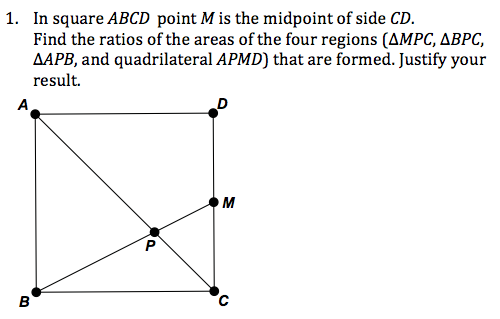
At the NCTM Institute last month, we broke into task groups to discuss reasoning and sensemaking (the conference themes) in content focus groups. I slipped into Geometry a little late and found a seat. The group was discussing approaches to this problem:

This was the session immediately following my keynote and the difference between the tasks I had described and the task they had just finished was stark. Someone asked, “How would we apply Dan Meyer’s approach to this problem?”

I ducked.

It isn’t fair. It’s apples and oranges. Paper is a great medium for a lot of math problems. Paper is a terrible medium for representing how people apply math to the world outside the math classroom. My techniques for one problem type have limited use for the other. My enthusiasm for one problem type shouldn’t be mistaken for a lack of enthusiasm for the other.

That said, I don’t find myself terribly enthusiastic when I think about assigning this problem to Geometry classes I have taught. As a challenge problem or extra credit, sure, but in its current form – with the abstract mathematical language and symbology smacking you right in the face – students are going to wonder, “Who comes up with these problems, seriously?”

If we make a better first act, though, we can engage, I dunno, 17.2% more students without any cost to the math. That’s empirical, friend.

Here’s the redesign:

  1. Show how this new, difficult problem arises from an old, easy problem.
  2. Make an appeal to student intuition.
  3. Introduce abstraction (labels, notation, etc.) only as a necessary part of solving a problem that interests us.

Act One

Some Really Obscure Geometry Problem from Dan Meyer on Vimeo.

  1. Start with a square.
  2. Draw the diagonals of the square.
  3. Ask students to tell you what percent each of those regions is of the whole. This is insultingly easy and that’s the point.
  4. Drag the endpoint of one diagonal halfway down the side of the square.
  5. Ask them, “How about now?”
  6. Ask them to guess the percents again.

Watch the video. Basically, we’re applying pressure to their confidence, which is how I try to approach pure math problems. Start from what they know. Then mess with it in some trivial way (eg. we just dragged the endpoint down a little) that requires math that is anything but trivial.

Act Two

You and your students will begin to find it very difficult to talk about all these different segments and regions without labels. So add them. A recurring point around here is that if you want to disengage a lot of students who might otherwise be engaged in the math, simply start the problem with as much abstraction as possible. If you want to engage those students, don’t introduce that abstraction until students know why they should care about it.

Act Three

You’ve been walking around and taking note of different solution strategies, right? Have students come up and explain those different strategies. Then show use this Geogebra applet to show the percentages changing, in case anyone still needs convincing.

Sequel

The sequels here are really, really great.

Suppose M cuts side CD so that MD = n – CM. What are the ratios of the areas of the four regions?

Send n to infinity and watch the fireworks.

Again, though: print-based media require you to keep everything on the same page – the sequels in the same visual space as the original problem. I realize that math teachers by nature don’t mind that. Do students?

Featured Comment

J Michael Shaughnessy, President of the National Council of Teachers of Mathematics and designer of the problem under discussion in this post:

Not all math problems have to be posed everytime in a a high tech environment. Sure, it’s ‘cooler’ that way, but i completely disagree with your comment on this one, about ‘how the problem was posed.’ It’s only boring in the beholder’s eyes, depends on how it’s pitched to a group.

2011 Aug 29: My response here.

The Three Acts Of A (Lousy) Mathematical Story

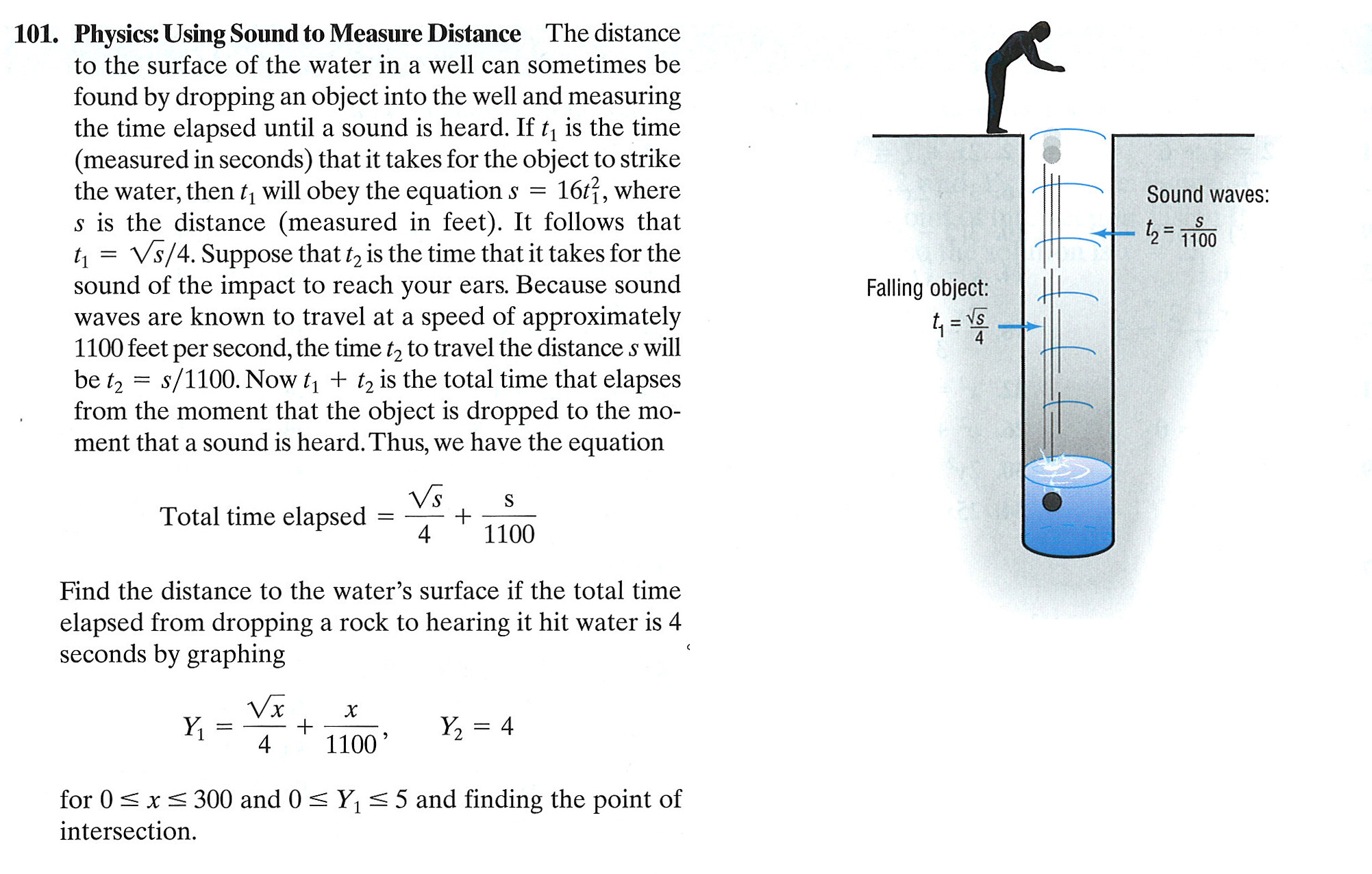
This is one of the most tragic math problems I’ve ever seen. (Click for larger.) Not because it’s awful, though it is, but because the awfulness conceals something amazing. I mean, how great is it that we can drop a rock in a well and the sound of the splash tells us how deep the well is. That’s wizardry!

I find it completely amazing we get to offer that power to our students. If my goal were to conceal that amazingness, though, to ensure my students would be less interested in mathematical wizardry thanks to my efforts, I’m not sure I could do any better than this problem.

Problems

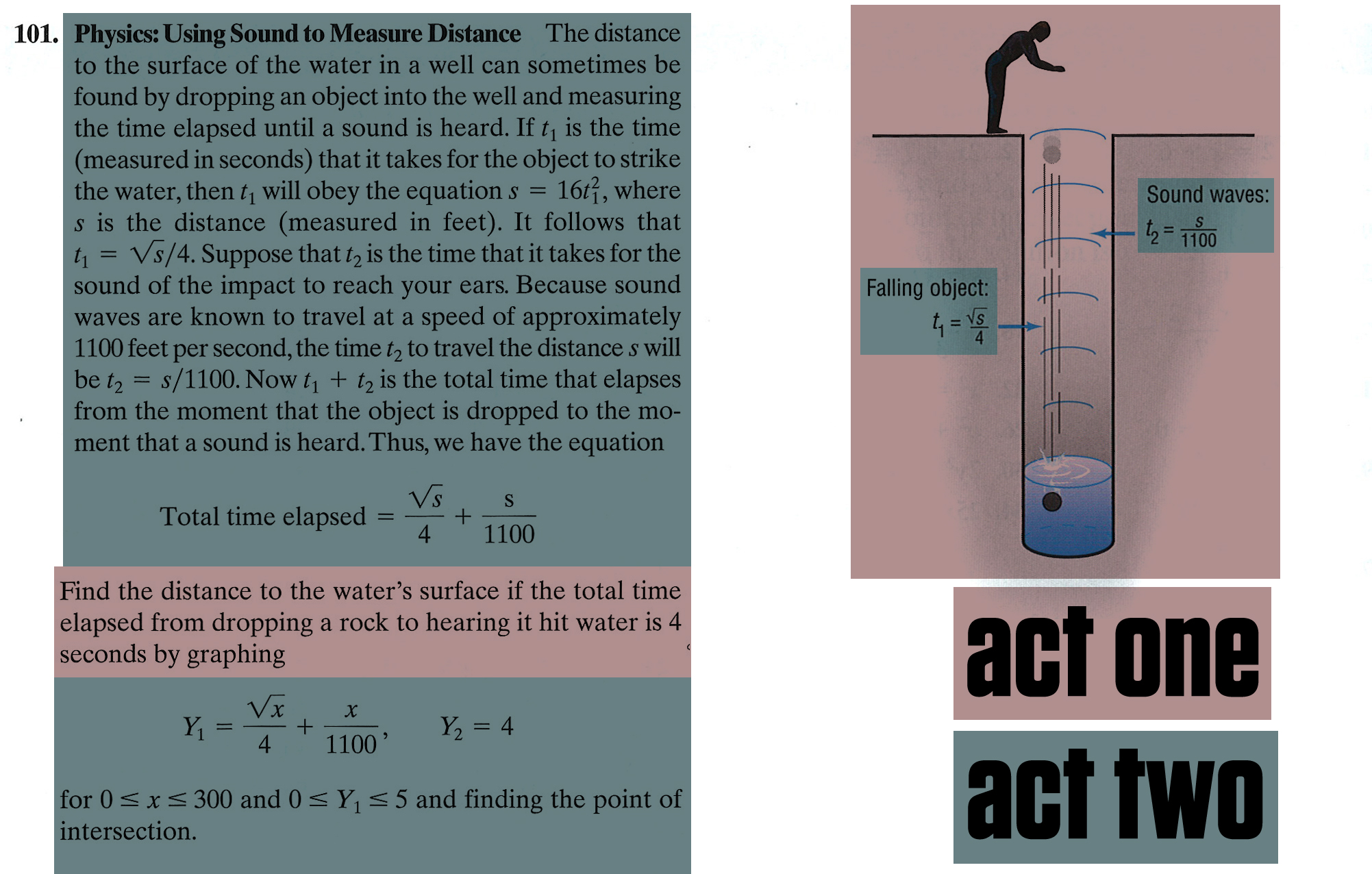
  1. The student experiences act one and act two at the same time. Act one is supposed to hit you in the gut; act two in the head. The only reason your textbook tries to do both at the same time is because printing the same problem on two different pages is logistically impossible. Luckily, you aren’t bound by the same constraints.
  2. The problem starts in the second act. And what a second act. Your students have no idea why they’re wading through that long, thickety paragraph outlining the tools, information, and resources (act two) they’ll need to solve the hook (act one) which shows up long after they’ve stopped caring.
  3. And what a hook. Seriously, could someone please explain to me which interest group or political constituency is served by slurring what should have been concise, obscuring what should have been clear, and jargoning what should have been conversational. Seriously, how would a human phrase that hook? Would a human need twenty-six words?
  4. The act one visual is cheap. Again, we’re dealing with cheap clip art here only because of the constraints on an industry that’s taking on water. Don’t go down with that ship. Can you think of a better visual, one that would make students wonder, “Wow. How deep is that?” without you lifting a finger?
  5. The act three payoff is weak. Imagine all the intensity of the final assault on the Death Star in Star Wars. A planet’s survival hinges on an unimaginably long shot. Luke takes that shot as the clock winds down, a shot right at the guts of the Death Star. What if at that moment we cut to some Rebellion functionary announcing in a slow monotone, “The Rebels were successful. They destroyed the Death Star.” That’s what it’s like to read the answer to a visually compelling problem in the back of the book. Show that thing explode.

Solutions

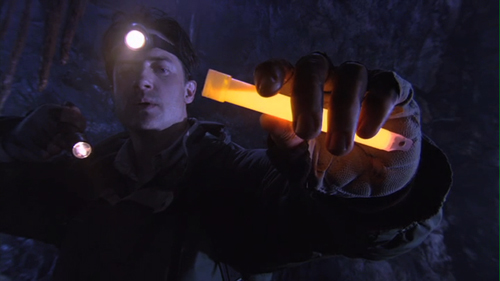
It turns out that Hollywood occasionally makes math problems for us. Click through and have a look.

  1. Journey to the Center of the Earth (2008)
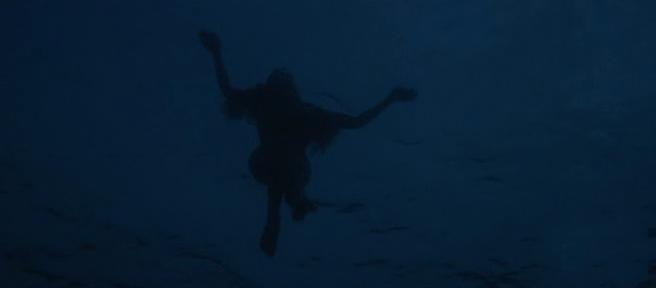
  2. The Descent

With Brendan Fraser, you get a fun check on your own answer and an explanation of why his team even cares how deep the cave is. With the Descent team, you get a much deeper cave and a stronger separation between the first and second acts. Both represent massive improvements over our status quo.

To be clear, I’m not saying you can just play act one and two and your students will trot merrily to an answer in act three, deriving that thorny equation for projectile motion all on their own while stopping periodically to smell the constructivism flowers. I’m not saying that. This problem is tricky and will likely require lots of help on your part. What I’m saying for sure is that it makes no sense to offer that mountainous paragraph of helpful text without your students knowing (to say nothing of caring) why you’re offering it.

Related:

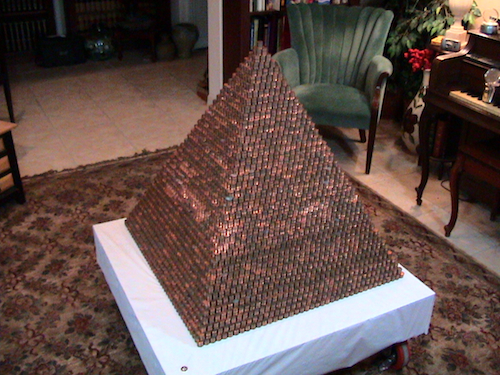
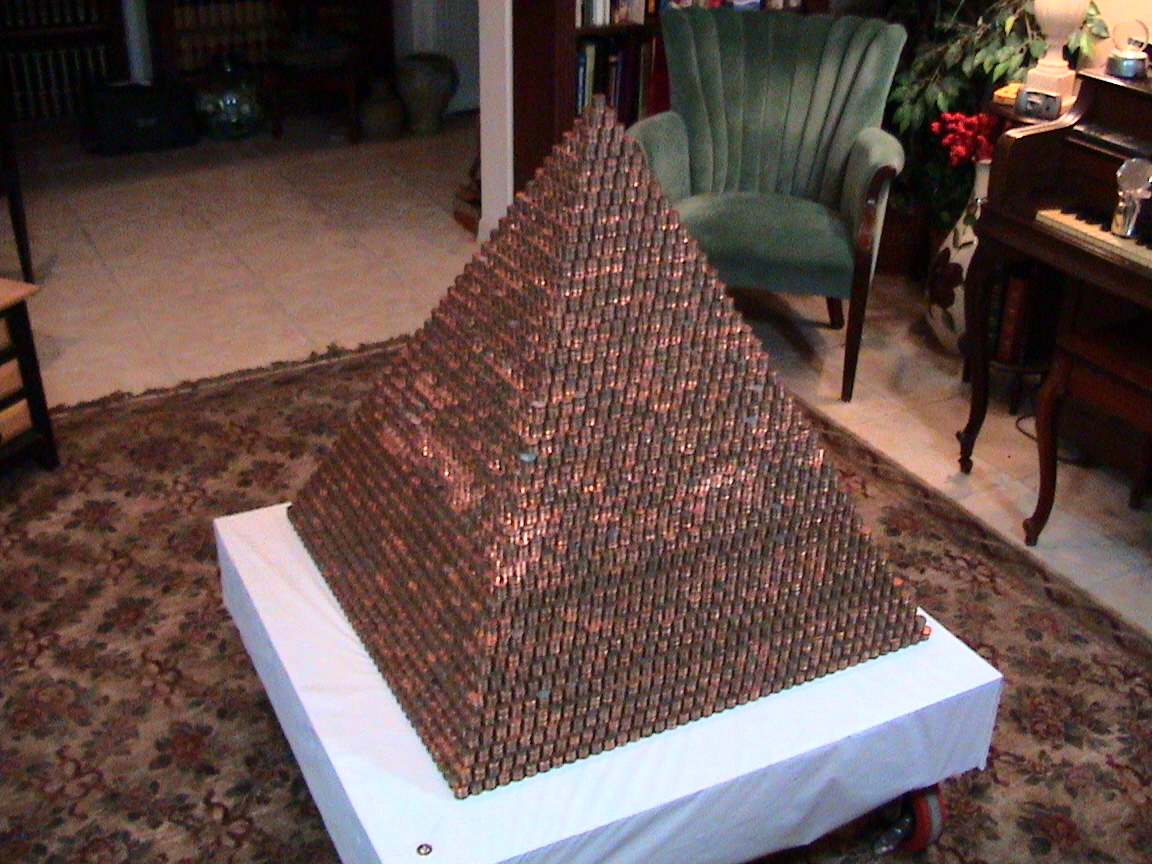
[3ACTS] Pyramid Of Pennies

The Goods

Download the full archive [33.9 MB].

Act One

Act Two

Act Three

Sequels

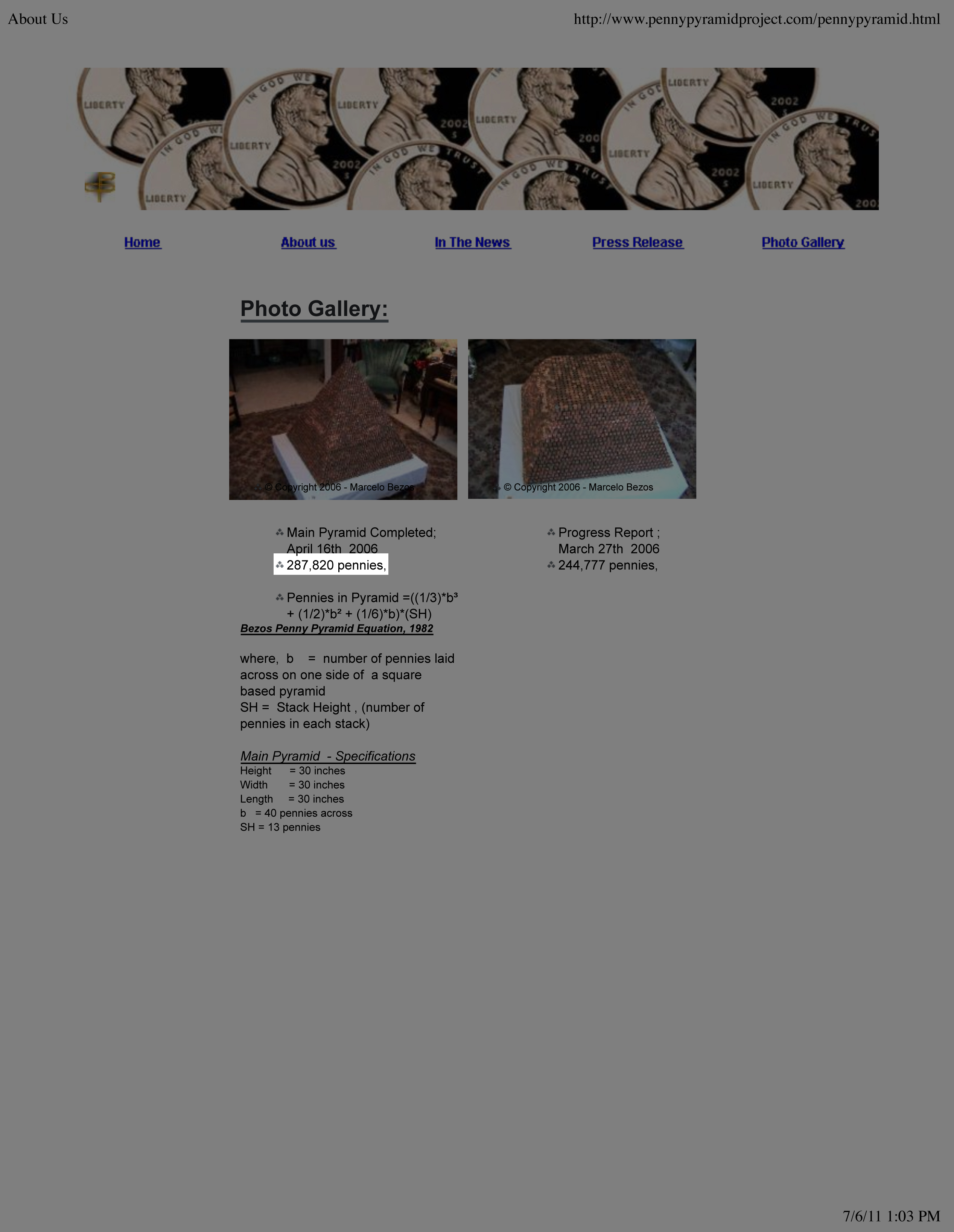
  • I have $1,000,000.00 in pennies, how big of a pyramid can I make?
  • Each stack has 13 pennies which is a strange number to choose. Why do you think Marcelo Bezos chose it? [Hint: not out of an abundance of superstition.]
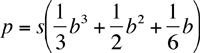
  • Bezos says he can tell you the number of pennies in a pyramid with this equation:

    where s is the number of pennies in a stack and b is the number of pennies on one side of the square base of the pyramid. Does this work? If so, prove it.

Review

Here’s my burning question: is that enough? Is that skinny outline enough for you to use this in your classroom?

Check for understanding: what happens during the first, second, and third acts of a mathematical story? What are your moves? What questions do you ask your students?

Act one is about visuals, context, and perplexity. Act one hits you in the gut, not the head. Act one eagerly invites questions like, “What is that?” or “Why did he do that?” If your students are anything like the teachers who have worked with this image, you’ll get a fair number of them wondering, “How heavy is that?” and “How much is that worth?” both of which tie into the most popular (by far) question, “How many pennies is that?” Have them write down a guess along with numbers they know are too high and too low. Share guesses. Stir up some competition.

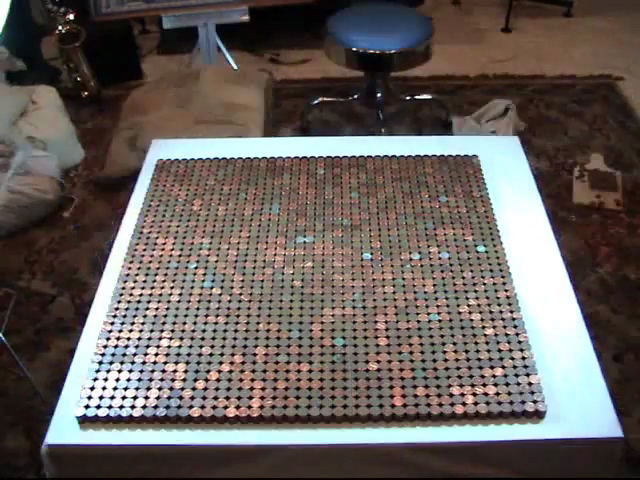
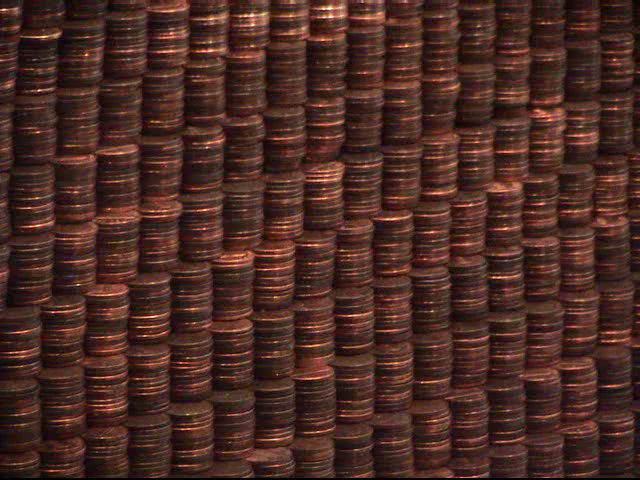
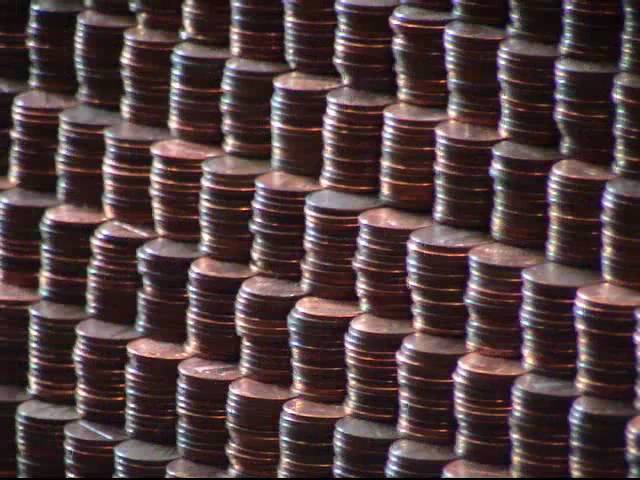
Act two is about tools, information, and resources. “What do you need to know to figure out the answer to your question?” Dimensions of the base? Number of pennies in a stack? The change from one level to the next? Give them what they want.

Act three is the resolution. When groups of students start finding answers, ask them to check the answers against the bounds they set up earlier. Challenge them with one of the sequel problems while you help other students. Bring students up to explain their different solution strategies to each other. Then pay off their hard work and show them the answer.

Release Notes

  • Teachers in my PD session love this one and, as their facilitator, so do I. They each come up with their own interesting question and yet the math doesn’t change. Whether you’re curious about weight, duration, quantity, or cost, we’re all going to work with area and series. That’s a win for every stakeholder in the room.
  • I’m especially fond of this one because everyone has a place to start. You can seriously start counting the pennies one-by-one if that’s the highest level of abstraction you can handle. We’ll beef up your skills over the course of the problem.
  • How many students will factor the number of pennies per stack, saving themselves a load of work? ie. 13*1 + 13*4 + 13*9 + … + 13*1600 vs. 13(1 + 4 + 9 + … + 1600) It’s going to be fun comparing work around the room.
  • A compelling visual is its own classroom management. If you put up a visual that’s a) simultaneously strange and familiar, b) larger than life, and c) aesthetically clear and interesting, the class is yours. Maybe only for a moment, but that moment is yours to lose. The class has given you permission to take them somewhere interesting. I’m not sure I can say the same for a worksheet. A worksheet brings with it a very different set of bags.
  • This one is courtesy of Dan Anderson. I’m drinking your milkshake here, Dan. Where were you on this story?

2011 July 8: Changed one of the sequels per David Wees’ remarks in the comments.

2011 July 15: Elizabeth Bezos, wife of Marcelos, the guy who made the pyramid, stops by to say hi in the comments.

The Three Acts Of A Mathematical Story

2016 Aug 6. Here is video of this task structure implemented with elementary students.

2013 May 14. Here’s a brief series on how to teach with three-act math tasks. It includes video.

2013 Apr 12. I’ve been working this blog post into curriculum ideas for a couple years now. They’re all available here.

Storytelling gives us a framework for certain mathematical tasks that is both prescriptive enough to be useful and flexible enough to be usable. Many stories divide into three acts, each of which maps neatly onto these mathematical tasks.

Act One

Introduce the central conflict of your story/task clearly, visually, viscerally, using as few words as possible.

With Jaws your first act looks something like this:

The visual is clear. The camera is in focus. It isn’t bobbing around so much that you can’t get your bearings on the scene. There aren’t any words. And it’s visceral. It strikes you right in the terror bone.

With math, your first act looks something like this:

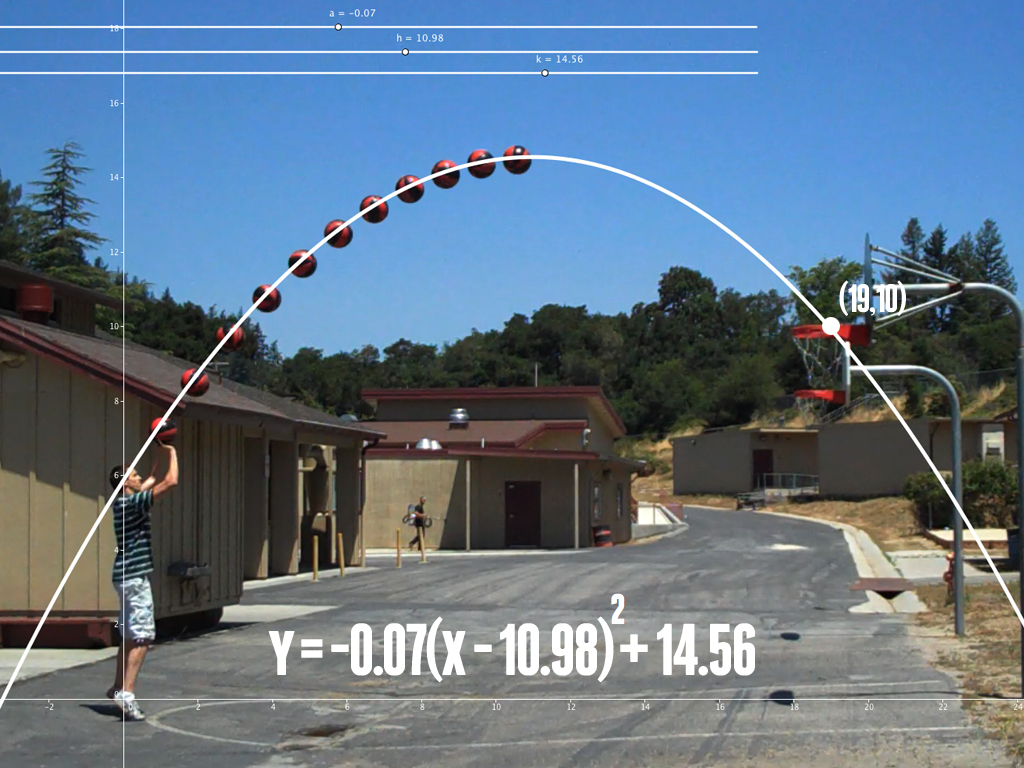
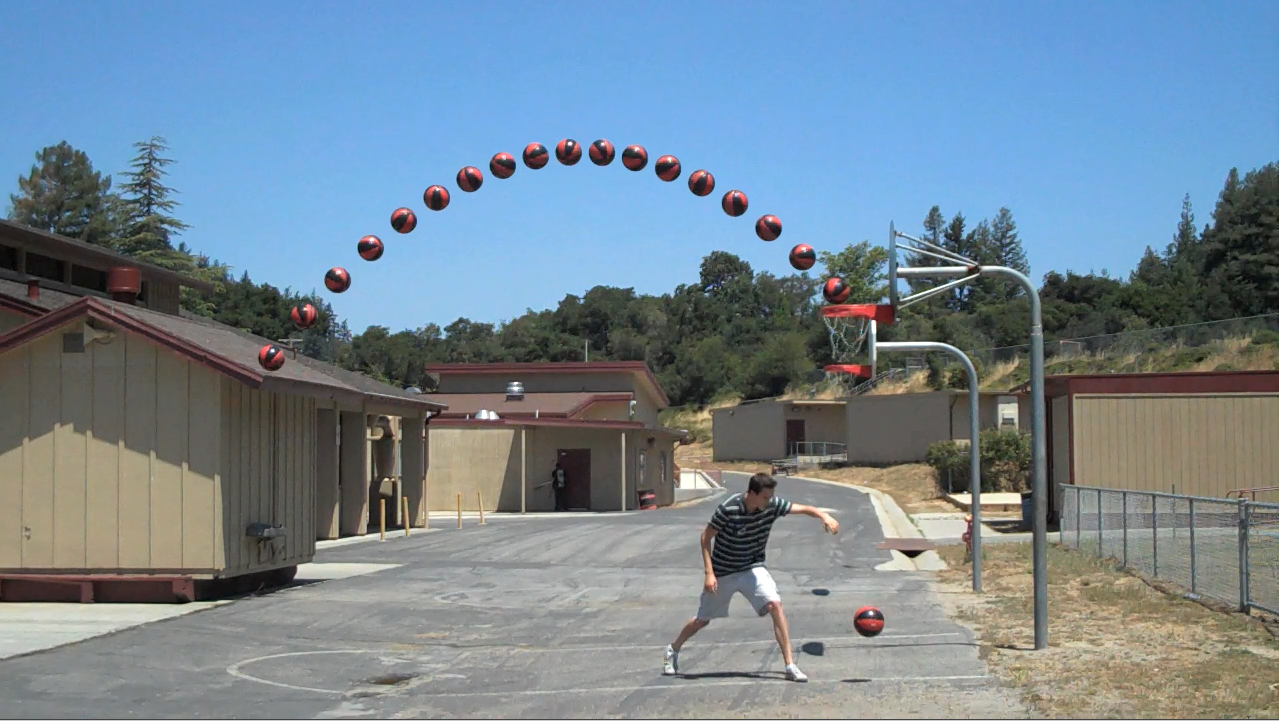
The visual is clear. The camera is locked to a tripod and focused. No words are necessary. I’m not saying anyone is going to shell out ten dollars on date night to do this math problem but you have a visceral reaction to the image. It strikes you right in the curiosity bone.

Leave no one out of your first act. Your first act should impose as few demands on the students as possible – either of language or of math. It should ask for little and offer a lot. This, incidentally, is as far as the #anyqs challenge takes us.

Act Two

The protagonist/student overcomes obstacles, looks for resources, and develops new tools.

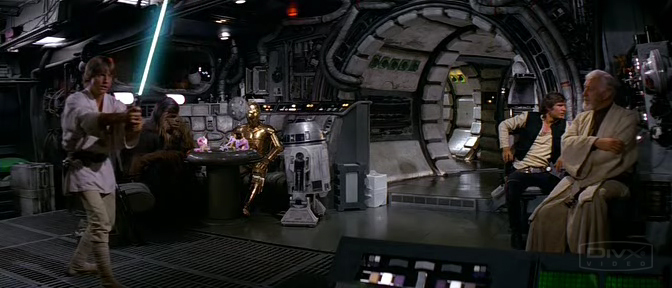
Before he resolves his largest conflict, Luke Skywalker resolves a lot of smaller ones – find a pilot, find a ship, find the princess, get the Death Star plans back to the Rebellion, etc. He builds a team. He develops new skills.

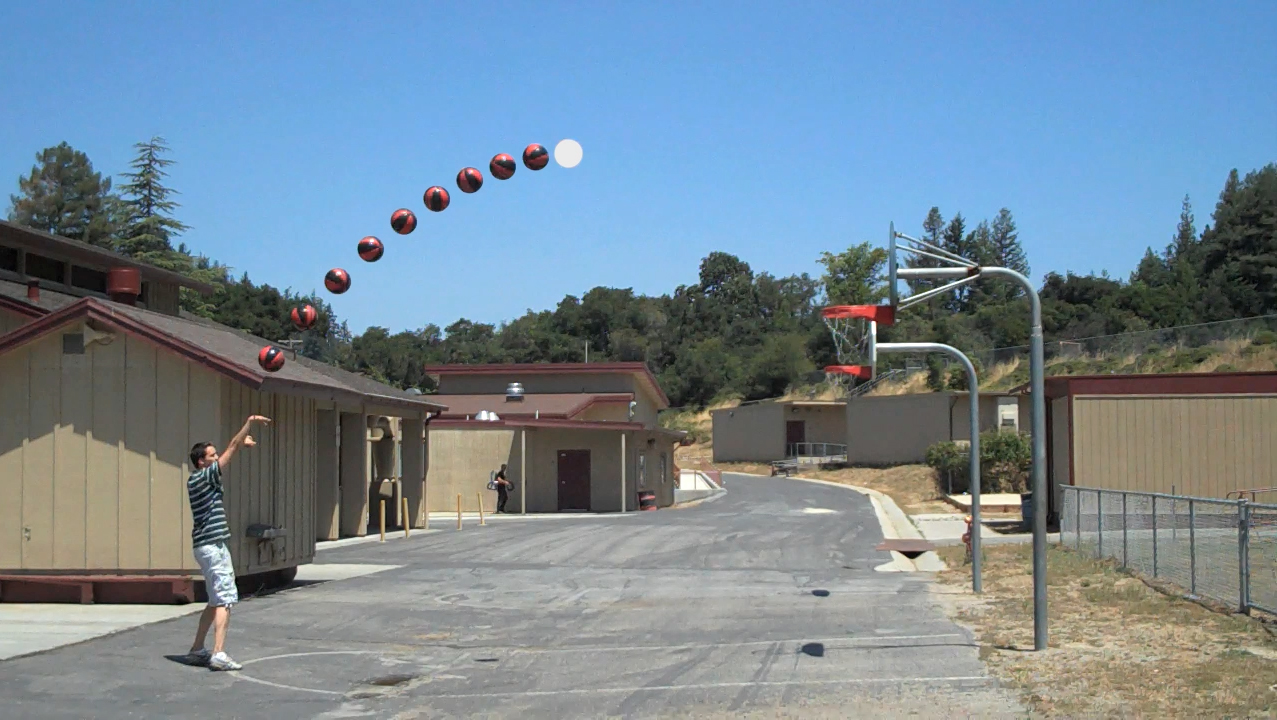
So it is with your second act. What resources will your students need before they can resolve their conflict? The height of the basketball hoop? The distance to the three-point line? The diameter of a basketball?

What tools do they have already? What tools can you help them develop? They’ll need quadratics, for instance. Help them with that.

Act Three

Resolve the conflict and set up a sequel/extension.

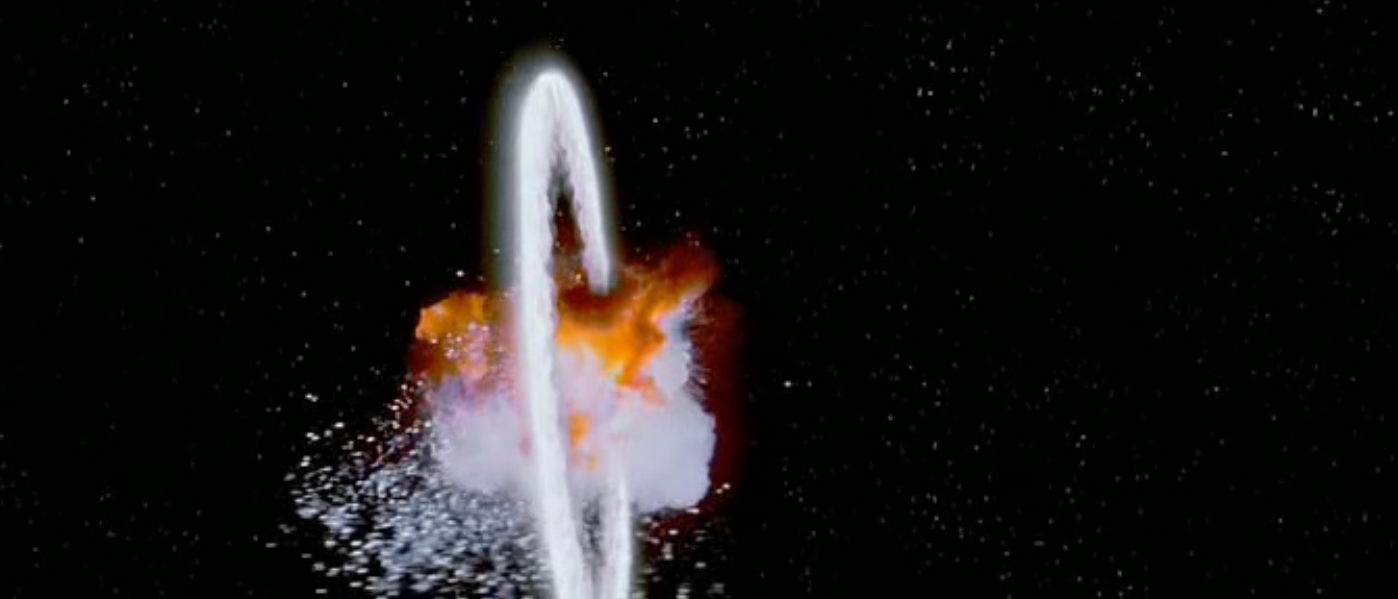
The third act pays off on the hard work of act two and the motivation of act one. Here’s act three of Star Wars.

That’s a resolution right there. Imagine, though, that Luke fired his last shot and instead of watching the Death Star explode, we cut to a scene inside the Rebellion control room. No explosion. Just one of the commanders explaining that “the mission was a success.”

That what it’s like for students to encounter the resolution of their conflict in the back of the teacher’s edition of the textbook.

If we’ve successfully motivated our students in the first act, the payoff in the third act needs to meet their expectations. Something like this:

Now, remember Vader spinning off into the distance, hurtling off to set the stage for The Empire Strikes Back. You need to be Vader. Make sure you have extension problems (sequels, right?) ready for students as they finish.

Conclusion

Many math teachers take act two as their job description. Hit the board, offer students three worked examples and twenty practice problems. As the ALEKS algorithm gets better and Bill Gates throws more gold bricks at Sal Khan and more people flip their classrooms, though, it’s clear to me that the second act isn’t our job anymore. Not the biggest part of it, anyway. You are only one of many people your students can access as they look for resources and tools. Going forward, the value you bring to your math classroom increasingly will be tied up in the first and third acts of mathematical storytelling, your ability to motivate the second act and then pay off on that hard work.

Related

  1. I gave this post a try a year ago.
  2. Also, Breedeen Murray has a lot of useful things to say about storytelling, though I can’t endorse her enthusiasm for “confusion.”

2011 Dec 26: The Three Acts of a (Lousy) Mathematical Story is also on the syllabus.