Category: anyqs

Total 24 Posts

Dan Anderson’s Mathematical Story

Love it:

Large Candle – Stop Motion Teaser from Dan Anderson on Vimeo.

Frameworks are inherently limiting. The more guidelines you specify, the more material you exclude, some of which can be very good. Frameworks are great, though, because they make implementation easy. I know what happens in the first, second, and third acts of a mathematical story, so it’d be a simple matter to use Dan Anderson’s lesson in the classroom โ€“ no lesson plan or handout required.

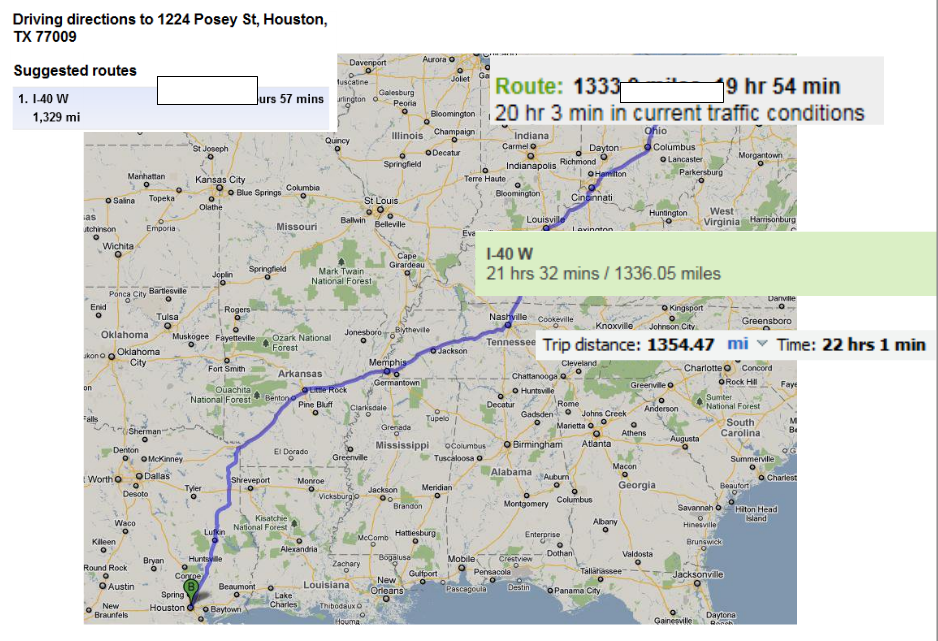
The Wembley Problem

The teacher put up this photo at the start of class and asked her students, “Where’s the maths in this picture?” She asked them to discuss the question in their groups while she took attendance. After four minutes, she pulled them back together and asked a student from each group to tell her where they found the maths in Wembley Stadium.

“The amount of seats,” one student said.

“Okay.”

“Area and perimeter,” said another student.

“Woo!”

“The number of seats,” said a third student.

“We already have the number of seats,” said the teacher.

The student tried again. “The, uh, perimeter … of the lines.”

The teacher pressed a little โ€“ what lines? what perimeter? โ€“ and then accepted it.

After two more groups, a girl named Sarah said something I can’t quite make out on the video, but the teacher was visibly floored.

“Have you read my lesson plan?!” she said. “Because that is very, very spooky. Because what we’re actually going to look at today is based on what Sarah just said. I’m a little bit … that’s very odd … but good stuff.”

What I’m suggesting with #anyqs and my last post is that:

  1. If you give students some photo of their world and tell them, “We’re definitely applying math to this โ€“ร‚ย you figure out how,” you’re confusing the master and the servant in the relationship between math and their world.
  2. If a majority of your students are interested in a single question (eg. the number of seats) then use it. That’s a gift. Can math help your students resolve that curiosity?
  3. Conversely, if you are shocked when your students’ questions zero in on the point of your lesson, you’re designing your curriculum for the only person in the room you shouldn’t care about.

2011 May 24. Bowen Kerins picks up some of my slack:

There’s a big fault with this sort of question that you didn’t mention: students start skipping the mathematics altogether and try to determine what it is the teacher wants them to say. It’s the equivalent of the teacher asking “What number am I thinking of?” then waiting for a bunch of answers. It’s a totally different game, decidedly not math, and not even close to good inquiry-based teaching. Such questions should either be clarified or just not asked in the first place.

[anyqs] Two Weeks Later

[previously]

By The Numbers

27 people posted 45 photos and videos tagged #anyqs in two weeks. @colintgraham posted four, more than anybody else. The balance, so far, is 60/40 in favor of photos over video. The median length of an #anyqs video is 31 seconds.

Rapid Prototyping

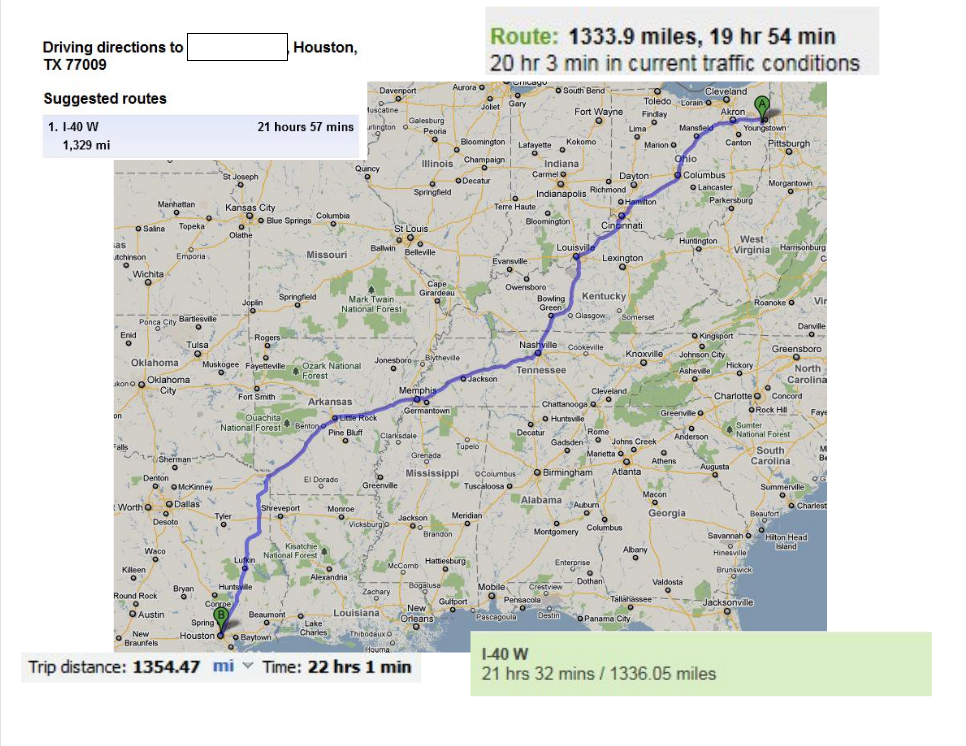
So what are you doing with the feedback to your #anyqs entry? If you intended to represent a perplexing application of math to the world around you but the responses were mixed and the enthusiasm was low, what do you do? If you’re Lisa Henry, you revise and resubmit.

Her first draft:

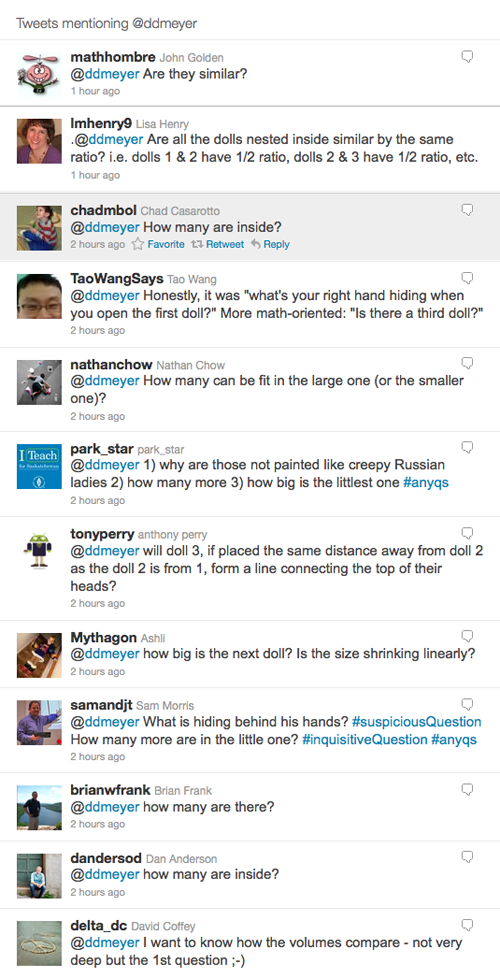
Her second draft:

I asked her if she could clarify the context without weakening the task she had in mind. She came back with gold:

The problem space was clear to me. Four different navigation sites returned different durations for the same trip. A question now gripped me โ€“ why? โ€“ whereas earlier I was mostly confused.

Teacher-Centered Curriculum Design

See if you can spot a recurring theme in the discussion around #anyqs:

Colin Graham, describing #anyqs:

… viewers should respond with the first (mathematical) question that springs to mind.

Timon Piccini:

What is the question?

Bryan Battaglia, responding to Christopher Danielson’s killer #anyqs entry:

That one’s easy! How many times will Griffy make it around?

Jon Oaks:

what is the question?

These quotes indicate a belief that there is a right way to be curious, that students should seek out the question the teacher wants them to ask, that the question should be mathematical. I’m not suggesting that math isn’t the point of math class or that student interest should exclusively determine how you spend your class time. I’m suggesting that, given an infinite number of ways to represent a problem space, you represent it as skillfully as possible, in such a way that you can anticipate the questions your students will have about it. Conversely, if you can anticipate they won’t have any questions about it, consnider a different problem space.

Lisa Henry could have stopped with her first draft and asked her students to meet her more than halfway. She could have stood at the front of class and played the “guess what’s in the teacher’s head” game, waiting for a student to ask the “right” question. Instead, she put the burden on herself to make a stronger representation of the problem space. Her curriculum design was centered around her students, not their teacher.

Let’s Push Things Forward

Let’s say you’ve managed to anticipate the question your students will wonder about your photo or video. (Plenty difficult on its own.) How can you help them answer it? Have you gathered the information your students will need for the second act? Have you recorded an answer to the question, something you can reveal in the third act to pay off on all their hard work from the second? If you’re looking for a harder challenge than #anyqs, that’s it right there.

Huge Open Question

To what extent is the response of math teachers on Twitter to these photos and videos a useful proxy for the responses of our students? If a bunch of math teachers wonder, “how many dolls are inside?” does that mean that students will also? If teachers don’t wonder that question does that mean that students won’t? Is there a better way to test out curriculum design this quickly and easily?

The Hope

Pam Grossman, my adviser, at a panel discussing teacher education:

Classrooms are somewhat unforgiving places to learn to teach.

Problem posing is a core practice of math teaching but the classroom is an unforgiving place to learn it. When you pose a problem in class, you’re betting a lot of time and motivation from a lot of students against the possibility you totally misjudged the task. When you pose a problem on Twitter to your teacher buddies, that risk drops to zero. I hope #anyqs proves itself a useful exercise of classroom practice that doesn’t require a classroom. There aren’t a lot of those. We’ll see. I only know that this exercise is most productive when we submit each new photo or video with the perspective that “this is just a first draft โ€“ I will be revising this.”

Miscellaneous

I’m doing some work in Singapore this week. I have a couple of items set to auto-post but my commenting will be light. Real talk, though: if I come home and there isn’t a pile of Graphing Stories waiting for me to edit, you are all in big, big trouble.
#anyqs

I was working with Wisconsin’s math teachers this afternoon, making the case that good storytelling is a first cousin to good math instruction. I challenged them at the end:

Give yourself one photo or one minute of video to tell a mathematical story so perplexing that all of your students will want to know the ending, without you saying a word or lifting a finger.

I’m talking about photos and video that provoke a vast majority of your class to wonder the same question without any explicit prompting. For instance, minutes before the presentation began, I tweeted:

Dear Twitter: what’s the first question that comes to mind? http://vimeo.com/23242866 #anyqs

[anyq] Stacking Dolls from Dan Meyer on Vimeo.

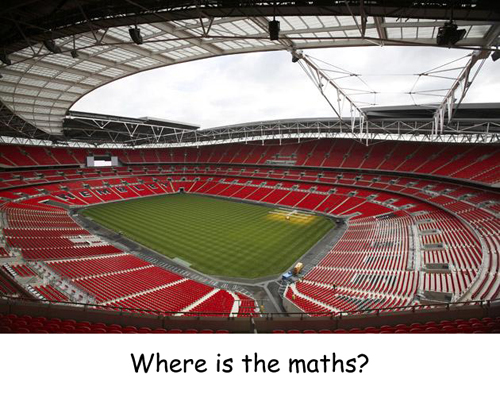
In the last minutes of my presentation โ€“ nervous as hell โ€“ I showed the group my Twitter feed. Here’s what we saw:

This kind of user feedback is invaluable. The results are mixed. There is a degree of consensus around one question but I still may head back to the drawing board to reshoot the problem in a way that makes “How many are there?” the most natural, perplexing question to ask.

So I’m pitching the same challenge to you. I have my hawk eyes on the #anyqs hashtag and I can promise you’ll get a question from me, at the very least.

PS:

You know which group of students seriously doesn’t hate it when you pose intriguing mathematical questions without words? English language learners. I know it’s some kind of cliché to say that a picture is worth a thousand words, but seriously: the more scene-setting you can embed in a photo or video the better for everybody.

PPS:

Consider how bizarre the #anyqs challenge would appear to your textbook’s publisher. They work in a world where it’s totally normal to take some cheap clip art or stock photography and ask a question about it that would occur naturally to nobody else in the world. I’m challenging you to flip every aspect of that around.

2011 Dec 01. Essential follow-up reading. Don’t try to get your students to guess the question in your head.