Category: digital instruction

Total 80 Posts

The Woman Who Didn’t Swim Across The Atlantic

This is somewhere in the neighborhood of What Can You Do With This? except I have no idea what to do with it.

Reaching a beach in Trinidad, [Jennifer Figge] became the first woman on record to swim across the Atlantic Ocean โ€“ a dream she’d had since the early 1960s, when a stormy trans-Atlantic flight got her thinking she could don a life vest and swim the rest of the way if needed. โ€“ Associated Press, 2009 February 8

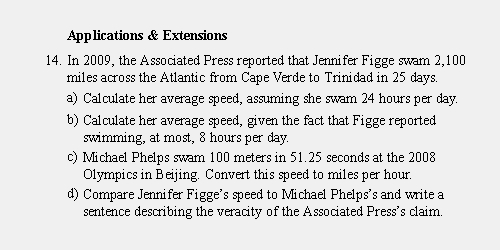
Figge swam 2,100 miles from Cape Verde to Trinidad in 25 days, sleeping nights on a catamaran that drifted alongside her.

Sort of. Outside Magazine has printed a retraction.

I know this is worth our class time because a) the situation is objectively interesting, and b) the situation is inherently mathematical. I don’t know how to maximize its interest to my class or how to make the mathematics as rigorous as possible.

Here is a hazy look at how I plan this sort of activity. Please step in at any point to save me from myself.

  1. I’ll tell them that a woman has claimed a distance swimming record. I’ll ask them to guess which body of water she crossed. I will project a world map on the wall. Somebody will eventually suggest the Atlantic, a suggestion which other students will shout down as impossible, at which point I’ll confirm it.
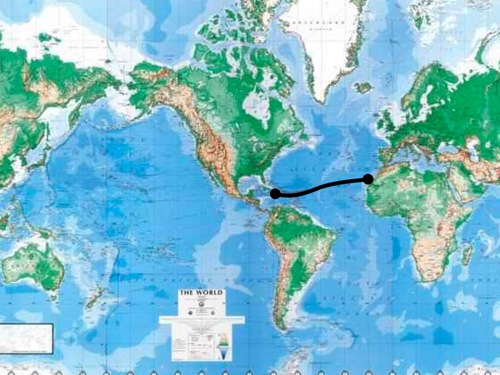
  2. I’ll ask them what route they would choose across the Atlantic. Each of my students is a pretty quick study in contract law and will find the loophole or shortcut if one exists. I’m not sure how many of them will find Figge’s exact shortcut, however, which had her swimming between two of the closest islands on opposite sides of the Atlantic. I’ll pass out world maps on paper so that the students can draw on themduhn duhn DUHN..
  3. I’ll ask them how long they think it took Figge to cross the Atlantic. At this point I’m positive they’ll ask the right questions (how long was she swimming each day? was she swimming all day, every day?) at which point I’ll quote the relevant passages from the AP report. (She swam, at most, eight hours in a day.) I will give the distance between the islands only when they request it.
  4. I’ll challenge their guesses. “I don’t think a human can swim that fast.” They will either have to defend their answers or alter them.
  5. We’ll sample some data points for comparison โ€“ Michael Phelps’s 100m gold medal at the Beijing Olympics (4.4 miles per hour); Petar Stoychev’s record-setting swim across the English Channel in 2007 (3.02 miles per hour); then there’s Figge’s presumptive trip the Atlantic (10.5 miles per hour).

Again, we lower the mathematical framework onto this situation slowly, only as the kids give me the nod to bring it closer, only as they invest themselves into the problem in small ways like guessing the route or the duration of the trip. Bonus exercise: imagine how efficiently your textbook publisher would crush the life out of this problem.
I’m running out of ways to illustrate my frustration with curriculum design’s status quo. Time to get the jihad going, I guess.
What Can You Do With This: Becky Blessing

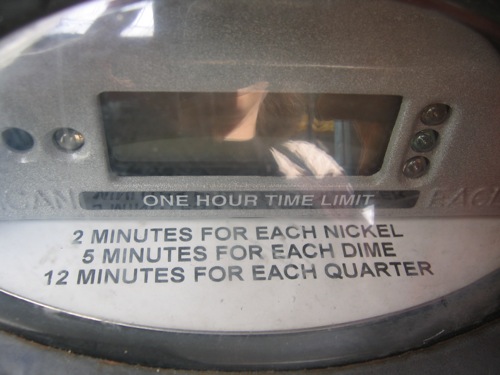
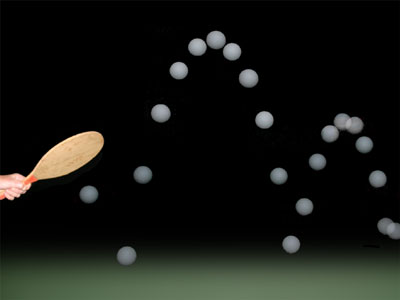
Becky Blessing was one of my substitute teachers last year. She re-introduced herself at the start of my UC Berkeley presentation and halfway through my WCYDWT? thesisie. “capture anything that interests you and present it to your kids in the most compelling way possible.” she called me over and showed me this gem, which she captured for Dor Abrahamson’s problem-solving class.

Download high quality here. See the pilot for instructions.

Impatience With Irresolution, pt 2: Part Of The Solution

I do my best not to worsen the problem of uncritical, impatient thought, but my best effort at a solution to the problem is What Can You Do With This? where we pull the world into our classrooms through digital media artifacts.

I have spent the last month trying to determine a framework for capturing and presenting these artifacts effectively, a framework that will differentiate effective and ineffective use, that will explain why some of these artifacts provoke lousy questioning, forcing the teacher to gesture and explain and prod, shooting blanks wildly at the target of real-world relevance, while others are sublime, provoking different routes to different, equally justifiable answers to interesting questions.

I presented my usual PowerPoint dog-and-pony show to UC Berkeley’s math/science teacher cohort on Monday. I had an extra half hour so I decided to test this framework to see if any of my ramblings here make any sense whatsoever.

The short answer is that, yes, off a brief introduction, most everyone could see why your textbook’s halfhearted stab at real-world relevance withers next to a single, compelling image, to which we gradually apply a mathematical framework, only as students request it.

I prefaced it with the Milch audio but I didn’t get around to playing what has become an extremely important piece in this puzzle, the opening shot of a French movie called Caché.

I reckon the majority of my time-strapped readership checked out of that one pretty fast. As drama, it’s kind of boring. As digital media instruction, though, it’s a road map and a full tank of gas.

You realize quickly that the camera won’t move, that there isn’t a soundtrack to establish the mood. (Should I be tense? Eager?) And then certain synapses of your brain start firing. You start constructing meaning from the scene however you can. You scan the margins. You check pedestrians for malicious intent. You notice you’re in an affluent neighborhood. You try to identify the protagonist.

The cameraman, the editor, and the composer are all on a coffee break. It’s on you to ask the difficult questions. It’s on you to find their answers within the scene and defend them. It’s on you to become patient with irresolution.

Visual Math Instruction: Premium Grade

The more I dig into the question, “How do we turn digital media into learning objects for math students?” the more I’m convinced we need a frameworkor maybe a stylesheet or perhaps a standards & practices document โ€“ I’m not sure of the best analogy here. for capturing and mounting that mediaie. “this is how we take a photo when we want to use it as a learning object.”. This is most obvious to me in our classroom conversations, some of which are enduring and propel serious mathematics, others of which are diverting but ephemeral. At whatever point I pin down the difference, I think I’ll have written myself a recipe for a coherent, engaging math curriculum, something that could occupy me for years.

Though neither of the following two curricula have any kind of public outline, they seem extremely self-consistent and they track (unintentionally, of course) extremely closely to the vision I’m chasing.

Problem Pictures

These CD-ROMs (which you can preview here and which Mr. K reviews here) are stocked with images that are each, on some level, “interesting,” and each of which beg a different mathematical question. Mercifully, that question is rarely, “what shapes do you see in this photo?” which is the lowest level of some pyramid which has yet to be named.

Principle Failing: No video, which makes the next entry particularly essential to my investigation.

The Hypertextbook

“Edited by Glenn Elert, written by his students.”

Their investigation of Mario’s acceleration due to gravity may have cropped up on one of your Internets, recently, and was certainly worth your attention. The recipe is consistent throughout Elert’s curriculum:

  1. Extract some video from pop cultureTalkin’ about Batman Begins, Madden 2006, Jackass โ€“ this Elert guy is out of control in my opinion..
  2. Use physics, math, Wikipedia, photogrammetry, and estimation to answer an interesting question.

Principle Failing: This document is designed more as a record of student learning than as a curriculum for teachers. The media which would propel this thing into classrooms around the world is either absent (as with the Mario investigation) or was uploaded to YouTube which dutifully scrubbed it (as with the Hulk investigation).

To proliferate as fully as they deserve to, these investigations need a complete multimedia supplement, starting with high-resolution captures. In Mario’s case, you would need:

  1. a clip showing Mario falling from the same height from every Mario game published, edited into a multi-panel split screen. The students would then ask the obvious question, “Why does Mario hit the ground sooner in some games than in others?”
  2. an individual clip for each jump, no decoration.
  3. The same clips with a grid superimposed over the footage for measurements.
  4. A lesson plan with analysis.

Again, we’re working on different projects here, but Elert only includes #4, which means his work will find its way only into the classrooms of the most digitally savvy physics teachers. How many more teachers would benefit had he included the first three? My guess is: a lot.

How Can We Break This?

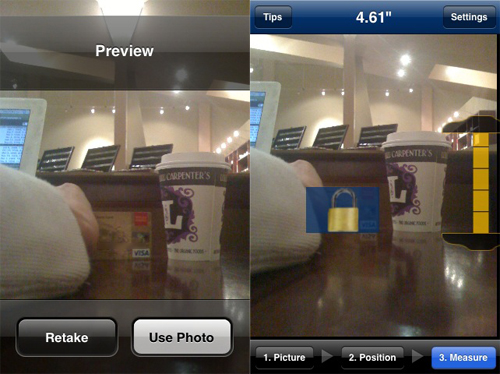
I like this. The iPhone application RulerPhone will measure anything, in any photo, so long as the photo includes a credit card. It’s a great use of proportional reasoning, which, if pressed to name one, would be The Mathematical Skill I’d Most Like My Students To Retain After High School.

I added it to the What Can You Do With This? segment featuring The Bone Collector, which seemed like an obvious pair to me. In trying to find the best classroom entry point for this program, I can only think of the question, “How can we break this thing โ€“ trick it into giving an incorrect measurement?” I imagine someone can do better.