Category: what can you do with this?

Total 99 Posts

Teaching WCYDWT: Learning

But where do you find this stuff?

โ€“ some variation on this first quote has come up in every professional development session I have ever facilitated.

I just need to sit down and set some time aside to search for lesson ideas.

โ€“ a colleague at Google while we were spitballing curriculum ideas.

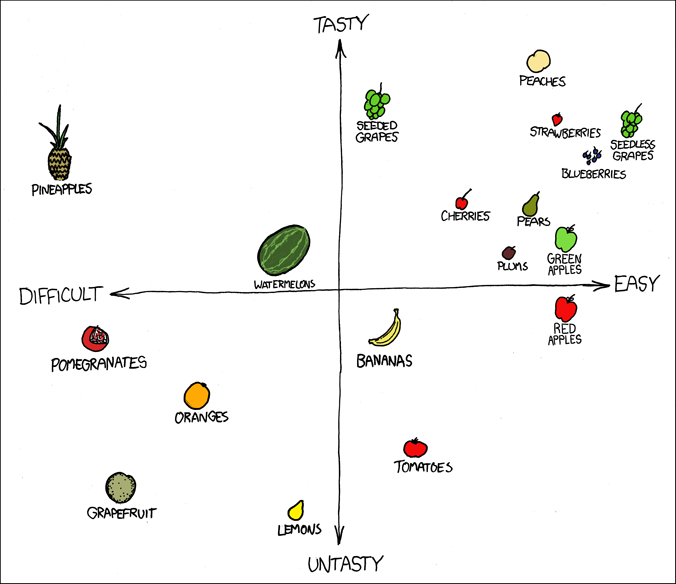
The fact is that I don’t find ideas for curriculum. They find me. And I mean that as literally as possible. I don’t sit down and start searching Google for “fruit as a metaphor for the coordinate plane” or “Flash games illustrating angle reflections.”

I graduated college several years ago and, like many of my friends, I had to fill that learning vacuum with something. All of us came around to Google Reader within months of each other, which represented (for me) an evolutionary leap forward in managing my own learning.

If we really believe that mathematical reasoning undergirds Everything, then we need to keep learning about Everything, not just about the technical skills common to our own field. (I went at this same concept some time ago, though perhaps a bit inartfully.)

My suspicion, also, is that education will improve fastest when teachers recognize the incongruity between their own most exhilarating learning experiences and what goes on in their classrooms.

Question: what tools are essential to that kind of exhilarating learning? What is in your learning Swiss Army Knife?

Let me urge you to consider that question under the following fictional constraint: every time you tell a teacher to download a new application or set up an account with a new web application, the teacher loses a fingertip.

Bracket, for a moment, the grossness of the scenario. I’ll let you decide how the teacher loses the fingertip. The point is that y’all don’t understand that you’re a bunch of freaks. Someone links up some new online Photoshop knock-off and on muscle memory alone you’re entering in your e-mail address and a password and clonking away at your new toy.

Real people aren’t like that. And you give them too much grief, sometimes, for their unwillingness to sign up for ten different web apps to service ten different nuances in their learning which you have judged to be equally essential.

So: fingertips. Be careful here. I would give the fingertip off my right ring finger for Google Reader. I would sacrifice a second fingertip for Delicious.
Teaching WCYDWT: Introduction

It’s been a lot of fun lately to get invited to speak to audiences of educators about things that interest me. Those experiences have been profitable in the short-run, in terms of getting paid for work, but also in the long-run, as I get to workshop new ideas and modify old ones with fascinating people who are inadvertently improving the conversations I’ll have with future groups.

I’m learning that I’m jumping into this WCYDWT this thing way too early. Or, perhaps more accurately, that the WordPress tag known as “what can you do with this?” comprises two huge disciplines. It’s to my discredit that I’ve gone so long without noticing and expanding them.

One is learning. The other is storytelling. I can’t imagine how trite these revelations must seem on their faces. I’ll elaborate and then I’ll ask you to help me edit my professional development song and dance.

Math Like A Summer Blockbuster

A student in my online course did not appreciate the water tank lesson:

The [water tank video] is simply boring. I do not think middle school students would sit and be engaged throughout the entire video. [..] All we know is that someone is filling the tank; we don’t know its shape or dimensions, we don’t know the rate of the water flow, and, in the end, we don’t care. The video is too long and, quite frankly, uninteresting. I couldn’t watch the whole video (although I left it playing to listen for any changes) and I certainly can’t see a group of middle schoolers watching and being engaged.

This response gave me a good angle on three return volleys:

  1. What if we decided not to show the entire video? What could we do with that?
  2. The student mentioned that “we don’t know its shape or dimensions, we don’t know the rate of the water flow ….” Do you realize how much conceptual skill that critique requires? How many of your students can answer the question, “What do you need to know in order to solve this problem?”
  3. This.

That third bullet is a response to a wager I made back in February:

Twenty seconds into watching the hose dribble water into the tank, ask “how long do you think this is gonna take?” Ask [your students] for guesses. Just guesses. Write them on the board next to the guessers’ names. Whenever anyone raises the maximum or lowers the minimum, point it out. Then turn the clip off. Turn off the projector and proceed to whatever else you had planned for the period.

I wagered that students would riot. I found the whole classroom anecdote worthwhile, but here’s the vindicating part:

After the students made their predictions, I abandoned the water tank problem and moved on to something completely different. In each one of my classes, eventually a few of the students made a comment along the lines of โ€œyou never told us how long it took to fill the tank.โ€ Sometimes the comment came only a few minutes after we had moved on. Other times, it came much later. More convincing evidence of the studentsโ€™ level of engagement in the exercise came at the end of the lesson when I played the rest of the video. With their focus on the screen, you would have thought they were watching a summer blockbuster at the movie theater, not a tank filling with water in a classroom.

What Can You Do With This: Gimme Friction / Taberinos

Teaser

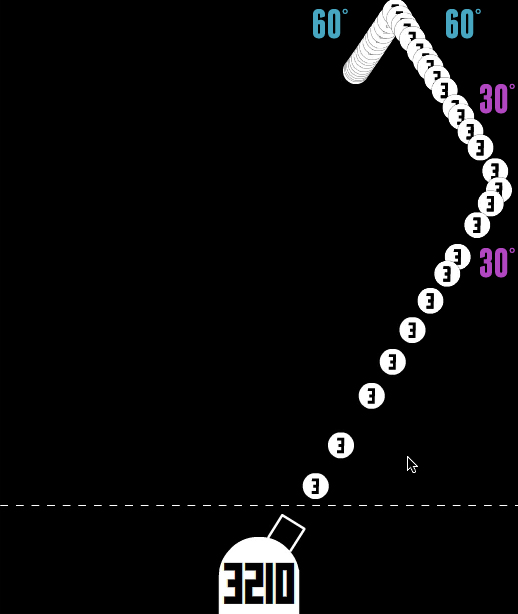
Open class with an online game, either Gimme Friction or Taberinos. Play for ten minutes. Have your students write down their highest scores. Create a classroom leaderboard.

What can you do with this now?

Spoiler

I’ll try to limit myself to broad strokes here. There are a lot of interesting trees but the forest — the framework for turning an interesting thing into a challenging thing — is what interests me most.

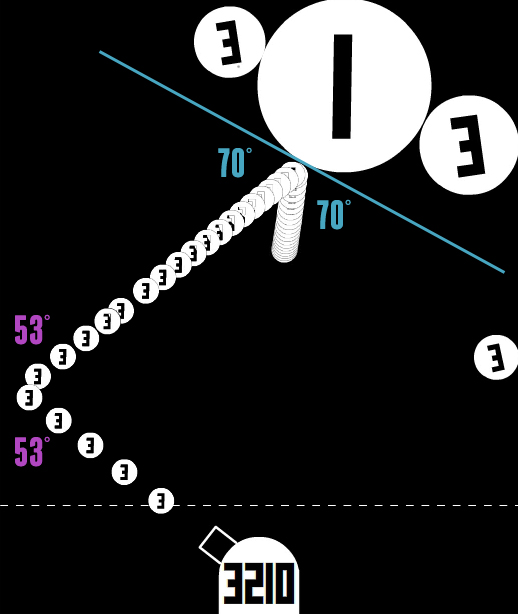
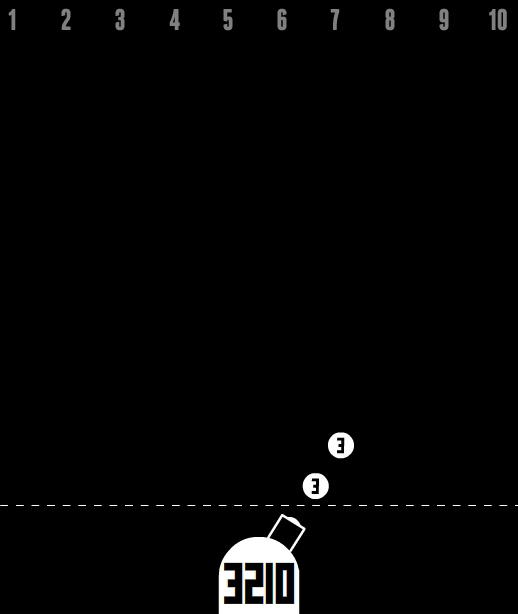
1. Freeze gameplay in time and space.

2. Ask the students to make an intuitive prediction about where the ball will hit the ceiling.

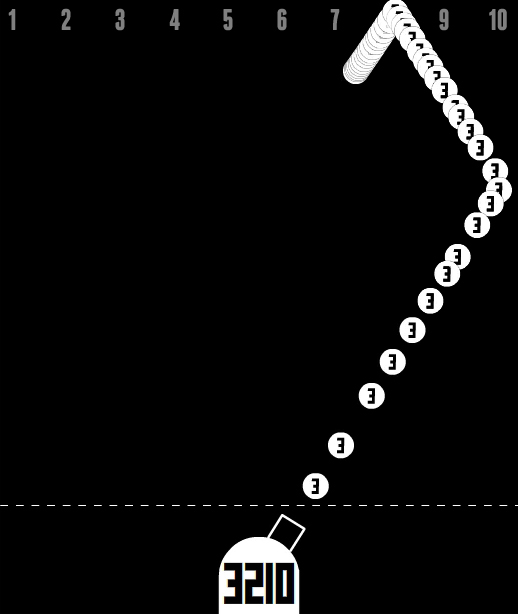
3. Show them the answer.

4. Formalize the math.

You can print out the previous picture and pass it around. Have students measure everything. Measuring things is a useful thing to do when you don’t know what to do.

Don’t just tell them to measure the angles. “Measure the angles,” is too helpful. Who will narrow down the scope of a problem like that for them after they graduate?

Eventually reach the (useful) conclusion that in a frictionless system like this, the incoming angle equals the outgoing angle.

5. Practice

Screengrab a few more scenarios like #1 above and have them determine where the ball will end up. Ideally, you’ll have the answer videos queued up so that the question of correctness isn’t answered by the authority figure in the room, rather by the world itself.

6. Play the game again.

Are scores higher or lower? Does an appreciation of the math undergirding the game even matter? Does it matter if it matters?

7. Iterate

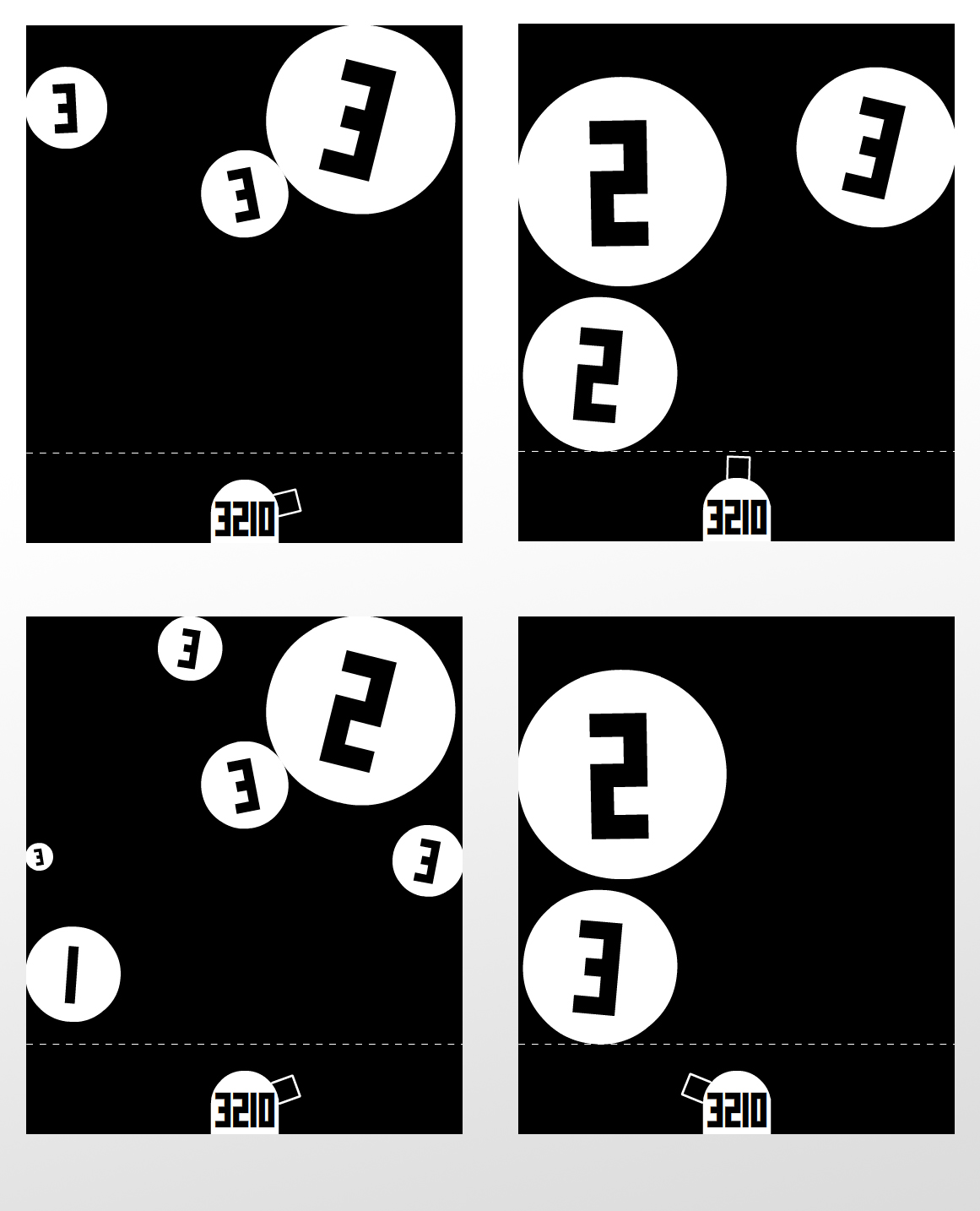
Gimme Friction beats out Taberinos and the usual miniature golf-style application of this concept because, eventually, you’re firing cannon ballsTeaching has made me an expert in certain skills that are marketable nowhere outside of teaching. You know what I’m talking about. In this case, I reflexively attach an adjective to the word “balls.” Basket balls. Tennis balls. Cannon balls. Every time. You will never catch me saying “balls” without modification by an adjective. I wish I was this good at anything else in my life because this won’t impress anybody at my ten-year high school reunion. off of curved surfaces, and then, without even really trying, you’re talking about tangent lines.

8. More practice.

Good questions here include:

“Is it possible to hit all three targets?”

“What cannon angles are ‘safe’?”

9. Extensions

Can you imagine the exceptional grasp of coordinate geometry, trigonometry, and vector math it took to program this game? We haven’t even gone into the way the cannon ball slides to a stop and then expands until it reaches a boundary.

So lay a coordinate grid over a screenshot. The only variable here is the angle of the cannon. If a student could develop an algorithm to describe the final position and size of the first shot fired for every angle from -90° to 90°, I’d assign her an A for the first semester of Trigonometry, no hesitation.