Category: what can you do with this?

Total 99 Posts

Yes We Can, Etc.

Kate Kowak is to math blogging what Barack Obama was to stump speeches:

My hope is that what we are witnessing here [with What Can You Do With This?] is a paradigm shift. At the intersection of problem-based lessons, digital projectors, blogging, and frustration with poor-quality textbooks, is blossoming a new way of bringing mathematical understanding to our kids. We don’t need to buy anything new, or anyone’s permission…just the structure, and the willingness to be observant and curious, and the humbleness to imagine that there might be a better way. I think this is just the beginning. I think this is going to spread like a fire.

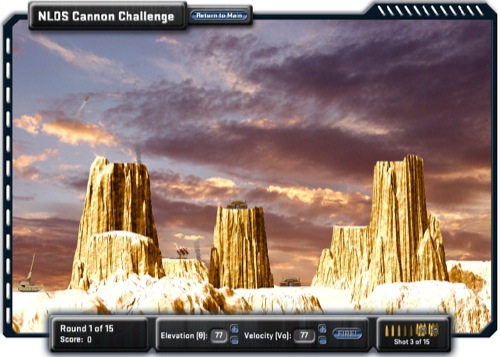
What You Can’t Do With This: NLOS Cannon Challenge

This is a classic game. It’s been around in various forms longer than I’ve been alive. Choose your velocity, choose your angle, cross your fingers, and fire. Discovery has simplified the game nicely, removing some noisy variables like wind speed, which you’ll find in other versions.

I first saw Discovery’s incarnation several weeks ago and have been on-and-off obsessed ever since by the question: what can I do with this? The point of this post is to throw up my hands and report: nearly nothing. I have no idea what the students do here.

I mean, it’s far from worthless. If a student can get past level ten, then she clearly has some understanding of angle and velocity and the dialog between the two. She might even ask herself some interesting questions, like, which angle gives you the longest range? But I won’t drag the laptop cart across school for those small potatoes, for that two-step lesson plan of 1) guess and 2) check.

Here is the most rigorous, reasonable question this game can ask, a question which it is fundamentally incapable of answering: can you develop a method for hitting any target in one shot? This is a question either a) Discovery didn’t think of or b) Discovery thought of but, for whatever reason, didn’t make accessible to students.

Either way, it’s frustrating. It’s frustrating that:

  • there isn’t a grid for determining coordinates;
  • the units aren’t defined;
  • there isn’t a timer for determining parametrized equations;
  • banner advertising reloads in the middle of the projectile’s flight, making a mess of my makeshift timer.
  • you’re firing from the tip of the cannon, not the base of it, which adds mathematical noise;
  • the layouts change at random (ie. my level three isn’t the same as your level three) which crushes my one workaround here, copying level screenshots into Geogebra.
  • I think, though I can’t be sure, that you’re blowing up huts and tents in some levels, which, gross. Seriously.

All of which is frustrating. The game uses mathematical notation for angle and initial velocity. It comes packaged with its own assessment systemYou get 100 points for each unused shell. The student with the most points (likely) has the best algorithm and calculations.. This thing is so close to being useful.

Which makes it an interesting answer to Scott McLeod’s question, where are the Internet resources for your subject area? Because this game isn’t from some arcade site which I’m hopelessly trying to bang into a lesson plan. It’s from Discovery, which isn’t exactly apathetic to the needs of educators. Why didn’t the thing come with a lesson plan?

My takeaway here is that the people who know the Internet and the people who know instructional design aren’t the same people and they aren’t talking to each other enough. We are left to our own devices.

BTW: Just a little over a year later and Colleen King comes through for the team: Tactical Rescue Missions for Intergalactic Good. Great work.

Global Math Geeks

Darren Draper takes on What Can You Do With This? as a professional development exercise in TechLearning:

I think weโ€™d do well as educators to consider this and similarly engaging forms of online learning to challenge teachers in their pursuit of up-to-the-minute professional development. Our teachers need to be challenged, and not just by the kids. By engaging in a little self-directed, peer-provided rigor, I think that instructional practices can improve.

Obviously, I agree. I’m also sure this is nowhere near the best we can do.

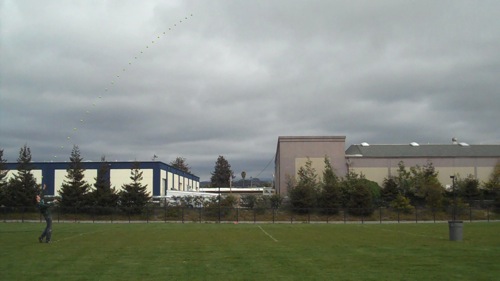
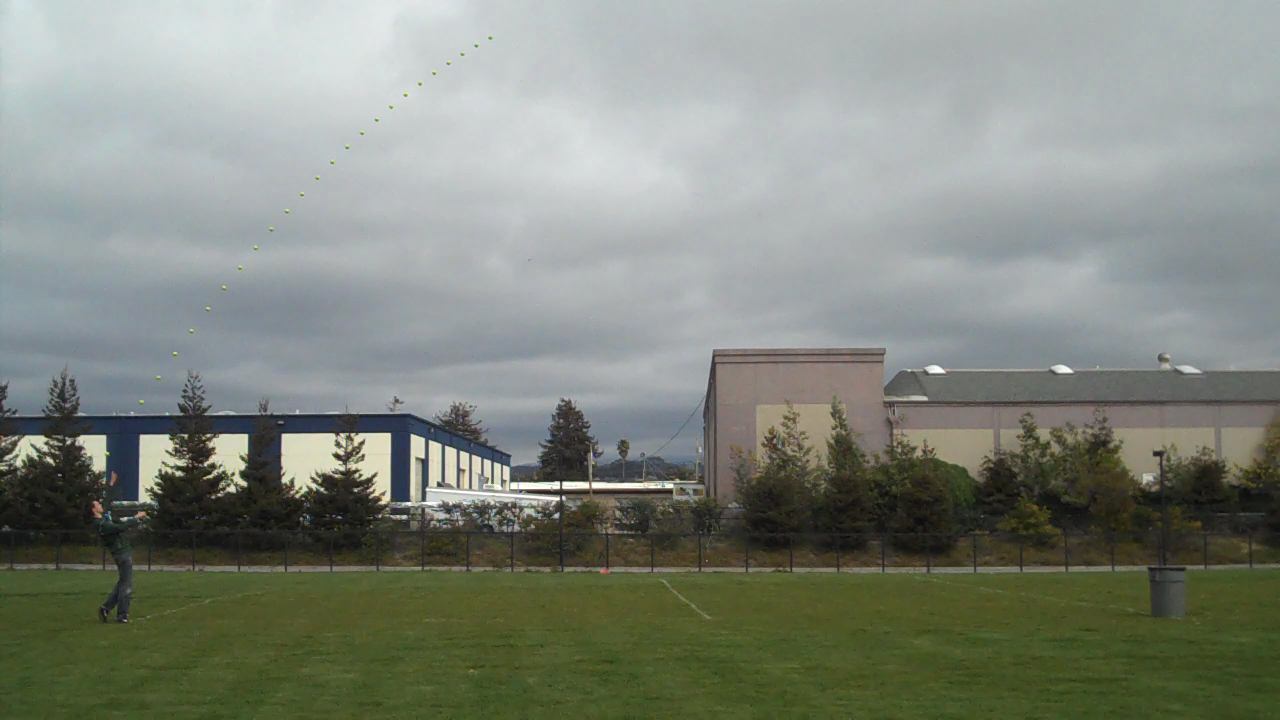
What Can You Do With This: Projectile Motion

Look carefully.

Download high quality here. See the pilot for instructions.

BTW: Lotta good stuff in the comments. I can’t prove any suggestion is better than another, but Jackie hits the one I intended all along, the one that packs the most punch per word, the one that rides into class alongside a student’s intuitive understanding of the world, the one that will do the most good as a introduction to parabolas:

Will the ball make it into the can?

Any question heavier than that and the picture starts to get a little wobbly under the weight.

BTW: Here are the still photos we imported into Geogebra and the full videos we used to confirm our answers.

What Can You Do With This: 2008 World Series Of Poker

This is the final hand of the 2008 World Series of Poker.

Click through to view embedded content.

Download high quality here. See the pilot for instructions.

BTW: Chuck has precision on his side:

Iโ€™d stop the tape after the turn comes down and have them figure out the chance that the guy with 2 pair wins

ESPN makes a running calculation of these percentages, of course, so I blacked out that information in the clip. Have the students make the calculations and then play the unedited clip.

The cool thing, to me, is that there are varying levels of difficulty, depending on how many community cards are still unknown.

The other cool thing, to me, is that the problem functions pretty well as just a photo. In the thumbnail image, for instance, you have all the information you need, with just enough panic in Eastgate’s face to motivate the problem.