Category: what can you do with this?

Total 99 Posts

[WCYDWT] Will It Hit The Hoop?

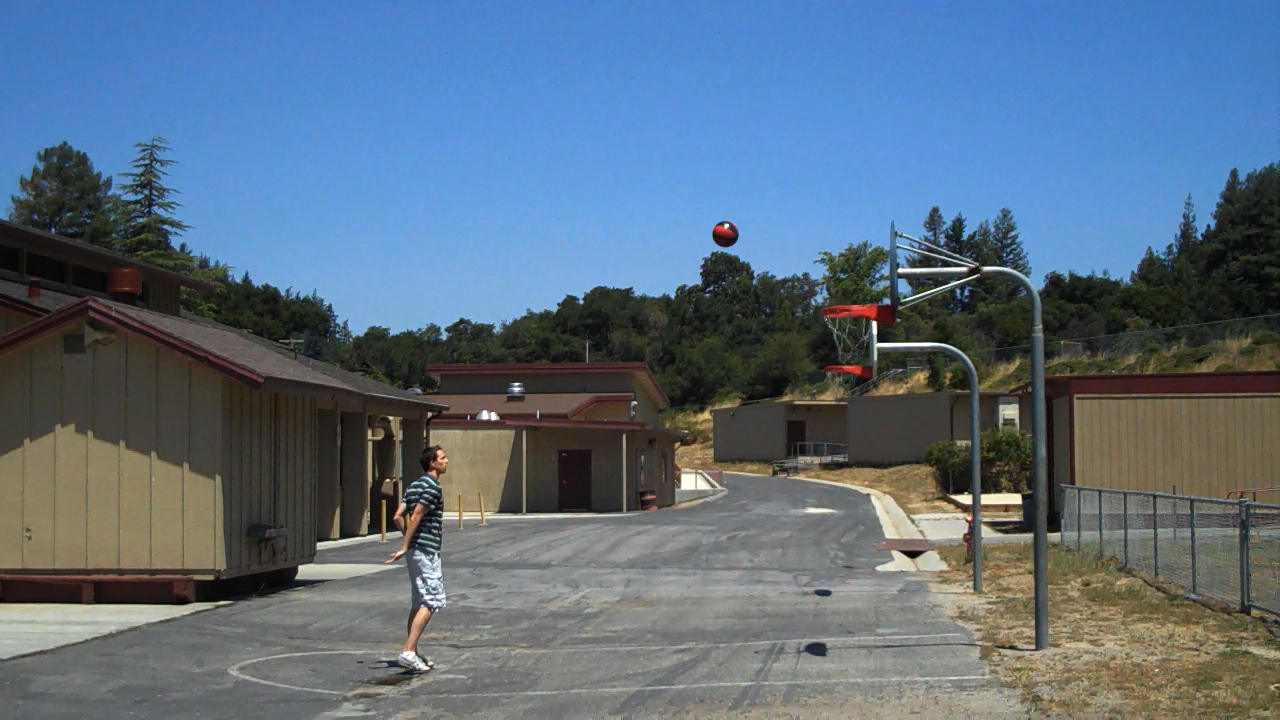
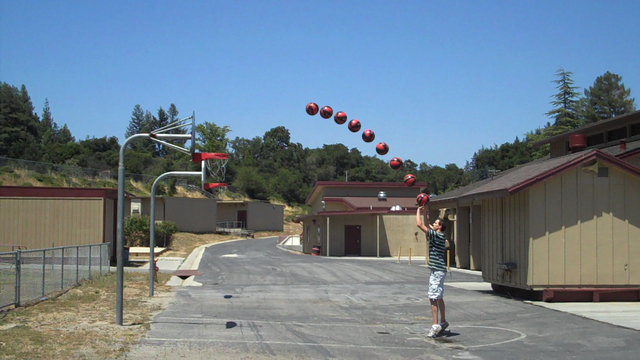
Is he going to make it? Can you draw me the path of a shot that will make it? That will miss it?

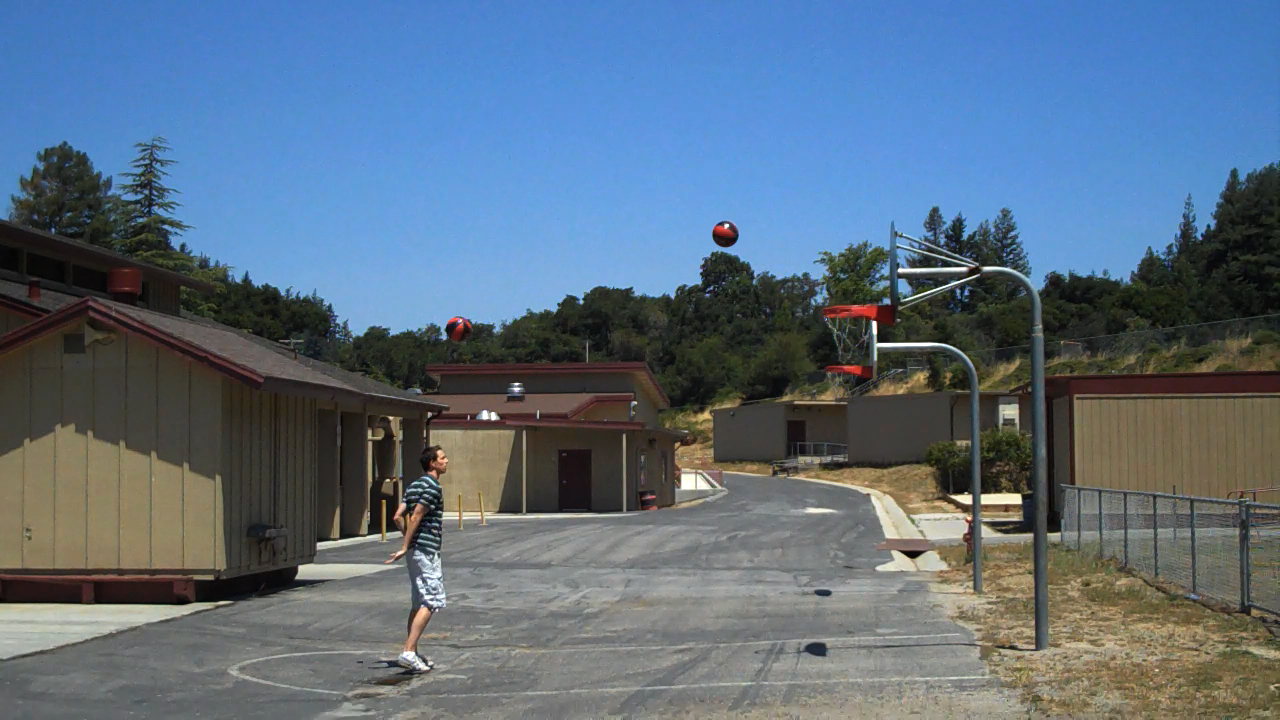
How about now? Can you draw me the path of a shot that will make it? That will miss it?

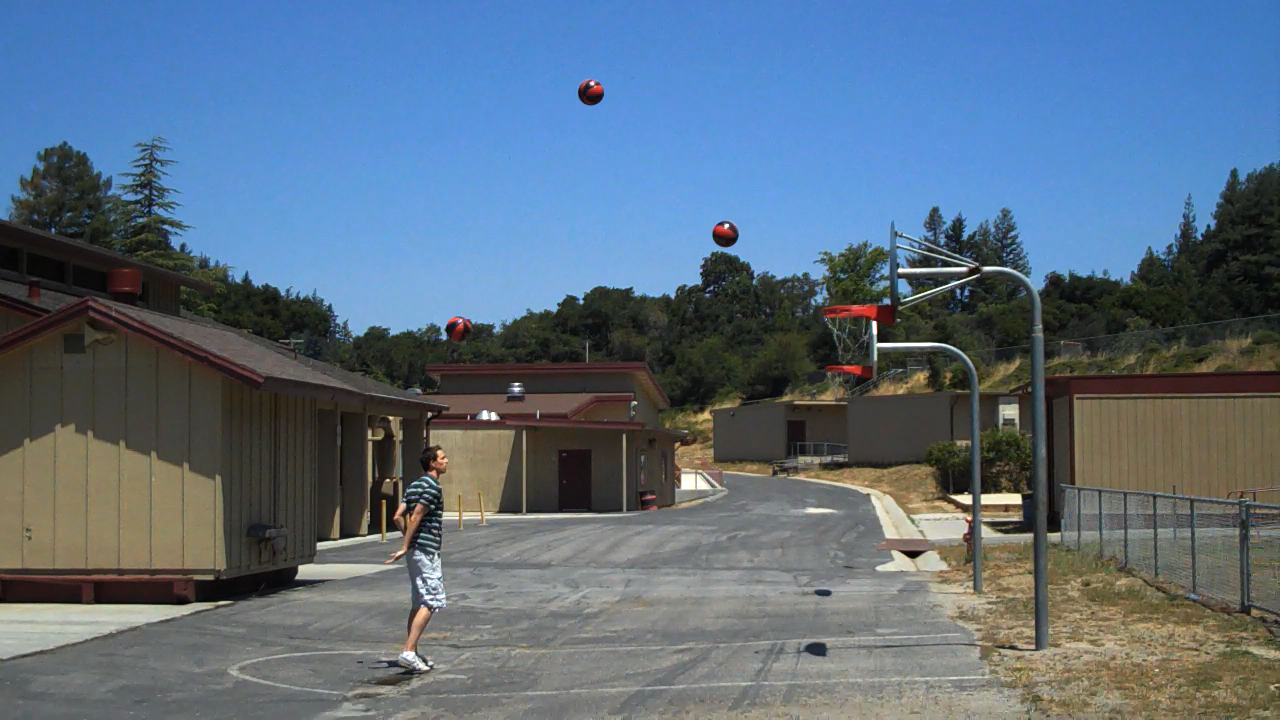
How about now? Can you draw me the path of a shot that will make it? That will miss it?

A little more obvious, isn’t it? And like that, we’ve derived illustrated the fact that, while one point is enough to define a point, and while two points are enough to define a line, you need three points to define a parabola.

Basketball Strobes โ€“ Full Take 4 from Dan Meyer on Vimeo.

Here are seven versions of the same problem. Each one contains:

  1. the half video, for asking the question,
  2. the half photo, for giving the students something to work with,
  3. the geogebra file, one use for the half photo, featuring a dynamic parabola in vertex form.
  4. the full video, for showing the answer,

Attachments

Toaster Regression

David Cox has WCYDWT by the throat. He used digital video, Adobe AfterEffects, and MovieMaker to export a clever visualization of toaster times versus toaster settings.

Toaster Question from David Cox on Vimeo.

Not that he asked, but I wouldn’t change a lot here. I’d rather see the data for settings one through four and use those to regress the eighth setting. By providing the seventh setting and asking for the eighth, he’s made it easier for students to jump right into the math which makes it less likely that my remedial students will invest a guess.

I would have also sped up the first four videos (even more) because I want my students’ impatient toe-tapping aligned to the question, “when will it end?” not before.

It’s really strong work, though, and you’re only going to see more of it from David because it just gets easier and easier to clear the annoying technical hurdles of video production. Soon he won’t even notice them and it’ll be as if there isn’t anything in between the curriculum he can imagine and the curriculum he can create.

Handle With Care

2012 Mar 09. This post references this task.

Greg Hitt put this image up in front of his class and couldn’t get them back:

So, anyways, they could see plain as day about the objectโ€™s motion, seeing the way that the vertical component of velocity goes towards zero, inspecting the horizontal component and seeing that it stays more or less the same. Again, the clarity of the image made it so they could see it, without me having to tell them. Good! Success! Time to move on! โ€œWait!โ€ the kid yells. โ€œDoes he make the shot?โ€

Sometimes the picture asks a question so loudly you have to answer it.

2011 Mar 09. Andrew Stadel:

Best quote from a kid: “Can we watch the video to see if he makes it?” No, we have to finish our graphs “It’s killing me. I gotta know!”

WCYDWT: Polynomials

Ha ha. J/k. There isn’t a picture for polynomials. That’s insane. The question about polynomials comes up, though, especially when we give into the fiction that students can’t enjoy math for its own sake.

Let me highlight two positive externalities of WCYDWT, which is to say, benefits of WCYDWT that don’t limit themselves to the time that we are actually WCYDWT-ing:

  1. The class understands that non-standard approaches are awesome.
  2. The class understands that failure is useful, not shameful.

You can capture those benefits using traditional curriculum but you have to work a lot harder at it and if you stop working harder, you capture the negative externalities: students come to understand that math is a right or wrong endeavor in which “wrong” is an destination unto itself rather than just another waystation to “right.”

The last two years of my career I facilitated classes that were often fearless and creative. That meant this: if they were really confident with trinomials like x2 + 7x + 6, I didn’t have to lecture. I’d just write on the board: 2x2 + 7x + 6.

Which would offend them. You know, like, “how dare you bring that weak stuff in here, Meyer? You didn’t see what we just did to the last trinomials?”

Because they were creative and because failure had little stigma attached to it, students would start putting answers down. They’d experiment. In math. Worst case, maybe one of them would throw down (2x + 7)(x + 6) โ€“ just banging the numbers from the question together, hoping to see some sparks. She’d call me over and ask if it was correct. I’d tell her to check it. “You know how to multiply binomials.”

She’d see she missed it โ€“ 2x2 + 19x + 42 โ€“ but we’d notice she nailed the 2x2 โ€“ “keep that!” โ€“ and ask her to experiment some more. My role in class was to help condense and summarize the findings of student experimentation.

This is how you maintain the spirit of WCYDWT even for concepts that seem to defy the spirit of WCYDWT.