Category: tech contrarianism

Total 133 Posts

Crisis of Faith

Y’all lost Jeff.

I find myself entirely uninterested in matters ed-tech, ed-policy, or ed-anything related, aside from what’s going on in my own classroom. The Twitterverse (cringe) bores the hell out of me; I’ve nothing to blog about; and too much of my time has been taken up by meetings about technology products that are supposed to make my life easier from a paperwork point of view but don’t give me anything to work with in terms of things my actual students need to do.

Go tell him he doesn’t have the right to refuse tech.

Your 20th Century Sales Pitch Of A 21st Century Product

I was already pretty comfortable with this metaphor but reactions to my initial post (which examined a tech coordinator perplexed by her faculty’s disinterest) have essentially tossed a goose-down comforter my way and invited me to bunk down with it.

Hang with me for a second:

A teaching group is receding – retiring, in some cases – and I won’t miss them. These teachers don’t fit any specific archetype – you can find them in any school, in any content area – but they do share one characteristic: they put the burden of engagement on their students.

If their students aren’t engaged, their students should simply pay closer attention or, should the teacher accept any responsibility at all, it’s for more frequent notebook checks, parent phone calls, and tougher punishment for distraction. They’re the ones who bemoan students who “aren’t there to learn,” the ones you hate sitting next to during all-district professional development. Anecdotally, I notice them leaving the job and I know that no one but their own kind will mourn their departure.

The link between some technology coordinators and these teachers seems altogether obvious to me right now.

Some technology coordinators expect teachers to meet them halfway or farther in their efforts to integrate technology into the classroom. They expect teachers to share their passion, to carry water up this hill alongside them, and when the reality of the thing closes in – teachers equally beholden to content-standards and the clock – they tend instinctively toward punitive measures: negative evaluations, citations, administrative sanctions, notebook checks.

It never occurs to them to develop a more persuasive pitch. (ie. tech units which better streamline into a teacher’s existing standards-based curriculum.)

I don’t mean you, of course. I get that some of you people put up with recalcitrance so severe it makes my hesitations look like the freaking 2020 vision over here. But there exists a line in every teacher and tech coordinator’s head, a threshold past which they say, “I have done everything I can. They need to bring it now or reap the consequences.”

Personally, the longer I’ve stalled that declaration (which is to say, the more responsibility I have assumed for my kids’ engagement) the better my classes have become. I have done my best to reject that threshold entirely, in fact, and the result has been a desperate search for engaging approaches to centuries-old material. That desperation has inspired the hungriest work of my life. I’ve never been prouder of anything.

Given that they sit on a rickety teeter-totter between both skeptical kids and skeptical teachers (while I deal with only one group of skeptics) I reckon tech coordinators have that threshold-rejecting process even rougher. What they oughtta realize, though, is that this makes hungry, persuasive salesmanship more essential to their job description, not less.

Extremists: Bad

On one end, you’ve got Graham Hughes dismissing persuasive tech salesmanship as “trick-turning and t-shirt giveaways,” tossing out firestarters like …

What we need is a big stick for when they spit the carrots out.

… and all but declaring jihad on resistant teachers with this comment:

2008 is going to be different because we are taking up the fight a little more vigorously and we are not going to let them get away it [sic] any more!

Extremists: Awesome and Awesomer

  • Leigh Blackall drops some knowledge at the end of his comment:

    At the moment we are focusing on these technologies as tools to improve a teacher’s learning long before we ask that they be used in a classroom.

    So great. Turn the teachers into users and then into pushers. So canny. Personally, and for just one example, I’m much more inclined towards blogging solutions in my classroom after such a satisfying year playing with it on my own terms.

  • And then step five of Scott’s Turn Your Luddite Administrators Into Tech-Driven Pod People article:

    Show RSS in Plain English. Then show the administrator the RSS aggregator you’ve created for him, with feeds already set up for woodworking, hiking, and pugs (replace with whatever the administrator’s interests are!). Show that you’ve also seeded the aggregator with some administrator-oriented blogs too, so that the aggregator can be used for both professional and personal interests.

    I mean, my word, how many of you tech coordinators have ever taken such a stealthy, guerrilla approach toward your customers, ingratiating yourselves into your faculties’ lives to the point that you could tailor a feed reader to their interests in advance of your sales pitch?

    I mean, I realize that kind of effort is beneath tech jihadists like Graham up there but, I promise you, if you can stomach the work, there’s only so much of that kind of persuasive salesmanship an obstinate, 20th-century educator can resist.

But I mean, regardless of these two posts, good luck. I believe in your cause – I really do – even if your sales pitch is outdated.

Dear Technology Coordinators:

Scott’s bold-faced question is: “Why aren’t our school organizations expecting more of their employees?” By “more” he means “tech use,” which he illustrates by comparing teachers to architects, stockbrokers, and grocery checkers:

For example, a grocery store checker doesn’t get to say ‘No thanks, I don’t think I’ll use a register.’ A stockbroker doesn’t get to say, ‘No thanks, I don’t think I’ll use a computer.’ An architect doesn’t get to say, ‘No thanks, I don’t think I’ll use AutoCAD.’ But in education, we plead and implore and incentivize but we never seem to require.

The difference, without sharpening my point too finely, is that the effect of technology on instruction is highly variable, while its effect on those other jobs is not.

Consider the vast, comical difference between a) an architect who uses computer-assisted drafting software and one who drafts by hand, b) a checker who uses a register and one who tracks purchases with a pencil, and c) a broker who relies on Bloomberg’s stock monitoring software and one who uses a ticker tape machine.

Then consider the difference between a teacher who uses blogs, wikis, podcasts, vodcasts, VoiceThread, Operator11, SlideShare, TeacherTube, Flickr, Animoto, and one who doesn’t. The difference between the two is less obvious neither is it necessarily positive. When used improperly and uncreatively, these tools do more harm than goodcf. One high profile flop; 99% of PowerPoint presentations..

If the difference between the converted and unwashed teachers were that obvious, that is, if these tools maximized student engagement while minimizing time wasted right out of the boxcf. Important Ratio #1. (as they do for architects, stockbrokers, and checkers) I’d find Scott’s question a little more pressing and a little less riddled by assumption.

But schools employ technology coordinators (a position unlike any that exist in architecture, stock brokerage, or grocery) to validate those assumptions, to prove and re-prove the opportunities which exist when teachers use these tools well.

If technology coordinators believe that salesmanship is beneath their job description, if they presume that teachers should leap hungrily at their technology before they’ll step in and set up a wiki, then they will doubtlessly find their philosophy reflected back at them in the cynicism and disinterest of their facultyNot that I’m expecting a show of hands, but I’m curious how many tech coordinators approach their job with this pocketful of presumptions. I’m at a disadvantage here as the only tech coordinators I read (Kim, Patrick, and Ken, plus Scott with his sporadic tech evangelism scripts) seem tireless in their pursuit of their colleagues..

Selling tech to the teacher is the tech coordinator’s job just like selling learning to the student is the teacher’s. Anyone who thinks he’s in a seller’s market here deludes himself. Anyone who thinks that punitive measures for the buyer will solve his market crisis (cf. John Gross’ comment at Scott’s) is even more deluded.

Perils of Podcasting

From Scott’s podcasting for principals tutorial:

What can I do with this? Well, I don’t know about you but I can talk faster than I can type. So maybe I’d like to send a message to my class… Ta da! I’ve just freed up 20 minutes of my day. What else might we do with this?

I’m all for stocking one’s toolbox but the upbeat monologue here makes me wary. You can talk faster than you can type, which, great, but I hope you temper your blithe optimism with some concern for your listeners’ experience at some point.

Not only do most of your listeners read faster than you talk but if you don’t edit for clarity – eliding those ums, ahs, scripting beforehand, and clipping out those accidental digressions – they carry the burden of your communication.

Which seems kind of typical of my relationship with podcasts: lots of waiting and finger-thrumming while you circle a point you could’ve made in half my time had you typed up a coupla draftsWhich, come to think of it, is the single biggest problem with pod- and vodcasting: the drafting process is too complicated for your casual enthusiast..

The suspicion just creeps over me every coupla months or so that the constant introduction of new tools has left your average, well-meant educator a permanent amateur, able to save some time for herself using these tools, unable to do anything better. And since we’re all in that same state, there exists very little peer pressure towards excellence, excepting occasional posts from certain School 2.0 curmudgeons.

Tell me I’m wrong.

Related:

Careful Now: 21st Century Edition

Linda links over with her own “Careful Now” admonishment, probably best expressed by this poster, which she recommends her readership paste above its school copiers.If anyone needs me to explain the joke, let me know.

She describes, but doesn’t elaborate on, a set of decent handouts she made in her early career, which she recently discarded. However, it isn’t hard to infer from these bullets …

  • In years to come will you be stopped in the street by an ex-student and they will bow down before you and thank you for all the exciting worksheets they gave? I don’t think so!
  • Please challenge your students and teach them to think.
  • Please give your students a 21st Century Literacy skillset.
  • Please hang this poster next to your school’s photocopier.

… that she finds worksheets unchallenging and unrepresentative of the skills kids need in the 21st century.

Let me say, first, that I think there is a decent heart here, something that may rightly rattle those teachers who content themselves cranking out worksheet after worksheet, passing them out after a rote opener, and then receiving questions at their desks.

But I think her post also reflects:

  1. the 21st-century-learning crowd’s total misapprehension of how students learn mathematics, particularly of how students who don’t understand mathematics at all learn mathematics, and
  2. the 21st-century-learning crowd’s haste to throw out old mediums along with their bathwater.This blog hasn’t always been above confronting (c) the tendency of enlightened 21st-century-learning educators to alienate those they should support.

Unsurprisingly, Linda teaches (or at least taught) English, which lends itself so well to a substituted set of 21st-century activities (eg. instead of printing an essay out in hard copy, blog it and let your classmates comment; instead of taking hard copy notes on Chuacer’s Canterbury characters, set up wiki pages for each) that she’s developed a familiar myopia.

I mean, it’s gotta be that easy for other subjects, right?

But no. Set aside for a moment the hair-pulling difficulty of entering equations and math notation into a blog interface. Math is skill-based in a way that few subjects are. And skills demand practiceFeel free to notice, at this point, the disproportionate number of math teachers blogging. It isn’t (entirely) because words scare us..

Aside from that: worksheets are only a medium, empty pieces of paper, and anyone advocating that we chuck an entire medium in the name of progress would do well to justify it.

For example, what quality of paper prevents challenging exercises from adhering and allows only the lame, rote stuff to stick? What quality of paper insists on empty thought?

Once we exit that dim thought-corridor, the good times roll, and we can investigate the issue which deserves investigation: what we put on the worksheets.

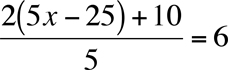
Today’s worksheet is worth posting. We’re learning entirely new skills. By the end of today’s class, students will go from outright befuddlement at this …

… to a tentative ability to solve beasts like theseEquations which took five minutes to attach to this post. My thanks to anyone who can explain how the hell LaTeX works in here..

We did it with four carefully selected problems, problems which I delivered on a worksheet, each problem eliminating units of mental scaffolding so precisely that most of my desk-help topped out at the question, “How is this problem different from the last one?”

My ongoing question for the 21st-century crowd is:

  1. how do I perform that same feat (again from scratch) using blogs, wikis, podcasts, Skitch, VoiceThread, or whatever, or alternately
  2. should a student’s compulsory education even include that knowledgeFrom experience, I don’t anticipate much response to the first question. Ex-blogger Chris Lehmann recently put some screws to that second question, though..

Related: