Category: tech enthusiasm

Total 120 Posts

1,400 Rectangles

Some math teachers were sharing dinner following last week’s Northwest Math Conference when Marc Garneau said something truly implausible:

If you have a class of students draw a rectangle, they’ll combine to create the golden rectangle.

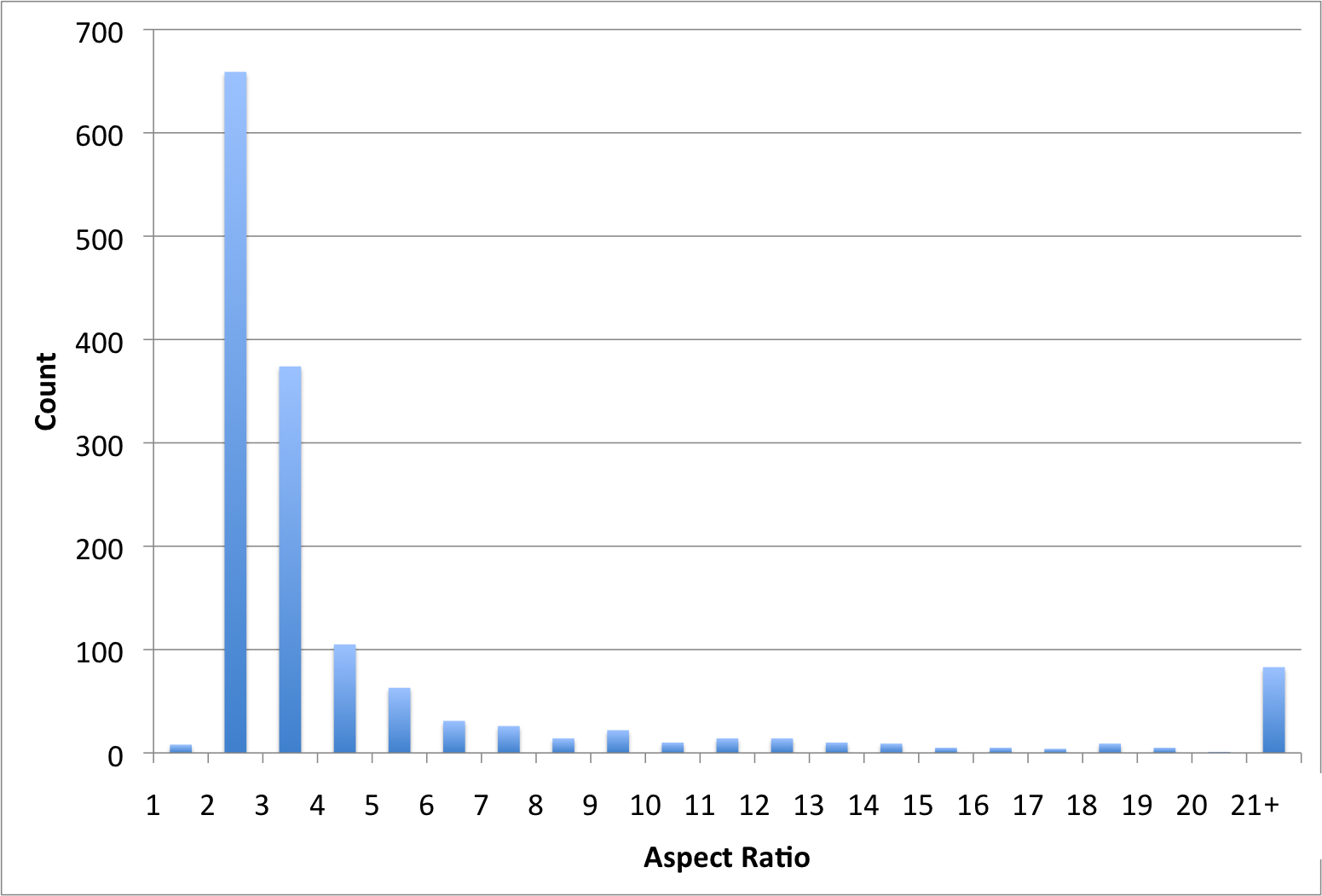
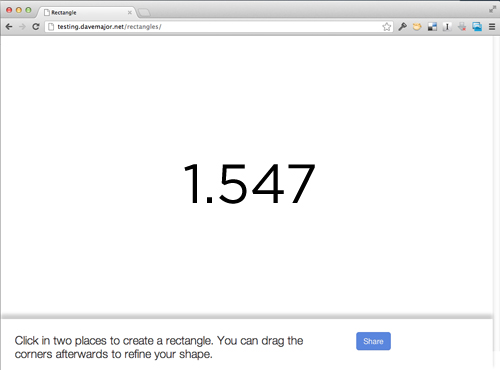
Truly implausible, but Marc stood by it, along with at least one other member of our party. Dave Major set up a web page so we could collect data. You all obliged us with 1,400 rectangles, about a third of which I’ll show you in this video:

Mean: 6.16; Median: 2.087; Standard Deviation: 18.296. So, no, not the golden rectangle. And now Marc owes me a new car.

a different dave wrote:

I predict that the shape of the rectangles is going to be very heavily influenced by the shape of the canvas provided.

Not that either. Now a different dave owes me a new car too.

Here’s all the data. Tell us something interesting about them we don’t already know.

Dave Major Shows You The Future Of Math Textbooks

I’ve been trading e-mails over the last few weeks with Dave Major, a teacher in Dubai who also knows how to use code to make dreams come true.

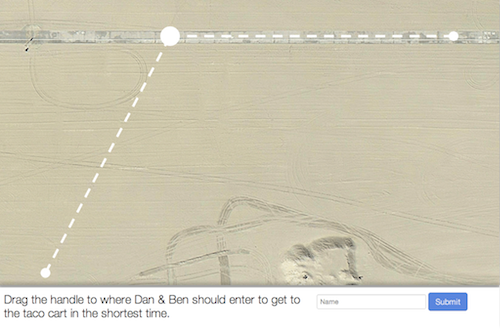
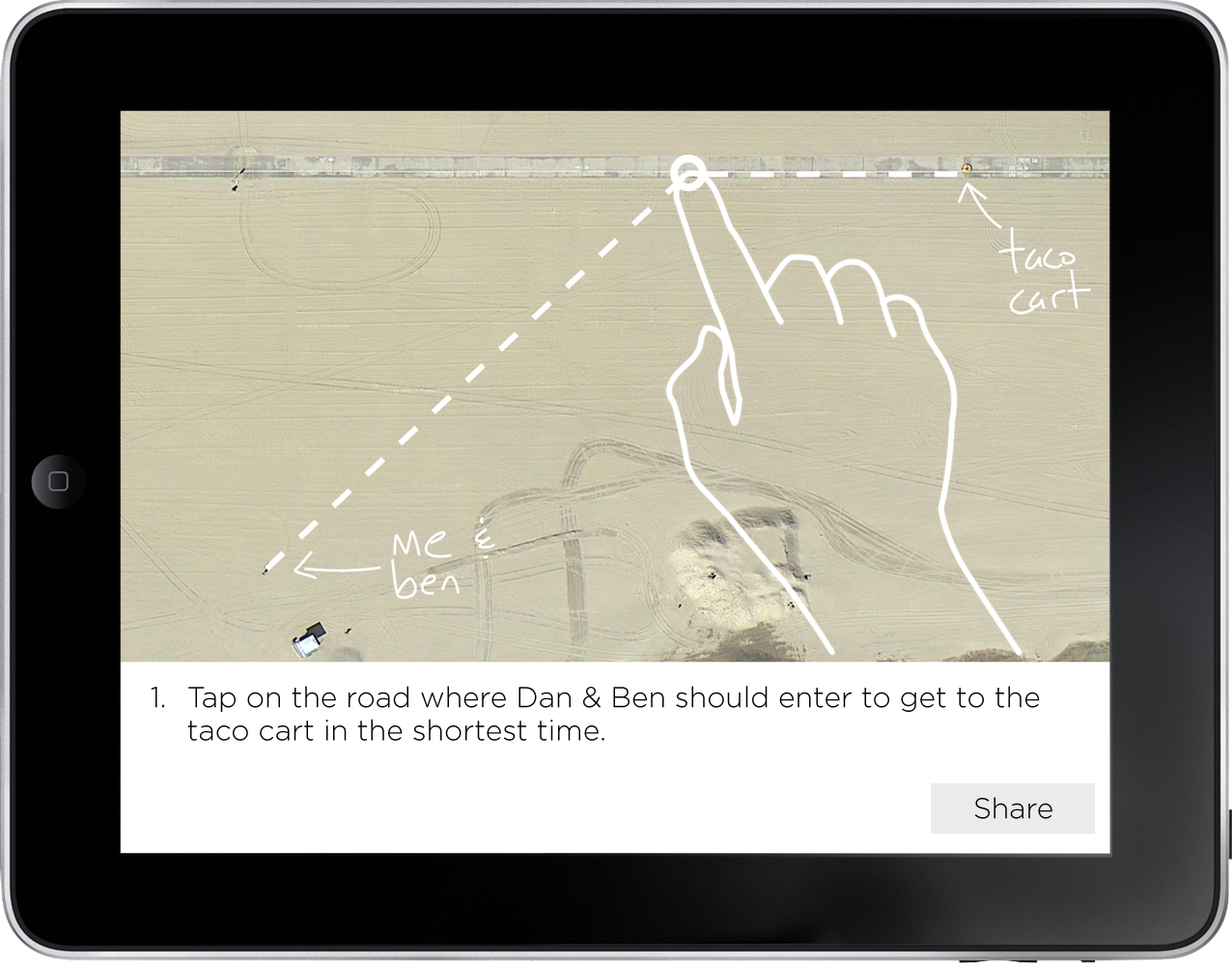
For instance, I wrote a mushy love ode to the Taco Cart task of my dreams. Dave Major made it real.

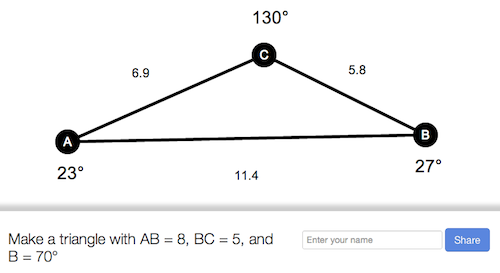
Then I asked him to create an activity I described in this talk at 28:01. We ask students to create a triangle with certain specifications. They submit their triangle and then they see quickly and easily whether or not everyone else created the same triangle from the same specs. If they did, we should prove that it’s impossible to create another triangle. If they didn’t, then we have a counterexample and we can axe the hypothesis.

Dave put it together. You should check it out. He’s giving you a look at the math textbook of the future, several years early.

Featured Comment

Andrew:

I keep thinking of learning a programming language, but didnโ€™t quite have a reason why. I think I have one now.

Building A Better Taco Cart

And by “taco cart” I mean “digital math curriculum.”

I made Taco Cart out of videos and photos. I’m comfortable making math curricula out of videos and photos but I’d rather build them out of code.

Here’s the Taco Cart I wish I had made. Implicitly, here, I’m admitting I’m in over my head. I need a new set of skills or a new set of collaborators.

Currently, I’m asking students to guess where Ben and I should enter the roadway to get to the taco cart as fast as possible. But how do they register that guess? Do they point to it? Do they make a mark on a printout of the scene?

Let’s give them tablet computers, instead, and let them slide their fingers down the road until they’re happy with their guess.

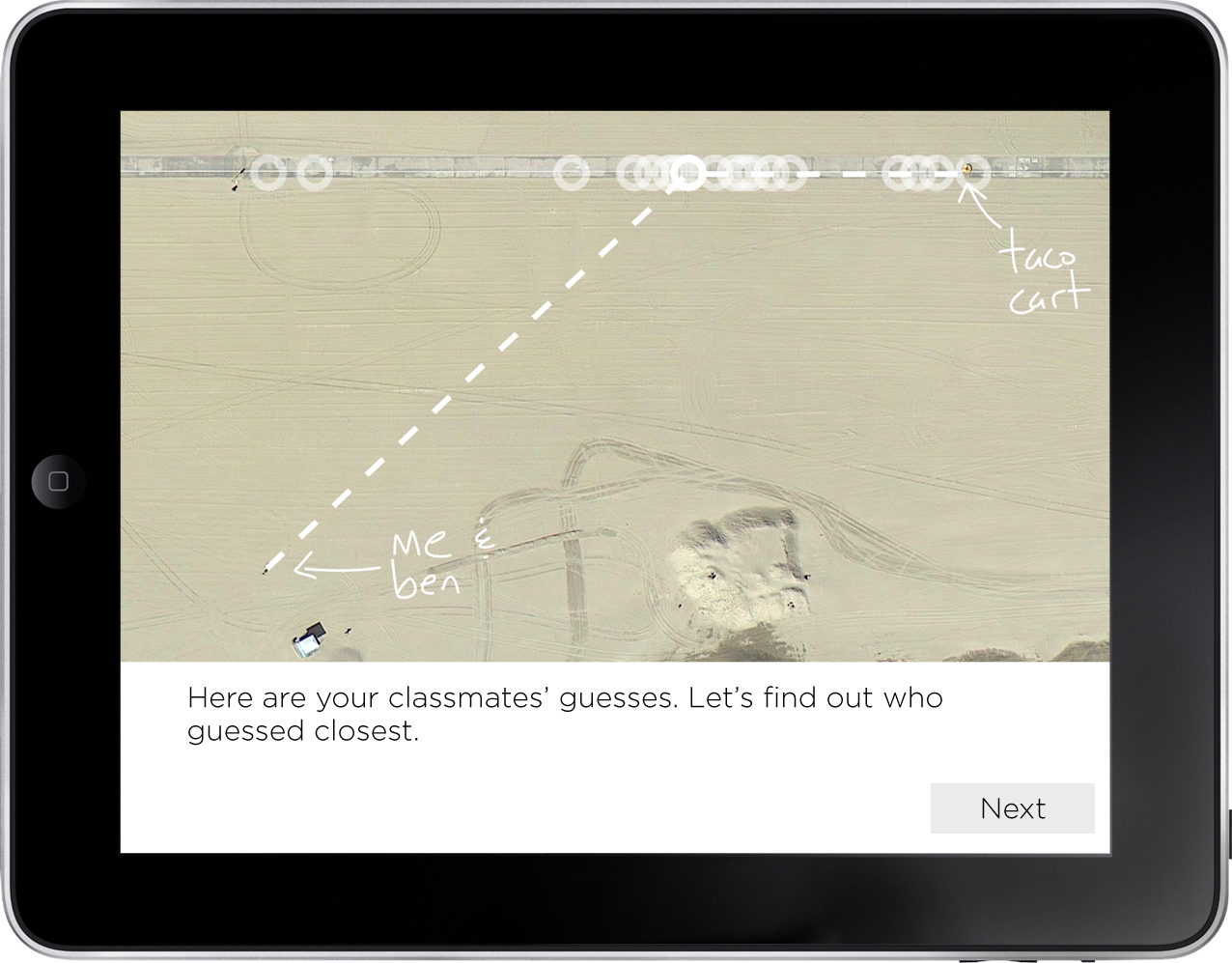
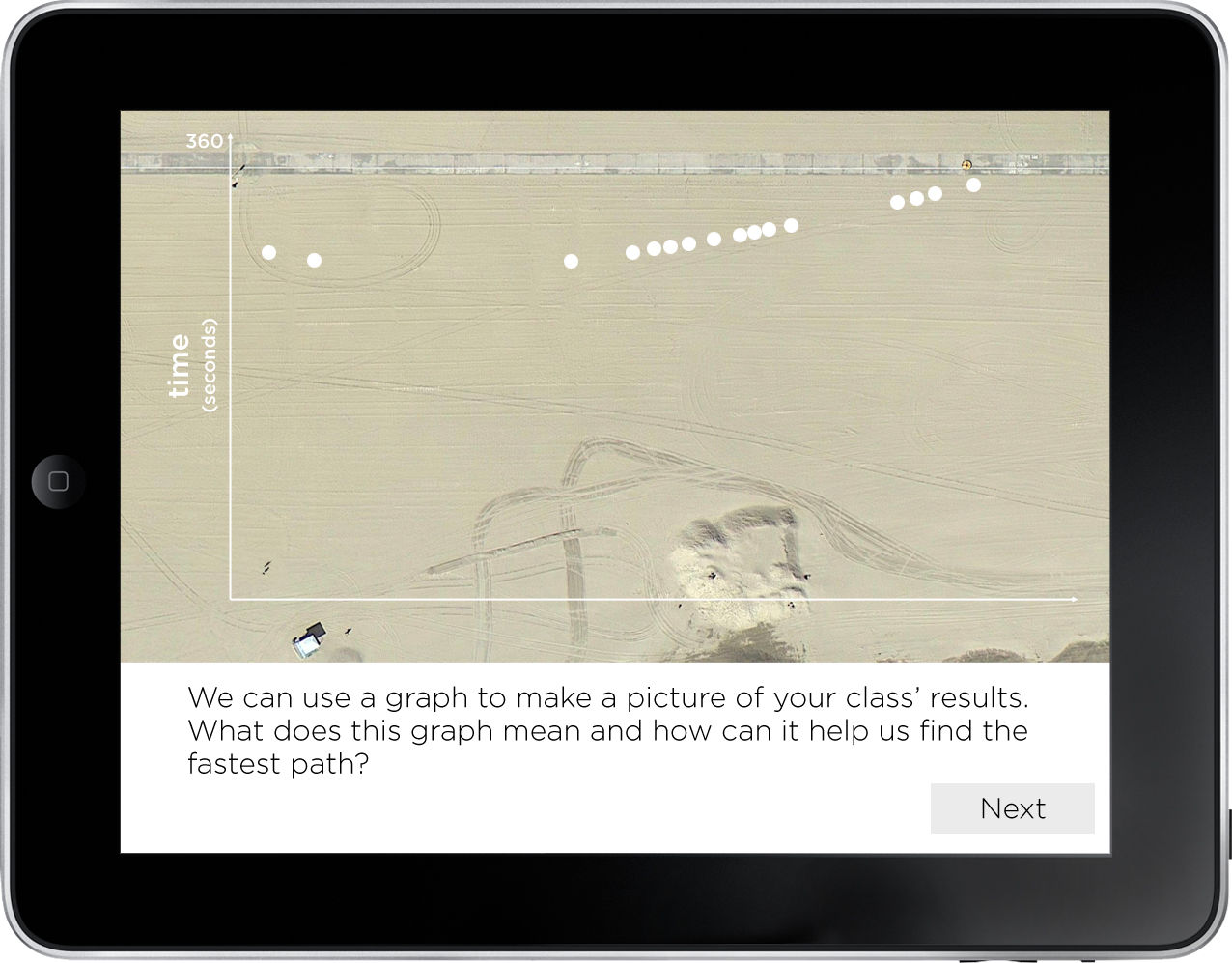
Then they see all their classmates’ guesses. Ideally those guesses are all attached to faces or names somewhere so you can see how your best friend or the girl you have a crush on guessed. This ratchets up their perplexity. Who guessed closest?

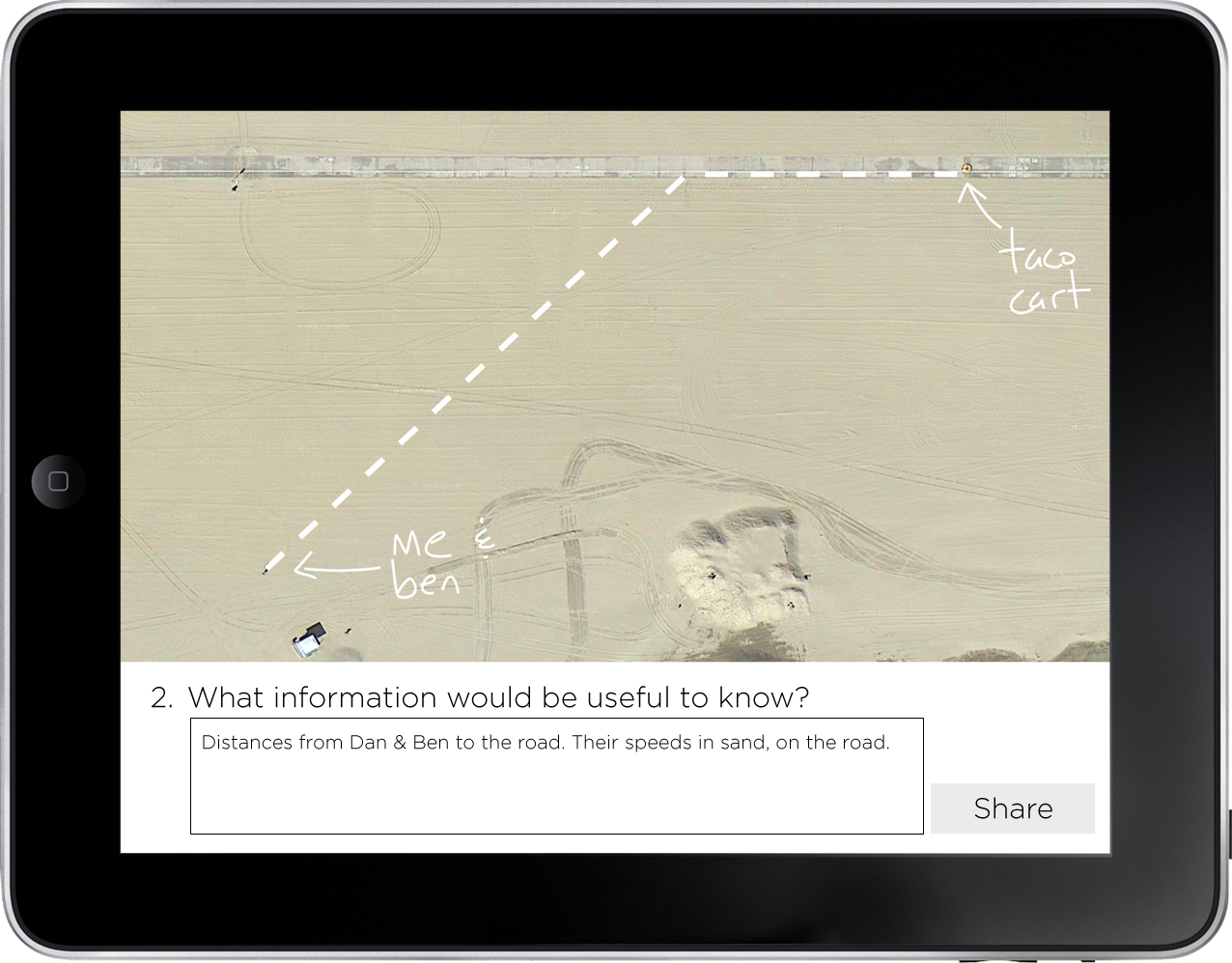
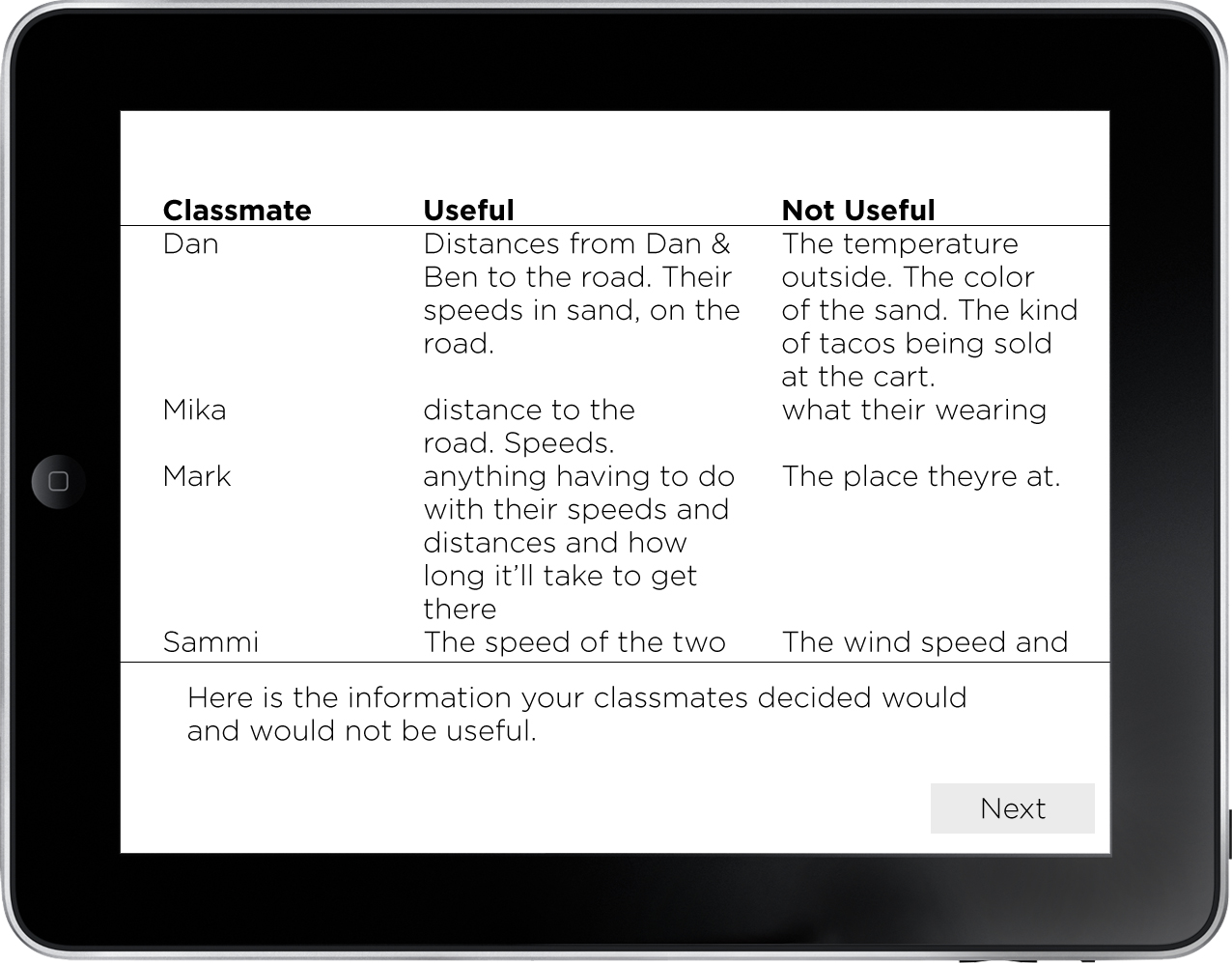
Then we ask them what information would be useful. This is abstraction. We’re giving the students a chance to extract the essential features of the context.

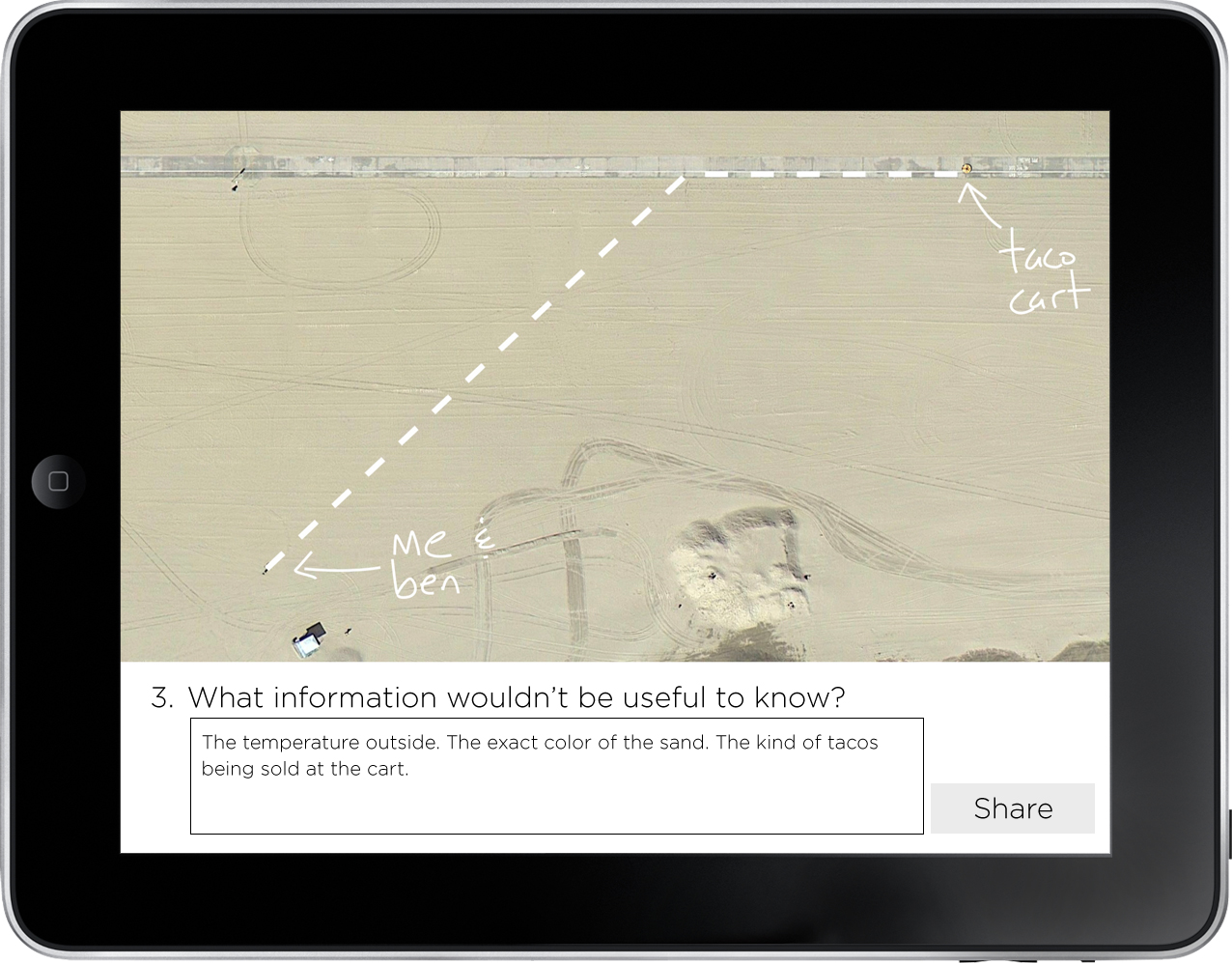
We ask them to discard the inessential features of the context.

The tablet summarizes the class’ responses. The teacher can use this information to seed a brief discussion.

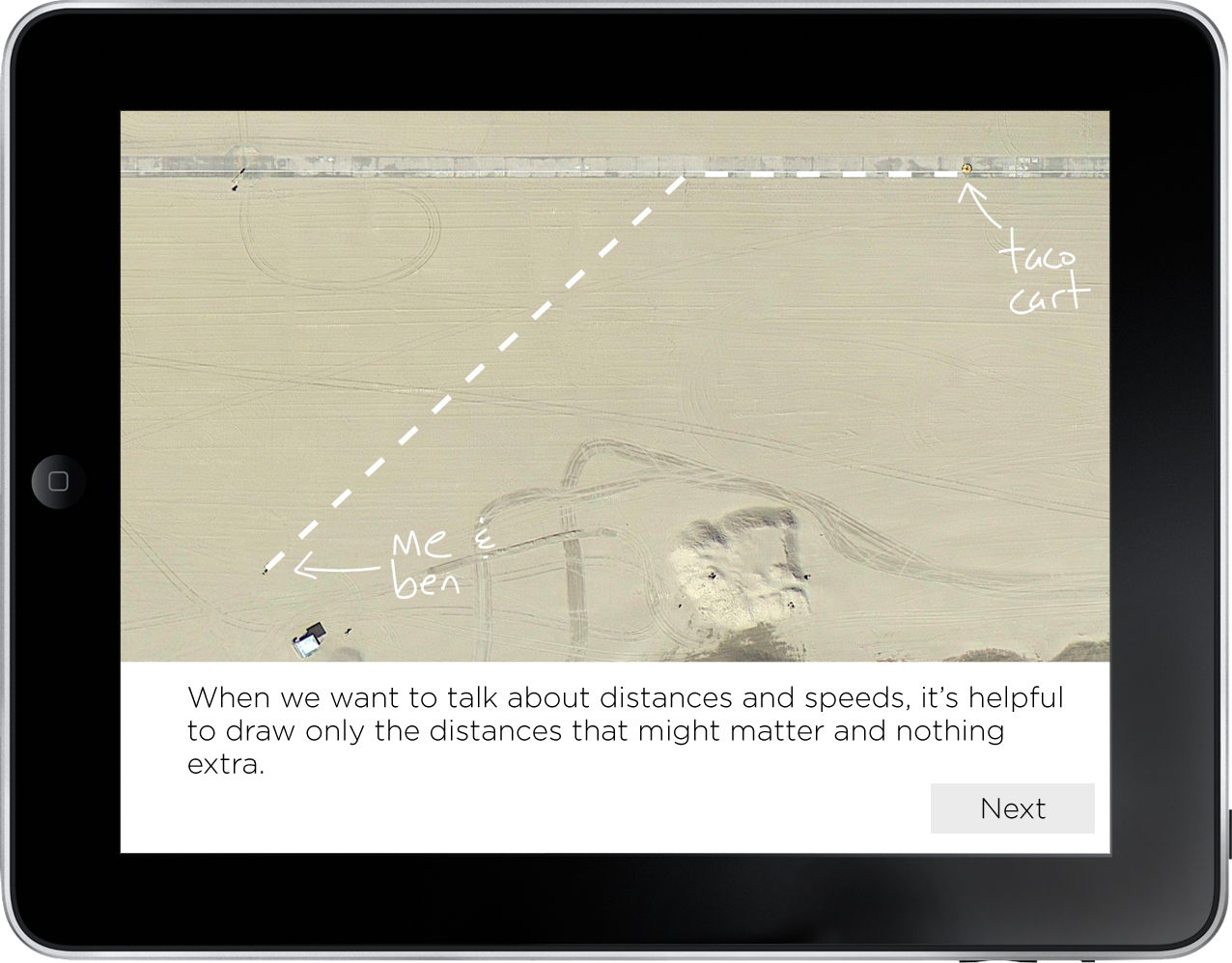
What happens next is violent. We’re going to vaporize the world. We’re going to strip away the sand. We’re going to destroy the buildings. We’re going to wipe Dan and Ben and the taco cart off the map and replace them with points and lines. If you’ve studied math at the university level, it’s possible you’ve lost touch with the violence inherent in mathematical abstraction.

So we scaffold that process briefly. We prepare the student. We say, “We’re going to get rid of a bunch of stuff you said was inessential and represent the rest as neatly as possible.”

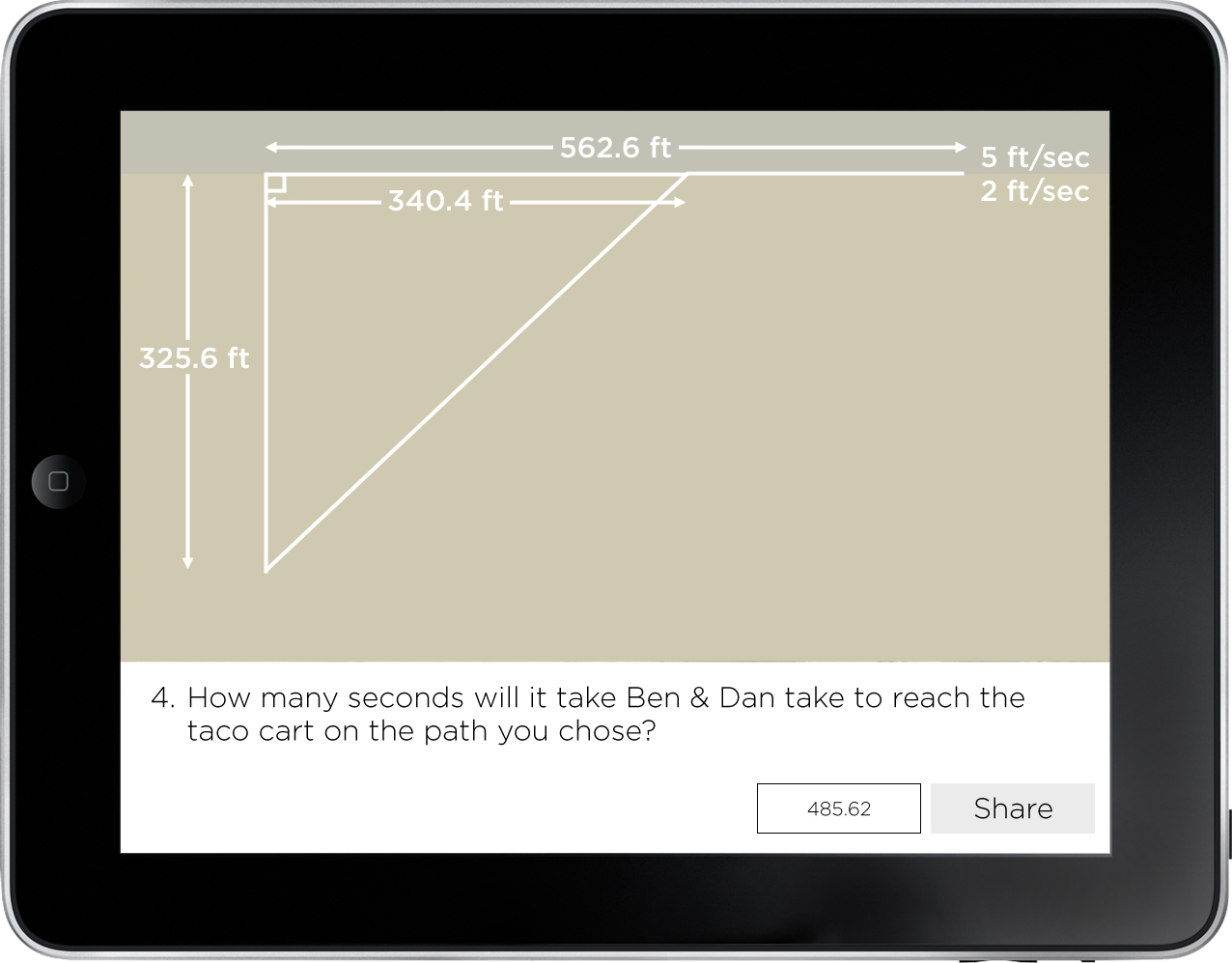
Now this is interesting. Each student is given her own task, a task that she, herself, picked. “You guessed that this would be the fastest path,” we say. “Go ahead and figure out how long your path would take.”

This is more fun than evaluating the duration of a generic path and it’s easier than differentiating the generic path and solving for its minimum. It isn’t all that much more difficult for the teacher to check either because everyone is performing the same calculation, just on a different value.

Everybody enters their results. The tablet checks them for correctness and then displays them.

Remember that everybody is doing the same calculation on a different value? [BTW: Christopher Danielson is right that I overstepped myself here.] That means it’s abstraction time again.

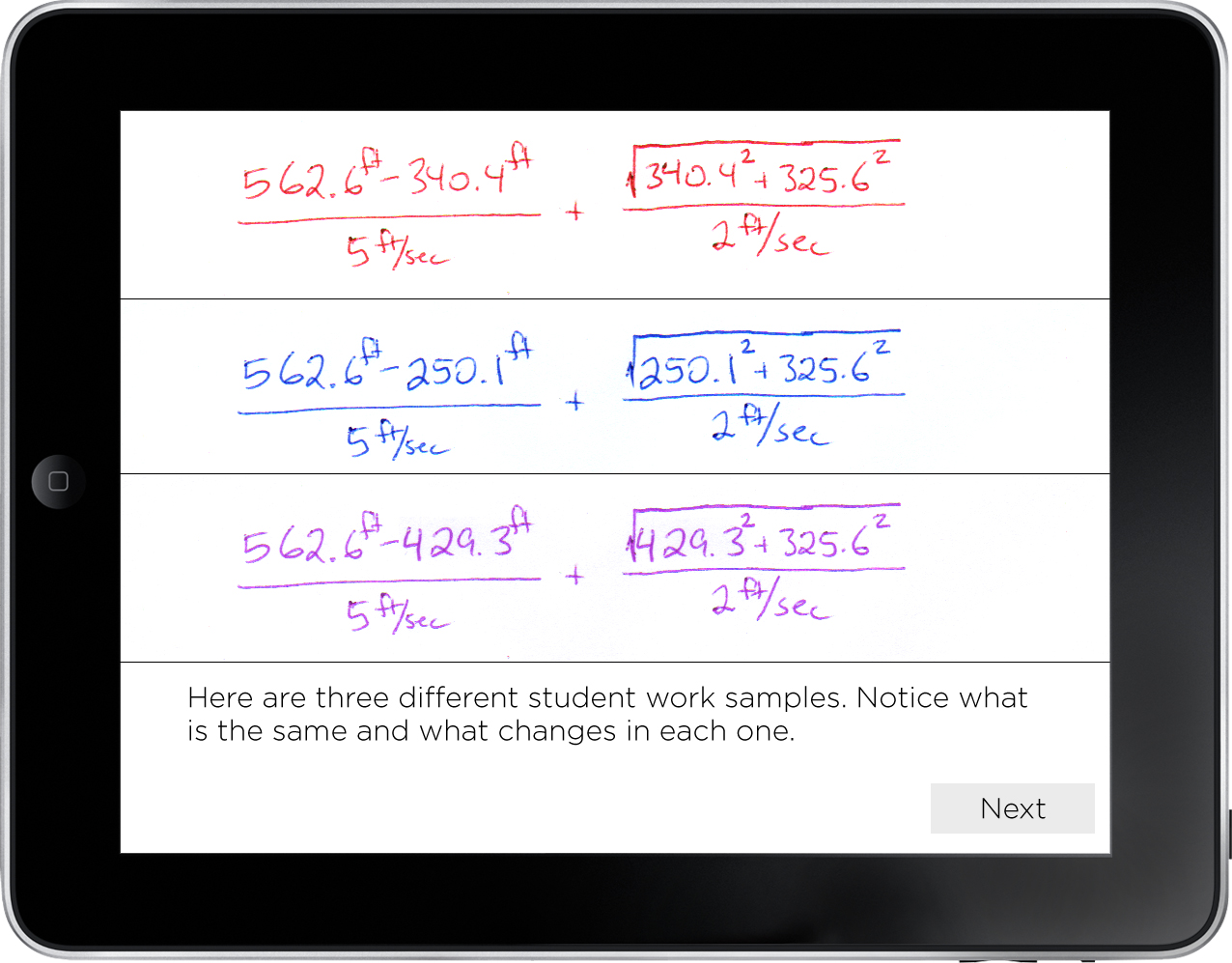
We pull out three student pages (never mind that these are all from the same person) and we ask the students to notice what changes and what doesn’t.

We turn the thing that changes into a variable. But why? Because math teachers need the work? Because math teachers amuse themselves with this notation? No. Because it lets us try any value we want really quickly. What are the highest and lowest values we should try?

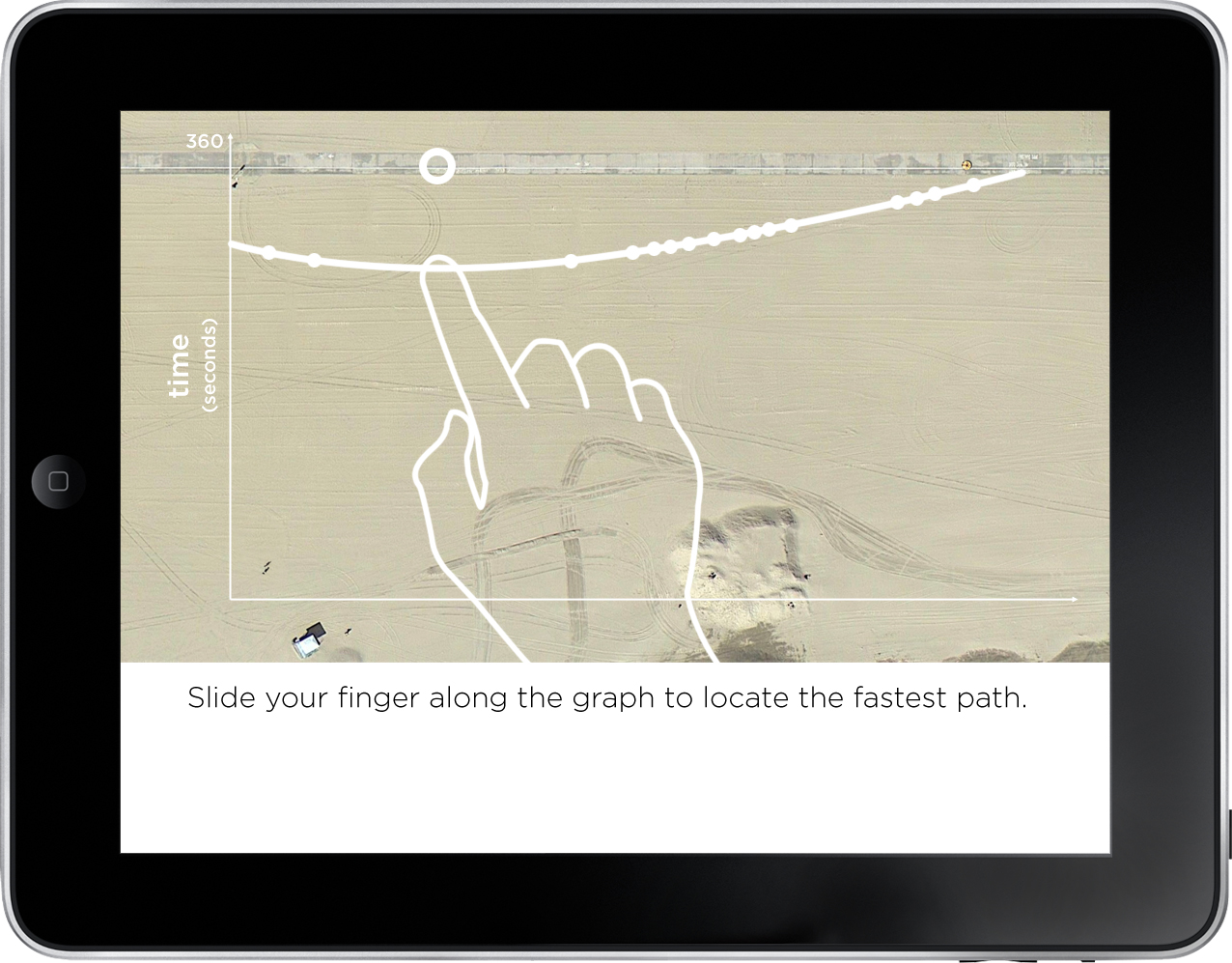
The student slides her finger along the graph and the path adjusts with it. The tablet snaps to points of interest like minima and maxima and displays the value of the graph at those points.

From here we’d play the video that shows that answer. The tablet would find out which student guessed the closest initially and throw some love on her.

A Few Closing Notes Before I Ask Your Opinion About This Kind Of Curriculum

  • On the upside, this task attempts to clarify abstraction for students and make that process participatory. It involves the entire ladder. Students pick their own math problem. Students are guessing. They’re deciding what information is useful and useless. ¶ Look at the original task and imagine how many more students are included in this re-imagining. ¶ The task is also social in a way that’s difficult to achieve without 1:1 technology. The tablet collects and represents the entire class’ guesses in real-time. A teacher can’t do that.
  • On the downside, I’m not sure what the teacher does in this sketch. At different times, I wobble between having the textbook function as the teacher and having the textbook simply maintain a steady course through the problem. If I taught this problem, I know I’d handle a lot of the exposition (ie. “Here’s why we use variables.”) myself, in conversation with students. But what should the textbook do? ¶ Also, we didn’t differentiate the function and solve for the minimum. We formulated the model and solved it graphically. Does that still count as math?

Now you go.

2012 Oct 11. Dave Major went out on spec and put a lot of this into code. It’s exciting.

UnGoogleable Problems

Rebeckah Peterson:

One challenge that I face, however, is that my students are used to their curiosity being satiated so quickly and easily. If they want to know the answer to something, they can just Google it. On their phone. Right there.

Chris Champion:

Iโ€™m wondering โ€” does solving the answer to โ€œThe Ticketโ€ permit the use of a cell phone bar code scanner? I easily got โ€œ2000โ€ยณ for the answer using the Amazon iPhone app. I had a feeling my students would find the answer that way too. Yup. It took about a minute before a student took out his phone and used Google Goggles.

I was in Kansas earlier this year when this problem reared its head and threatened to swallow up back-to-back workshops. I had shown this video and we were kicking a few questions around before eventually answering, “How much money is on the walls?”

In the first workshop, a participant asked, “Why did he do it?” and I talked about the $100,000 that Hugo Boss awards Guggenheim artists for the design of an installation. A few people snickered and I realized I had just answered our next question.

In the second workshop, we were working off Guggenheim blueprints to determine how much cash was on the walls and one group seemed disengaged. I walked over and saw New York Times coverage of the installation on several screens. The headline has the answer.

Two options here:

  1. Throw suspicion on Google. I asked one group to please make sure there are really $100,000 on the walls. I mean, what if Feldman just quoted that sum to the New York Times but pocketed $40,000 thinking, “Who can really tell the difference between 100,000 and 60,000 bills?”
  2. Ask a question that’s never been asked before. The point of the Guggenheim task is to have students model the total dollars using a) the surface area of the walls, b) the surface area of a dollar bill, and c) the amount one dollar bill overlaps the next. My students found an easier way to resolve their perplexity than build that model. Power to them. So I asked them, “What would the bills look like if there were a billion of them up there?” Eventually, you ask, “What’s the most cash they could pin to the walls?” In both cases, they have to construct the same model. They’re just solving for a different unknown. For the ticket roll task (original question: “Given a ticket roll, how many tickets does it contain?”) I said, “I’m inviting my 1,000,000 friends over for a party. I’ll need a ticket roll that holds that many tickets and I’m wondering how big that’ll be. Can I store it in this room? Will I need a shed? A warehouse?”

I have a lot of faith in that second option. It extends to any kind of task. Swap the known and the unknown. Pick a number with a lot of zeros and then build a story around it.

[LOA] How Technology Can Help

In March, I gave a talk to some math textbook authors describing five strategies for designing curricula for digital media like tablets and computers. One of those five strategies relatedly directly to the ladder of abstraction and my tentative hypothesis that paper is a problem, that the constraints and cost of paper lead us to decisions that ultimately make the process of abstraction very difficult for students to understand. (ie. Print-based curricula in your teens leads you to tell people that “Math always seemed abstract to me” in your thirties.)

My preference would be that you’d watch the 8.5 minutes from 19:14 to 27:57 of this video. Some of the examples don’t work well here in text, but I’m going to lay out the slides and narration anyway so we have a place to argue about this segment in specific.

This gets really fun here. This is a part I’m really enthusiastic about right now. Have students climb the entire ladder of abstraction.

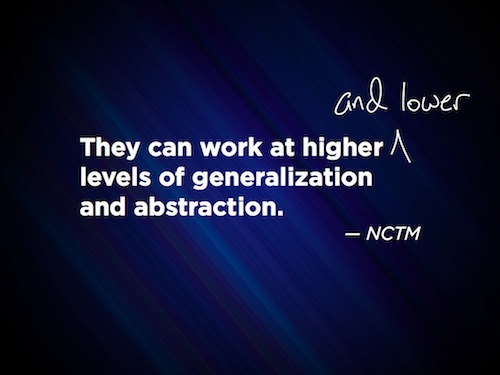
This is NCTM on technology and I think they got it exactly half right. The technology helps us work at higher levels of abstraction but technology also helps us work at lower levels of abstraction. Right now, the tasks we give students are focused on this narrow band, this narrow set of rungs in the middle of that ladder and no higher and no lower.

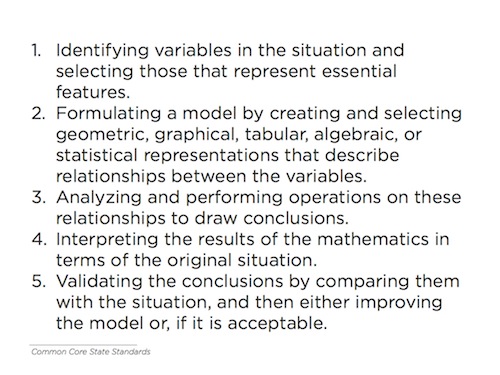
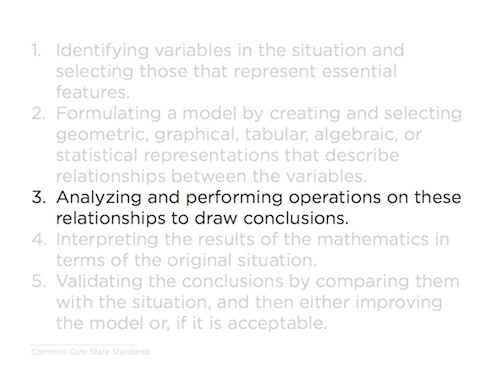
You look at the modeling standard and look at what it says. (This terrifies me by the way.) “Identifying variables. Formulating a model. Analyzing and performing operations. Interpreting the results. Validating the conclusions.” That’s your ladder of abstraction there. [I won’t exactly sign on off that now, FWIW, but let’s see where he’s going with this. –dm] And what do we have students doing? Just that middle rung.

They select the operation and apply it. That’s it.

And so this is a tool that was built by a guy named Bret Victor. This is a guy you should get to know. I watched a talk he gave on the plane over here from San Francisco and I had like a physical reaction to this talk it was that good. He has a project called Kill Math, which should be provocative enough for all of you guys to click on the link. He’s a technologist, a creator, an artist, an engineer. This is a guy who will provoke your thinking in a number of different ways.

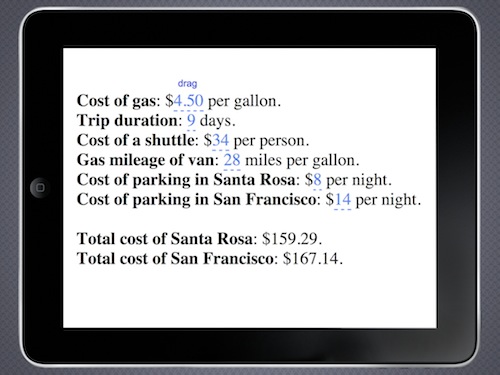
But he created this tool he calls Tangle and I adapted it for use in this problem. And what it lets me do is essentially turn all those parameters into variables and so now once I’ve solved the first problem, I can slide around on all those things and see what would happen if gas dropped in price or if the shuttle costs went up or if the cost of parking in Santa Rosa dropped to zero. And ask a whole host of new, different, complicated questions. And pose scenarios that are higher up on the ladder of abstraction.

But we also need to have students work at lower levels. Like, where did those parameters come from? You and me. We brainstormed them [earlier in the session –dm]. But in the textbook those are given to them. The text tells students what parameters they’re going to need and it gives them that information.

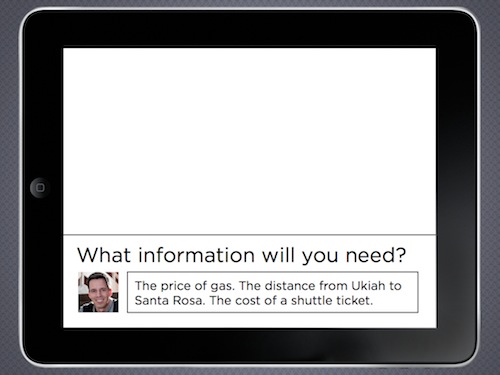
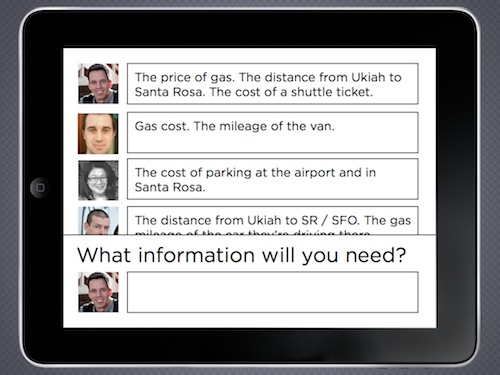
Thats a valuable lower rung on the ladder that students need experience with. Once we have the task posed, let’s just ask that student, “What information will you need here?” And just let the student think about it for a second, and then type a few things down in a low-risk environment.

And maybe let the student see all the classmates’ responses also, the results of that brainstorming.

That’s a lower level of abstraction. You and I are constantly dealing with the question, “What information do I need to solve this task?” That’s a question that gets very little air time in our print-based curricula.

Again, we have a third page for this problem now. We have the starter โ€“ the context, the visual. We have this rung โ€“ this level of abstraction. And then the rest of the problem. That’s three pages for this task right now. You can’t do it in print.

We could compress all of those. But you can’t put a kid on a higher rung and then ask them to work on a lower one. Like I can’t give the kid all the information they’ll need and then ask them “what information will you need?” The horse is out of the barn. So we have to split this up over multiple “pages”.

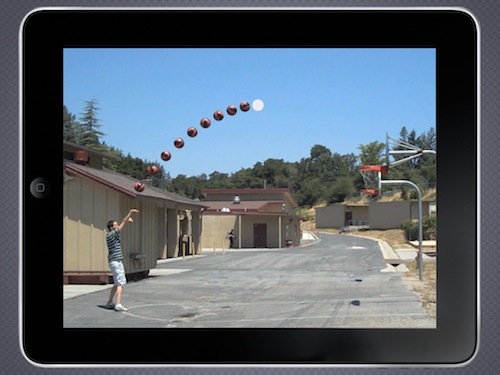
Go even lower. This is, I think, the lowest rung on the ladder of abstraction.

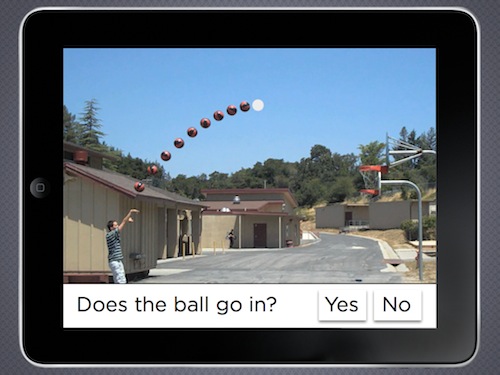
We show. We don’t tell. And then we pose the task immediately, “Does the ball go in?” And, at this point, how are you not speculating? Like how are you not guessing. I know you have a theory. You’ve got an idea in your head whether it’s going in or not. Can I get you guys to raise a hand if you think it’s going in? Okay. And the rest think it’s going out. I’ll just assume that. That is a valuable moment of intuitive and guesswork and it’s engaging for students so let’s give them an outlet for that on the page there.

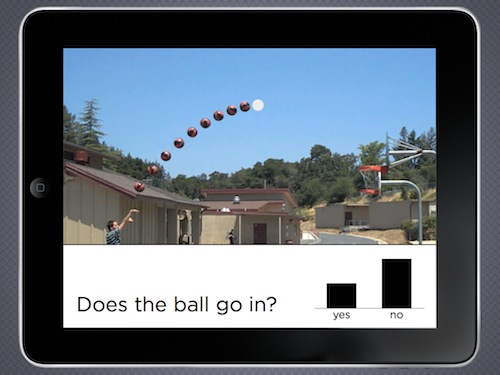
Just let them tap a yes or a no. “What do you think?” And then we’ll aggregate all those responses.

This has cost us nothing in terms of cash or weight on the student’s back. It’s cost us a brief second of class time, which makes whatever meager return we get on this investment just incredible. Just in terms of, “Well now I want to know the answer.” We’ve got that student.

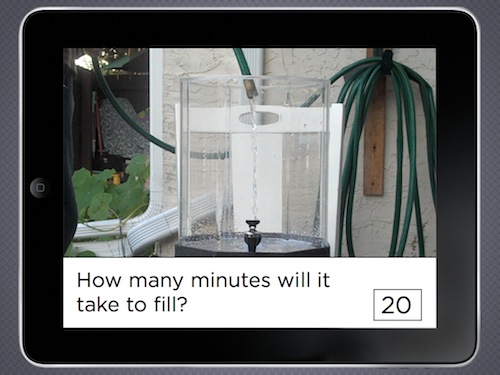
And that’s everywhere, in applied math particularly. “How many minutes will it take to fill?” Every student puts down a guess before we get in the real meat of it.

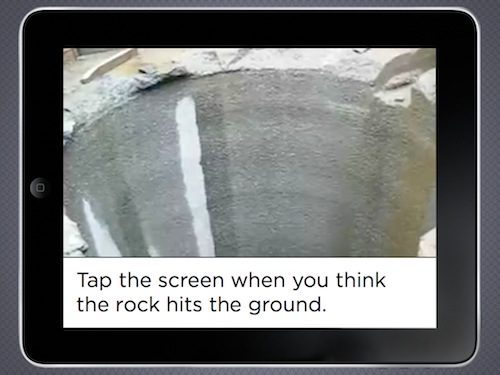
This is going to get really fun here. Obviously I will ask you, “How deep do you think it is?” That will happen. But even better is this. I’m going to ask you to tap on the screen when you think the rock hits the ground. And I can’t have you do that. [This part makes no sense on paper but it’s pretty awesome in the video –dm] But I’m going to ask you to raise your hand when you think the rock hits the ground.

Now tapping obviously has a lot of advantages over raising your hand. It’s more surreptitious. You have your own answer. You’re less biased by others. I like that about it. But for now you saw that video before. I’m going to ask you to raise your hand up when you think the rock hits the ground.

[Most people raise their hand on the huge boom. I raise my hand way earlier than the boom. –dm]

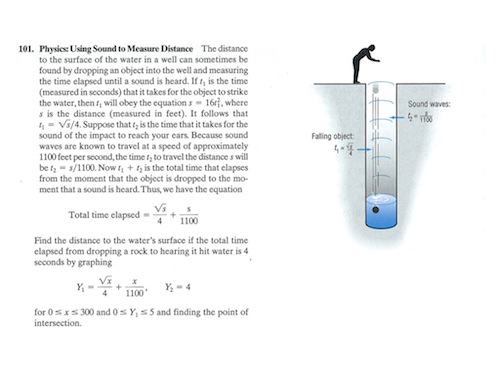
We were all over the place there. There was some large clumps there at the end. I think the you guys were late. I don’t know what the answer is, exactly, but I know that this crowd here, on that big boom, was late. Why? What was the question that these people answered perfectly? “When did I hear it?” Which is different than “When did it hit the ground?” Right. Because the sound is coming back up.

And you guys should see your faces right now. Some of you guys are kind of like, “Huhhh.” So using a very low rung โ€“ which student couldn’t answer that question? โ€“ we’ve highlighted that there’s more here than projectile motion. There’s also the speed of sound going on. We’ve got that in your head.

And thinking about how that happens in print, we get a very different reaction off this right here when we’re just writing and writing and writing about the speed of sound. It’s different.

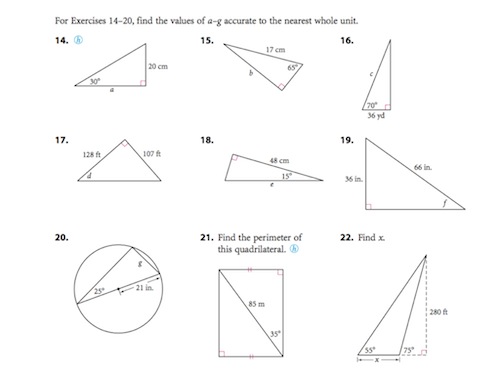
This plays out in pure math in some fun ways. This is your very traditional trigonometry practice unit. We jump into problems like this right here.

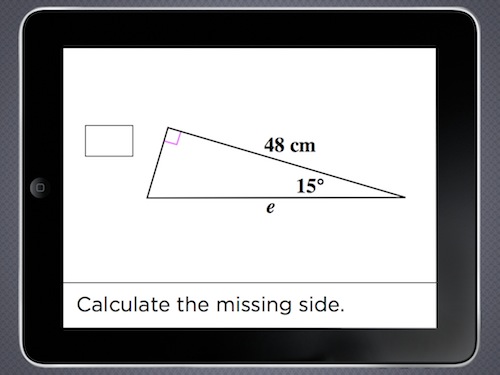
Calculate the missing side. And we do this very interesting thing on these problems where the student gets an answer and we go around and we look at the answers. When the answer is wrong, we ask, “Does your answer make sense? Is your answer reasonable?” It has the effect of stigmatizing that question, of course, so they know “Is your answer reasonable?” means “Your answer is wrong.” But it’s interesting when we ask that question. We ask that question once they’ve climbed to the very highest rung on the ladder. They’ve selected a model. They’ve performed the operation. They are way high up there. And we ask them to climb on down and access the lowest rung on the ladder. “Is your answer guessable, reasonable? Does your intuition say, ‘Yeah, it works.'”

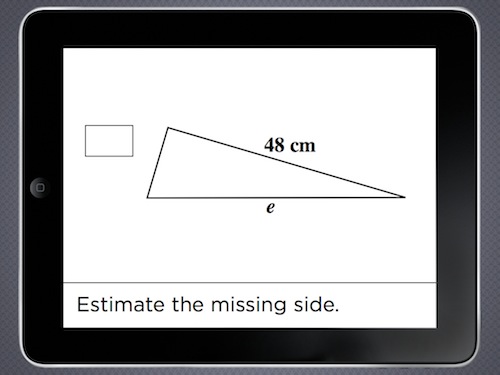
I don’t have a ton of evidence but I think that’s hard for students. Far better would be to start the student at that low rung and then build up. So I’m talking about this right here:

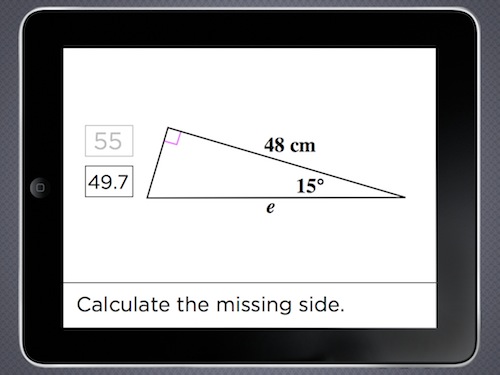
We just ask them to estimate it at the very start. All the same problems. They’re just going to see them twice, though. They’re going to go through the first time in a couple of minutes and just put down their best guess at how long that side will be. So maybe the student says, “55, maybe,” and moves onto the next one. It takes two minutes.

Then the next time through, we give them this angle here. Their answer โ€“ their intuitive answer โ€“ร‚ย is still up there so that when the student gets that it’ll be 49.7. Like, yeah, that’s kind of within the ballpark there. And we don’t have to answer the question, “Is that reasonable?” Their reason is staring them in the face already.

So if they were to use the wrong identity. It would be more obvious. So if the student got 14, or whatever it would be, if they had solved accidentally for the other side, it might be more obvious seeing that guess staring them in the face.

I’m enthusiastic about that.