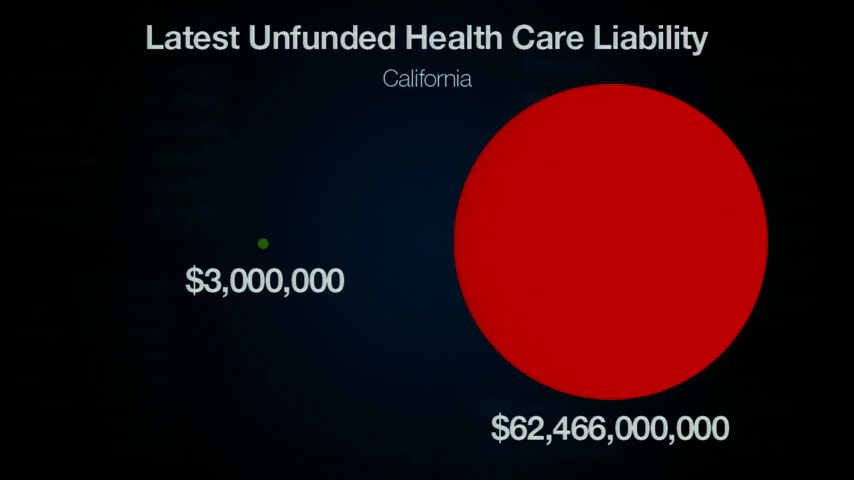
There is a pile of money to be made in tricking people into enrolling in online colleges. A pile.
It’s a trick because these online colleges don’t care if students can succeed at their school or not. They profit either way. How?
The underprepared student takes out loans from the federal government – that’s your money and mine. They give that money to the college. Then they drop out halfway through, either defaulting that debt back to our tab or carrying that debt around with them for decades, unable to discharge it in bankruptcy, unable to get a job or rent an apartment because they’re a credit risk to employers and landlords. Either way, the college gets paid.
It’s a predatory system and whenever you link to a “Top 100 Teacher Blog” list, you are one of the predators. Here’s how it works:
1. The Prey Googles “Get An Online Degree”
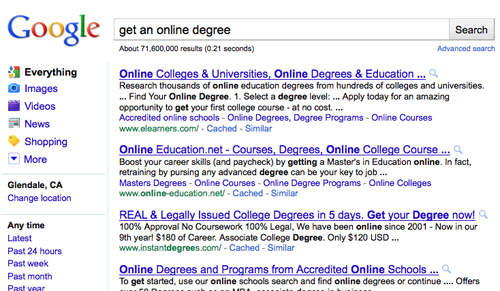
Or something close to that. There is incredible competition to be the top result on this list. Why?
2. The Prey Clicks A Link And Looks For A Degree

3. The Predator Returns Results From Online Colleges
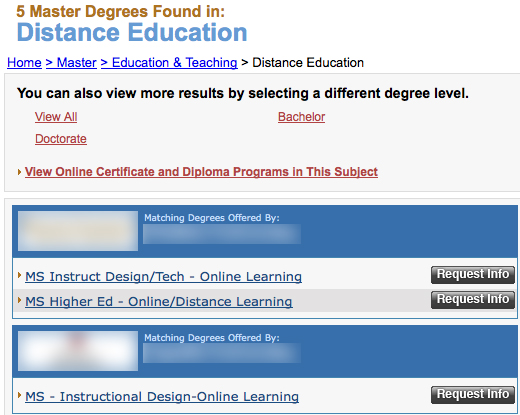
This is where the predators get paid off. They have passed the prey up the food chain to a larger predator and they get an awesome conversion fee for their trouble. Those fees add up to a pile of money.
But Where Do You Fit Into The Food Chain?
You’re a predator.
The other predators make big money when they’re Google’s top result. How do they become Google’s top result? They get a bunch of people to link to their website!
How do they get a bunch of people to link to their website? They make a list!
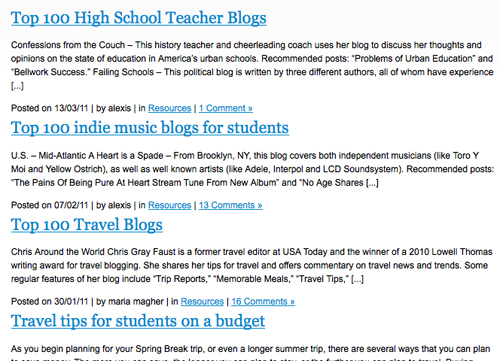
They make dozens. Top 10 social studies blogs. Top 20 writing teacher blogs. Top 100 administrator blogs. They flatter a bunch of people who are underpaid and underappreciated who then relink, reblog, and retweet the list, simply flattered to be included!
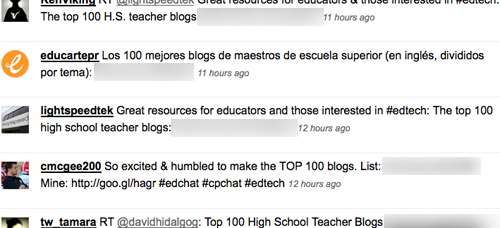
For Instance
I got an e-mail 22 February 2010 asking me for some details about my blog. At least 100 of you got the same e-mail. “You’ve been selected as one of the top 100 teacher blogs,” it said. I clicked “Spam.” I got another e-mail a month later:
I was wondering if you could please write an article about this on your site, or include the list in your blog roll. My goal in writing this article was to make it a resource for other teachers…so hopefully by coming across the list it will inspire them to start blogging as well. Please let me know if this is possible via e-mail.
No. You’re a liar. You made that list so you could take money from people who don’t need more predators in their lives.
Click “Spam.” Move on. Don’t look back. Don’t be a predator. And please relink or retweet this post whenever you see someone who doesn’t know better.
Related:
- Campus Progress gives for-profit colleges a solid infographic treatment.
- This undercover video from the Government Accountability Office is nauseating. I dare you to tell these enrollment officers apart from used-car salesmen.
- College, Inc.. How online, for-profit college works.
- More details on the money in gaming Google’s search results.
Other E-Mails To Ignore:
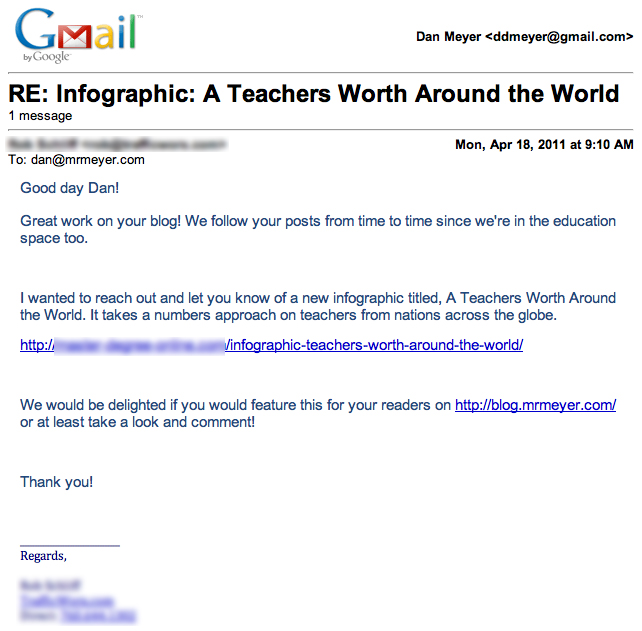
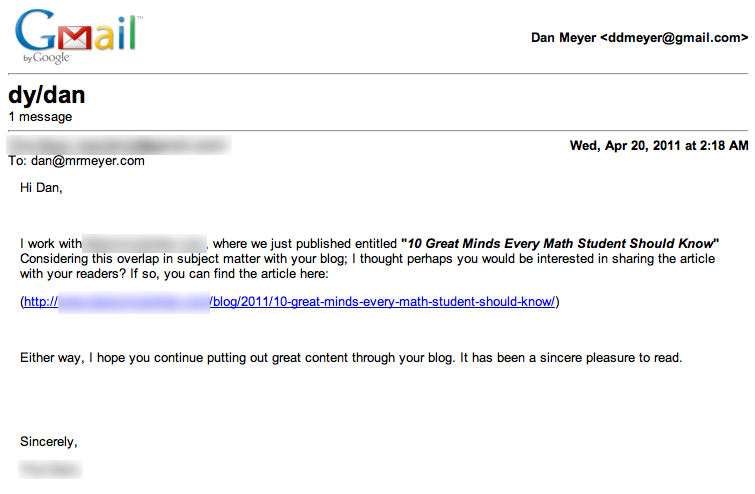
The other thing to be aware of in this arena is unsolicited emails where someone is asking to write a guest post on your blog. That has happened to me in the last year. They are very flattering. Fortunately, the person who wrote me provided links to examples of her work elsewhere, and I could see the guest posts were littered with links back to a scammy online college website.