Teaching movies suffer just like all movies do from weak actors, murky cinematography, and didactic, lazy writing. I’d argue that teaching movies hold a lower batting average than most, but you’d call me fussy, so I’ll note, instead, two extremely specific, substantive ways teaching movies fail me:
-
Wrongheaded pedagogy. In The Wire we’re meant to smile when Prez cancels literature review (boring!) for another lesson loosely connecting gambling to math (fun!).
Or in another episode, when Bunny Colvin creates a separate class for a group of unruly kids, the sole purpose of which is socialization, because, paraphrased, “they can’t learn.”
Or Chalk, which propagates the philosophy that students oughtta do the teacher’s job.
Or Freedom Writers, whose failings are notorious around here.
When these films and programs speak truth to the reality of teaching in America, it’s often accidental. More often than not, they do us some terrible PR, depicting this job for bystanders and prospective teachers as something it isn’t.
-
Noxious pandering. Call it the “Oh Captain, My Captain” moment, endemic to the genre, which pits an unctuous, narrowminded dean …
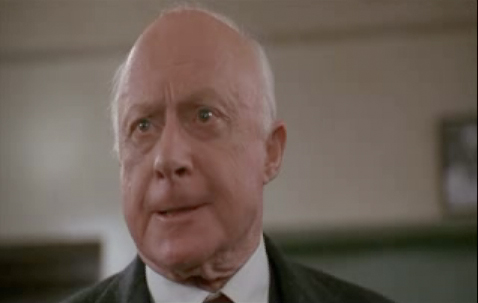
… against a beneficent but unconventional teacher …
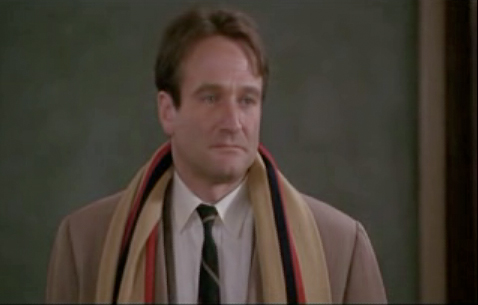
… with a bunch of disadvantaged doe-eyed students between them. And it’s like, how do you think a situation that contrived is gonna turn out?
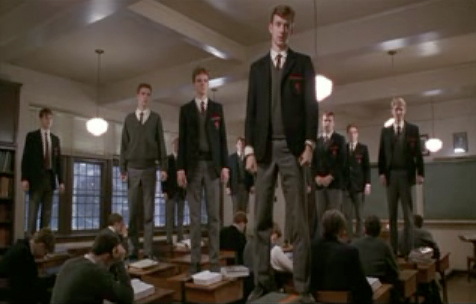
Every time this sequence shows up (usually within the last reel) I feel like a stranger has started massaging my back. I don’t need that.
My question, then, is whether there are any depictions of teaching you find worthwhile, or whether you’d relegate everything to the same trashheap as Kindergarden Cop?
I have found the most interesting depictions of teaching in movies and tv wholly unconcerned with teaching.
As in The Wire, which depicts Carver’s transformation from an overbearing, self-important cop to a community police who knows where the kids hang out, who motivates, talks to, and looks after young offenders instead of writing up their every humble misdemeanor
Or in The Office, which on a weekly basis speaks more truth to the exigencies of befriending, interacting with, and motivating your subordinates than any teaching movie I’ve ever watched.
None of this is to say I hated Chalk. I don’t know if its wisdom was entirely intentional but one short scene involving a stolen box of chalk warrants an entire graduate seminar of its own
I’m certain, though, that teaching lends itself poorly to dramatization. Our triumphs are often ephemeral – here and gone again – and sometimes exist only in the hindsight of an appreciative former student. The work isn’t cinematic – we aren’t piloting X-Wings into the Death Star here – and it’s often an interior, intellectual pursuit.
Why, then, do we insist on dramatizing a profession which defies dramatization?