[3ACTS] Double Sunglasses

My video Target Tint was taking a beating over on 101questions with well over 50% skips. But the overall concept seemed solid to me. What happens when you apply multiple layers of tint? My guess is that people watched that video and figured the answer was a matter of simple division when, in fact, tint is more complicated and more interesting than that. If you wear two sunglasses with 50% tint each, for instance, are you then blind? So I reshot it and the result is now humming along at 90% perplexity as of this writing. Raise your hand if you dig the revise-and-resubmit cycle of teaching.

Here’s the task page.

If Math Is Basketball, Let Students Play The Game

Konstantin Kakaes:

Math and science can be hard to learn–and that’s OK. The proper job of a teacher is not to make it easy, but to guide students through the difficulty by getting them to practice and persevere. “Some of the best basketball players on Earth will stand at that foul line and shoot foul shots for hours and be bored out of their minds,” says Williams. Math students, too, need to practice foul shots: adding fractions, factoring polynomials. And whether or not the students are bright, “once they buy into the idea that hard work leads to cool results,” Williams says, you can work with them.

There are plenty of lines to cringe at in Kakaes’ article. PJ Karafiol knocks down most of them in a great post that was eventually syndicated by Slate. (Good for Slate. Good for Karafiol.) Mr. Williams’ metaphor deserves extra scrutiny, though. Here are just two of its most screwy aspects:

  1. Drills aren’t a basketball player’s first, only, or most prominent experience with basketball. Drills come after a student has been sufficiently enticed by the game of basketball – either by watching it or playing it on the playground – to sign up for a more dedicated commitment. If a player’s first, only, or most prominent experience with basketball is hours of free-throw and perimeter drills, she’ll quit the first day – even if she’s six foot two with a twenty-eight inch vertical and enormous potential to excel at and love the game.
  2. Basketball players aren’t bored shooting foul shots. Long before “math teacher” was on my resume, I was a lanky high school basketball player trying to get his foul shooting above 50%. I’d shoot for hours but I wouldn’t get bored, as Williams suggests I must have been. That’s because I knew my practice had a purpose. I knew where that practice would eventually be situated. I knew it would pay off in a game where I’d be called to the line for a shot that had consequences.

There is a place for drills and explanation in mathematics, as in basketball. But consider what little good they do in either arena if the student isn’t first made aware of the larger, more enticing purposes they serve.

BTW. The worked examples literature leans heavily on De Groot’s research into chess masters who, it turns out, have memorized an enormous number of board configurations relative to casual players. This is unsurprising in the same way it’s unsurprising that professional basketball players practice their free throws much more often than amateurs. But it doesn’t necessarily follow from either of those facts that the best way to start inducting new members into either of those groups is to force novice chess players to memorize board configurations for hours or new basketball players to shoot hours of free throws from the line.

BTW. Max Ray articulates a strong framework for technology use in the math classroom at the end of his recent post at the Math Forum.

2012 Jul 11. PJ Karafiol follows up.

Featured Comment.

Jeff de Varona:

Am I the only one who is reminded of The Karate Kid? Mr. Miagi has Daniel do crazy, de-contextualized drills without knowing their purpose. In the end it works (because it’s a movie), but in the meantime Daniel gets extremely frustrated and wants to give up. Perhaps if Mr. Miagi had made it more clear what the “cool results” would be or how he would be “painting the fence” and “sanding the floor” in a tournament, Daniel-san would have been more than happy to wax all his cars.

101questions Updates

[cross-posted to the 101questions blog]

Here are the top-level updates for 101questions:

  1. You have better quality control rankings. I’m no longer listing the top ten most perplexing people on the site. We can bring that list back if we miss it, but my sense from conversations on this blog and at Stanford is that it was ultimately more divisive than useful. I’ve also split the top ten lists for photos and videos and added a “right now” option alongside the “all time” rankings, so we can see what’s recently perplexing.
  2. You can bookmark questions now. Maybe your first act received eighty questions, but those eighty questions are really only composed of four or five distinct questions. You can now click a bookmark icon and put them in order from most common to least. You’ll help other people (and yourself) get a better sense of the questions people asked about your first act. (See what I mean with US Bank.)
  3. Comments. You asked for comments. You got ’em.
  4. You can delete your own first acts now. Maybe someone’s comment gave you a better idea for your timelapse video of grass growing on your lawn. Now you can delete the old one before you upload the new one.
  5. You have better access to the feedback on all your first acts. I’m really happy with the new “latest” tab in your profile. It has more information – you’ll see questions and skips like before but also comments and bookmarks – in a cleaner layout.
  6. You won’t be able to upload itty-bitty images anymore. The uploader makes sure your pictures are at least the size of the viewing window.
  7. I got rid of Facebook, Twitter, and G+ sharing. No one used them and Twitter uses them to stalk you around the web. So I got rid of them and replaced them with a “Copy Link” option that puts the shortlink on your clipboard. You decide what you want to do with it.
  8. Animated GIFs are now supported.
  9. You can search the site. Something that’s a little fun is that even though you haven’t tagged your first acts in any particular way, other users have. They’re asking questions about your photos and videos and our search engine finds in those questions the semantic goodness it craves. (ie. “Everyone is asking questions about a basketball?” says our genial and dimwitted search engine. “Maybe this first act is about a basketball!”) I’ll be messing with the algorithm over time but ideally, at some point in the near future, you’ll come to the site saying to yourself, “I’d love to motivate completing the square with a video of Australian rugby” (or something equally unlikely) and the site will deliver.

Add in a slew of of performance tweaks and other odds and ends and you have a site update that’s been a long time in the making. If you see anything fun or funny, don’t hesitate to let me know.

[3ACTS] Lucky Cow

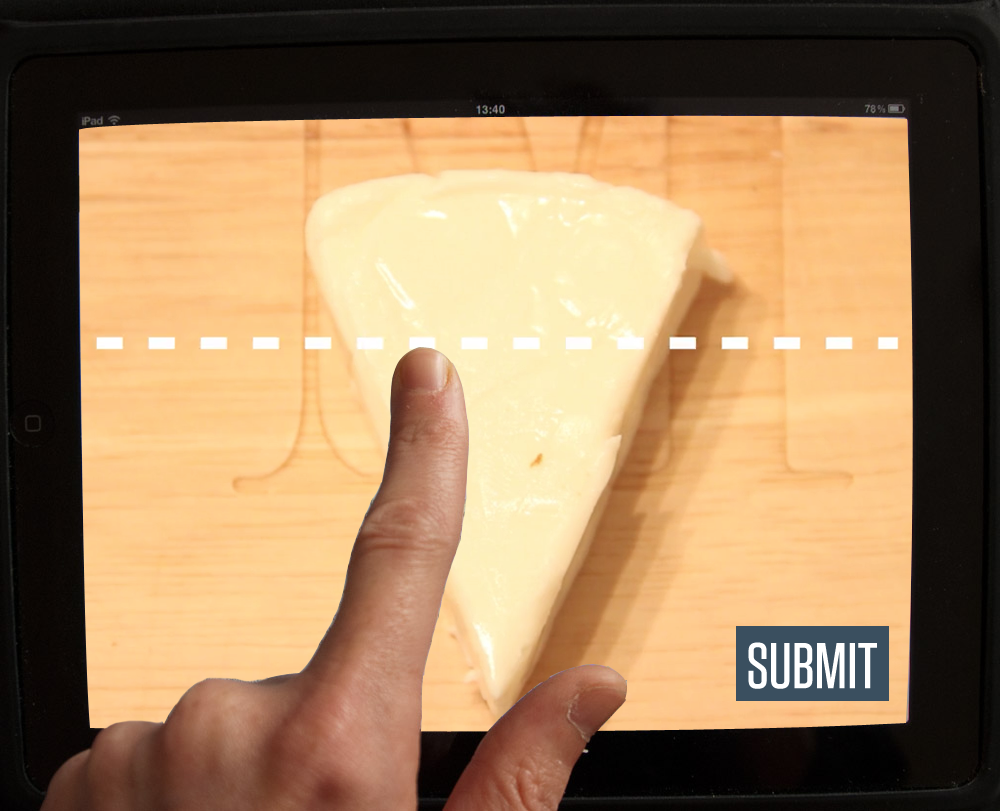
So I took a page out of Bryan Meyer’s blog and turned it into this three-act task.

Two release notes here:

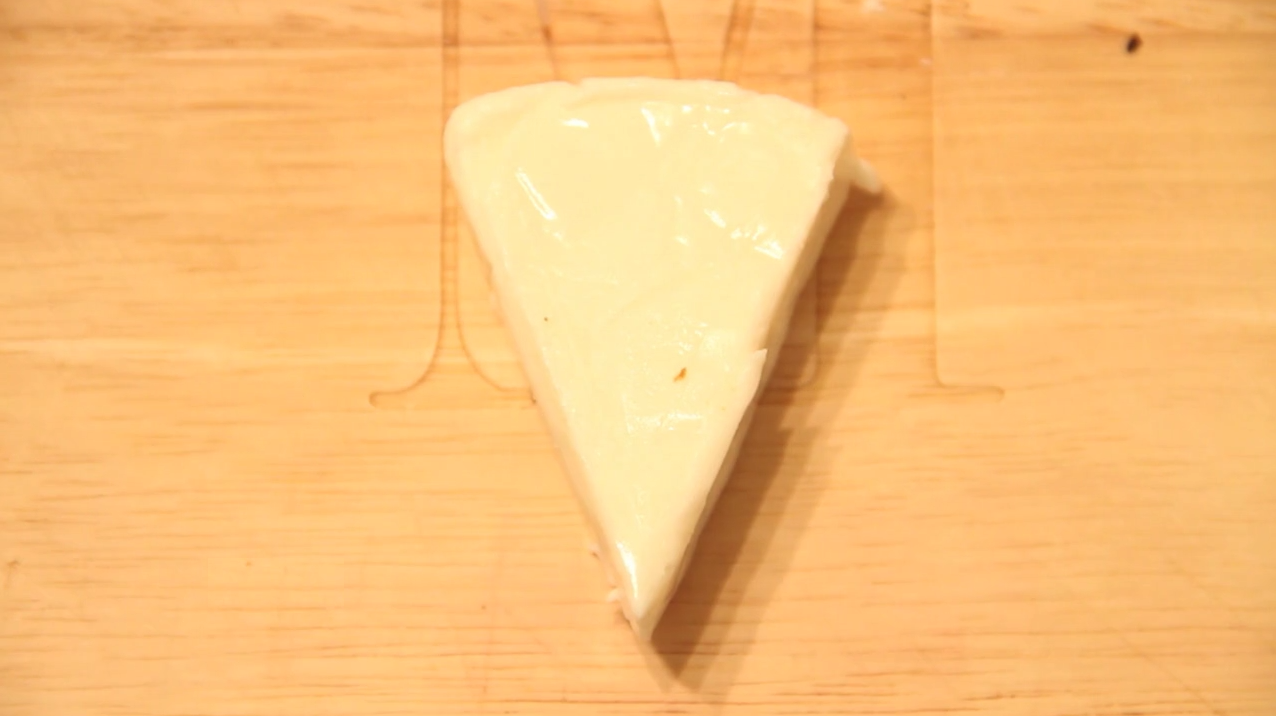
This task isn’t worth much if you don’t start with intuition. You should point to this image and ask your students to intuit the location of a fair horizontal cut. At the moment, I think my best option is to print out that frame and pass it out to students so they can each draw their own lines. What I need, though, is a digital system where students can adjust that line precisely to their liking and then tap submit.

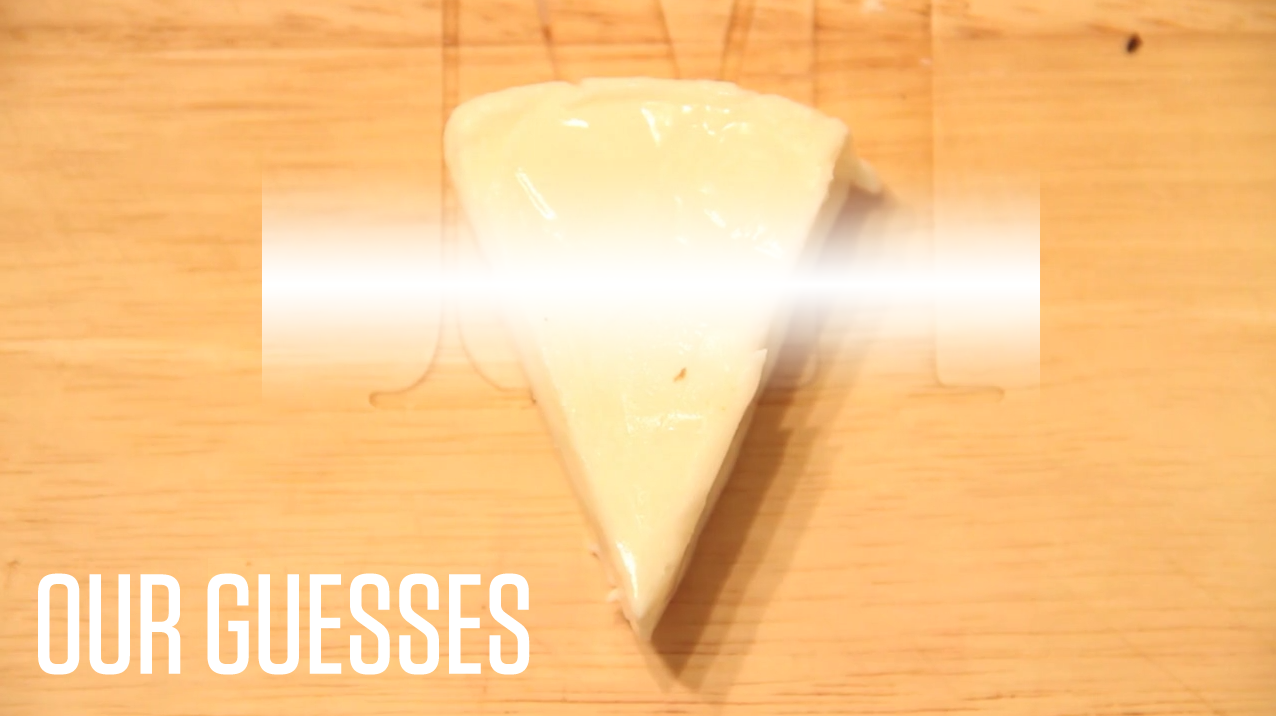
After that, the students see a composite of their classmates’ guesses.

This does two things. One, it ratchets up engagement. We want to know what the answer is and who guessed closest. Two, the mathematical model gets a lot of credibility when its solution falls right in the middle of our field of guesses.

This task isn’t worth much if you don’t end with generalization. The initial task sets the hook, but it resolves quickly into computation. Where this task (and others like it) light up the board is when we say, “Okay, now tell me where to make the cut for any size wedge of cheese. Any angle. Any radius.”

The ideal outcome on a digital device is that the student comes up with an abstract function with respect to theta and r, enters it into the device, and then that abstraction gets concretized right on the original image. The student sees the result of her model on a dynamic cheese wedge. She adjusts the theta slider and sees both the wedge and the cut adjust dynamically according to her function.

That’s the ladder of abstraction right there – from intuition to generalization.

Featured Commentary

There’s an interesting back-and-forth in the comments with one side claiming that the obviousness of the vertical cut makes the horizontal cut kind of contrived and another side saying it doesn’t matter.

Sal Khan Comments On #MTT2k In Chronicle of Higher Education

Sal Khan, responding to our #mtt2k contest in a (paywalled) article in the Chronicle of Higher Education:

There’s always the critique that Khan Academy is not pedagogically sound, that we’re procedural-based, focusing on mechanics without base understanding but I actually think we’re the exact opposite of that.

[..]

With procedural, worked problems: That’s how I learned, that’s how everyone I knew learned. But we do have videos explaining the ‘why’ of things, like borrowing, or highly rigorous concepts like college-level linear algebra, so it’s kind of weird when people are nitpicking about multiplying negative numbers.

Maybe something got lost in the edit, but I can’t seem to reconcile those two statements. On one line, Khan Academy is the opposite of procedural learning. In the next paragraph, Khan offers a full-throated endorsement of procedural learning through worked examples.

We will never say that our visual library is perfect. And we’re constantly trying to improve. But I think it’s a straw-man argument to pick one video and say, ‘This is a procedural video, it is not conceptual, they’re all like this, these people don’t have an understanding of pedagogy.’ That is, frankly, a bit arrogant and disparaging.

The statement “this should have been better” isn’t the same as “this should have been perfect.” Khan has god-knows-how-many videos at this point, some of which he made with only his cousins in mind, and we should expect a wide distribution of quality.

Setting aside any of our concerns about the best place for video lectures in a math classroom, we all have an interest in Khan’s video lectures being as mathematically correct as possible. But Khan thinks it’s arrogant and disparaging for people who have spent decades witnessing and cataloging every possible misconception about negative numbers to step in and say, “Your video may lead to misconceptions about negative numbers.” That’s a pity. I encourage Khan and his staff to find a more productive way to engage this deep bench of unpaid, well-informed critics.

BTW. If Khan is wondering why math teachers worry about his pedagogical content knowledge, this is the sort of decision that gives us the heebie-jeebies:

Mr. Khan says he intentionally mixed up the transitive and associative properties to show that understanding that a times b is the same as b times a is more important than the procedural process of memorizing vocabulary.

Comments closed.