[BTW: Mimi Yang’s remix is highly recommended.]
I’m about to give you what I’m convinced are good blueprints even though the house I built off of them today was pretty raggedy.
Here, three days before winter break, I wanted an activity that injected math into something mindless. I thought about snowflakes, you know, how you fold some paper, cut it here and there, and open it up only to discover you’ve recreated The Storming of the Bastille.
So here’s (what I’m convinced is) an awesome exercise in spatial intelligence for you and your students: predict what the snowflake will look like before you open it up.
I’m tempted to leave it there and let you decide how this oughtta shake out, encouraging you to please get back to me and let me know. Because what I did today didn’t have the same loose-limbed energy my best stuff usually does. This was second-rate but maybe we can spin something better out of it – you and me:
- I passed out a sheet of standard letter paper and some scissors to each student.
- I had them square the paper and fold it into fourths – now a smaller square.
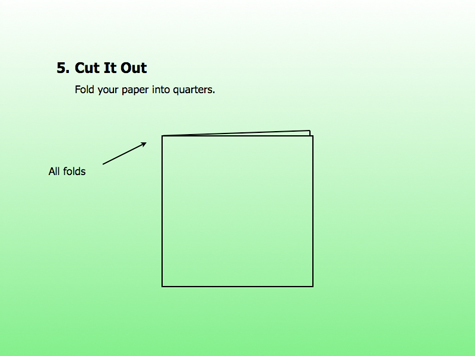
- I put up a series of slides. Each one asked them to make one cut.
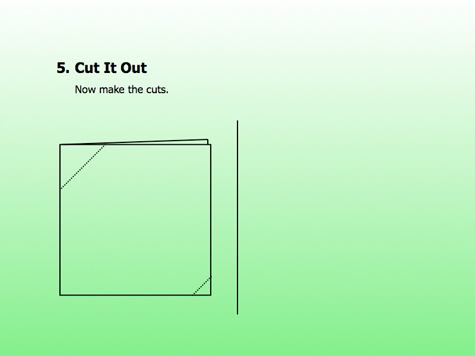
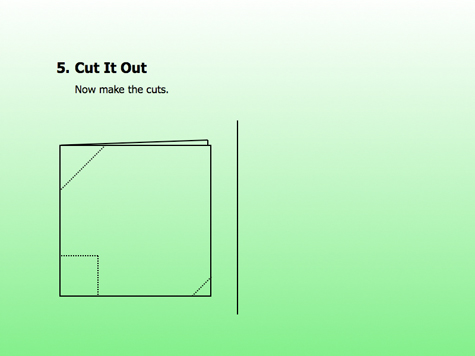
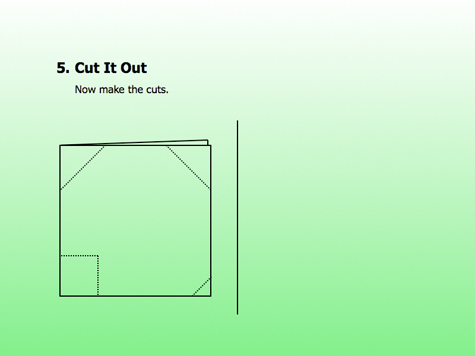
- They made the cuts and I said, before you open up the snowflake, sketch what you think the snowflake will look like.
- They sketched it.
- I walked around, observing, sometimes making comments.
- They opened it up and checked themselves.
Then, without passing out more paper, we went backwards
- I gave them the result and asked them what cuts had been made to get it.
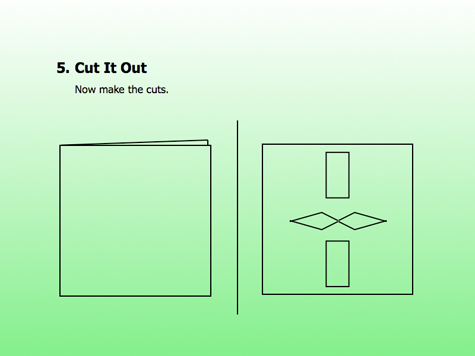
- I called up five volunteers to the board to show their solutions, most of which differed only slightly from each other, a fact which offered up some good conversations starting with words like “compare” and “contrast.”
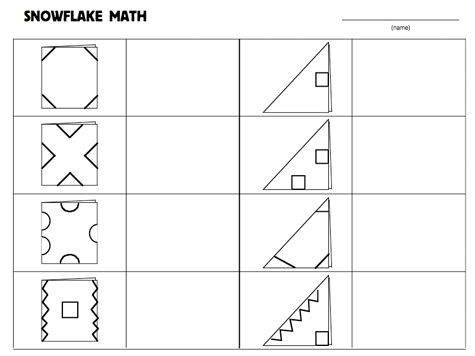
Then I passed out this worksheet, which asked for eight visualizations, the second half doubling in complexity by adding one fold to the snowflake.
Typing all that here at the end of the day, it’s kinda obvious to me that this was too much even for my Geometry sophomores
Attachments: