The Math Edublogosphere’s Welcome Mat

Sam Shah, chalking up another reason to love the math edublogosphere:

For a few weeks now, I have had this idea bouncing around in my head. A new blogger initiation! All it involves is writing four blogposts. There will be no hazing of any kind, except for the kind where we all say how much we think you’re awesome. That’s a form of hazing, right? Like happy hazing?

It’s a great idea and I can’t wait to read the summaries. If you haven’t created your own faculty lounge online, now is the time. Sign up by August 14.

[LOA] Misconceptions

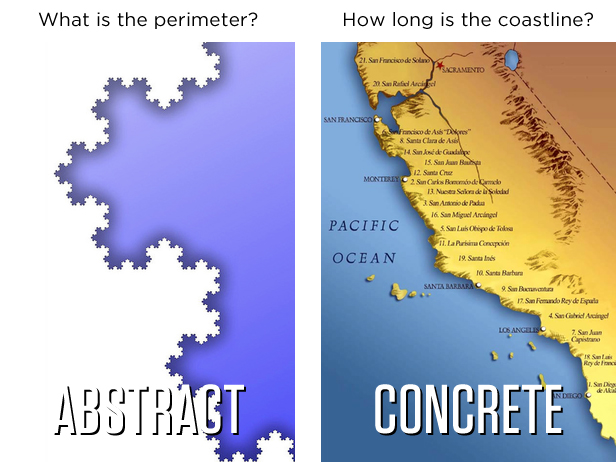
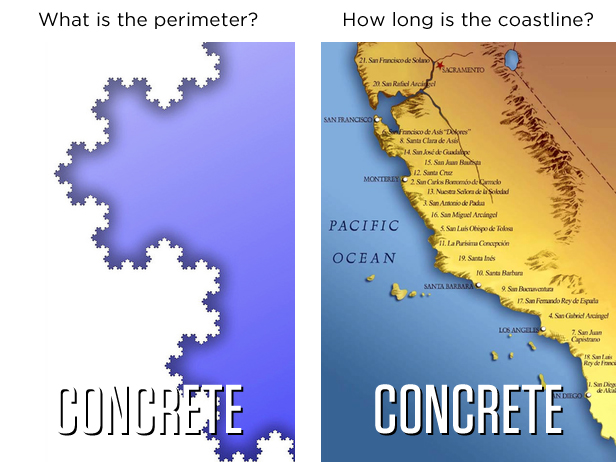
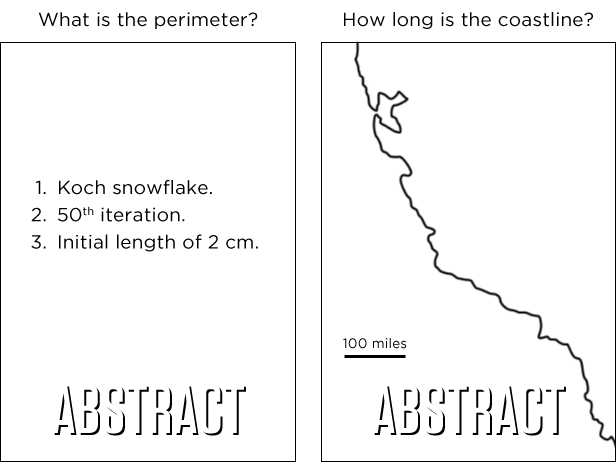
Bryan Meyer claims to prefer the abstract task on the left to the concrete task on the right:

But both of those images have information that is extraneous to the question Bryan poses about them. Color information is irrelevant in both, for instance, so you get rid of it. You don’t need the names of California’s missions or the name of the ocean to its west. Both images are in need of abstraction. Therefore they are both concrete.

Or at least they’re more concrete than what we get after we ask ourselves:

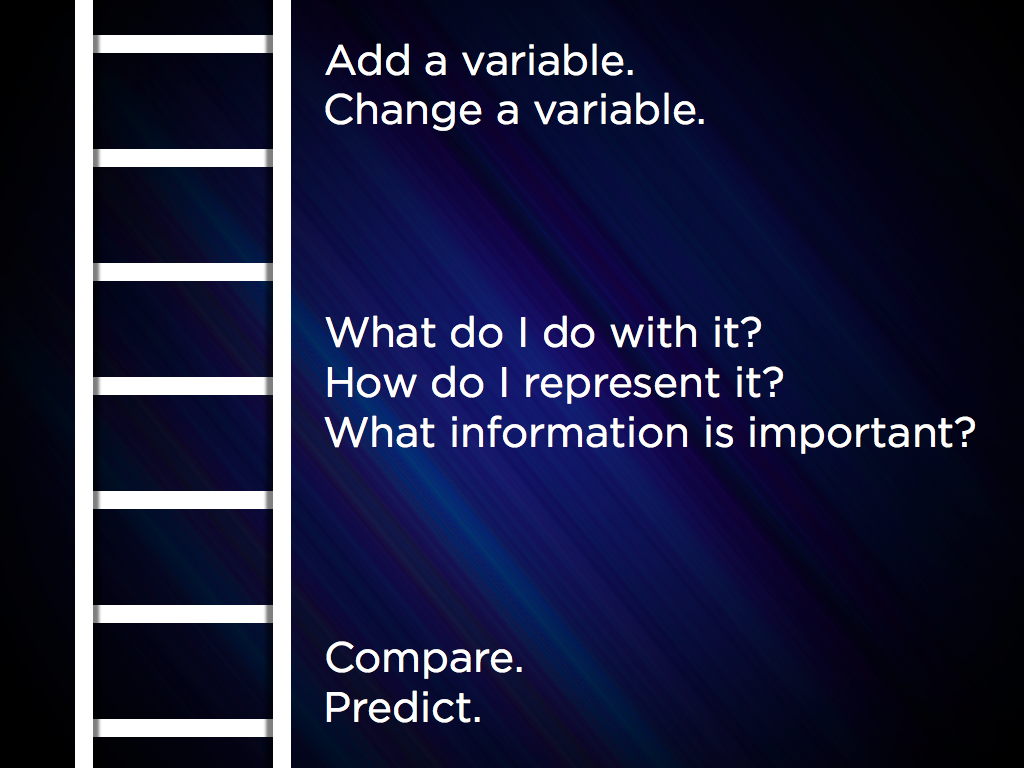
  1. What information is important?
  2. How do I represent it?

This points to the highly subjective nature of the adjectives “abstract” and “concrete.” They’re often statements of preference (eg. “I prefer concrete to abstract” or vice versa) and they’re both relative terms. Everything is more abstract and more concrete than something else on the same ladder. But we’re looking at two different ladders here, not one.

[LOA] A Japanese Classroom

So here is a task that occupies maybe two rungs on the ladder of abstraction:

You bought some 40-cent pencils and some 70-cent pens. There were 10 of them in total for 460 cents. How many pencils and ballpoint pens did you buy?

At this altitude, it’s difficult to apply your intuition to a solution. The important information has already been identified. You’ll decide how to represent that information (symbolically, perhaps, with variables and two simultaneous linear equations) and what to do with that representation (manipulate those equations, solving for both unknown variables). But that’s the extent of the task ladder.

So watch and marvel, as I have, at video of a skilled Japanese teacher reconstructing that task ladder to include more rungs above and below what few currently exist. I have watched it five-or-so times since Steve Leinwand introduced it in his April talk at NCTM. I encourage you to do the same. For the sake of our conversation here, though, I have created a smaller excerpt of just the teacher’s questions:

Here are those questions and some commentary. The questions are listed in chronological order, like a script, but I’m sure you understand we’re starting at the bottom of the ladder:

  1. This is what we’re going to study today. What is this?
  2. What’s this?
  3. How much are they? Guess.
  4. So how much is a ballpoint pen?

I prefer tasks that make more intentional use of guesses, prediction, and intuition. But I don’t know what else he could do with this task except ask his students if they know what a ballpoint pen is and check to see if they have enough sense of that context to guess at its cost.

  1. You bought some 40 yen pencils and some 70 yen ballpoint pens. There were 10 of them in total for 460 yen. How many pencils and ballpoint pens did you buy?

The task is introduced.

  1. A table?
  2. Do you think the table would help you?
  3. Do you understand what the table is?
  4. Rio, do you think the table would be useful?
  5. Well then, if we’re going to make a table, we need some labels, don’t we?
  6. What kind of table?
  7. Do we need a label like this?
  8. Do you understand this?
  9. What else do we need as a label?
  10. Do we still need something else?
  11. How about this? “The total price.”
  12. What do you mean 0-10?
  13. You mean no pencils?
  14. And how many ballpoint pens?

This is one of my favorite moves in the lesson. A similar task in the United States might explicitly direct students to create a table. It might provide a table with several rows pre-filled. In both cases, the problem would be abstracting itself. It would be answering the question, “How do I represent the information that’s important?” for the student. It would be locking the process of abstraction inside a black box, far from the student’s view. And then twenty years later we’ll marvel when that student, now grown, complains that “algebra always seemed too abstract.”

But the Japanese teacher isn’t sending his students off to discover the abstraction. Yes, the students are making most of the crucial choices here – from the selection of a table to the labels of the table to the domain of the table – but the teacher steps in after each of those choices and makes them totally explicit.

The choice to include “0 pencils” in the domain of the table, for one example, is far from obvious. So when a student suggests it, the teacher underscores that suggestion over and over again, doing everything but sending a skywriter up in the air to write “YOU MEAN NO PENCILS?!” above the school in smoke.

  1. Well there are many combinations of the numbers right?
  2. Seika, can you tell me any examples of the combination?
  3. 3 pencils and 7 pens. Did you make the same combination?
  4. Is it correct?
  5. Are there any mistakes on the board, please tell me?
  6. But before we see that, there already is an answer, isn’t there?
  7. What is the answer?
  8. This pair?
  9. Is it similar with your notebook?

The teacher asks his students to calculate the table by hand. In another bright move, he passes out the table’s 11 columns to different students who calculate and return them. Now those columns are pinned to the board, arranged in no particular order.

He notes that they have solved the problem. One of the columns contains 460 yen. That’s the combination of pens and pencils they’re after. The task seems complete.

But the ladder continues upward.

  1. Can someone arrange the cards and make the table easier to see?
  2. Why did you arrange the cards like this?
  3. But why?
  4. It’s easier to see?
  5. The order of numbers?
  6. For example, if I change the cards like this, is it wrong?
  7. This is the answer, is that all?

He’s still picking at the abstraction!

Two girls come up and arrange all those haphazard columns into ascending order in a table. And he asks them, “Why did you arrange the cards like this?” He doesn’t let up. He takes one column and sets it out of order. “Is it wrong?”

No, it’s just less useful. A student says, “It’s easier to see.”

What’s easier to see?

The student explains that when we arrange the table in order, the change in total price is hard to miss. When they’re out of order that change is hard to see.

  1. How does our method match the Easy / Fast / Accurate rule?
  2. Is it fast?
  3. It is easy?
  4. Is it accurate?
  5. How can we solve the problem more quickly?

Now we’re abstracting over new variables: speed, ease, and accuracy. The students decide unanimously that their method is accurate. They’re mixed on ease and no one thinks it’s fast. So now we’re ready for a faster, easier method for a new problem.

  1. You bought some 60 yen colored pencils and some 80 yen markers. There were 12 of them all together. The price they cost was 820 yen. How many colored pencils and markers did you buy?
  2. What is the title of today’s lesson?

What amazing work from such meager beginnings.

A few final notes before we dive into your commentary:

  • Titles. What’s with titling the lesson at the end of the day? Anyone know what’s going on there?
  • Technology. Blackboard. Chalk. Teacher voice. Student voice. Paper. Pencil. It’s multimedia in the most literal sense of the word. (Tentative hypothesis: it’s very difficult to work on the ladder of abstraction if your tasks are limited to one medium.)
  • Tables. A table is a representation of a context’s most important information. It’s an element of an abstraction with which math teachers are extremely comfortable. I think we find it easy to assume, particularly at the secondary level, that what’s obvious to us about these representations is also obvious to our students. I love how every single aspect of the table in the video is up for negotiation and debate – its labels, the inclusion of zero values, the fact that you probably oughtta put something in ascending order. Nothing is taken for granted.
  • Time. At the end of class, the teacher notes that, wow, that took a lot of time. It turns out a deep understanding of abstraction doesn’t come for free.

BTW: Michael Pershan offers an excellent analysis of Khan Academy as it relates to high-performing Japanese classrooms like this one. He closes with an alternate vision for Khan Academy that’s provocative. You’ll especially enjoy it if you find this #mtt2k business too mean-spirited. Commentary about that video belongs on that video’s YouTube page, though. All comments about it here will be shot on sight.

Featured Comment

Chris Taylor:

Totally at the effectiveness of leaving the title to the end. The students not only see it because the content of the lesson is played out if front of them, but there’s a pretty clear agreement that the title of the lesson fits. One of the students even says, “Cool.” How often do you get a student saying cool when you *start* a lesson by writing the title on the board.

The NYT Asks The Wrong Question About Algebra

The interesting question isn’t, “Should every high school graduate in the US have to take Algebra?” Our world is increasingly automated and programmed and if you want any kind of active participation in that world, you’re going to need to understand variable representation and manipulation. That’s Algebra. Without it, you’ll still be able to clothe and feed yourself, but that’s a pretty low bar for an education. The more interesting question is, “How should we define Algebra in 2012 and how should we teach it?” Those questions don’t even seem to be on Hacker’s radar.

Featured Comment

Paul Salomon:

I certainly think every student should have algebraic experience and fluency in some sense, but we definitely need to reconsider the idea that working through systems of 3 linear inequalities is an essential component of a mathematical education.

It occurs to me more and more that programming and science are the best places to utilize and manipulate algebraic expression, so it should be reconsidered, how algebra should be learned and experienced by our students

[LOA] Concretizing Abstraction

Let’s drop down a rung and make abstraction concrete.

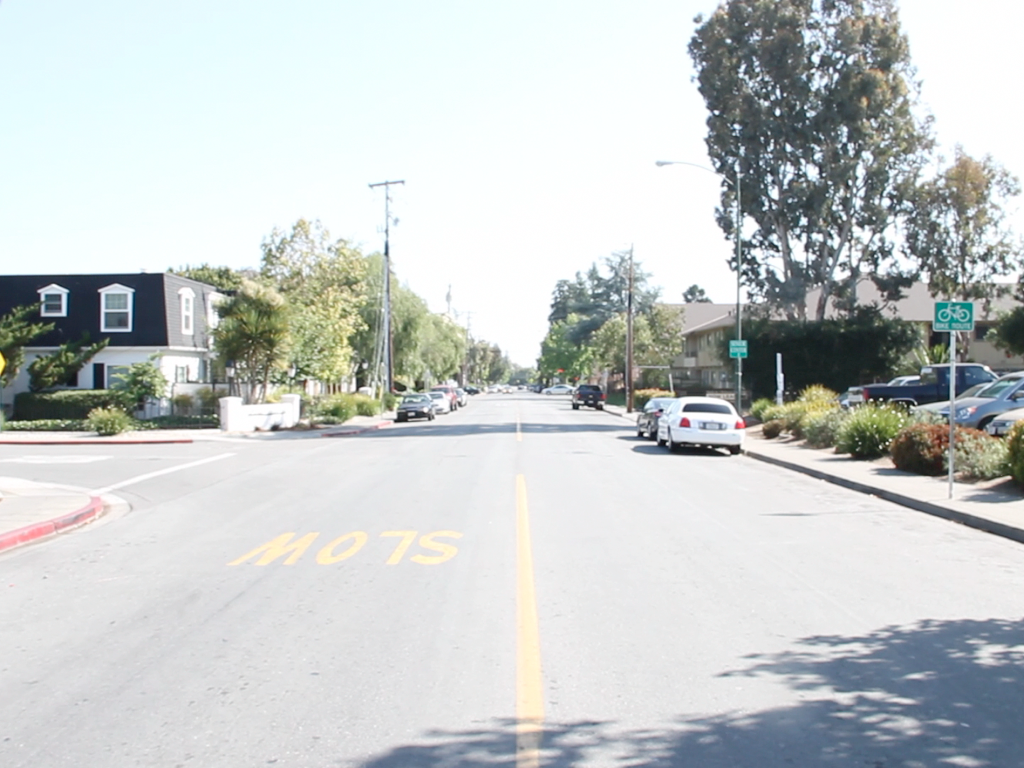
You’re walking across a street. This is a photograph of what you see.

This is your context. What is its abstraction? There’s no way to know because you don’t know your purpose here, your question.

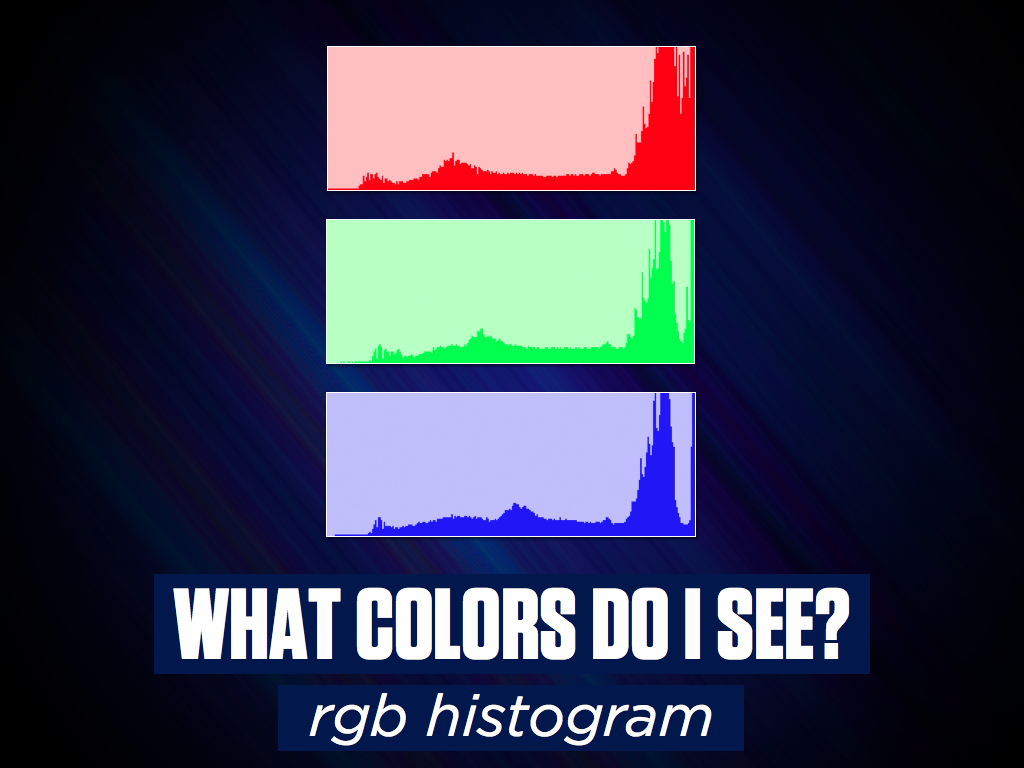
You ask yourself, “What colors do I see?” Now you have a question and you’re on the ladder of abstraction.

You start speaking very informally about the context, perhaps comparing one shade of green to another. You ask yourself, “What’s important here?” and decide it doesn’t matter whether the green thing is a car or a tree. All that matters is its greenness. This is abstraction. You’re removing aspects of the context that are inconsequential to your question.

Now you have to decide how to represent the consequential aspects. You could represent them with words:

A lot of grays on the street and sidewalk. Light blue in the sky. Red on the curb. Different shades of green in the trees and on a car.

Different representations are more useful for different purposes. This representation might work if you were writing some prose about the colors. If you wanted a more precise representation, though, you might turn to a histogram of the red, green, and blue values.

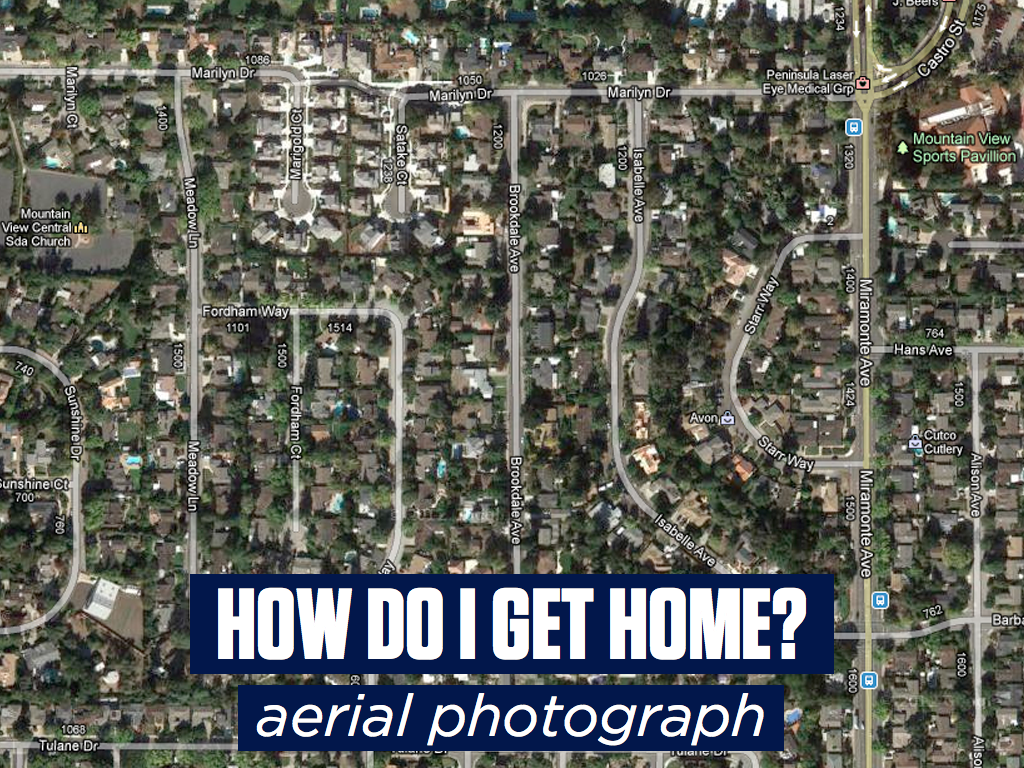
Now if the question changes, the entire ladder changes. If your question is, instead, “How do I get home from here?” different predictions are useful, different information becomes consequential, and the representations of that information will look nothing like the histogram we used to examine color.

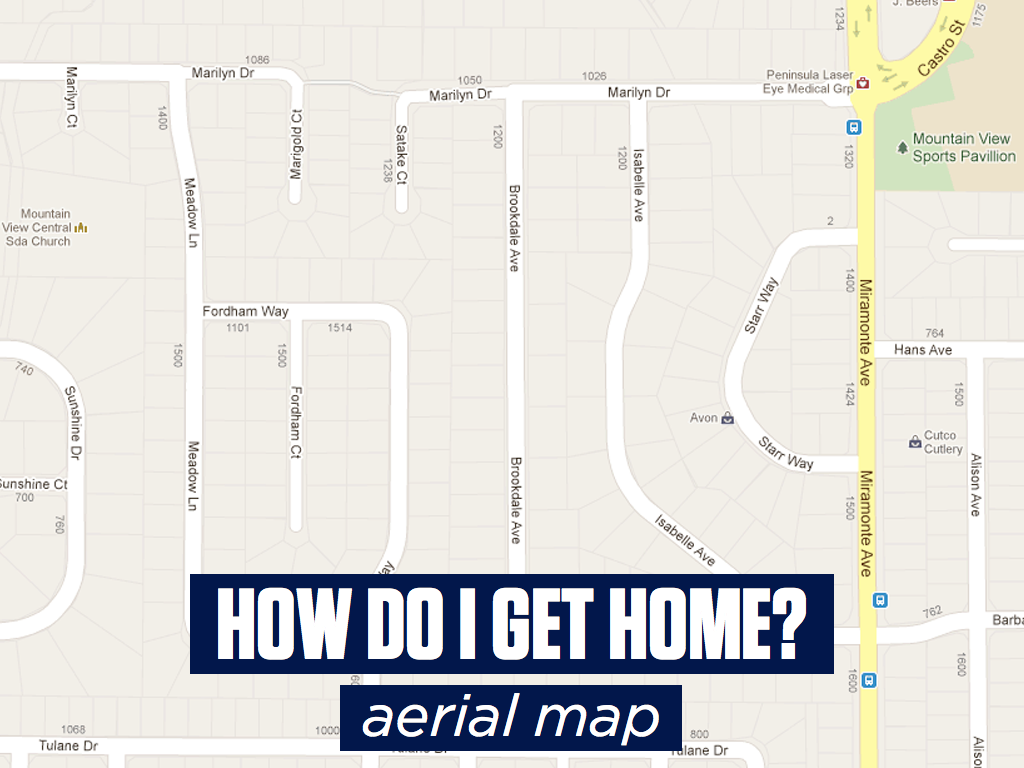
A useful abstraction of this scene would be an overhead view of the terrain.

Of course, we only care all that much about the roads, not the trees or houses in between them, so we abstract all that away.

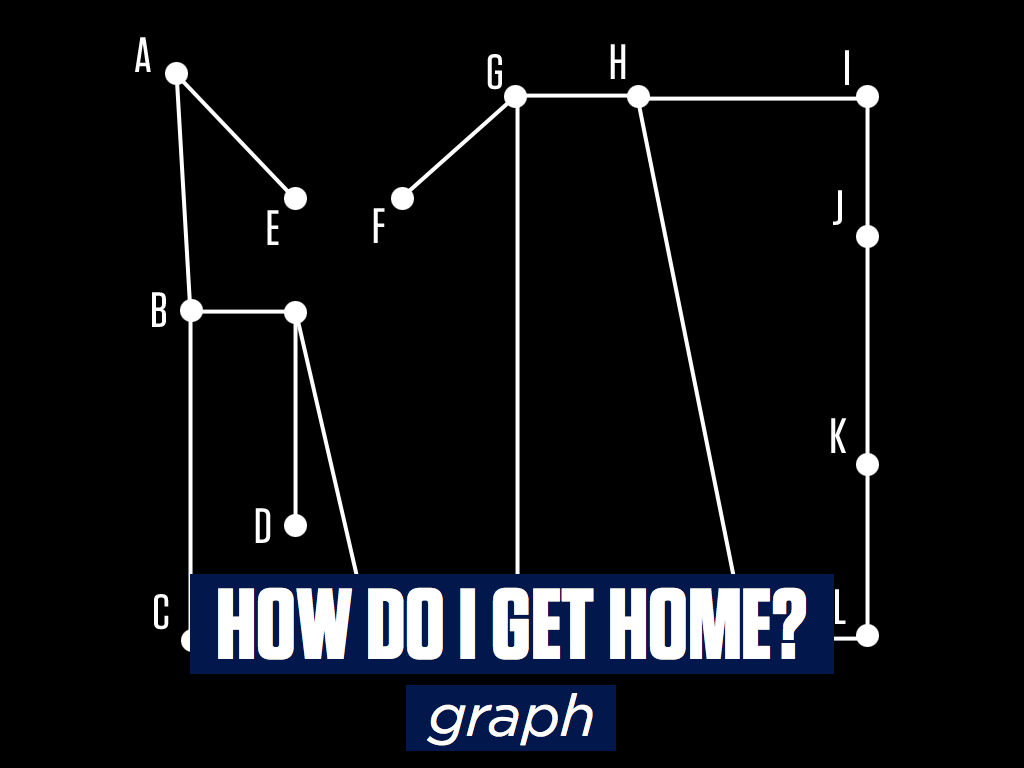
If our purpose here is to create some kind of enormous geolocation system, we don’t really care whether or not a road curves. We just care whether or not the road connects one intersection to another, or, abstracting those terms a little, we care whether or not an edge connects one vertex to another in a graph:

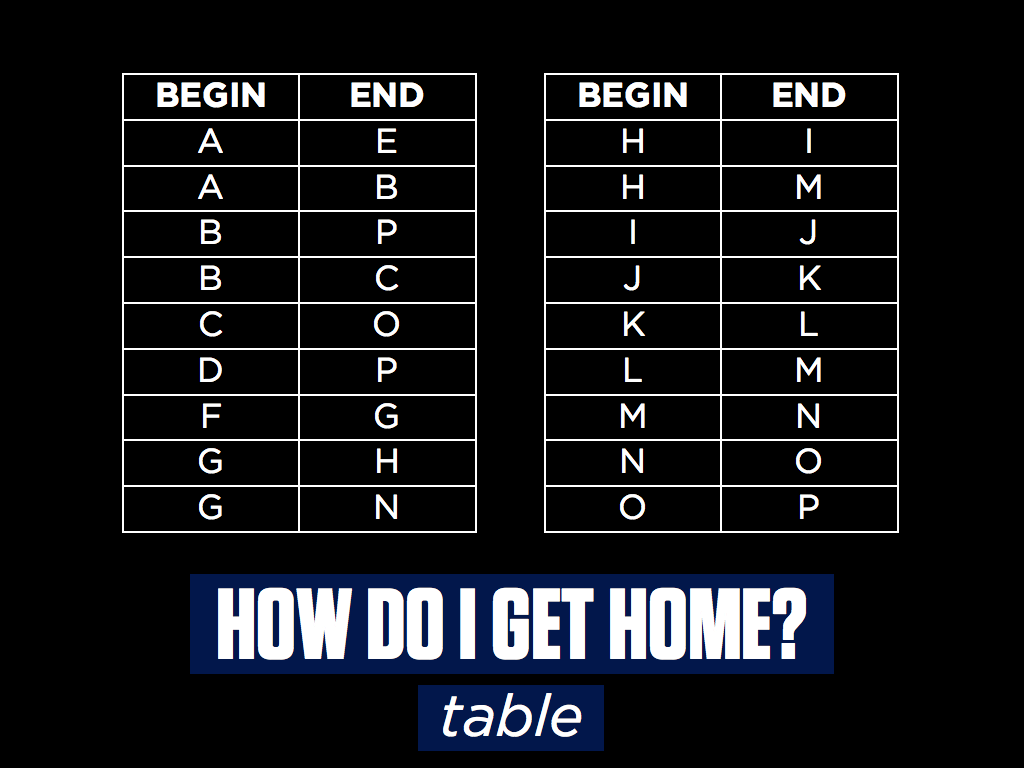
An array would be a representation of the graph that’s friendly to manipulation by a computer, though as a human, I miss a lot of the visual information we’ve abstracted away.

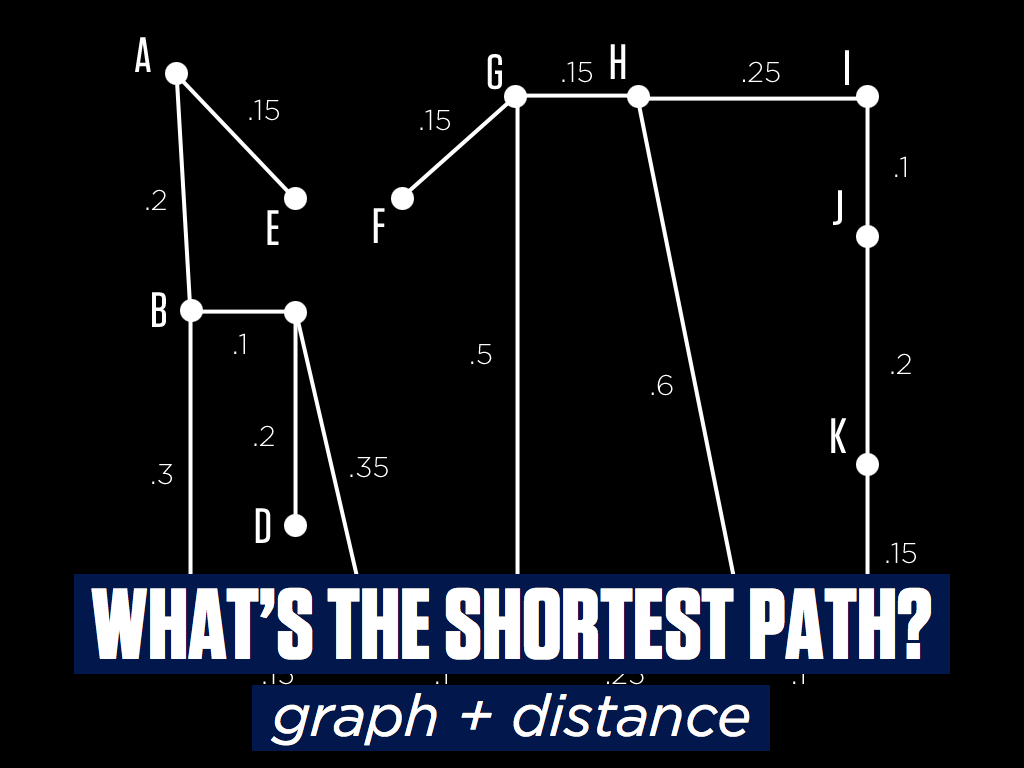
Great. But not perfect. This representation will only tell us whether or not it’s possible to get from one point to another – whether a route exists. If we want to find the shortest route, we add another useful variable, “abstracting over distance,” at it’s said.

If we want to find the fastest route, we’ll also need to abstract over the speed limits of each of those edges.

That’s a concrete example of the process and ladder of abstraction. The adjectives “concrete” and “abstract” just aren’t all that useful here. Everything is concrete if you think about the rungs above it and everything is abstract when you think about the rungs below it. The photograph that kicks off the post is more concrete than everything that comes after it but it’s also more abstract than the full-bleed, full-audio, moving panorama you experienced as you walked across the street. What matters isn’t the rung itself but how deftly you can move between all the rungs above and below you on the ladder of abstraction.

Checking For Understanding: Give an example of abstraction as it exists in your own life, in the problems you or other people try to solve. Two examples to kick off our list:

  • Airplanes landing at night don’t care about the color of the tarmac or the grass on either side. All they care about are the margins of the landing strip, which are therefore lit up by lights.
  • Google’s self-driving cars abstract away a metric ton of data that your senses usually take in while driving – the color of the sky, the music in the car, the humidity outside, etc. It also retains a metric ton of data, of course, and the quality of Google’s abstraction of the roadway will determine whether these things will kill us or let us (once again!) text while driving.

Featured Abstractions

Bob Lochel:

Should I call or text? If the message is short and quick, I could just shoot a text, but what is my data plan like, and are there financial considerations? Or I could call, and risk a phone conversation which I perhaps don’t have the time or want for at this point in my life? How important is the message? Or will I possibly see this person soon anyway and it’s all a moot point? Or maybe I could just tweet it? But how sensitive is the message?

Max Ray:

One way I can see abstractions is to think of domains where I’m not an expert. Is it an abstraction when two kids who are really into video gaming communicate their solutions to challenges in terms of button pushes rather than the story on the screen? As in, I’m likely to say, “Gee, I wish I could make Mario jump up and do a flip in the air to get that gold coin without being hit by the hammer.” Whereas a Mario expert is likely to tell a fellow expert, “That level’s easy. It’s just right-right-A-left” (or whatever).

lessano:

When looking at my email inbox, I disregard most of the information presented there. During the busy workday I “see” only the messages that are highlighted as unread and which were sent to me individually rather than schoolwide. This level of abstraction sometimes presents problems, so if I’ve read an important message but haven’t yet resolved it, I have to star it AND mark it as unread, tricking it back into the category that registers.

Featured Comment

Bowen Kerins:

One thing a great context / question also gives you is the experience of figuring out what information is important and what sort of abstraction is most useful for extracting and using the right information thoughtfully. And that’s a skill a lot more adults will use than factoring.

Richard Bitgood, via e-mail:

Transformations is one step higher than functions because it is the abstraction of our abstractions.

2012 Aug 26. Of course, money is an abstraction of the value we provide society.