Dan Meyer

Total 1628 Posts
I'm Dan and this is my blog. I'm a former high school math teacher and current head of teaching at Desmos. He / him. More here.

[NCTM16] Beyond Relevance & Real World: Stronger Strategies for Student Engagement

My talk from the 2016 NCTM Annual Meeting is online. I won’t claim that this is a good talk in absolute terms or that this talk will be good for your interests. I only know that, given my interests, this is the best talk I have ever given.

My premise is that we’re all sympathetic towards students who dislike mathematics, this course they’re forced to take. We all have answers to the question, “What does it take to interest students in mathematics?” Though those answers are often implicit and unspoken, they’re powerful. They determine the experiences students have in our classes.

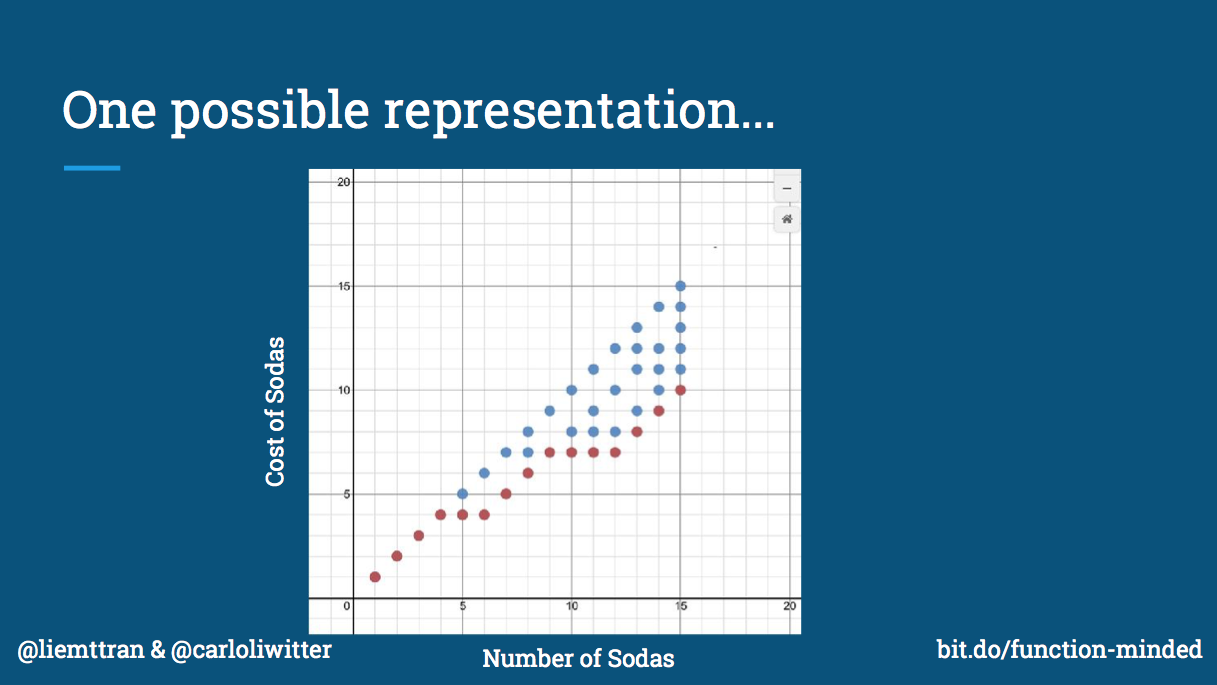
I lay out three of the most common answers I hear from teachers, principals, policymakers, publishers, etc., two of which are “make math real world” and “make math relevant.” I offer evidence that those answers are incomplete and unreliable.

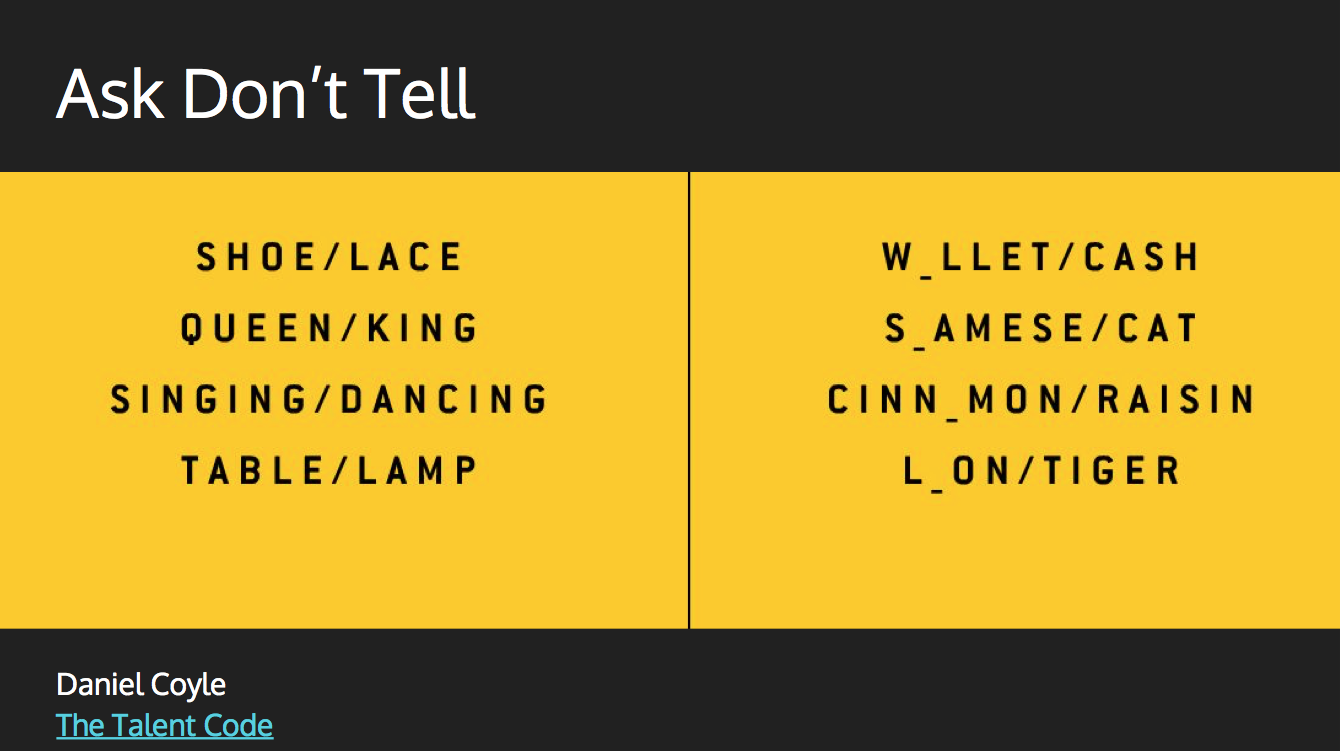
Then I dive into research from Willingham, Kasmer, Roger & David Johnson, Mayer, et al., presenting stronger strategies for creating interest in mathematics education.

My call to action will only make sense if you watch the talk, but I hope you’ll take it seriously, give it a try, and let us know how it goes.

160422_1lo

BTW. I’ve already received one email asking me, “Wait? Are you saying never make math real world?” No. My principles for instructional design often lead me to design applied math tasks. But “make math real world” isn’t a great first-order principle because, as a category, “real world” is poorly defined and subjective to the student.

Featured Comment

Dan Smith:

This was a really helpful talk in illuminating why it doesn’t work to simply drop a mundane math task into some sort of “relevant” or “real-world” context. And it was great that you didn’t stop at deconstructing these unhelpful approaches, but instead went on to share specific ways to think, steps to take, and tools to use to increase engagement and thoughtfulness in our math classrooms. A very natural follow-up to the famous “Math class needs a makeover” talk.

Every Handout & Presentation From NCSM & NCTM 2016

It will probably take more than one post to unwind my last week of conferencing, but let’s start here. I sent a script through the conference programs and pulled out every uploaded handout and slidedeck.

After skimming through every file, I’ll note that the uploads skew heavily towards primary. So if you’re looking for those resources, you’re in luck.

In case your interests follow my own, here are the presentations and papers I’ve pulled aside for a closer reading:

NCSM Annual Meeting

160417_1lo

NCTM Research Preconference

NCTM Annual Meeting

160417_2lo

If you find any material you recommend, please highlight it in the comments.

Conference Week. Let’s Do This.

Thanks for making the trip all the way out to the San Francisco Bay Area, team. It’d be a treat to run into any or all of you during conference week. Here are my whereabouts.

Association of State Supervisors of Mathematics

Math, Education, and Technology: Reasons for Pessimism and Optimism. Monday. 9:15AM. The Metropolitan Room.

My optimism and pessimism are currently balanced at about 50/50.

National Council of Supervisors of Mathematics

Beyond Relevance and Real World: Talking with Teachers About Engagement in Mathematics. Monday. 1:30PM. Grand Ballroom EFGH.

I’ll summarize some of what I’ve learned from five years of offering workshops to teachers on student engagement in mathematics.

National Council of Teachers of Mathematics

Task Makeover Techniques for Grade 6-12 Math. Friday. 11:00AM. Exhibit Hall.

This is one of those informal “Networking Lounge” sessions. I’ll bring some textbook tasks that are eager for our help. We’ll brainstorm improvements.

ShadowCon. Friday. 5:00PM. Yerba Buena 7.

Zak Champagne, Mike Flynn, and I recruited another set of six amazing speakers from across K-12: Burrill, Bushart, Fletcher, Gutierrez, Kaplinsky, and Turner. We’ll film and post all their talks. They’ll all be eager for your conversation afterwards.

Beyond Relevance & Real World: Stronger Strategies for Student Engagement. Saturday. 9:30AM. 134/135 (Moscone).

This is the last time I’ll give this talk. I’ve been polishing it over the last 15 months, sanding off rough bits, tightening its scope, and adding more practical strategies. I’m really happy with it. I will also record it and post it here shortly after NCTM, so I welcome you to enjoy any of the 57 awesome other sessions NCTM has wedged into that timeslot.

Looking for Some Extracurriculars?

  • Desmos and Mathalicious are hosting their fourth annual happy hour and trivia contest on Thursday at 6:30PM. First round is on us.
  • From 1:00PM to 5:00PM on Friday you’ll find the Desmos Teaching Faculty in the Desmos booth answering any questions you have about our activity builder or calculator. (My slot is 2:00PM.)

Whose sessions are you excited to see? (Here is the unofficial #MTBOS track.) Recommend some new names, fresh voices, or first-timers in the comments below.

Great #3Act Action

Please enjoy two posts from two teachers who are playing around with the Three-Act task structure.

First, John Rowe shows his students this image as a lead-in to counting problems, asking them, “Which state has more registered vehicles and how do you know?”

160405_1

(Here’s an alternate version of that image that allows students to wonder “Where do you think these license plates are from and how do you know?” Because you can always add, but you can’t subtract.)

Second, Jenn Vadnais creates a stop-motion animation that does exactly what it wants to do, which is compose a cylinder into a sphere and then decompose the sphere into doughy little cubes. How close will math take you to the actual answer?

160405_5

Go check out their posts, and keep up the great work, everybody.

A Response to Danny Brown & Geoff Wake: Should Modeling Be Important?

Danny Brown:

Some of the other online modelling resources, such as Dan Meyer’s blog, don’t really fit what I would class as meaningful modelling, and can feel contrived, or of little relevance/import to students’ lives; if I am going to spend the time bringing modelling situations to my classroom, I want to address matters of importance, socially or politically.

Geoff Wake:

Yes, I’m interested see how Dan Meyer promotes a sort of pseudo-modelling that seems to be quite popular among certain teachers. I think one aspect that appeals is that he suggests a narrative that is immediately accessible. On the other hand some of the questions are not particularly meaningfully tackled using mathematics seriously.

I see two tacit questions.

One, should math be important?

And by “important,” I’m using Danny’s definition: relevant to a student’s life, either socially or politically.

See, there isn’t any one agreed-upon definition of “mathematics.” They’re all arbitrary, personal, and cultural. And given finite hours in a school year to spend learning math, they’re all political. They create winners and losers. Class time spent how you’d prefer is time not spent how someone else prefers.

So I help students learn math for one reason alone, and it doesn’t have to be your reason also. I want to help students learn to puzzle and unpuzzle themselves. Math offers us the opportunity not just to solve puzzles, but to generate them from scratch — just you and your brain and maybe something to write with.

Those puzzles may have sociopolitical importance, but that’s a higher standard than I choose to set for myself. So it’d make more sense for Geoff and Danny to criticize my standard than to assume I’m aiming at theirs and missing. I’m not.

Two, should modeling be important?

I suspect Danny, Geoff, and I would agree more about the point of mathematics than the point of modeling. Their criticisms specifically concern modeling, and the fact that I ask questions like “How many pennies are in the pyramid?” and “How long will it take the water tank to fill?” rather than questions like (I’m guessing here) “Is capital punishment sentencing just or unjust?” or “How should California manage its water supply?”

But there is much more consensus around the definition of “modeling” than “mathematics,” and that definition doesn’t specify culture, context, or importance. Modeling is mental work, work of a certain character, work that I think we’d all agree is uncommon in many classrooms and unfamiliar to many students.

Modeling asks questions about a context. It works to make those questions more precise and tractable. It nourishes those questions with data where none exists. It sets reasonable bounds on an answer before finding a solution. It solves questions mathematically and then tests those answers against the world’s answer.

Basically, “modeling” is a verb and it doesn’t help our understanding of the verb to attach it a priori to adjectives (like “important” and “relevant”) or to nouns (like “capital punishment” and “water supply”). If you want to understand modeling, ignore the adjectives and the nouns. Watch the verbs.

Featured Comments

Chris Evans:

Additionally, we have to remember (as math teachers) that we are not the only teachers and courses these students encounter. I teach mostly 11th and 12th graders, and they frequently tell me about the political conversations they are having in government class or the serious social topic they are writing about in English. I have observed that, although students seem to appreciate these connections to real-world problems, these topics are heavy, and at times students appreciate engaging in “lighter” application problems and activities.

Nick Hershman:

Except that when you watch students engaging with a task that they are motivated to understand they are doing all sorts of things that relate to the “way they view their place as a member of society“. I can’t imagine a situation in which a student isn’t both learning something about their place in society and simultaneously asserting some version of their belief about their place in society. It’s happening all the time.

John Mason:

So working on socially relevant issues is valuable. But ‘relevance to me’ means, ‘real to me’, and as the RMP project has shown, well as it has confirmed what has been known for ever such a long time, what can be real to someone has to do with what they can imagine, can grow to imagine, and is not confined to what they already do every day.