Category: 3acts

Total 60 Posts

[3ACTS] Double Sunglasses

My video Target Tint was taking a beating over on 101questions with well over 50% skips. But the overall concept seemed solid to me. What happens when you apply multiple layers of tint? My guess is that people watched that video and figured the answer was a matter of simple division when, in fact, tint is more complicated and more interesting than that. If you wear two sunglasses with 50% tint each, for instance, are you then blind? So I reshot it and the result is now humming along at 90% perplexity as of this writing. Raise your hand if you dig the revise-and-resubmit cycle of teaching.

Here’s the task page.

[3ACTS] Lucky Cow

So I took a page out of Bryan Meyer’s blog and turned it into this three-act task.

Two release notes here:

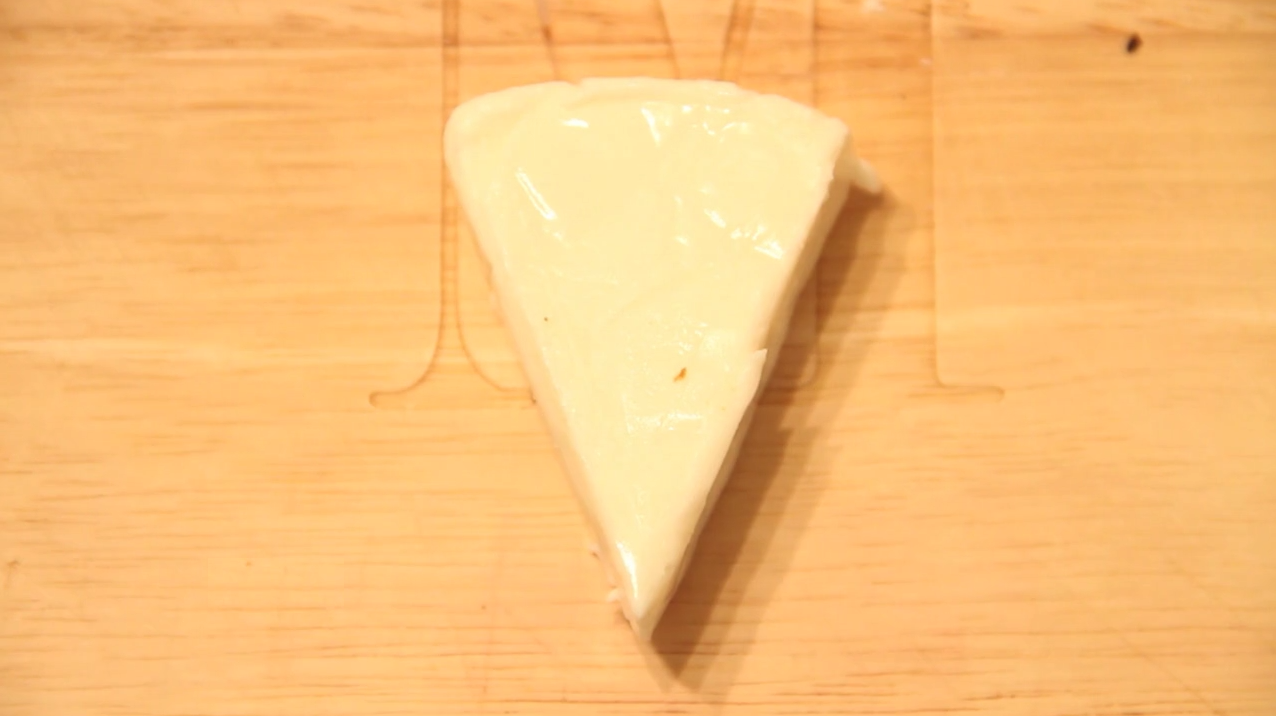
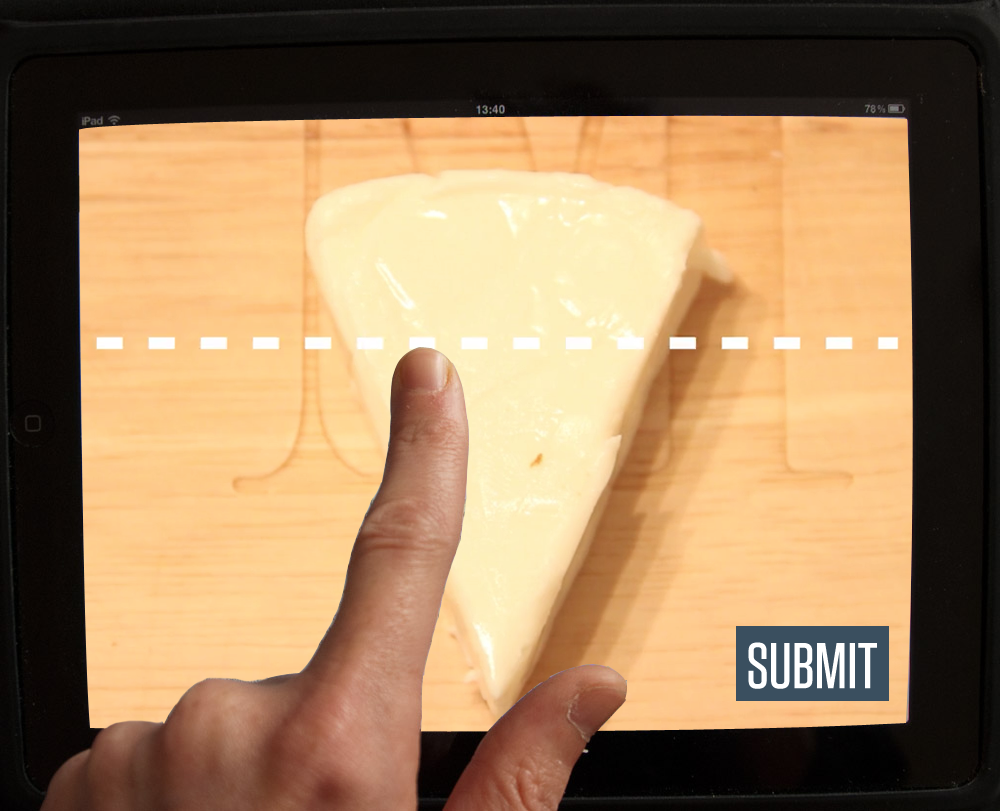
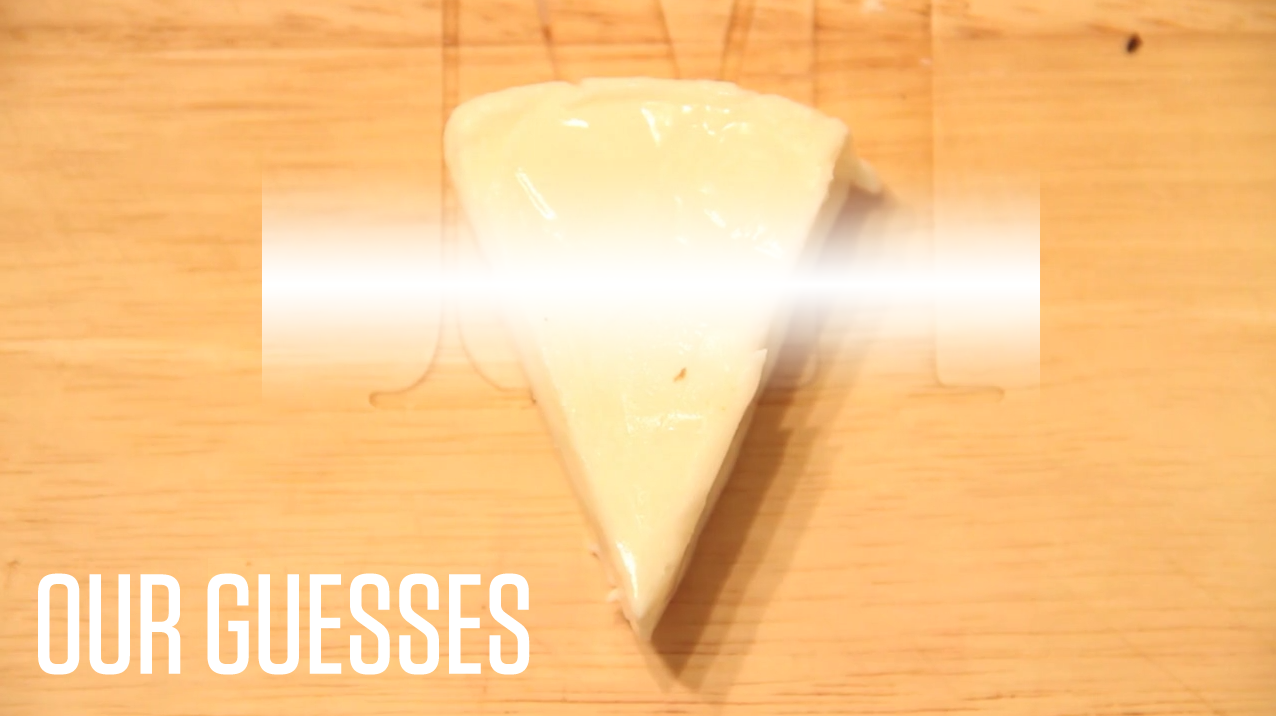
This task isn’t worth much if you don’t start with intuition. You should point to this image and ask your students to intuit the location of a fair horizontal cut. At the moment, I think my best option is to print out that frame and pass it out to students so they can each draw their own lines. What I need, though, is a digital system where students can adjust that line precisely to their liking and then tap submit.

After that, the students see a composite of their classmates’ guesses.

This does two things. One, it ratchets up engagement. We want to know what the answer is and who guessed closest. Two, the mathematical model gets a lot of credibility when its solution falls right in the middle of our field of guesses.

This task isn’t worth much if you don’t end with generalization. The initial task sets the hook, but it resolves quickly into computation. Where this task (and others like it) light up the board is when we say, “Okay, now tell me where to make the cut for any size wedge of cheese. Any angle. Any radius.”

The ideal outcome on a digital device is that the student comes up with an abstract function with respect to theta and r, enters it into the device, and then that abstraction gets concretized right on the original image. The student sees the result of her model on a dynamic cheese wedge. She adjusts the theta slider and sees both the wedge and the cut adjust dynamically according to her function.

That’s the ladder of abstraction right there – from intuition to generalization.

Featured Commentary

There’s an interesting back-and-forth in the comments with one side claiming that the obviousness of the vertical cut makes the horizontal cut kind of contrived and another side saying it doesn’t matter.
[3ACTS] Coffee Traveler

See the task page.

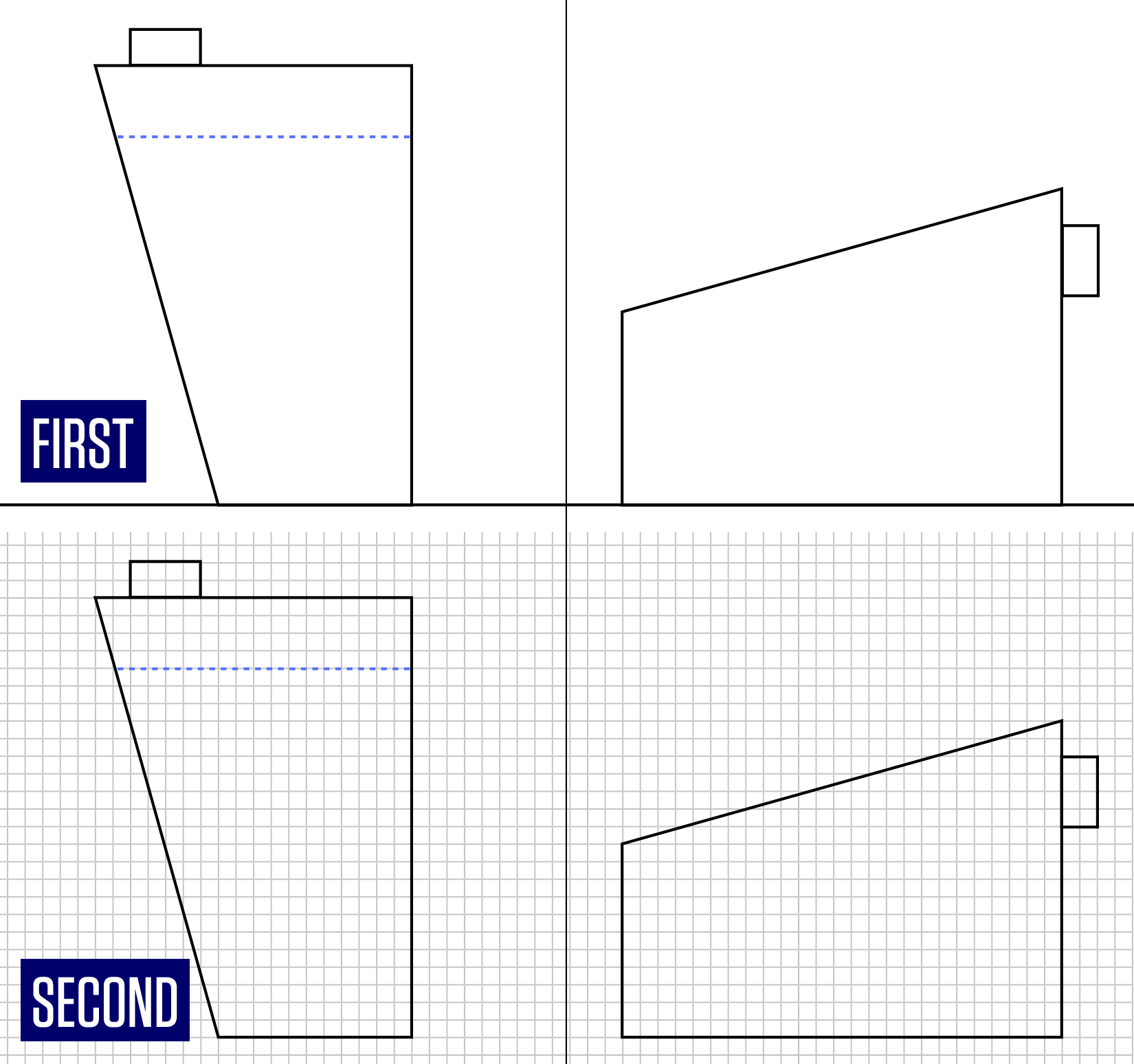
I set up the problem and then had a whale of a fun time figuring out an answer. I suspect I used a railroad spike where a penny nail would have sufficed, though, so I’d like to see how you’d solve it. Leave your method or a link to a scanned scribble sheet in the comments.

BTW: This is another example of the advantages of the digital medium I’m working with. The student sees two images. One looks almost identical to the other.

With the first image, I can ask the student to guess where the water levels falls in the rotated traveler. Then we lay down a mathematical structure on the image and the student works on a more abstract task. But I’ll wager that when people use this task they’ll just print out the second image because, wow, that’s a lot of paper to use for something as fleeting as a guess. That’s an advantage of digital media: students can work on more concrete tasks using more concrete representations, then abstract tasks using more abstract representations. At no extra charge.

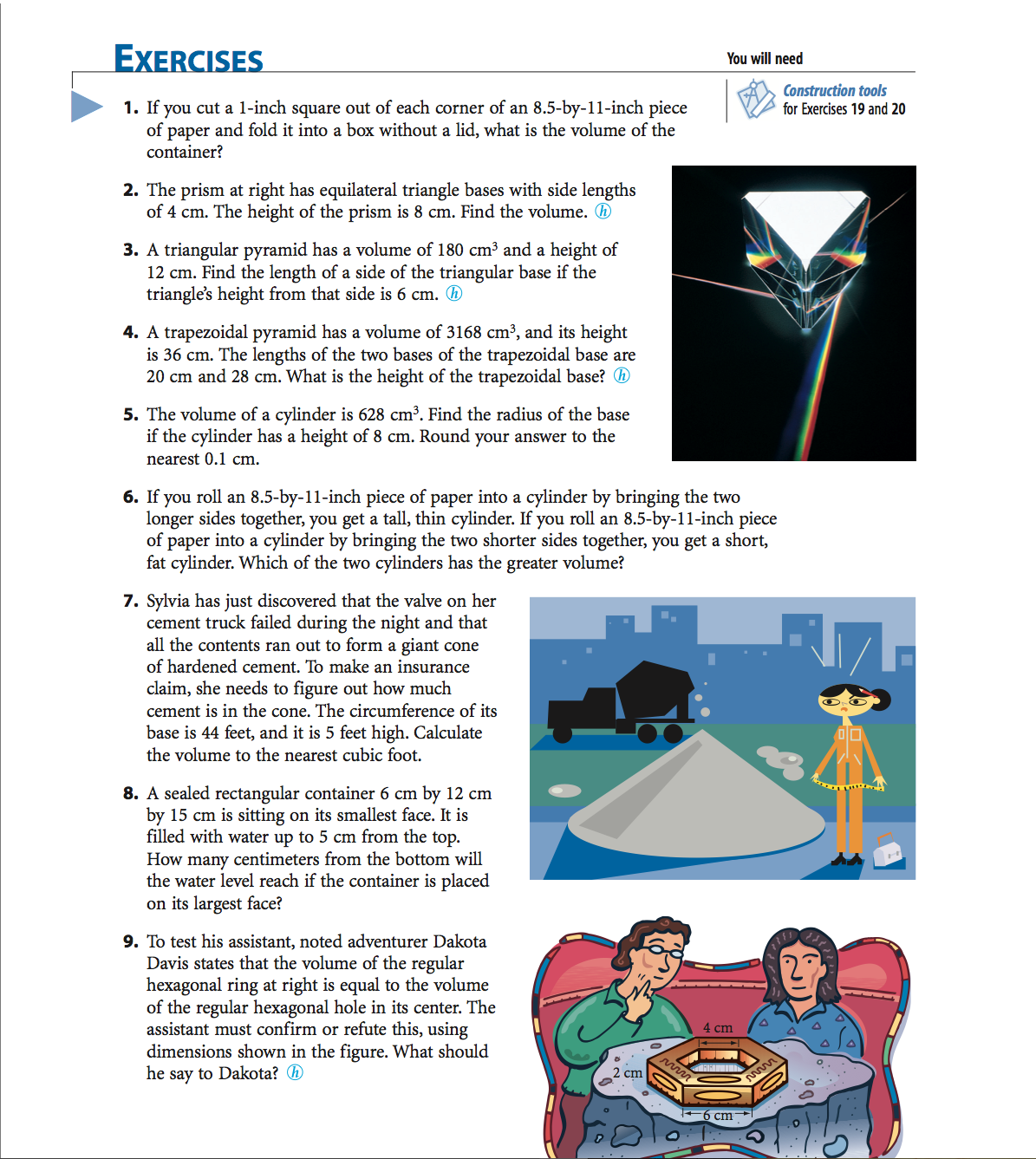
2012 Jun 16. From Discovering Geometry, Fifth Edition, pg. 548:

A sealed rectangular container 6 cm by 12 cm by 15 cm is sitting on its smallest face. It is filled with water up to 5 cm from the top. How many centimeters from the bottom will the water level reach if the container is placed on its largest face?

[3ACTS] Popcorn Picker

See the task page.

FWIW, this is exactly the reaction I hoped to provoke with that video:

Featured Comments

Ryan Brown:

This is a classic textbook problem that we actually did early in the year (Discovering Geometry, Ch. 10) and at the time I recall a number of students asking me for help. They weren’t entirely sure what the problem was asking, and they didn’t know where to start. I’m sure a large number of my no-homework doers saw a block of text and skipped it entirely. We did this today, and kids totally bought into it.

brooke:

This was awesome. I just showed my 8 year old and asked, “Which one will hold the most popcorn?” He answered, “Both.” I now need to show the other kids.

2012 Jun 16. From Discovering Geometry, Fifth Edition, pg. 548:

If you roll an 8.5-by-11-inch piece of paper into a cylinder by bringing the two longer sides together, you get a tall, thin cylinder. If you roll an 8.5-by-11-inch piece of paper into a cylinder by bringing the two shorter sides together, you get a short, fat cylinder. Which of the two cylinders has the greater volume?

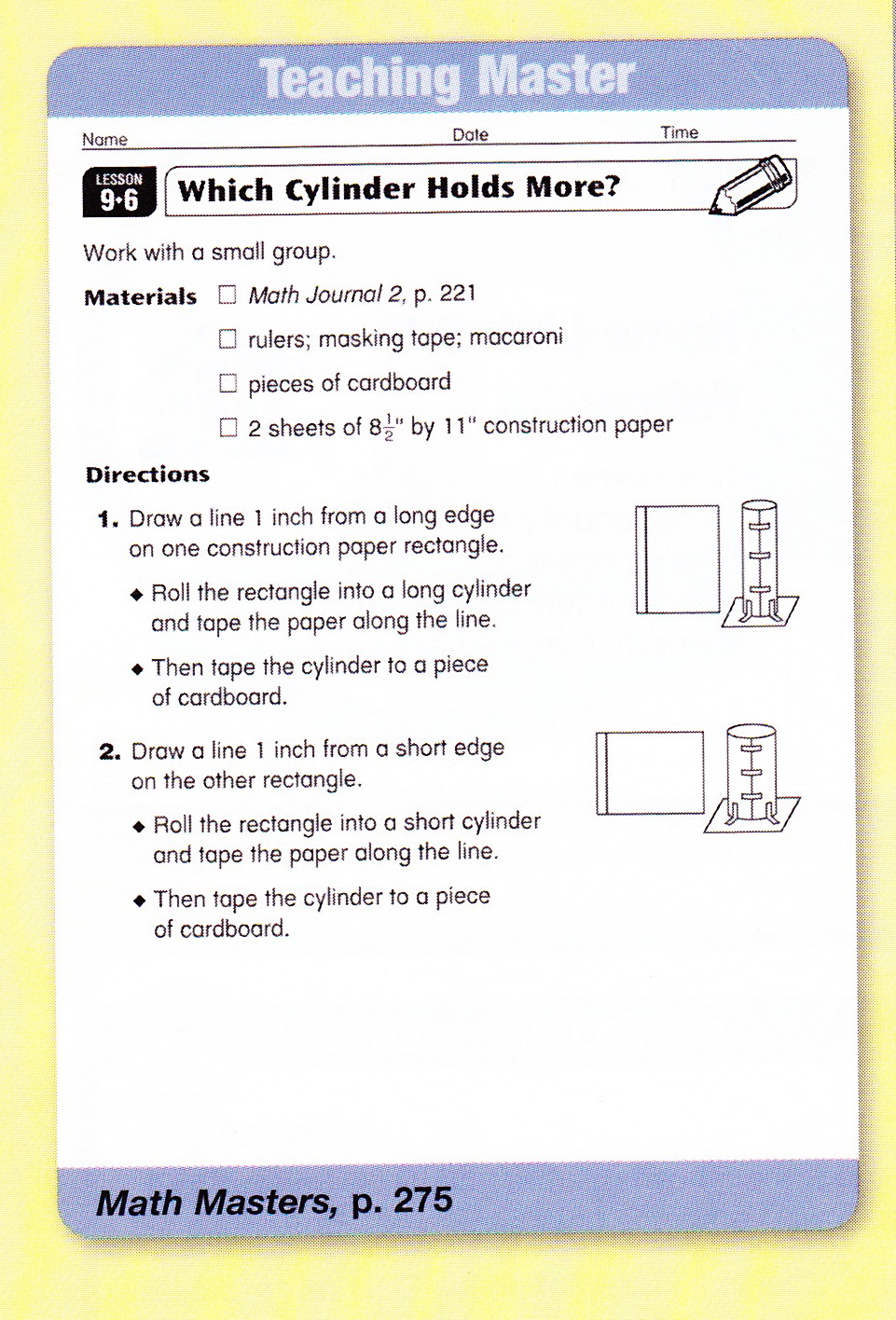
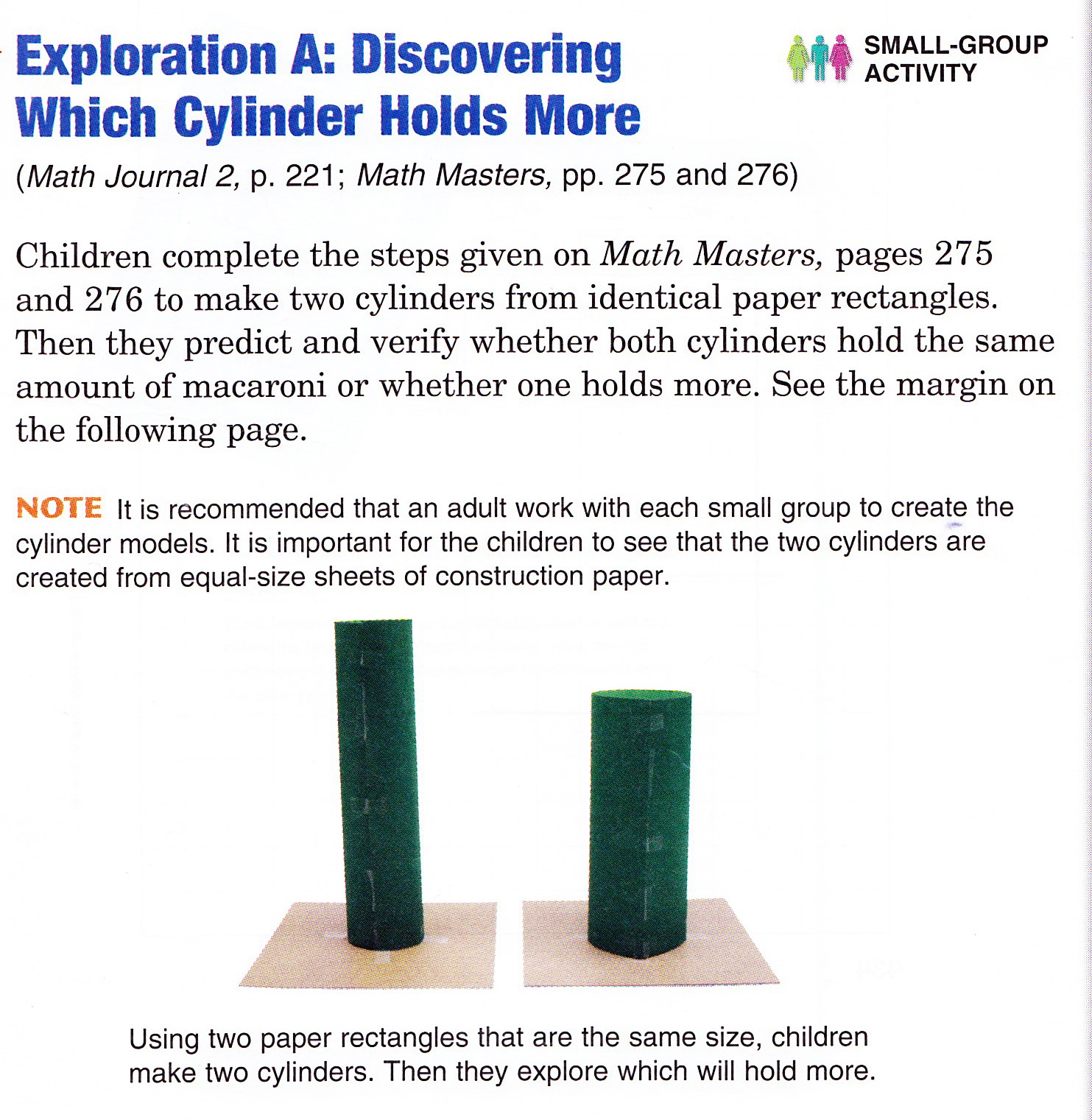
2012 Jul 2. From Everyday Math. Page One. Page Two.

[3ACTS] May 2012 Tasks

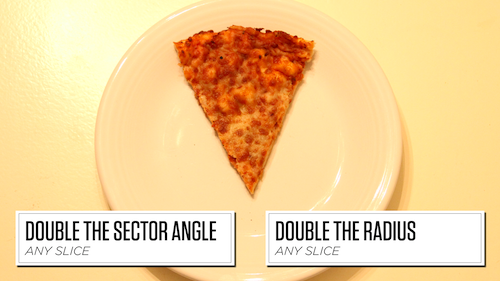
  • Pizza Doubler. The initial problem gives specific dimensions, but the momentum of the problem should be towards a general argument.
  • Coin Carpet. If you’re going to carpet your floors with any kind of US bill, obviously one-dollar bills get you the same area for the lowest price. But what about coins? If I had a classroom, this problem would run all year. I’d put a bounty on the best coin from around the world. (Something like the slope challenge.) “You found some saucer-sized coin from some obscure island with very favorable exchange rates? Pin the picture to the wall, kid. Nice work.”
  • Leaky Faucet. I needed this one for PD purposes. As an exercise in rates goes, it’s fairly generic, though I wouldn’t have guessed anywhere close to the answer.
  • Fry’s Bank. Timon Piccini posted this video to 101qs.com and I wanted to build a sequel around it.

Featured Comment

Dan Henrikson:

My students were amazed by the Fry’s Bank problem. My favorite part was when a student left out a zero and accidentally calculated the balance after 100 years. $8 after 100 years, but 4 billion dollars after 1,000 years. I had to try it on a different calculator to make sure that his calculator wasn’t broken.