2016 Aug 6. Here is video of this task structure implemented with elementary students.
2013 May 14. Here’s a brief series on how to teach with three-act math tasks. It includes video.
2013 Apr 12. I’ve been working this blog post into curriculum ideas for a couple years now. They’re all available here.
Storytelling gives us a framework for certain mathematical tasks that is both prescriptive enough to be useful and flexible enough to be usable. Many stories divide into three acts, each of which maps neatly onto these mathematical tasks.
Act One
Introduce the central conflict of your story/task clearly, visually, viscerally, using as few words as possible.
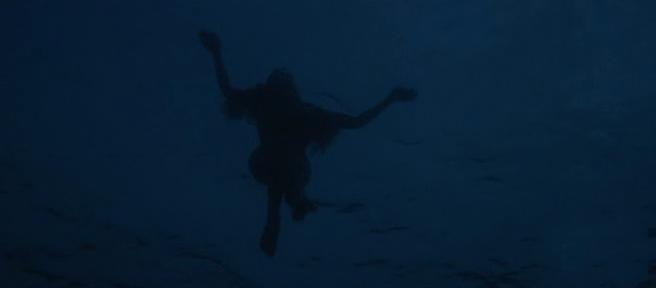
With Jaws your first act looks something like this:
The visual is clear. The camera is in focus. It isn’t bobbing around so much that you can’t get your bearings on the scene. There aren’t any words. And it’s visceral. It strikes you right in the terror bone.
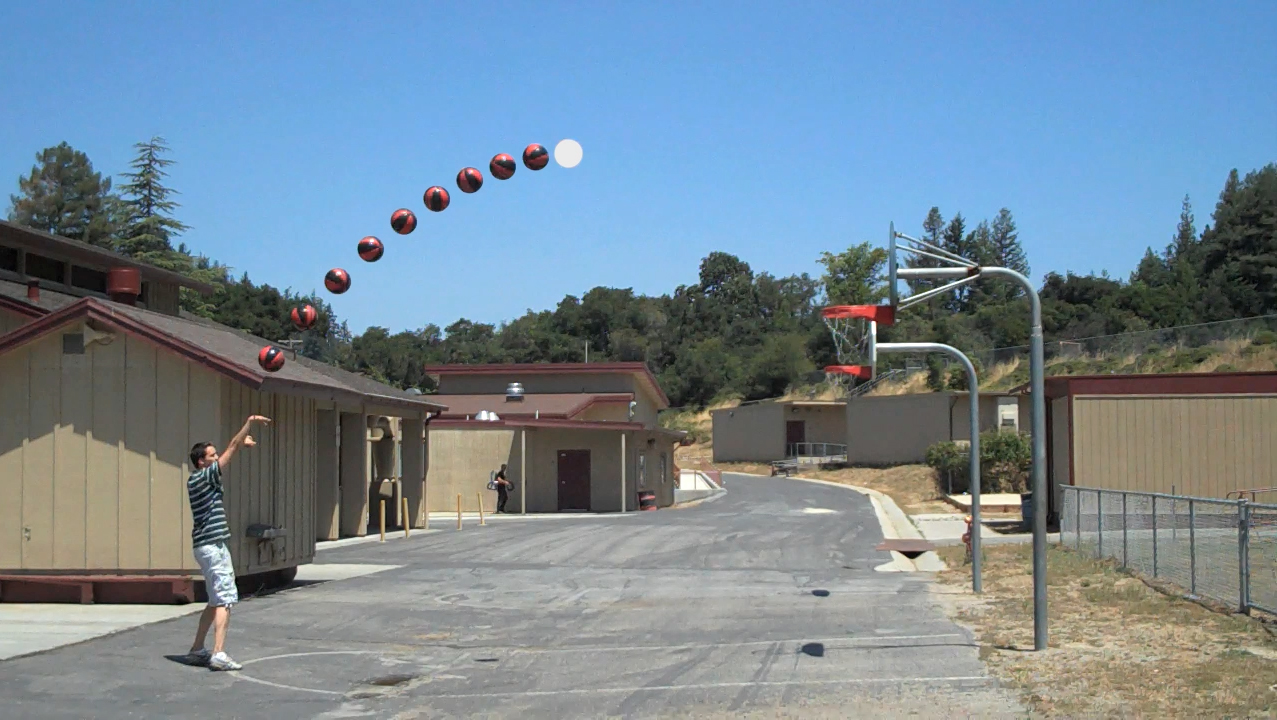
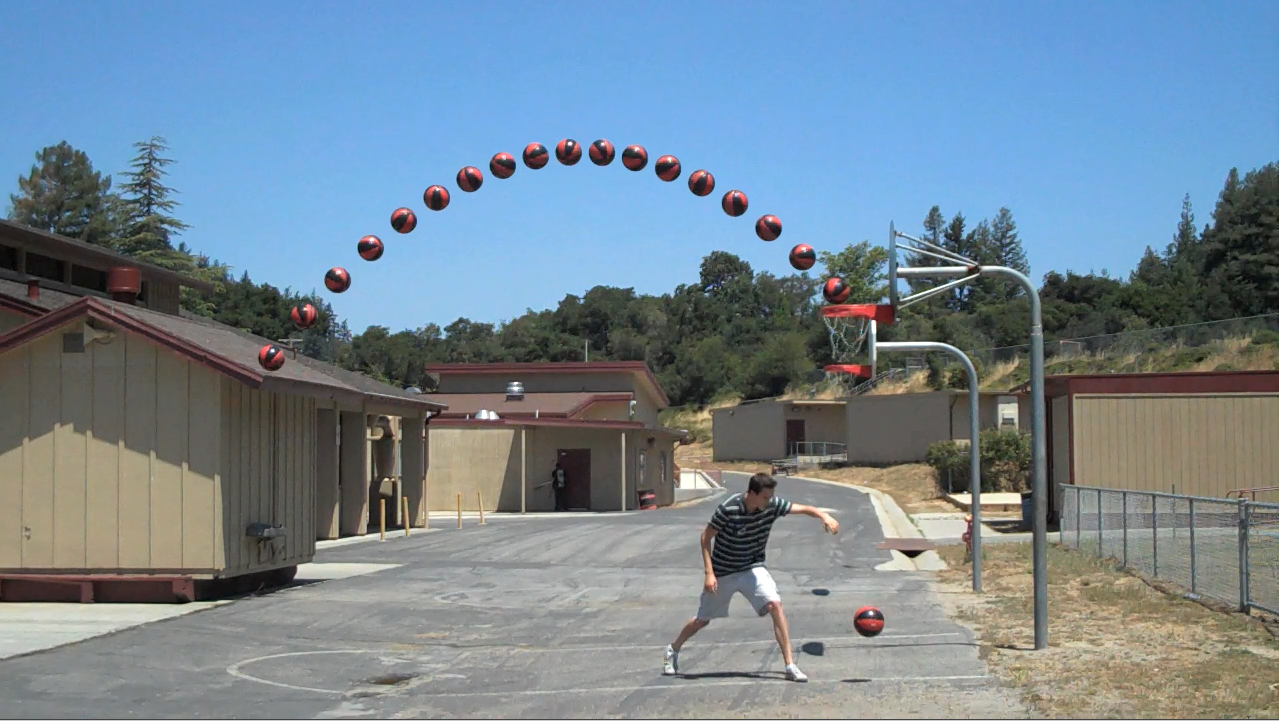
With math, your first act looks something like this:
The visual is clear. The camera is locked to a tripod and focused. No words are necessary. I’m not saying anyone is going to shell out ten dollars on date night to do this math problem but you have a visceral reaction to the image. It strikes you right in the curiosity bone.
Leave no one out of your first act. Your first act should impose as few demands on the students as possible – either of language or of math. It should ask for little and offer a lot. This, incidentally, is as far as the #anyqs challenge takes us.
Act Two
The protagonist/student overcomes obstacles, looks for resources, and develops new tools.
Before he resolves his largest conflict, Luke Skywalker resolves a lot of smaller ones – find a pilot, find a ship, find the princess, get the Death Star plans back to the Rebellion, etc. He builds a team. He develops new skills.
So it is with your second act. What resources will your students need before they can resolve their conflict? The height of the basketball hoop? The distance to the three-point line? The diameter of a basketball?
What tools do they have already? What tools can you help them develop? They’ll need quadratics, for instance. Help them with that.
Act Three
Resolve the conflict and set up a sequel/extension.
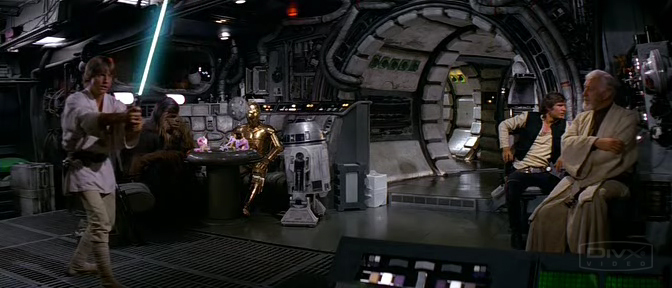
The third act pays off on the hard work of act two and the motivation of act one. Here’s act three of Star Wars.
That’s a resolution right there. Imagine, though, that Luke fired his last shot and instead of watching the Death Star explode, we cut to a scene inside the Rebellion control room. No explosion. Just one of the commanders explaining that “the mission was a success.”
That what it’s like for students to encounter the resolution of their conflict in the back of the teacher’s edition of the textbook.
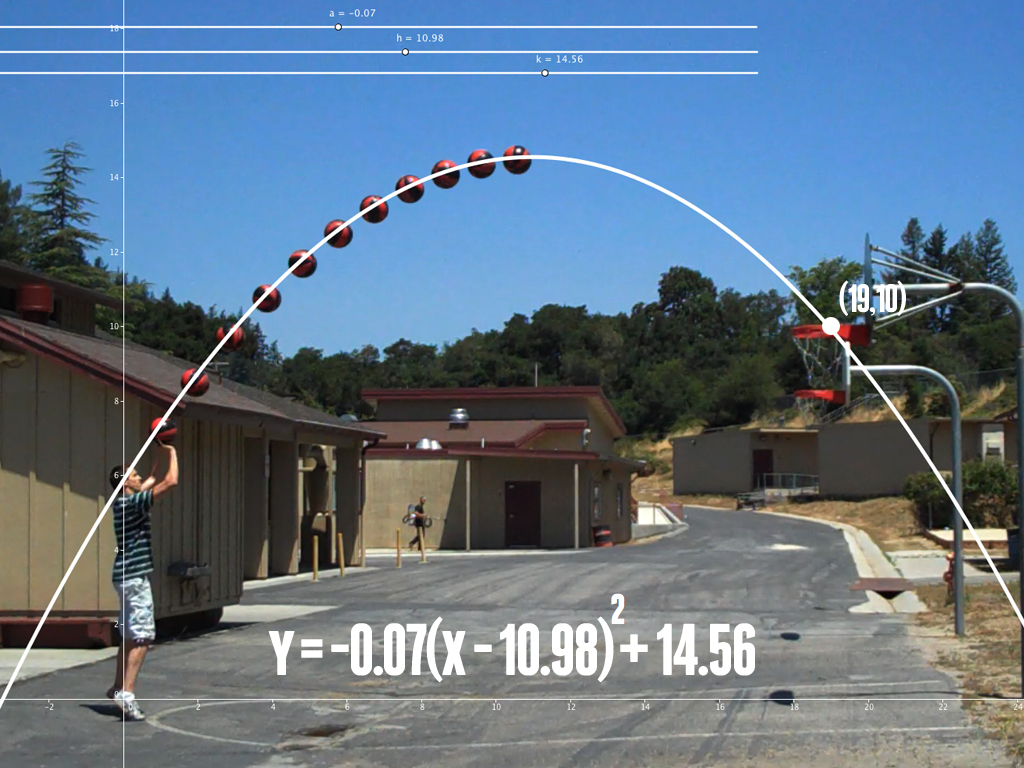
If we’ve successfully motivated our students in the first act, the payoff in the third act needs to meet their expectations. Something like this:
Now, remember Vader spinning off into the distance, hurtling off to set the stage for The Empire Strikes Back. You need to be Vader. Make sure you have extension problems (sequels, right?) ready for students as they finish.
Conclusion
Many math teachers take act two as their job description. Hit the board, offer students three worked examples and twenty practice problems. As the ALEKS algorithm gets better and Bill Gates throws more gold bricks at Sal Khan and more people flip their classrooms, though, it’s clear to me that the second act isn’t our job anymore. Not the biggest part of it, anyway. You are only one of many people your students can access as they look for resources and tools. Going forward, the value you bring to your math classroom increasingly will be tied up in the first and third acts of mathematical storytelling, your ability to motivate the second act and then pay off on that hard work.
Related
- I gave this post a try a year ago.
- Also, Breedeen Murray has a lot of useful things to say about storytelling, though I can’t endorse her enthusiasm for “confusion.”
2011 Dec 26: The Three Acts of a (Lousy) Mathematical Story is also on the syllabus.