Category: lessons

Total 93 Posts

Compass & Straightedge

Summer school right now involves six hours of Geometry instruction followed by three hours of planning for the next day’s Geometry instruction, which basically leaves me fully tapped for tweeting, blogging, smiling, anything but sleeping. I’d say something laced with regret here but the fact is I enrolled some truly incredible students who challenge me and crack me up for the better part of those six hours. These kids make for light work.

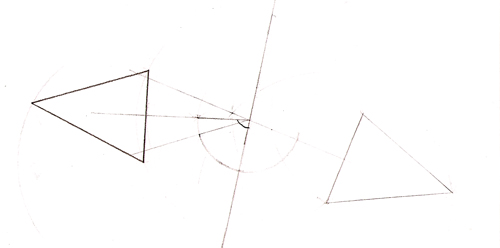
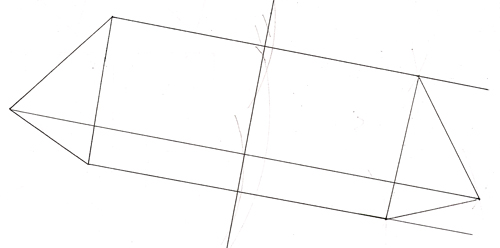
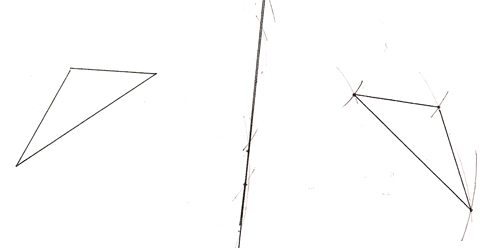
Their proficiency does cause its own kind of trouble, though, because my strongest and weakest students space themselves out dramatically over six hours, requiring all kinds of differentiation. My favorite recent method, particularly with today’s investigation of reflections, is to say, “okay, now do that with just a compass and straightedge.”

I had a method in mind but several students each did me one better.

One student made kind of stunning use of SSS congruency. Another dripped sweat all over the page constructing perpendicular bisectors, copying angles, copying sides in an incredible (but functional) mess. Another used the method I chose but did it in three fewer arcs.

I have five more days to enjoy this.

[BTW: I have determined that at least 20% of this is garbage.]

The First Day Of Summer School

Five uninterrupted hours of Geometry differentiated between credit recovery students and enrichment students turns out to be exactly as easy as everyone predicted it would be. After misjudging time-on-task about a dozen times and grossly overestimating our ability to construct an orthocenter by Just Playing With It, I did something at the end of class that I didn’t hate.

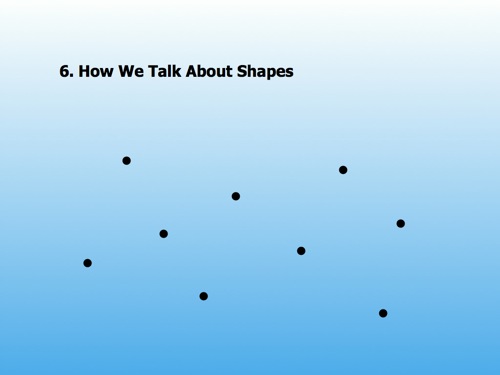
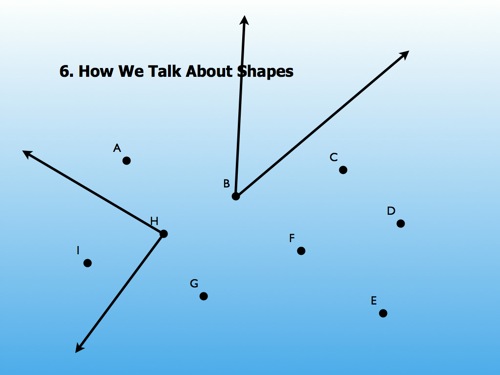
I put up this slide and asked Mika to pick a point out. I asked her to tell Jason across the room which point she was thinking of. She stumbled and stammered a bit. “It’s sort of to the left of the one that’s near the center,” etc.

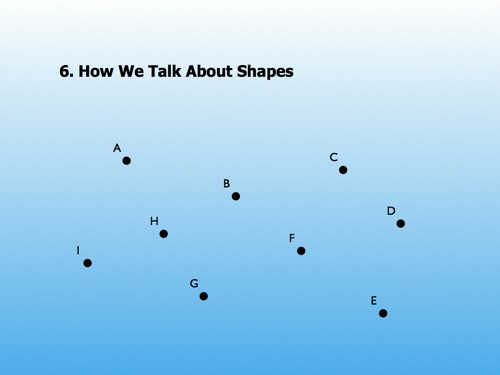
And then I added labels.

And it became a little clearer why we label points. Mika relaxed. Everything looked easier.

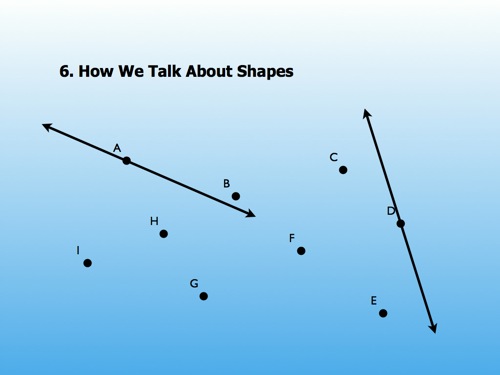
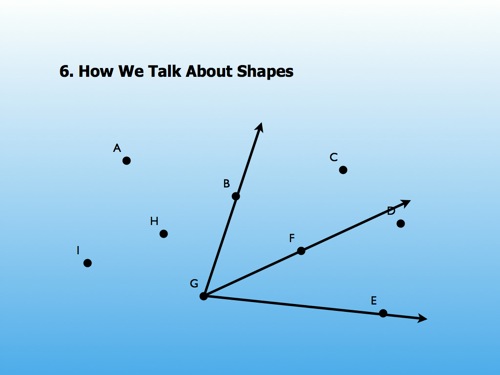
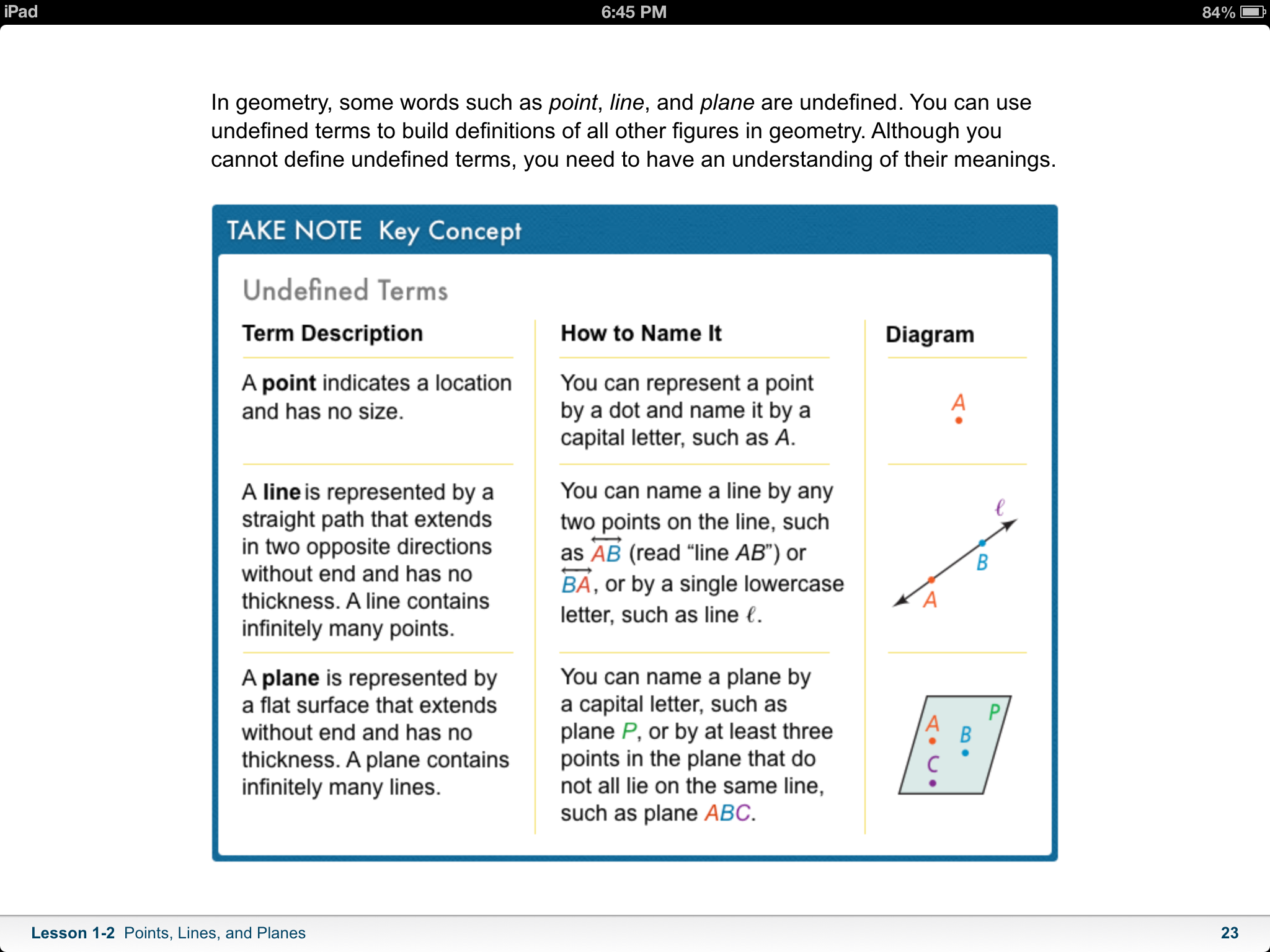
In 2007, I told my students that we name lines using two letters and I gave several examples. Today, I asked Mike how he would tell Kelsie across the room which of these lines he was looking at. First, it was easy.

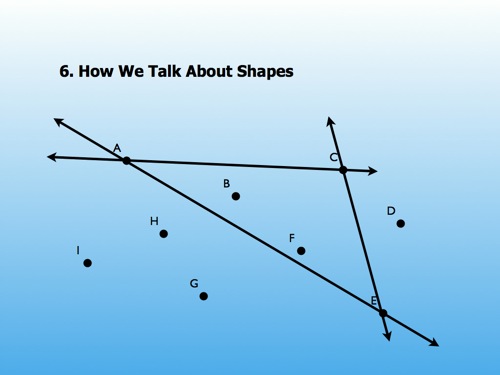
Then it was difficult.

The same went for how we name angles.

This math thing is easier to approach if I ask myself, what about this concept is useful, interesting, essential, or satisfying, and then work backward along that vector, rather than working toward it from a disjoint set of scattered skills. There is probably a book I should read somewhere in all of this.

Postscript

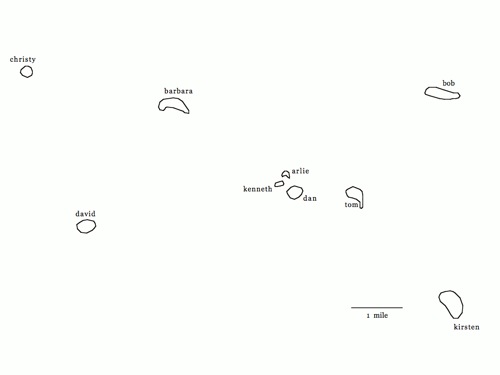
Also: I didn’t hate our opening exercise in which I gave each student a) a compass, b) a straightedge, and c) a map of the Meyer family’s South Pacific archipelago, Meyeronia, and d) five questions. [pdf]

  1. How many miles is it from Kenneth to Christy?
  2. Which island is farther from David? Barbara or Christy?
  3. List all the islands that are three miles from Kenneth.
  4. Find a location in the water that is the same distance from Tom & Bob. How many are there?
  5. Find a location in the water that is the same distance from Tom & Bob & Kirsten. How many are there?

Download

Flavors:

2012 Nov 24. Of course you could just take the concept straight on โ€“ defining the terms and defining the notation. No one would have any idea what purpose that notation served or why you’d need two letters to define a line. The concept would be just something else to memorize. But you could do that.

My Lesson Plan: The Door Lock

Michael Caratenuto:

Personally, I think that this particular image lacks opportunities for inquiry. Perhaps if it was presented with other kinds of door locks leading students to come up with and answer the question, โ€œwhich is the most secure lock?โ€ [emph. added]

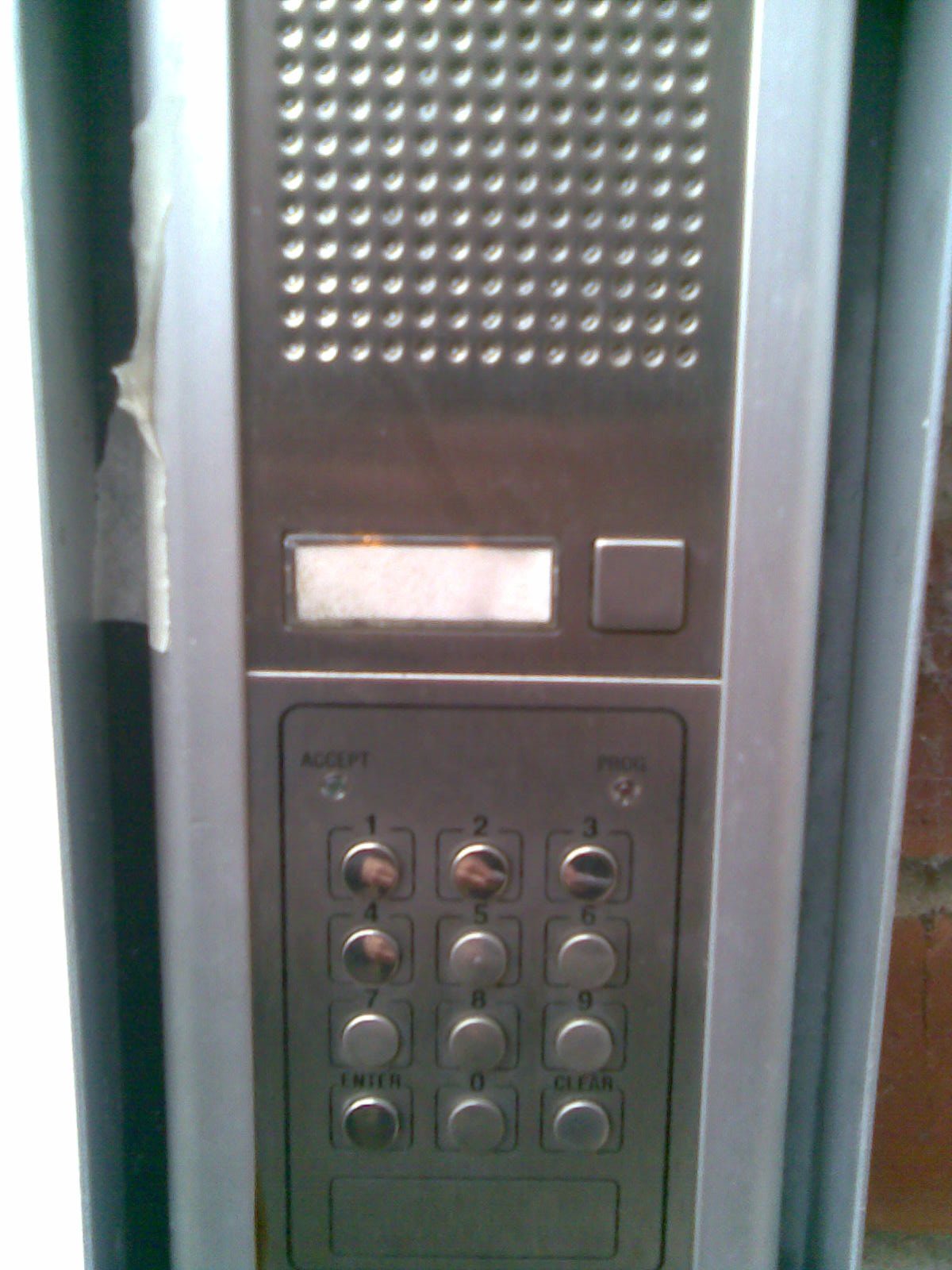
This is exactly right. The latest WCYDWT? installment has provoked the usual litany of Really Interesting Bite-Sized Questions, the sort of prompts that will play great in the Applications & Extensions & Assorted Mindblowers section of your lesson plan but which, on their own, aren’t a lesson plan. Those questions don’t provoke the kind of iterated, increasingly difficult practice that students need for skill development.

Again, this image on its own is insufficient. With some creative modifications, however, it will carry you through permutations. Here is that lesson plan in its broadest strokes.

Start with the image.

Tell them the code is 1 digit long. Tell them the code is 2 digits long. Tell them it’s as long you want it to be. I respected the rule of least power here, which meant that when I took this photo I tried to stay out of the way of your lesson planning. Have them write down all the possible codes for n=1, n=2, n=3, etc. The increasing obnoxiousness of the task will motivate a formula for the general case. That’s arrangements.

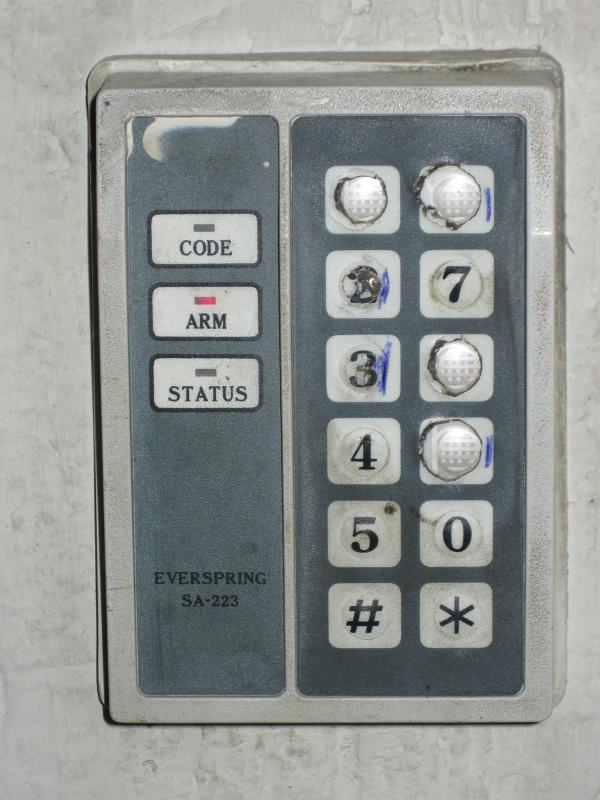
Tell them the lock is a 4-digit lock. Now turn on the blue light.

Ask them to list the possible codes. You can iterate this a bunch of times until they have discovered on their own this tool that mathematicians call a factorial.

Remind them it’s a 4-digit lock. Then put up this image. It will be confusing, but only for a second. Ask them to list every possible code.

Iterate this with two and three buttons until they have generalized permutations. Then maybe you iterate the entire thing with another keypad lock.

Then maybe you dip into the comments of the original WCYDWT? post and help yourself to some very-interesting follow-up questions. I recommend Alex’s.

Let me close by saying how shocked I am at how little all of this costs.

[Update: Bruce Schneier has a good follow-up on information leakage. Two photos.]

[Update II: due to the peculiarities of many car door locks punching in “123456” tests both “12345” and “23456.” Consequently, there is a number string 3129 digits long that will test every five-number comination.]

[Update III: more information leakage.]

[Update IV: more information leakage.]

If I Taught: Social Studies

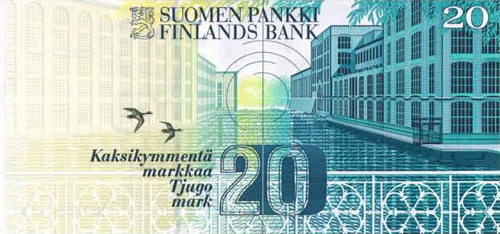
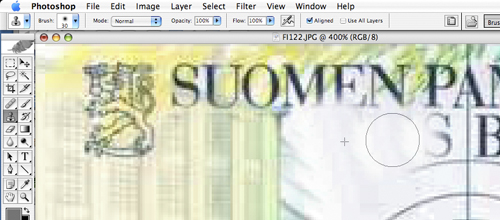
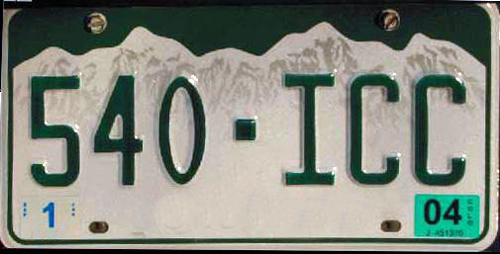
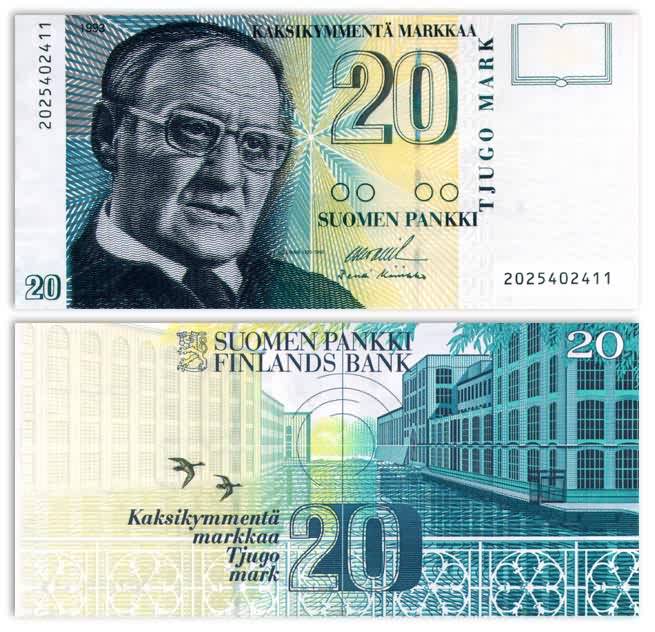
I’d have my students reverse engineer banknotes and license plates:

I’d rip ’em from Banknotes or Plateshack or wherever. And then I’d get comfortable with Photoshop’s clone stamp, removing identifying details by any means necessary.

And then I’d serve them up plain …

… and ask the students to:

  1. determine the elements that comprised the banknote or license plate (and, in the case, of banknotes, there are usually a lot of elements โ€“ historical figures, state birds, even the color scheme matters)
  2. speculate on what country/state the banknote/plate belongs to.
  3. explain each element in the context of its country/state.

I’m just armchair quarterbacking here, though.

Visual Math Instruction: Premium Grade

The more I dig into the question, “How do we turn digital media into learning objects for math students?” the more I’m convinced we need a frameworkor maybe a stylesheet or perhaps a standards & practices document โ€“ I’m not sure of the best analogy here. for capturing and mounting that mediaie. “this is how we take a photo when we want to use it as a learning object.”. This is most obvious to me in our classroom conversations, some of which are enduring and propel serious mathematics, others of which are diverting but ephemeral. At whatever point I pin down the difference, I think I’ll have written myself a recipe for a coherent, engaging math curriculum, something that could occupy me for years.

Though neither of the following two curricula have any kind of public outline, they seem extremely self-consistent and they track (unintentionally, of course) extremely closely to the vision I’m chasing.

Problem Pictures

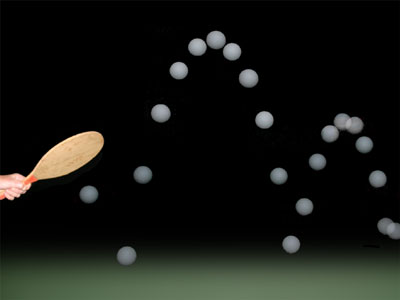
These CD-ROMs (which you can preview here and which Mr. K reviews here) are stocked with images that are each, on some level, “interesting,” and each of which beg a different mathematical question. Mercifully, that question is rarely, “what shapes do you see in this photo?” which is the lowest level of some pyramid which has yet to be named.

Principle Failing: No video, which makes the next entry particularly essential to my investigation.

The Hypertextbook

“Edited by Glenn Elert, written by his students.”

Their investigation of Mario’s acceleration due to gravity may have cropped up on one of your Internets, recently, and was certainly worth your attention. The recipe is consistent throughout Elert’s curriculum:

  1. Extract some video from pop cultureTalkin’ about Batman Begins, Madden 2006, Jackass โ€“ this Elert guy is out of control in my opinion..
  2. Use physics, math, Wikipedia, photogrammetry, and estimation to answer an interesting question.

Principle Failing: This document is designed more as a record of student learning than as a curriculum for teachers. The media which would propel this thing into classrooms around the world is either absent (as with the Mario investigation) or was uploaded to YouTube which dutifully scrubbed it (as with the Hulk investigation).

To proliferate as fully as they deserve to, these investigations need a complete multimedia supplement, starting with high-resolution captures. In Mario’s case, you would need:

  1. a clip showing Mario falling from the same height from every Mario game published, edited into a multi-panel split screen. The students would then ask the obvious question, “Why does Mario hit the ground sooner in some games than in others?”
  2. an individual clip for each jump, no decoration.
  3. The same clips with a grid superimposed over the footage for measurements.
  4. A lesson plan with analysis.

Again, we’re working on different projects here, but Elert only includes #4, which means his work will find its way only into the classrooms of the most digitally savvy physics teachers. How many more teachers would benefit had he included the first three? My guess is: a lot.