Category: what can you do with this?

Total 99 Posts

What I Would Do With This: Groceries

[following up from here]

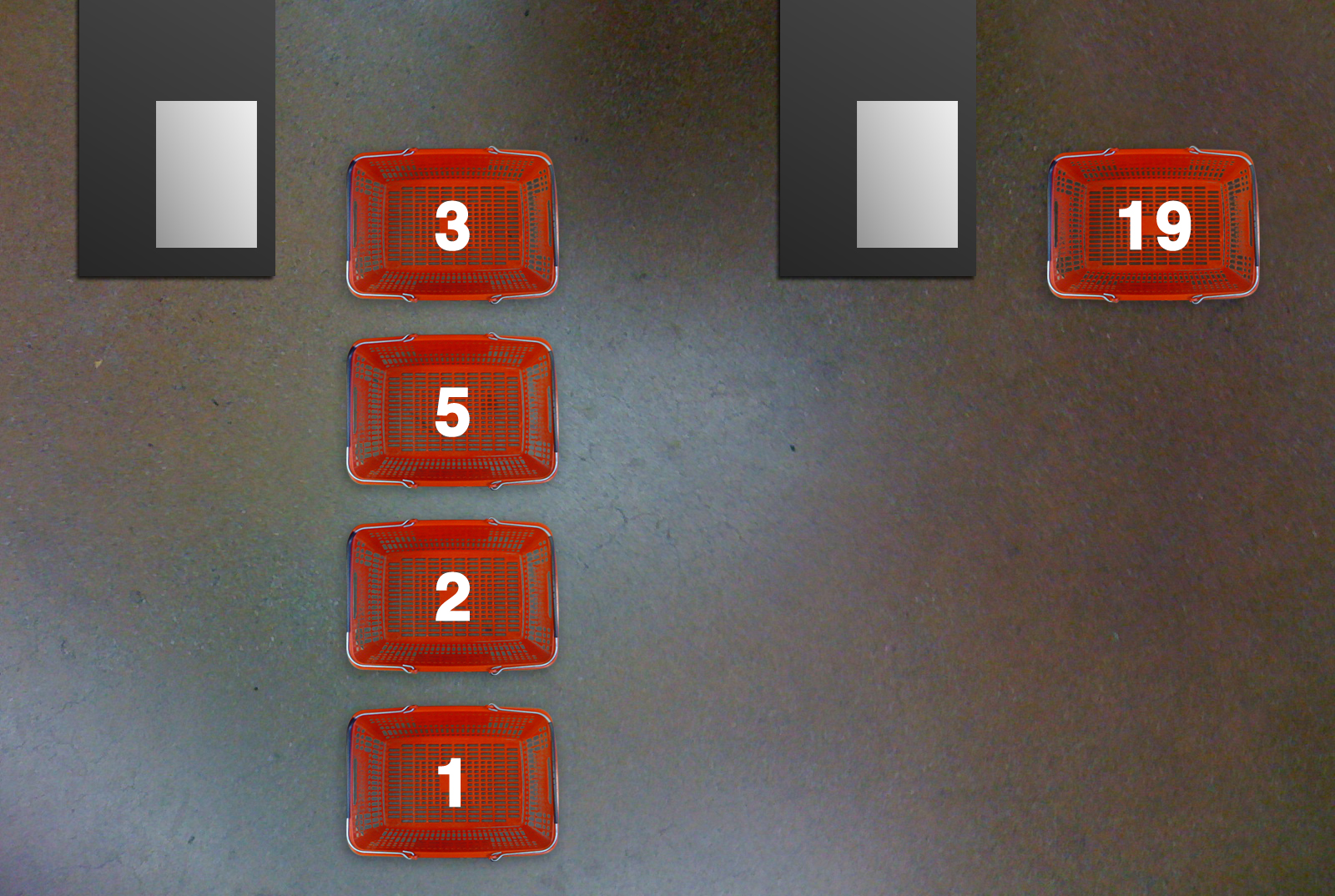
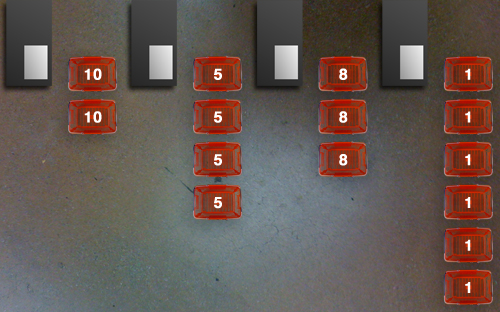
All other things being equal, which lane is the fastest?
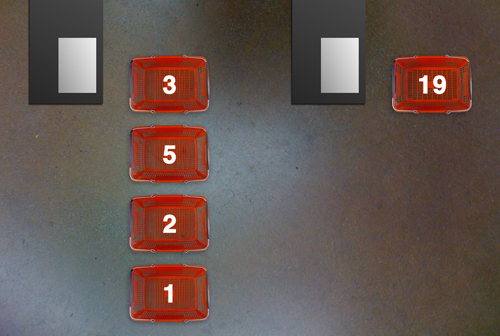
This problem has obsessed me for years. It’s my DaVinci code. It’s my love for math, for mathematical reasoning, for the relentless deconstruction of something that seems simply intuitive into data, models, and computation.

This is also my love for WCYDWT media.

Perfunctory Pitch For WCYDWT Math Instruction

You have here a simple question that anyone can access. Doesn’t matter that you’ve never run a linear regression in your life. If you’ve ever shopped for groceries, if you’ve ever stood in line with a candy bar, a soda bottle, and a matinee starting across town in ten minutes, you have an opinion here. And I can use that.

The question is simple and so is the answer but the justification is extremely complicated, which is exactly how I’d like to balance the learning experience. We will argue. There are easily a dozen variables affecting the line speed that have nothing to do with the number of customers in each line or the number of items in their baskets. You could assign some field research here. I spent ninety minutes last week just watching, counting, and timing groceries as they slid across a scanner.
The question is also scalable. We can remix this single image into endlessly difficult scenarios (or easier scenarios) that will push a student’s hypothesis to the crumbling point and back again.
A (Broad) Lesson Plan

Gather the data. Or supply the data. Graph the data. Develop a model. Test the model. Talk about the effect of outliers. Assign weight to outlying variables.

I threw some questions on a worksheet five years ago, fairly predictable stuff like “what does it mean when a point is above the line of best fit?” At this point, though, I’m hesitant to constrain the activity even that lightly. I’d almost rather pick a fight with a student who finished early and let the rising pitch of that conversation fold in a few more learners.

Other Remarks

  1. Check is slower than credit which is slower than cash. Students are sometimes surprised that cash is faster than credit. From my observations, the fastest cash transaction will outpace the fastest credit transaction by a wide margin but there is also huge variance in credit transactions. I mean, some people have absolutely no idea what they are doing with that thing. The same can’t really be said of cash.
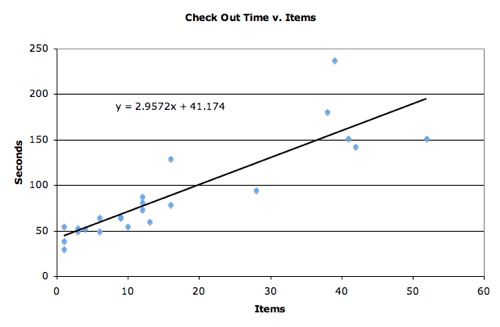
  2. The store manager hooked up some checkout data, which was awesome. At first, he declined my request for numbers while agreeing to let me float around the store. Then he brought back the mother lode: checkout scanner data from a single six-hour shift. The data was aggregated in a few unhelpful ways but no way do I mind this particular excerpt, which gives away the store:
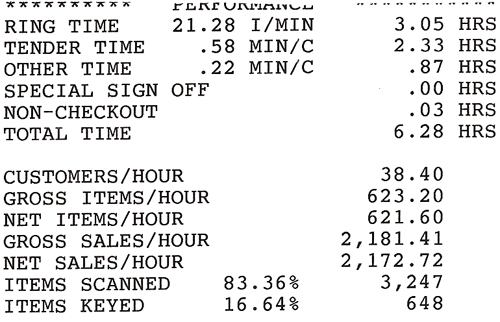
  3. The y-intercept is non-zero! This never fails to trip my fuses. It should take you zero seconds to purchase zero items but you can’t ignore the fixed time cost of the pleasantries (“Hi. How are you doing? Do you need any help out?”) and the transaction itself.
  4. The express lane isn’t faster. The manager backed me up on this one. You attract more people holding fewer total items, but as the data shows above, when you add one person to the line, you’re adding 48 extra seconds to the line length (that’s “tender time” added to “other time”) without even considering the items in her cart. Meanwhile, an extra item only costs you an extra 2.8 seconds. Therefore, you’d rather add 17 more items to the line than one extra person! I can’t believe I’m dropping exclamation points in an essay on grocery shopping but that’s how this stuff makes me feel.

Here’s the Photoshop template, which you’re welcome to remix with new numbers or, even better, revamp into something altogether less offensive to the eye.

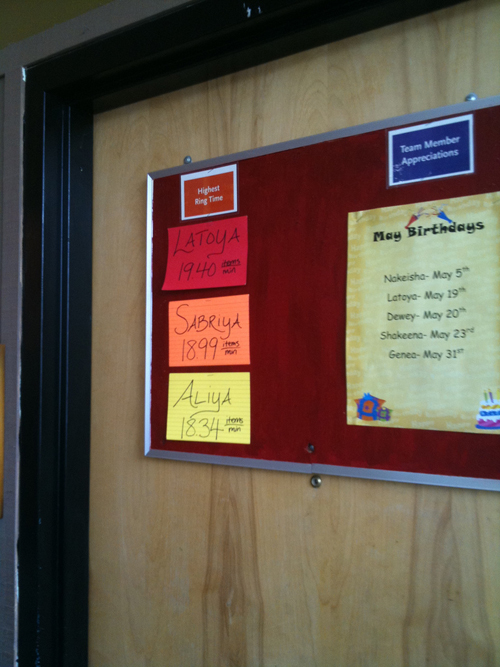
[BTW: check out this fun snap from Dan Callahan of the Whole Foods staff bulletin board.
Don’t Forget Answers, Iteration

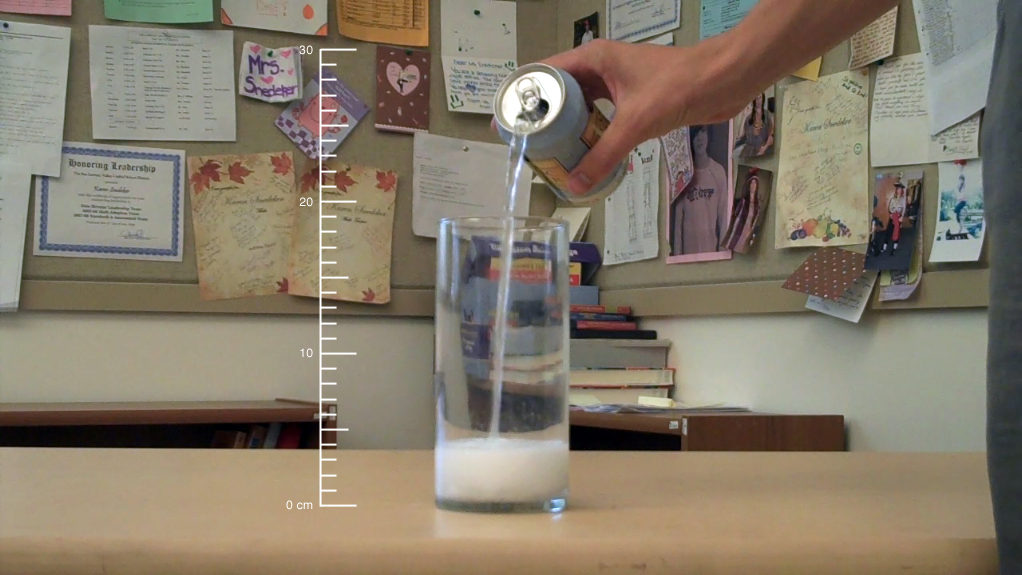
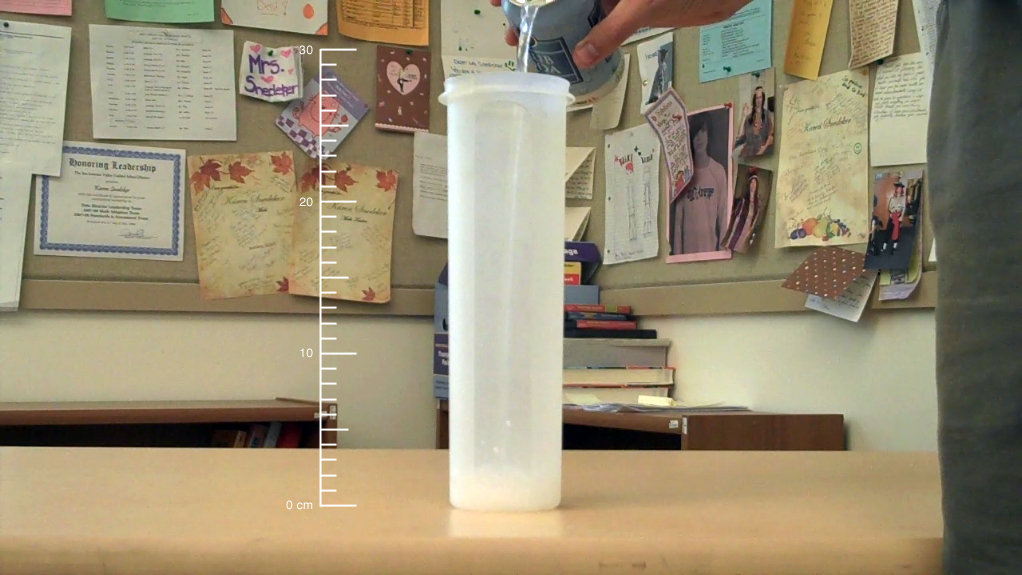
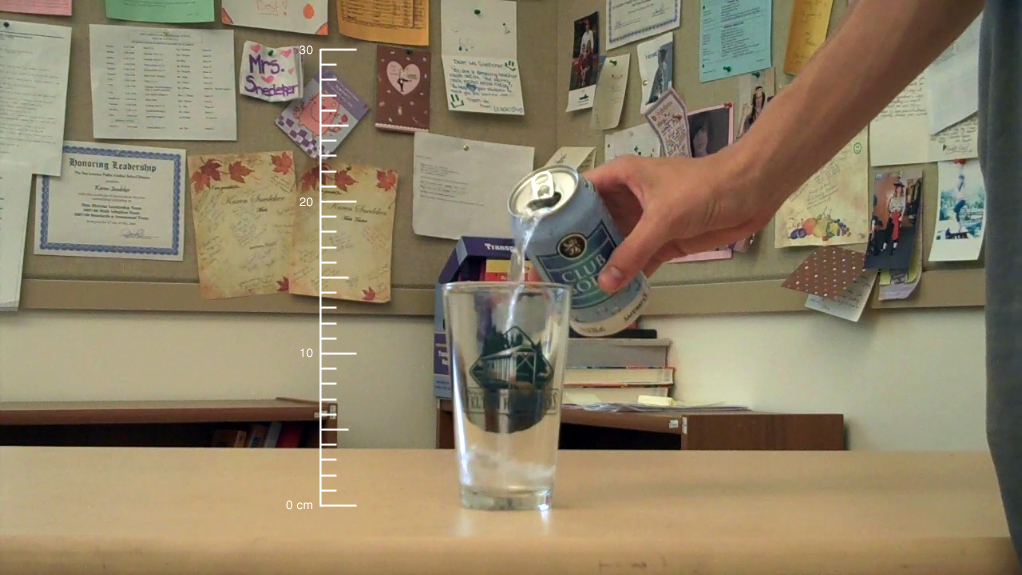
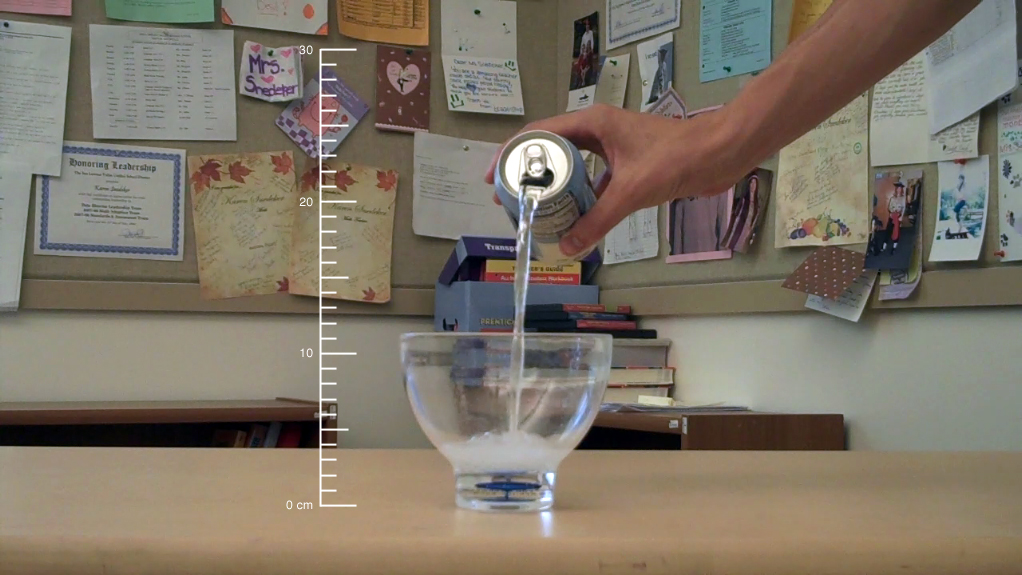
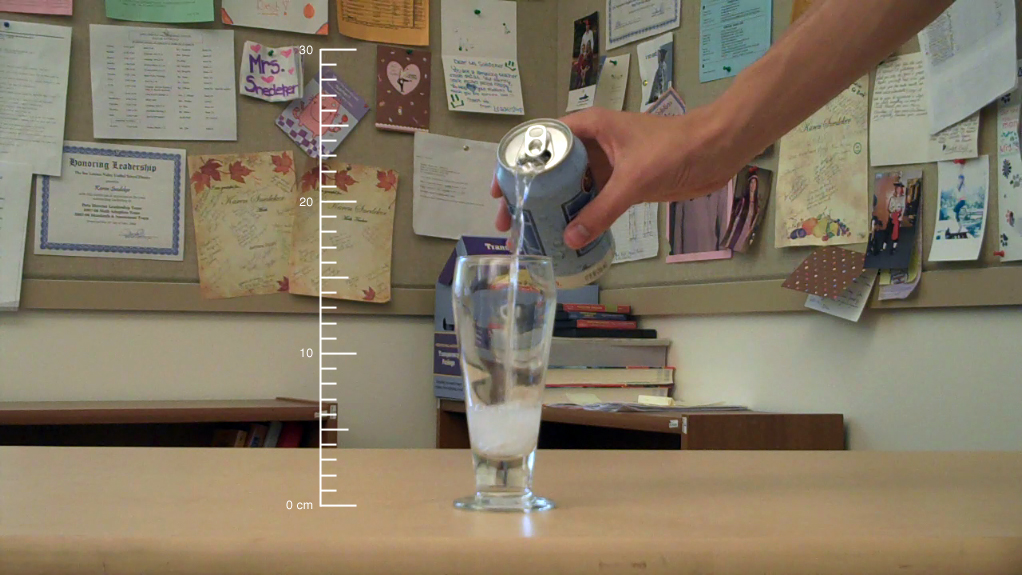
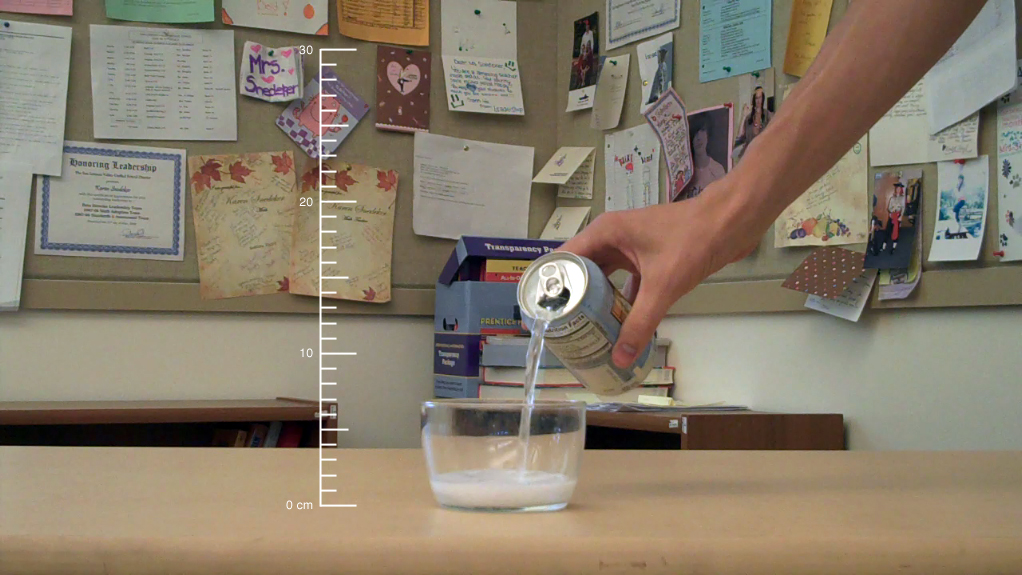
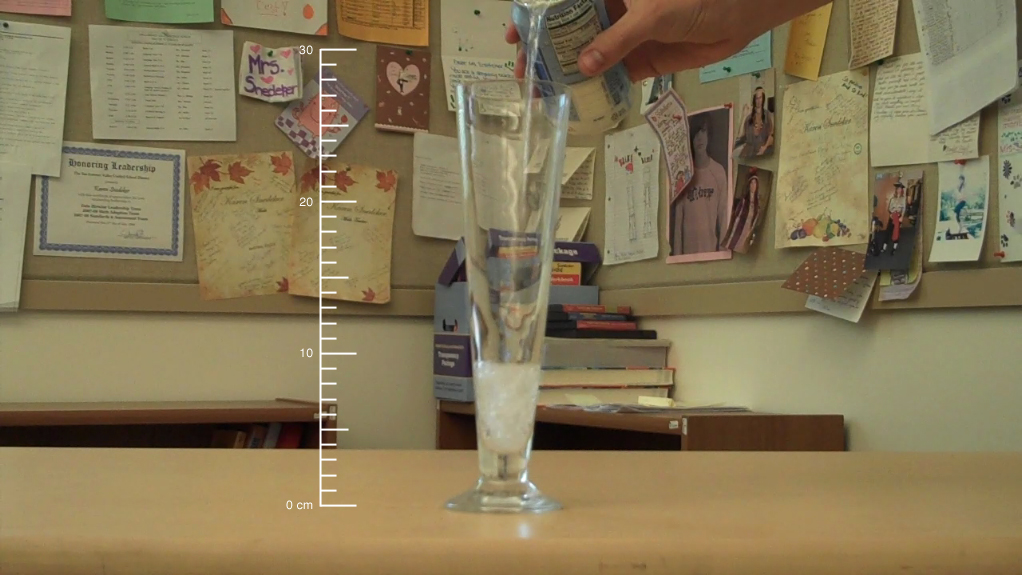
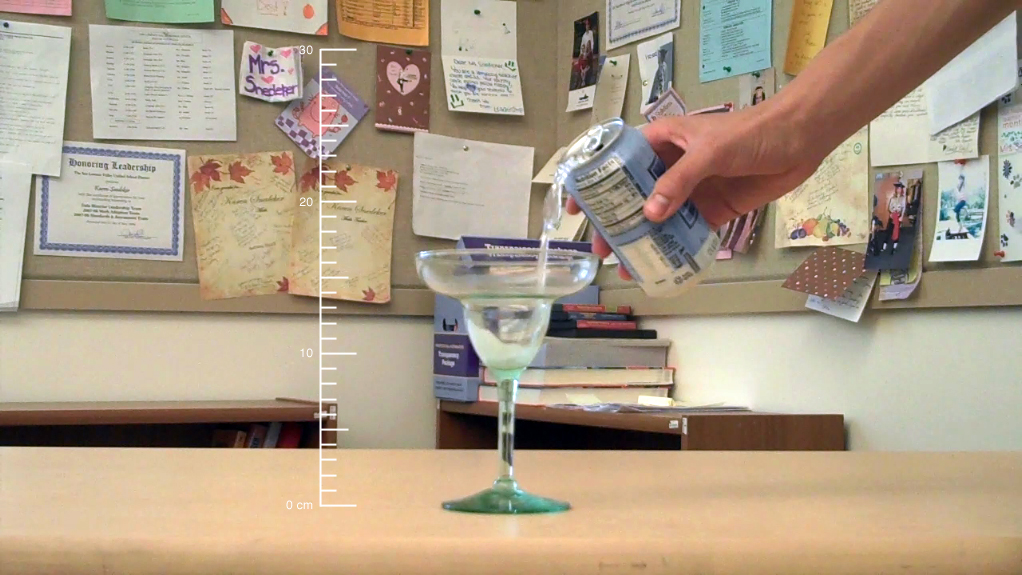
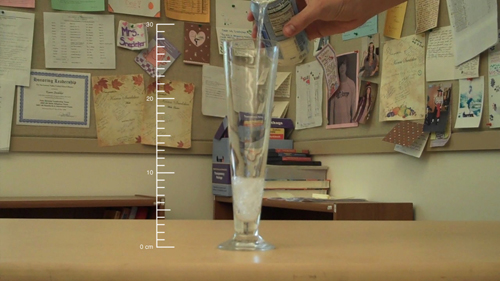
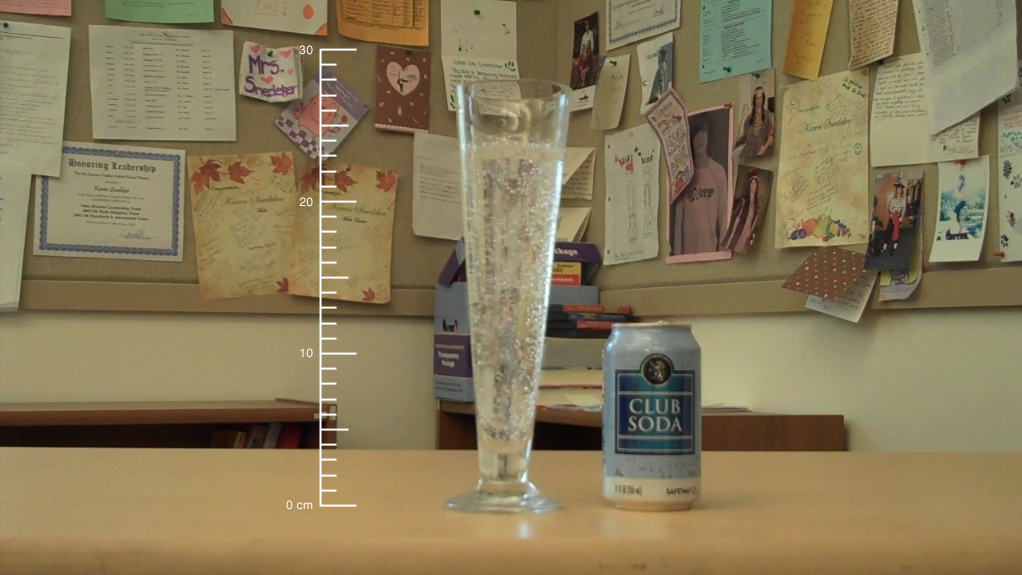
With the question, “how high will the club soda go?” we have taken WCYDWT media into calculus, which is fun.

It’s important with these media-based math questions that you have on hand a) answer media (like this, showing how high the club soda went) that students can contrast against their own work, and b) iterative practice problems that scale in difficulty.

Maybe you start with i) the cylinder tumbler, building towards ii) angled, linear sides, moving through iii) the parabolic bowl, and culminating with iv) the piecewise monstrosity that is the margarita glass, which, it turns out, holds exactly 12 oz. of club soda. I only know that to make WCYDWT media worth your while, you must iterate them.

[Click each for high quality.]

What I Would Do With This: Glassware

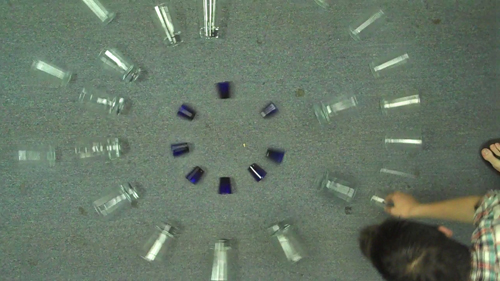
If you have never rolled a cup across a flat surface and marveled at how precisely it returns to the same place you rolled it from, it’s possible you’re the wrong audience for this post.

There is math here, certainly, but I have made it a goal this year to stall the math for as long as possible, focusing on a student’s intuition before her calculation, applying her internal framework for processing the world before applying the textbook’s framework for processing mathematics.

Bad First Question

This one sucks the air right out of the room. We’re into the math immediately, having bypassed several easy opportunities to pull in our students who hate math… and, when those students comprise your entire class, good luck with that..

Jason’s First Question

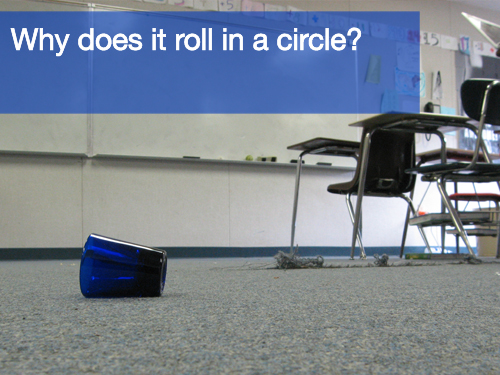
Jason Dyer suggests handing out plastic cups, letting students roll them around, then asking “why do they do that?” I have no problem with this approach. I would like to start from a position of stronger student investment, though.

My First Question

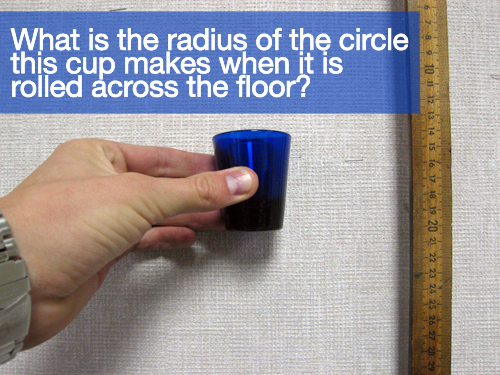
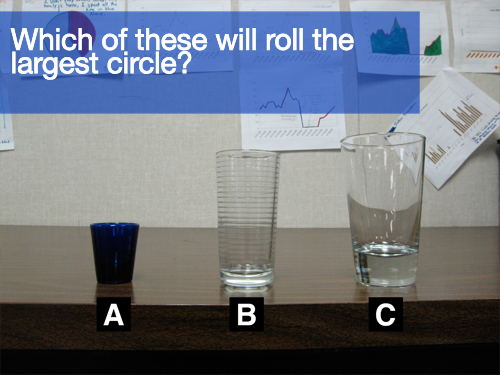
Have them roll some plastic cups around. Then toss up this slide and ask them a question that has a correct answer, yes, but which attaches little stigma to the wrong answers. It’s an educated guess and different students will make persuasive cases for all three of these. Ask them to write their guesses down, to put them on the recordIt’s extremely helpful here that the tallest glass doesn’t make the largest circle..

A Lesson Sketch

The conversation can then proceed along some interesting lines where you ask the student to:

  1. justify her guess.
  2. draw the kind of cup that will roll the largest circle using a fixed amount of plastic. This is fun. Many will draw a really tall cup, which isn’t the best use of limited material. A two-inch-tall cup can roll a circle that’s a mile wide.
  3. make their ideal cup from a page of card stock. The fixed size of the card stock will normalize the results.
  4. draw a complete picture of their cup including the auxiliary lines. Can they find the invisible center of the circle it will roll? What’s the method?

We do all of this before we start separating triangles, before we write up a proof, before we generalize a formula. We ask for all this risk-free student investment before we lower the mathematical framework down onto the problem.

Degenerate Cases

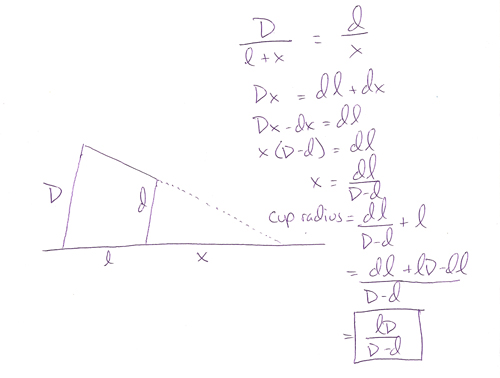
A cool feature of this formula is how well it handles degenerate cases. For example these two:

  1. A cone’s roll-radius is the same as its slant height so letting d = 0 should (and does) eliminate D from the formula.
  2. A cylinder will roll forever so letting D = d should (and does) return an undefined answer.

Iterate

From there you can pull out of your cupboard (digital or otherwise) any random set of cups and the students should be able to predict the roll-radius within a small margin of error.

And the framework grows stronger.

A Parting Swipe At Textbooks

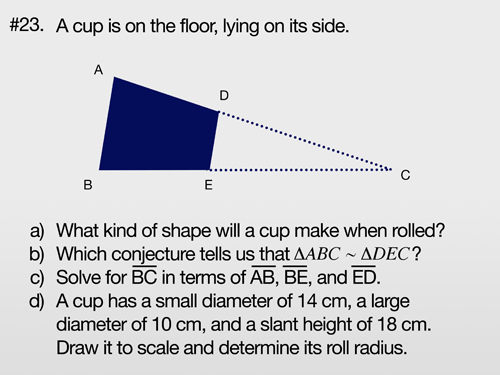
I didn’t dig this out of a textbookh/t Mr. Bishop, Summer School Geometry, Ukiah High School, 1997. but this (hypothetical) scan highlights the difference between my math pedagogy and my textbook’s.