Category: tech contrarianism

Total 133 Posts

How Do You Solve A Problem Like Cigotie?

YouTube user cigotie attends my feeder middle school. In spite of his age and our rural setting, he has amassed a portfolio of digital special effects on par with people twice his age and half his distance to Hollywood.

He is an auto-didact, having taught himself with online tutorials (like Video Copilot, which is the best of the best) to use tools which others attend brick-and-mortar schools to learn. He publishes his videos on a YouTube channel to a global audience. One of my freshmen fully expects to see him on the shortlist for an Academy Award in 2015. Your poster digital immigrant, in other words.

I’m impressed. I’m worried.

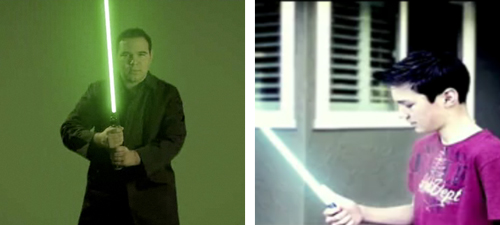
Here are a few comparisons between cigotie’s work and the Video Copilot tutorial, which, well, I guess “inspired” it is the right word.
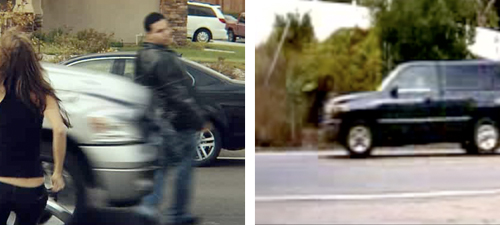

The vision of education that promotes digital nativism seems very effective to me at equipping the natives with tools and technique, with hammers, nails, screwdrivers, glue, and a birdhouse tutorial from which they can build an identical birdhouse. But if there is a plan for moving the natives past raw technique, for bridging the gulf between technique and art, I have yet to see it widely articulated.

It’s just too easy to plunder Delicious for tags like “digitalstorytelling,” “aftereffects,” or “tutorial” and pass them off to natives like cigotie. But this kid doesn’t need more links, more web apps, or more resource sites lousy with textures, tutorials, and embeddable 3D objects. He needs someone to help him tell his own stories. Someone to interpret his interests and direct him to fiction and nonfiction that will drive his thinking to the point where he can create and not simply mimic.

I worry. Probably needlessly, but I worry that we are building schools that put students in a place to care about artistic expression while only equipping them with technique.

Just Say Yes?

Gary Ball, edtechnophile:

I want to be a Yes Man. I want to be a Lets Find a Way Man. I want my job to be finding ways to say yes to educators requests. Educator: “Can I do/have (insert random skill/technology/tool)?” Me: “Heck ya – that sounds awesome. I am not sure how but lets find a way!”

Mark Weston, Dell’s educational strategist:

Asking the question, “Does technology improve student learning?” is the wrong question. The question should be, “Does technology support the practices that improve student learning?”

Don’t Let Your Students Use Music In Their Video Projects

Adding a music track to film used to be a technically strenuous task requiring an optical printer to run a transparent strip alongside your film print. Now, your computer’s stock video editor (iMovie or Windows Movie Maker), VoiceThread, or PhotoStory will import a track from your iTunes library in seconds. Here, again, we have conquered the technical hurdle but we have underestimated the height of this particular creative hurdle.

When you make videos, vodcasts, and montages, you are attempting to create meaning.

You create meaning – whether that’s a thesis or a tone – when you write scripts, cast actors, place cameras, use lights, direct actors, and edit shots. Not one of those creative tasks is value neutral. If you can align each of those creative tasks to your thesis or tone, then music will be redundant at best, distracting at worst, serving only to remind your audience that they are watching a movie.

In our classrooms, when we make movies, we write a sloppy plot outline, a soft script, we act unskillfully, direct unskillfully, edit unskillfully, and then trowel a soundtrack onto our movie to fill the gap between what it is and what we wanted it to be. We wanted something buoyant so we add Louis Armstrong. We wanted to convey menace so we add John William’s soundtrack to Jaws, or the Creative Commons-licensed equivalent. When we let our students use music in their videos, we let them outsource the truly difficult creative work to industry professionals.

Four Illustrative Examples

  1. No Country For Old Men featured smart suspense, fat-free plotting, and some truly terrifying set-pieces, all without the shock chords and shrieking notes that horror schlock has to trowel onto otherwise unscary sequences. The movie was silent.
  2. The Wire and The Shield were, for my money, two of the best dramatic television series of the current millenium. Both of them established complicated characters and rich drama without soundtracks.
  3. I used music in exactly one of my ten dy/av episodes and I blew it. The CC-licensed track I selected was far too ponderous and far too mopey for the footage it was working against.

Harmless Anecdote

I witnessed a montage at ILC 2008 featuring a Frankenstein medley of “Highway to the Danger Zone,” “Ride of the Valkyries,” “Dare You To Move,” “Don’t Stop Thinking About Tomorrow,” “New Soul,” and “Requiem for a Dream,” the lyrics and songs straining to carry the weight which the photos, themselves, couldn’t carry, photos of students unboxing laptops.

Far better there, to play ambient audio of the students excitedly unboxing their laptops or of student testimonials and, beneath that, if absolutely necessary, a track that functions not as an emotional signpost (“hey hey! feel happy! yeah, you!”) but as an emotional lubricant, something pleasant but inexpressive on its own.

Finally

If your students can demonstrate that all of their creative decisions from pre-production through editing support their thesis or tone, and they still need music, then let them have at it. Otherwise, you’re letting them off easy and they need to cut Louis Armstrong in on the grade.

BTW: Ken Loach, director, winner of Palmes d’Or:

I think film music that tells you what to think is cheap — the film should do that without that prompting.

Did You Know?

Mark Zuckerberg:

If Facebook were a country, it would be the eighth most populated in the world, just ahead of Japan, Russia and Nigeria.

Marco Arment:

Right, except its demographics would be a bit skewed.

There would be no children and no elderly.

Half of the population would be dead, flopped over in their houses, with nobody noticing or caring. But they’re still counted in the census!

A quarter of the population would be marketing consultants yelling advertisements at everyone. They’re counted, too.

And nobody, including the government, would be making any money or producing much of lasting value.

Asilomar: Closing Remarks

From my comment at Jon Becker’s blog:

I’m having a difficult time determining why I walked away from three days at ILC so deflated while three days at CMC-North has me bouncing off walls.

It may be an issue of interest, true – I care more about math ed than tech – but give the same presentation outline on (eg.) “Wildlife of the Serengeti” to any randomly selected presenter at CMC-North and any randomly selected presenter at ILC, and my money’s on the CMC presenter every time to put up something lively, engaging, visual, and audience enfolding, scaled up by thirty extra minutes no less.

There is a lack of substantive criticism in the edtechno-blogosphere, I think, which is mirrored in these presentations, where people hop up to the front of the class for an unfocused, but definitely emotional, show-and-tell, and few people either care enough or have enough temerity to suggest that higher standards should apply. The feedback mechanism is, by and large, overly polluted by emotion.

By contrast, the crowds at CMC-North are vicious, though constructively so. I appreciate this and I know that overall session quality has risen to the occasion. As educators, the stakes are too high and the time constraints too stringent to settle for anything less than our best efforts, even if hearing that we shouldn’t lecture from bulleted slides for an hour is painful.

Jon’s response is entirely on point and he invokes my new favorite word, which I am trying to wedge as much as possible into my daily correspondence.