Category: tech enthusiasm

Total 120 Posts

Marbleslides Madness!

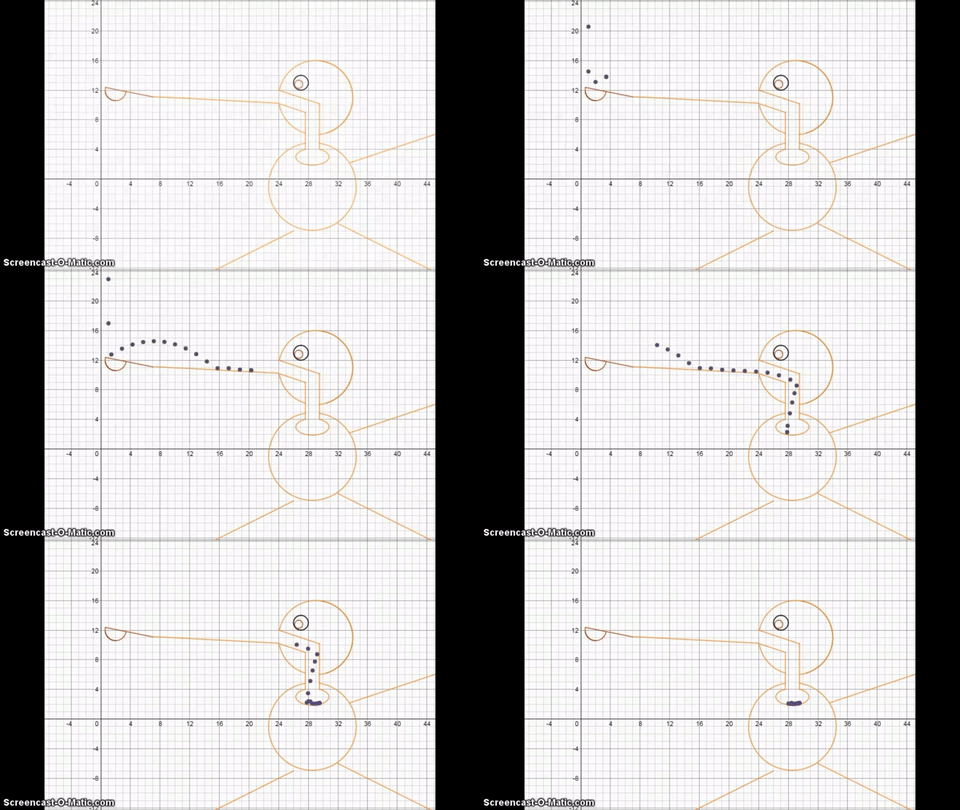
Watch some students play our new Marbleslides activity.

In the first example, Maggie and Claire exemplify basically all of the mathematical practices and then some as they try and fail and try and succeed to set up their marbleslides.

In the second example, Mr. Bondley recorded his students’ free play levels, some of which were quite elaborate.

160109_2

As I mentioned on Twitter, I don’t want to overstate the matter, but I think we’re seeing a level of human creativity unknown since the time of da Vinci.

Start your own class!

2016 Jan 19. One Marbleslide, Five Function Families.

Tracy Zager Offers You And Your Fact Fluency Game Some Advice

Thoughtful elementary math educator Tracy Zager offers app developers some best practices for their fact fluency games:

I’ve been looking around since, and the big money math fact app world is enough to send me into despair. It’s almost all awful. As I looked at them, I noticed I use three baseline criteria, and I’m unwilling to compromise on any of them.

She later awards special merits to DreamBox Learning and Bunny Times.

Marbleslides Is Here

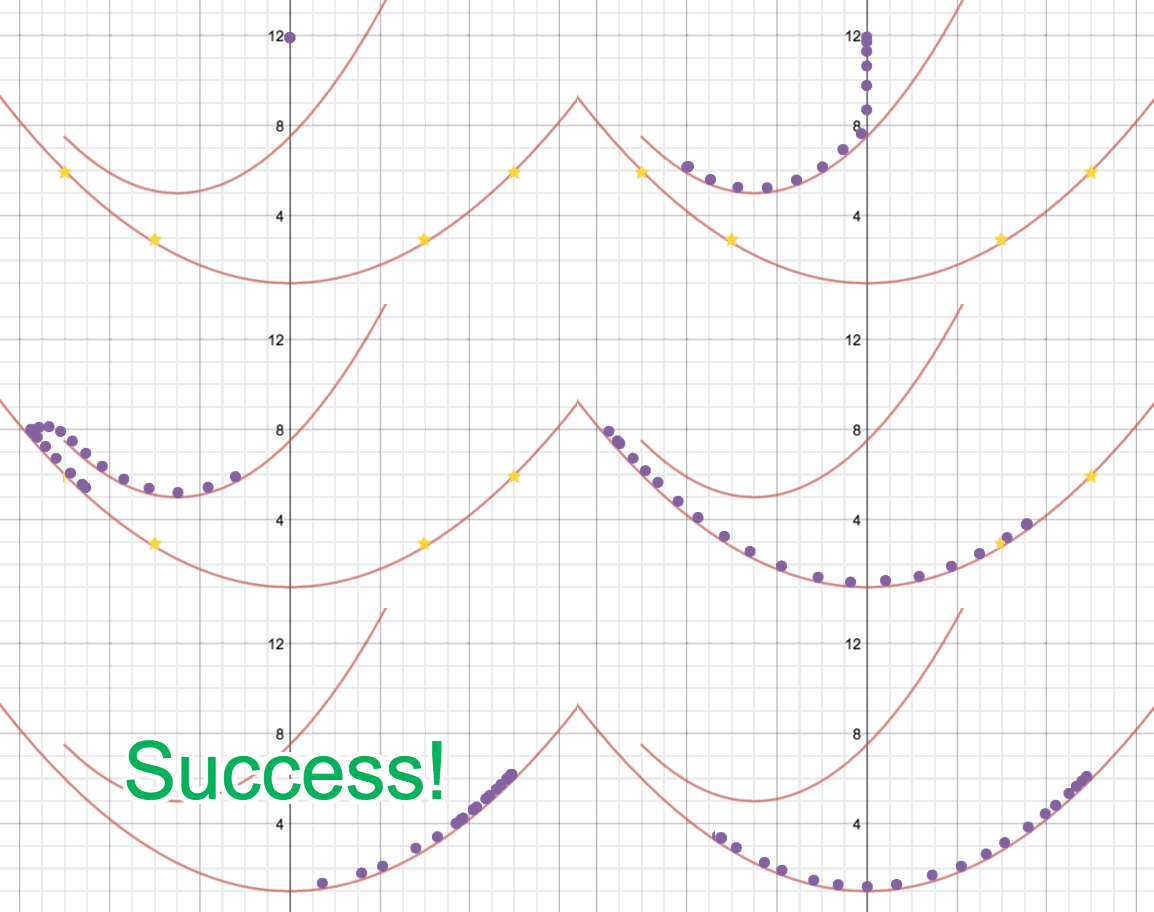
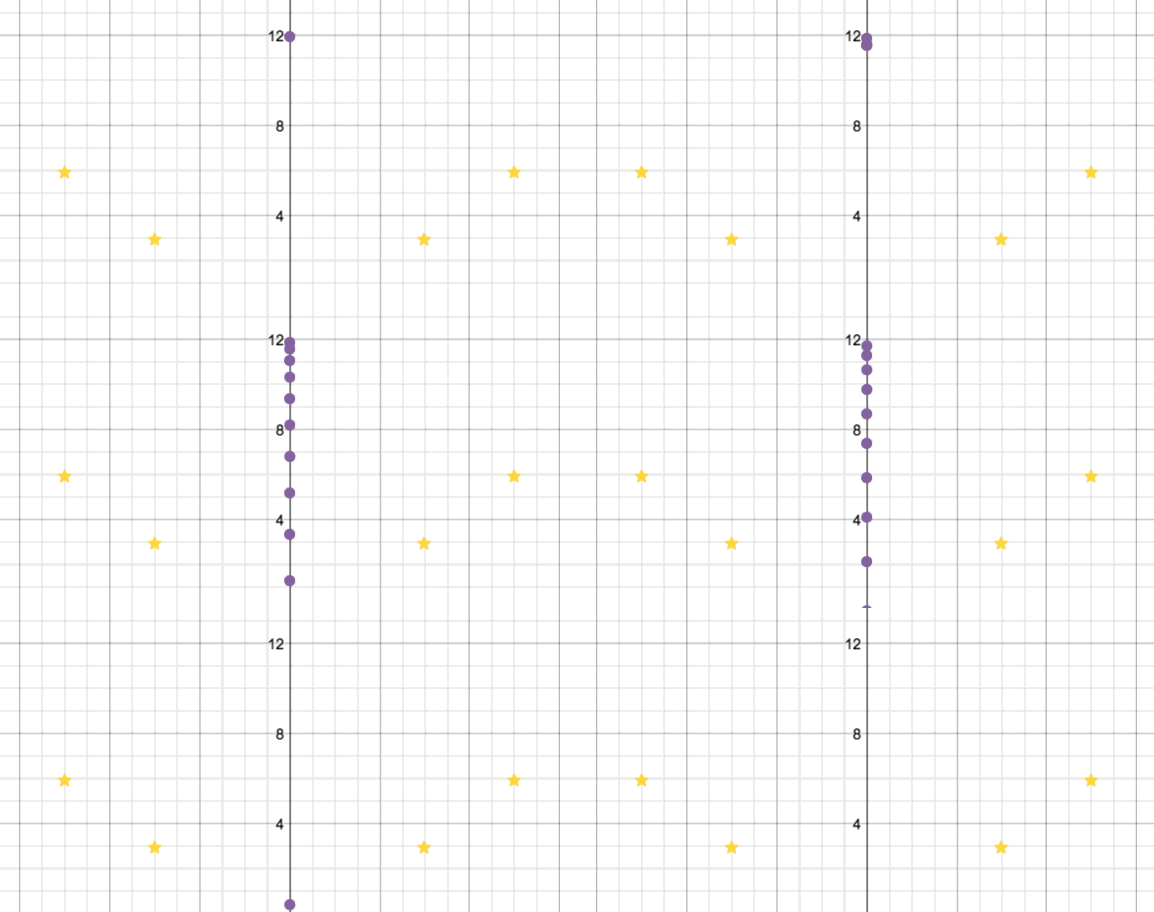
Marbleslides is the latest activity from my team at Desmos. It’s simple. We set up some stars. You press a “launch” button and marbles drop.

But here you have collected zero stars. No success.

151213_2

That’s because your students need to set up parabolic, linear, exponential, sinusoidal, or rational functions to send the marbles on a trip through those stars.

Success!

151213_1

That’s Marbleslides and you and your students should play it this week and let us all know how it goes. If you want a preview, head to student.desmos.com LINK and type “eht8”.

If you want to set up your own class, head to the Marbleslides activities listing, choose a function family, and get a classcode of your own.

Here are some quick, below-the-fold notes about what we’re trying to do here and why we’re trying to do it.

Delight. Whenever possible we want students to experience the same sense of delight about math that all of us at Desmos feel. Students can experience that delight both in pure and applied contexts and Marbleslides is that latter experience. Seriously, try not to grin.

Purposeful Practice. Picture two students, both graphing dozens of rational functions. One finds the experience dreary and the other finds it purposeful. The difference is the wrapper around that graphing task. If the wrapper is no more purposeful than a worksheet of graphing tasks, your student may fatigue after the first few graphs. In our Marbleslides classroom tests, we watched students transform the same function dozens of times — stretching it, shrinking it, nudging it up, down, left, and right by tiny amounts. That’s the Marbleslides wrapper. Students have a goal. Their pursuit of that goal will put you in a position to have some interesting conversations about these functions and their transformations.

BTW. Here’s the announcement post on the Desblog.

Desmosify Your Worksheet

[cross-posted to the Desblog]

Sometimes I see a worksheet online and I say to myself, “That should stay a worksheet. Paper is the right home for that math. Any possible benefit from moving that math to a computer is more than outweighed by the hassle of dragging out the laptop cart.”

Other times I see a worksheet and it seems clear to me that a different medium would add — you name it — breadth, depth, interest, collaboration, etc.

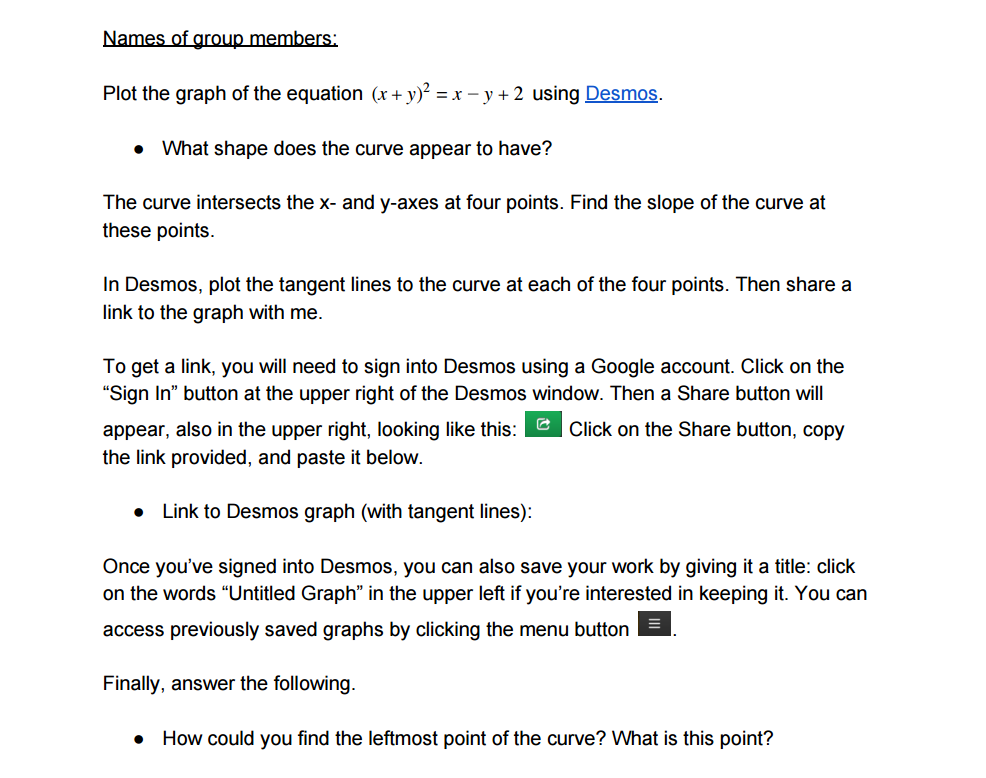
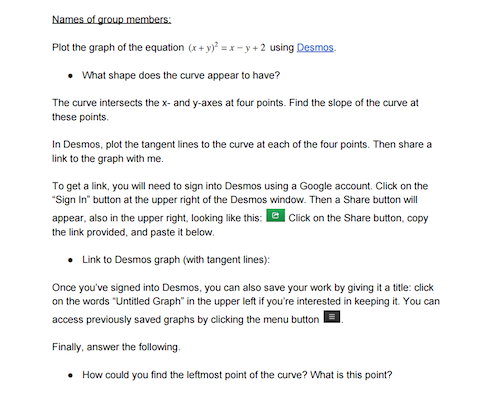
That’s the case with Joshua Bowman’s implicit differentiation worksheet, which he shared on Twitter. It’s great in worksheet form. But the Desmos Activity Builder can add a lot here while subtracting very little. Activity Builder is the right home for this math.
151117_1lo

Here is the activity I built in Activity Builder:
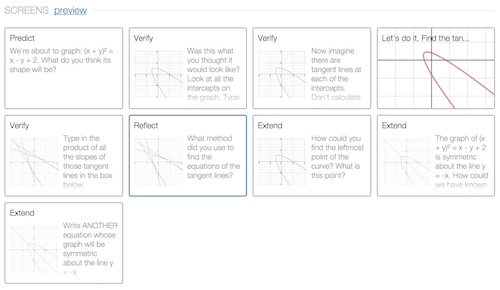
1511117_2lo

And here are some differences, from small to large:

Simplify Assignment Collection

Bowman is asking his students to do their work in Desmos anyway and then copy and paste their calculator link into a Google Doc for feedback.

151117_3lo

Activity Builder simplifies that collection process. Students do their work in the Desmos activity. Desmos sends you all of their graphs, quickly clickable.
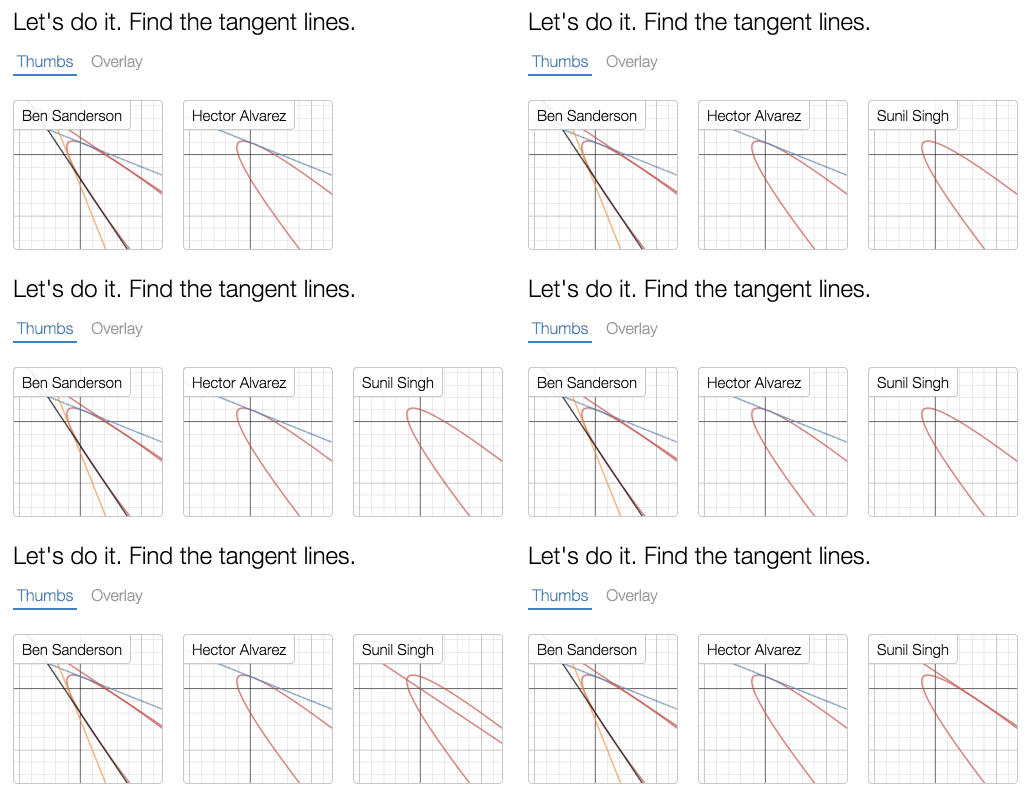
151117_4

Ask More Questions

When students see worksheets with seventeen questions running (a) through (q), they lose their mind. Let’s lighten their cognitive load and keep question (q) out of their visual space while they’re considering question (a).

This isn’t necessarily an improvement, especially if my new questions just ask students to repeat the same dreary work several hundred times. So:

Ask More Interesting Questions

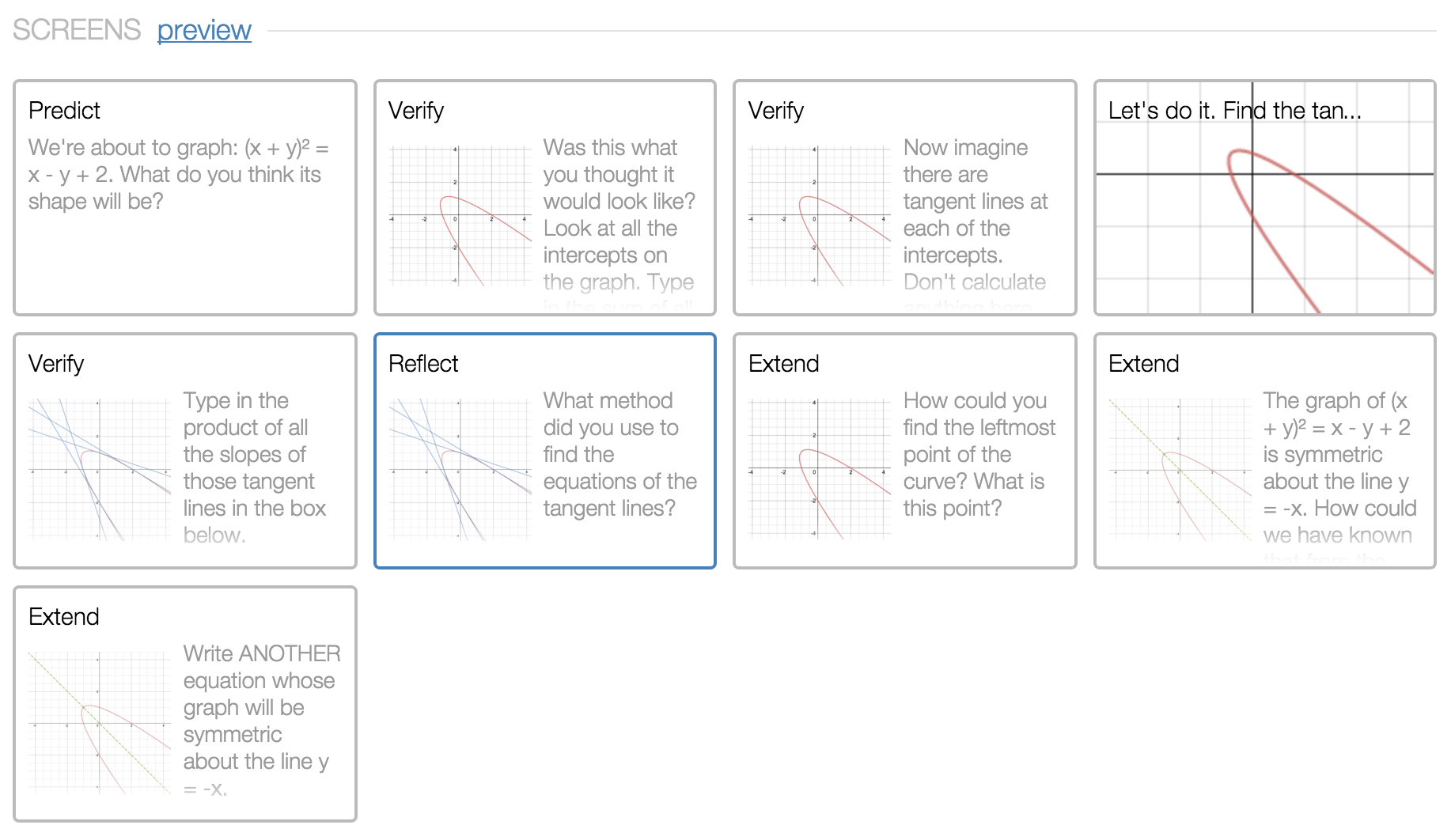
I added six more questions to Bowman’s worksheet, and they share particular features.

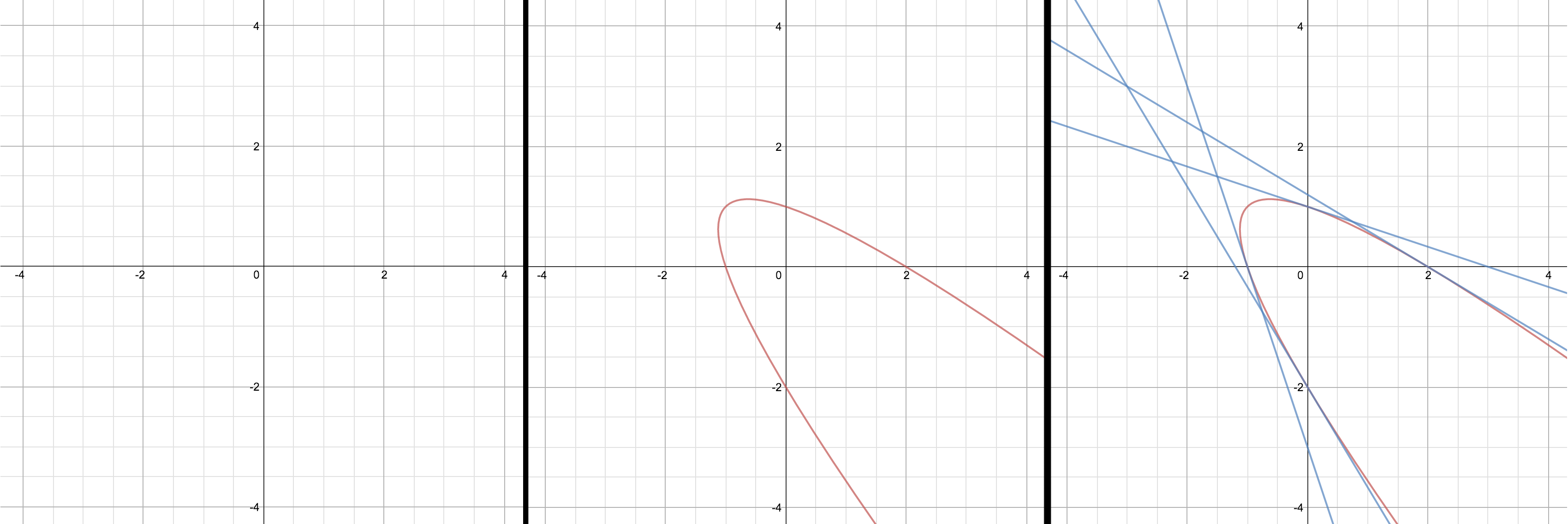
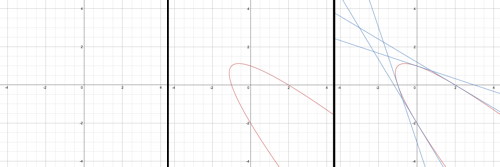
First, they ask students to work at several different levels, from informal to formal. For example, I wanted to ask questions about:

  • a blank graph — “What do you think the shape of the graph will be?”
  • the graph — “Add up all the intercepts. What is that sum?”
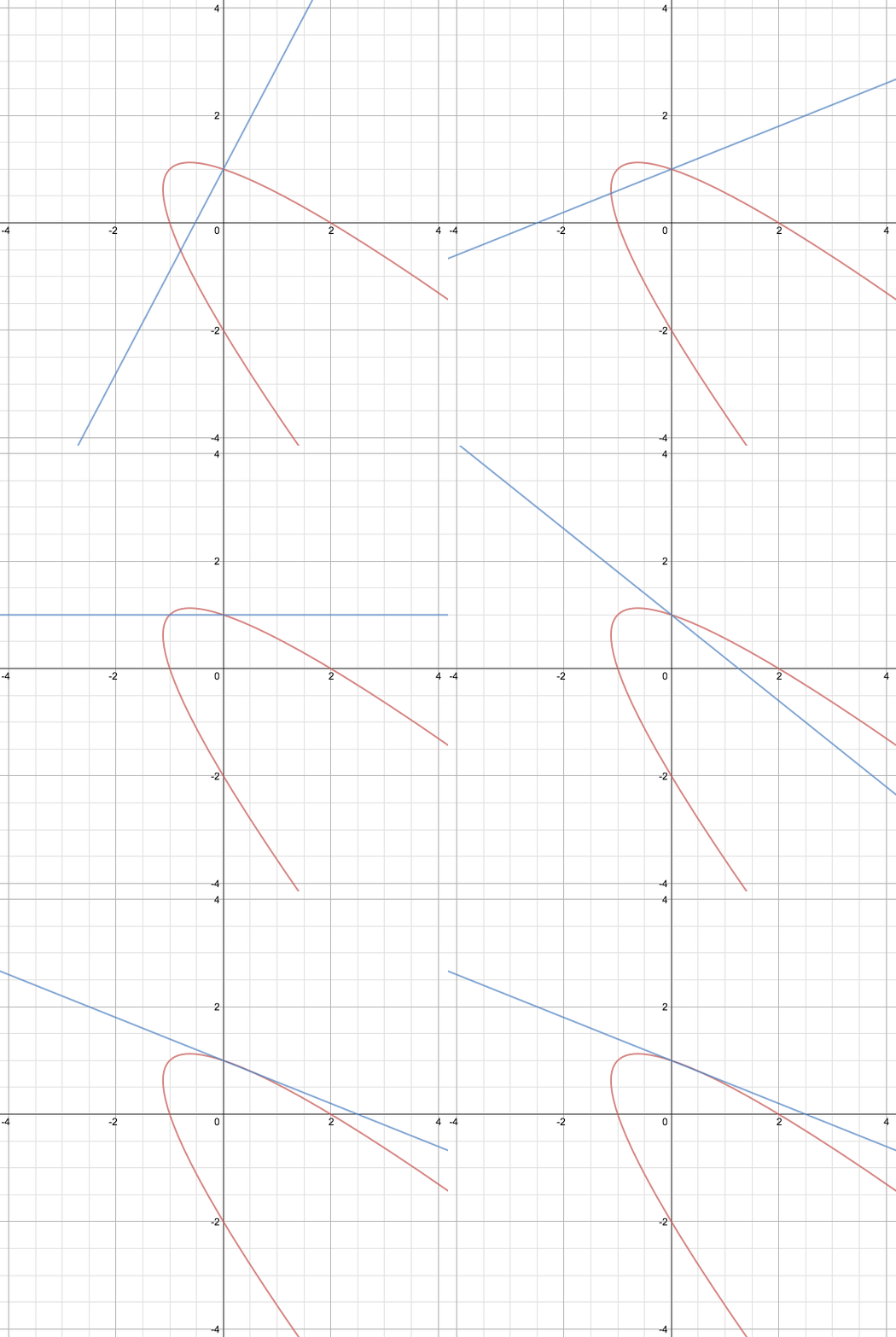
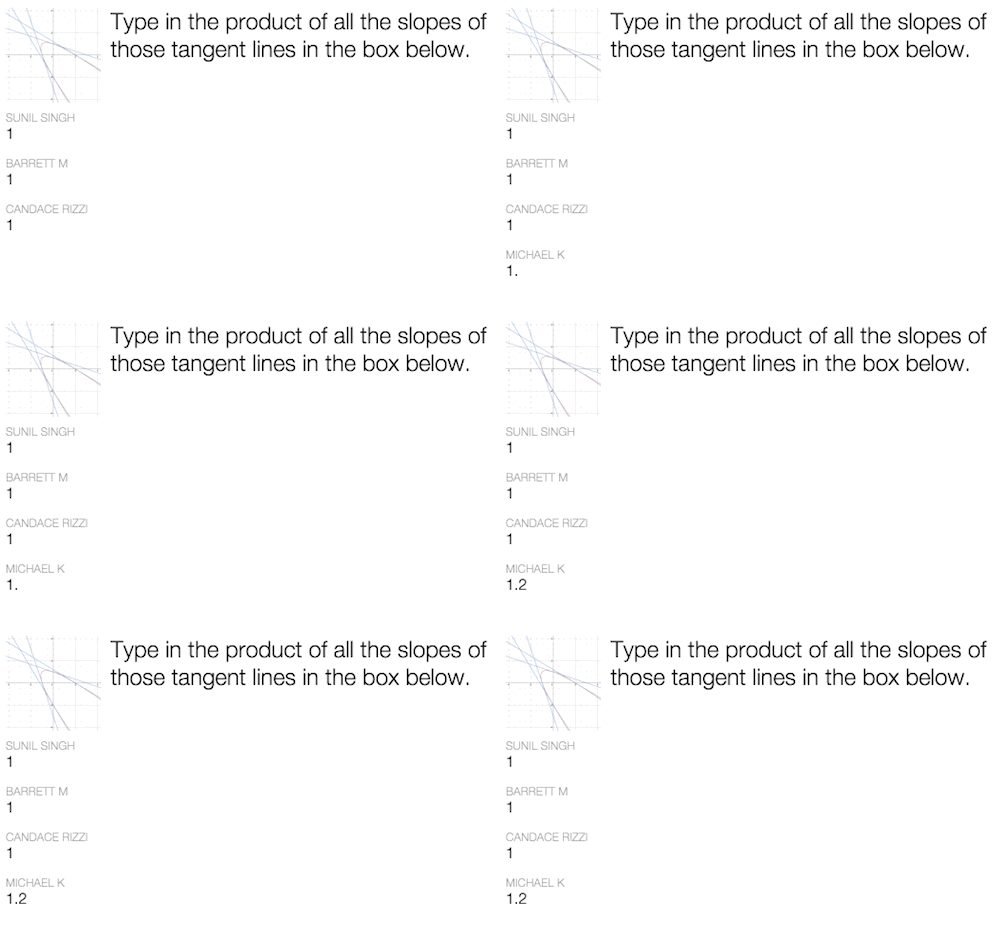
  • the graph and some tangent lines — “Multiply their slopes. What is the product?”
151117_5lo

These questions move productively from informal understandings to formal understandings, but they don’t live well together on the same piece of paper. You can’t ask students, “What do you think the shape of the graph will be?” when the graph is farther down the page.

Another example:

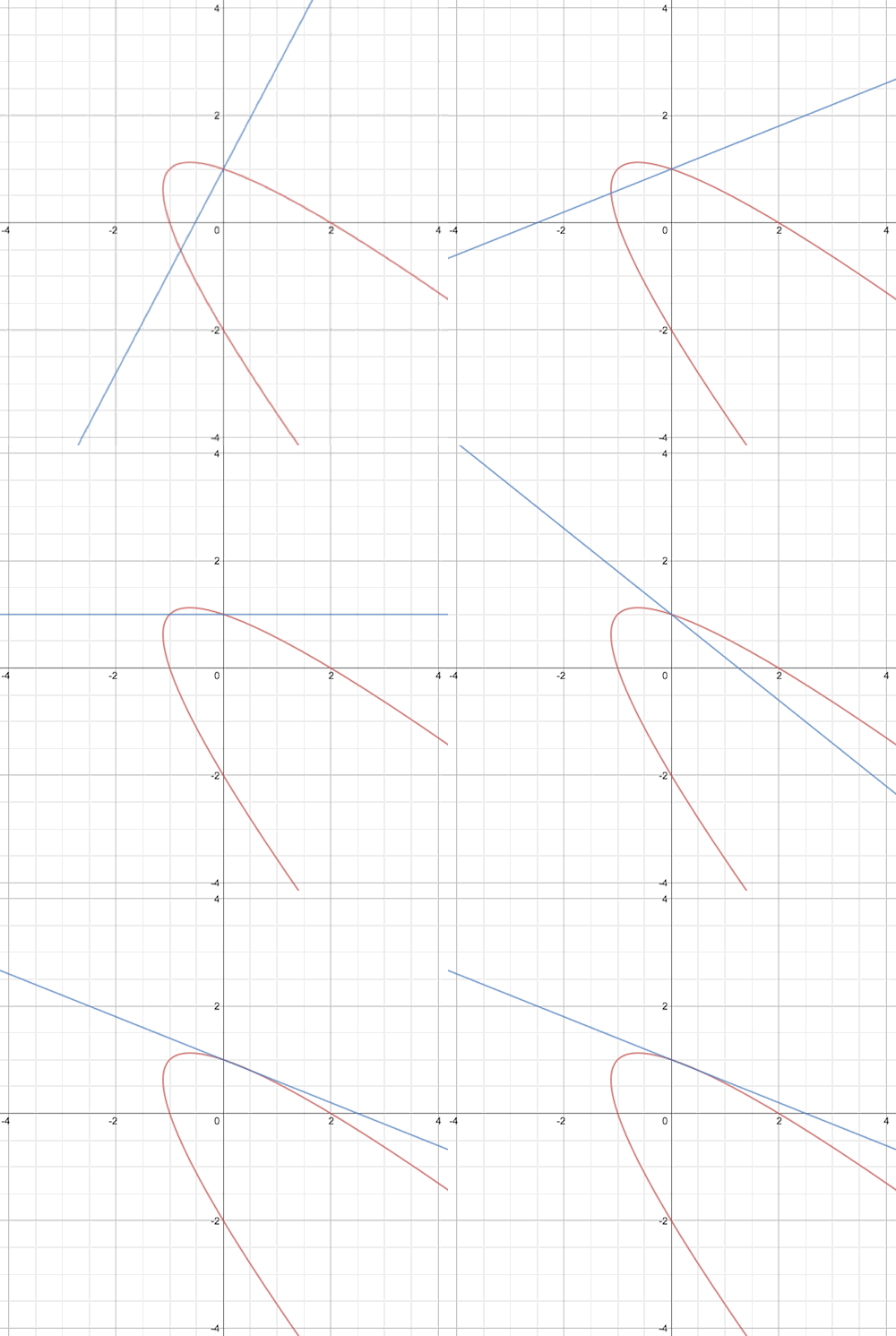
Bowman’s worksheet asks students to find the equation of the tangent lines to the intercepts of the graph. Some students may use sliders, other students may differentiate implicitly.
151117_6lo

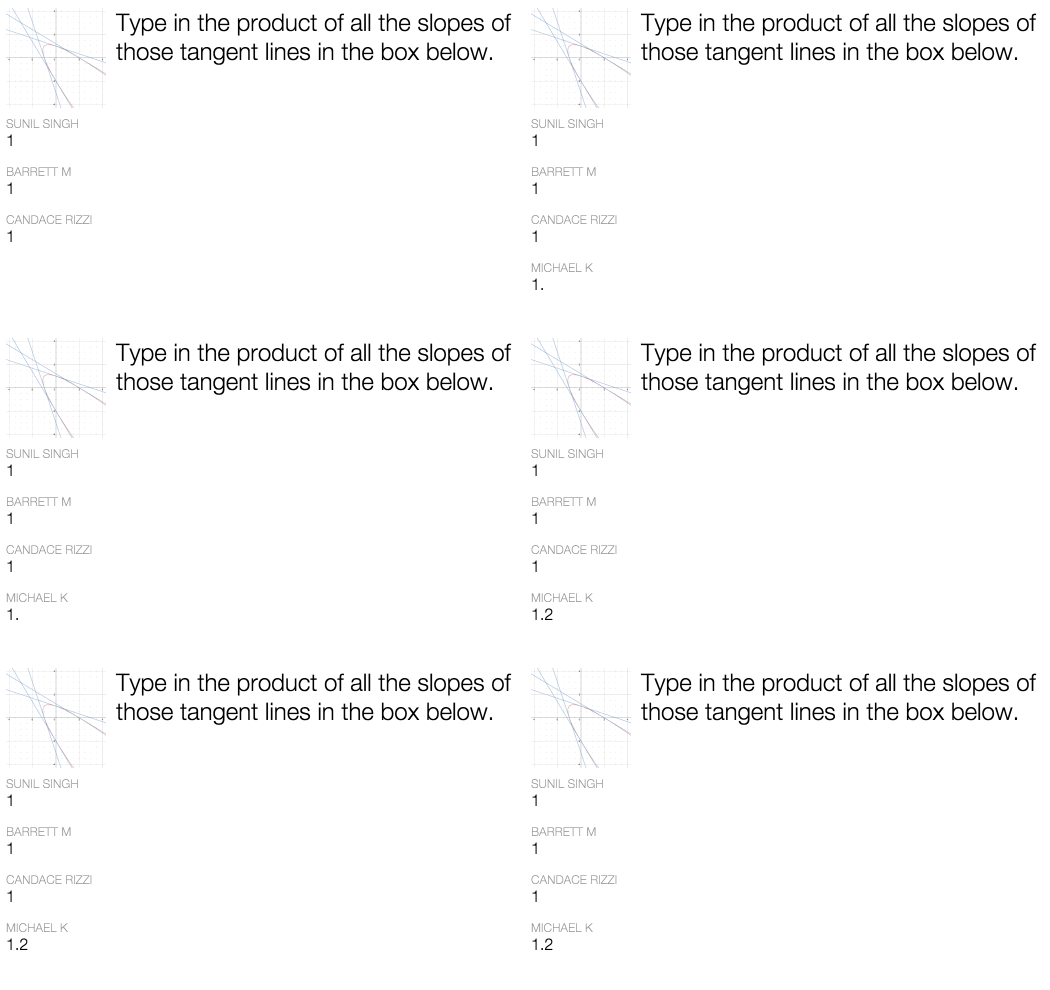
I can quickly figure out which group is which by asking them to multiply their slopes together and enter the product in a new question. Which students differentiated and which students experimented?
151117_7lo

Long before I ask students to calculate that product, I ask them to simply estimate its sign. Envision the tangent lines in your head. Without knowing their exact slopes, what will their product be? That’s an informal understanding that assists later, formal understandings.

So again:

  • Simplify assignment collection.
  • Ask more questions.
  • Ask more interesting questions.

Best of all, this Desmosification took minutes. Start somewhere. The tools are all free forever. Thanks, Joshua, for sharing your worksheet and letting us take a crack at it.

Featured Comments

Brandon Dorman:

I also like how the overlay view of your student answers could help lead to new questions, like seeing trends for student mis/understanding.

Jamie Mitchell:

This is great…but I need more. I want a way to be able to provide feedback to my students as they work through these activities.
Classkick Defeats The Mind-Reading Math Robots

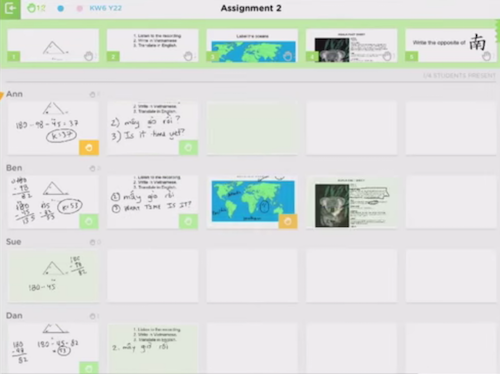
151019_2lo

Classkick allows you to give your students written feedback on work you assign on iPads. Crucially, that student work can be handwritten, which is (potentially) more valuable for feedback than multiple choice work. I thought it looked promising and I wrote about some of its promise last September.

Ruth Eichholtz didn’t find it as useful in class (where it’s hard to focus on a dashboard) as she did out of class, when she took a personal day:

I had my iPad at home and had iPads brought to the students at the beginning of the lesson. They were monitored at the start by a substitute teacher, who made sure they were present and that they received my email instructions. And then they joined my lesson on Classkick and worked, for 75 minutes, with me. As the students worked through each review problem, I could see their progress. I could make comments on their solution methods, correct their mistakes, and praise their successes. A few times, I tried to tell them they could use pencil & paper and just resort to Classkick when they needed help, but every single one chose to work on the iPad for the entire lesson!

I’m pessimistic about any vision of math education that has a robot grading the work of millions of students. These robots just aren’t good enough yet.

I’m intrigued, however, by this vision of math education that has one expert human analyzing and responding to the handwritten mathematical thinking of many more students than could fit in the same room at the same time. Let’s push ahead a little farther on that path.

Featured Comment

Jesus:

The first thing I thought about after seeing the tutorial was that I could start a mini Saturday school lesson for those students that need or want the help. Also, some of my students have a lot of after school activities, I have meetings and trainings, so I could see setting a time where we could review some work.