Category: uncategorized

Total 483 Posts

United Kingdom PD Opportunities

I’ll be taking a leave of absence from Stanford during the winter quarter of 2013 (all of February and March) to work with (and learn a lot from) the Shell Centre in Nottingham. While I’m in town, I’d love to do some work with UK maths teachers – workshops or lectures or whatever else. I have four openings. If I can help out, please drop me a note at dan@mrmeyer.com.

2012 May 18: Apologies for the double-post. I just finished up some renovations around here.

“Definitely not where I imagined this blog would go”

Daniel Schneider:

I thought I’d still be the only one reading it these days. I’ve only recently started telling friends and colleagues about this site, which means most of those 10,000 are from people I’ve never met. I’m surprised by how many people have found me and I’m glad people find my ideas meaningful. I guess I’m just amazed at how easy it’s been to have a voice in the semi-anonymity of the internet.

If you’re just getting into teaching, there are plenty of worse ways to invest your time than in blogging, tweeting, and building your own faculty lounge.

2012 May 10. On account of her stellar blogging, Kate Nowak receives unsolicited e-mails from administrators looking to hire her.

So, you know. For the past long while it seemed like admins and hiring-decision types paid no mind to my blogging. But that’s changing. People are paying attention, and more importantly, it’s people who value the same things we do: continuous learning, reflective practice, learning out loud. I was asked about specific posts on f(t) in the interview for my new job, which not only helped them get to know me, but heightened my opinion of them and their school as a promising place to work.

That Kate Nowak:

I don’t have a blog, because I have nothing original to contribute.
The Mullet Ratio

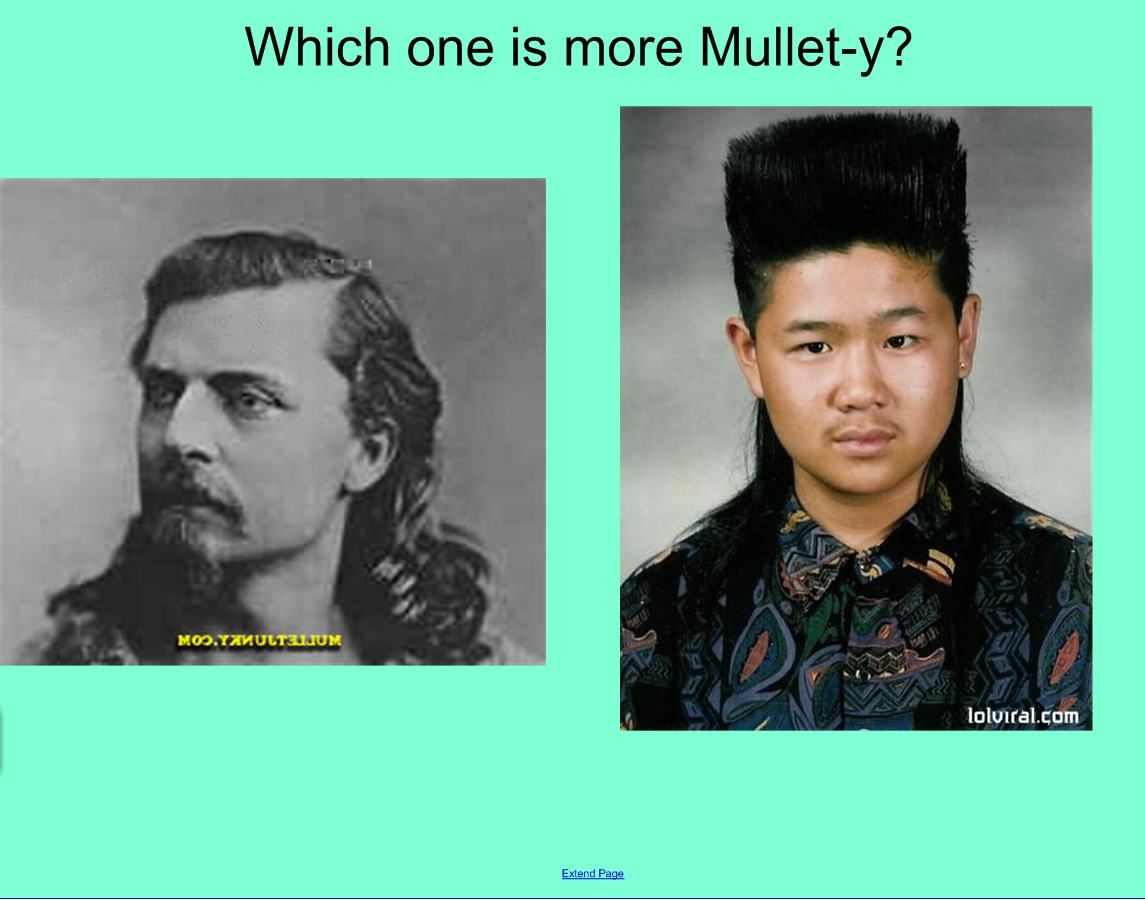
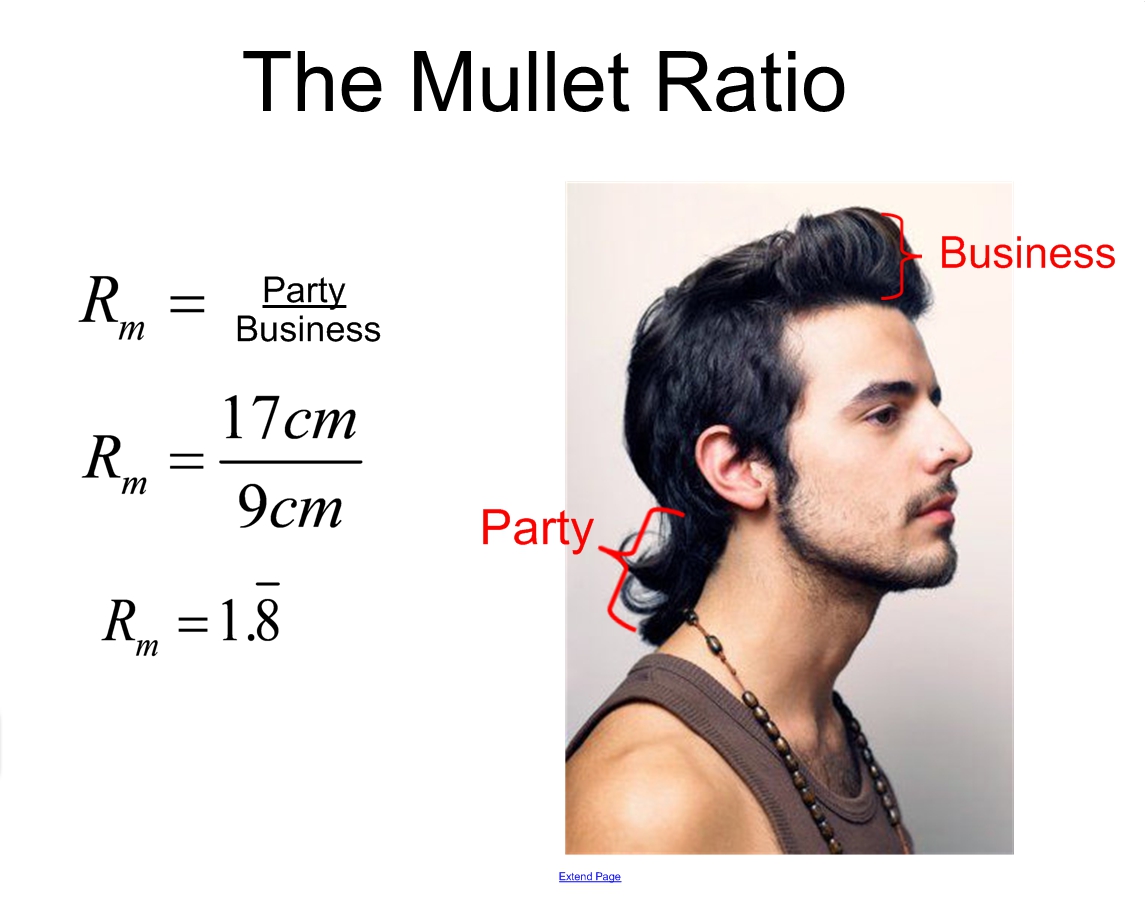
Matt Vaudrey takes an assist from Timon Piccini with a high-caliber lesson on the math of mullets. The money graf:

Students fit the pipe cleaner along the hair, then straightened it onto their rulers to find the measurement of the Party. The Business was usually pretty straight.

Great moves here:

  1. He begins the experience with intuition, the lowest rung on the ladder of abstraction, asking students to decide using nothing more than their gut “which one is more mullet-y?” By the end, they’ve named variables and defined operations, fully abstracting the context. Math has given a language to their intuition.
  2. He asks the students to generalize the ratio to their own haircuts, in addition to several other higher-level extension questions. You’re looking at an activity with a low bar for entry and a high bar for exit right here.
  3. He cut his own hair into a mullet for the occasion. That’s commitment, and gross.

Stanford And Silicon Valley, Sitting In A Tree

Ken Auletta on the thin membrane separating Stanford University and Silicon Valley:

David Kennedy, a Pulitzer Prize-winning historian who has taught at Stanford for more than forty years, credits the university with helping needy students and spawning talent in engineering and business, but he worries that many students uncritically incorporate the excesses of Silicon Valley, and that there are not nearly enough students devoted to the liberal arts and to the idea of pure learning. “The entire Bay Area is enamored with these notions of innovation, creativity, entrepreneurship, mega-success,” he says. “It’s in the air we breathe out here. It’s an atmosphere that can be toxic to the mission of the university as a place of refuge, contemplation, and investigation for its own sake.”

Auletta’s article nails whatever low-frequency sense of despair you might have heard thrumming through my piece on Silicon Valley earlier this year.

Related: Stanford’s Design School as seen by Stanford’s Business School.